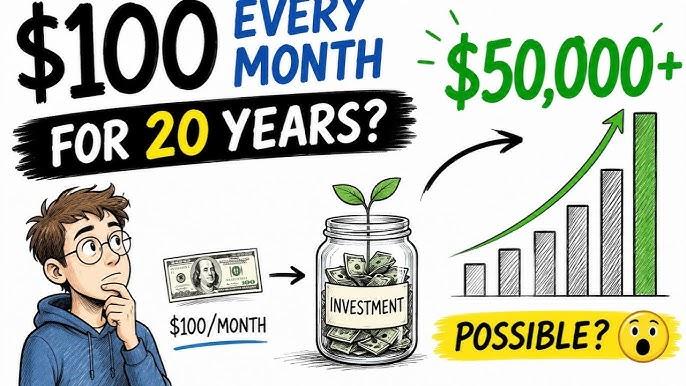
What Happens If You Invest $100 a Month for 20 Years?
What Happens If You Invest $100 a Month for 20 Years?
One hundred dollars a month may not feel like enough to change your financial future. Yet over 20 years, those contributions add up to $24,000 before any investment growth. If returns are positive and gains remain invested, compound growth can potentially push the ending value much higher. The final result, however, depends heavily on returns, fees, taxes, time and whether you stay invested.
If you invest $100 a month for 20 years, you contribute:
$100 × 12 × 20 = $24,000
If there were no investment growth, you would finish with $24,000.
Using simplified monthly-compounding assumptions, the approximate ending values could be:
| Hypothetical Annual Return | Your Contributions | Approximate Ending Balance | Approximate Growth |
|---|---|---|---|
| 0% | $24,000 | $24,000 | $0 |
| 4% | $24,000 | $36,677 | $12,677 |
| 5% | $24,000 | $41,103 | $17,103 |
| 7% | $24,000 | $52,093 | $28,093 |
| 8% | $24,000 | $58,902 | $34,902 |
| 10% | $24,000 | $75,937 | $51,937 |
These are educational illustrations, not forecasts or guaranteed returns.
Table of Contents
The Basic Math: $100 a Month for 20 Years
Monthly Contribution
$100
Annual Contribution
$1,200
20-Year Contributions
$24,000
This number is important because it separates money you contributed from money that may come from investment growth.
If Nothing Grew
You would still have:
$24,000
If Investments Grow
The ending balance can become larger because previous investment gains may remain invested and potentially generate additional growth.
What Could $100 a Month Become at Different Returns?
| Annual Return Assumption | Approximate Balance After 20 Years | Amount Above Contributions |
|---|---|---|
| 0% | $24,000 | $0 |
| 4% | $36,677 | $12,677 |
| 5% | $41,103 | $17,103 |
| 7% | $52,093 | $28,093 |
| 8% | $58,902 | $34,902 |
| 10% | $75,937 | $51,937 |
Investments do not normally earn the same return every year. Markets can rise, fall or remain weak for extended periods. The table simply shows what fixed mathematical assumptions would produce.
1 Scenario: 0% Investment Growth
This is the baseline.
Monthly Contribution
$100
20 Years
240 monthly contributions
Ending Balance
$24,000
No growth is included.
Every dollar came from you.
Why This Scenario Matters
It reminds us that investing results are not created only by returns.
Regular contributions themselves build wealth.
2 Scenario: 4% Average Annual Growth
Suppose the investment produced a hypothetical 4% average annual return and growth remained invested.
Total Contributions
$24,000
Approximate Ending Balance
$36,677
Approximate Growth
$12,677
In this scenario, your contributions still represent most of the final balance.
However, compounding adds more than twelve thousand dollars beyond what you personally contributed.
3 Scenario: 5% Average Annual Growth
Total Contributions
$24,000
Approximate Ending Balance
$41,103
Approximate Investment Growth
$17,103
The difference between a 4% and 5% assumption looks small.
However, after 20 years it creates approximately:
$4,426 of additional ending value
That illustrates how rate differences become increasingly important over long periods.

4 Scenario: 7% Average Annual Growth
A 7% figure is often used in long-term educational illustrations, including Investor.gov examples, but it remains an assumption rather than a guaranteed outcome.
Your Contributions
$24,000
Approximate Ending Value
$52,093
Approximate Growth
$28,093
Something Important Happens Here
Investment growth becomes larger than your total contributions.
Contributions: $24,000
Growth: $28,093
5 Scenario: 10% Average Annual Growth
Contributions
$24,000
Approximate Ending Balance
$75,937
Approximate Growth
$51,937
The number looks impressive.
However, higher-return assumptions should never be interpreted as guaranteed future performance.
The FTC warns that claims of guaranteed large returns, quick profits or little risk are common investment-scam warning signs. Real investments involve the possibility of losing money.
What Could the Balance Look Like Along the Way?
Using a hypothetical 7% annual return with monthly contributions:
| Time | Your Contributions | Approximate Investment Balance |
|---|---|---|
| 1 year | $1,200 | About $1,239 |
| 5 years | $6,000 | About $7,159 |
| 10 years | $12,000 | About $17,308 |
| 15 years | $18,000 | About $31,696 |
| 20 years | $24,000 | About $52,093 |
Notice the Pattern
The first five years add comparatively little investment growth.
Later years can contribute much more because a larger existing balance is participating in market changes.
Early on, your contributions are doing most of the work.
Contributions vs Investment Growth: Which Matters More?
At the beginning, contributions usually matter more.
Year 1
Your contributions: $1,200
Hypothetical growth: relatively small
Later Years
A larger portfolio can experience larger dollar changes from the same percentage return.
Example
A 7% change on:
$5,000 = $350
A 7% change on:
$50,000 = $3,500
Practical Lesson
Beginners often gain more by:
- Contributing consistently
- Increasing income
- Increasing contributions after raises
- Keeping fees reasonable
- Staying invested for long-term goals
rather than constantly trying to find a dramatically higher return.
What If You Invest $200 a Month Instead?
Doubling your monthly contribution roughly doubles the ending value under the same assumptions.
At 7% for 20 Years
| Monthly Investment | Total Contributions | Approximate Ending Balance |
|---|---|---|
| $100 | $24,000 | $52,093 |
| $200 | $48,000 | About $104,185 |
| $300 | $72,000 | About $156,278 |
What If You Start at $100 and Increase Contributions Later?
This may be more realistic than assuming a beginner can immediately invest a large amount.
Possible Progression
| Career Stage | Monthly Contribution |
|---|---|
| Starting out | $100 |
| After first raise | $150 |
| After debt payoff | $250 |
| After promotion | $350 |
| Higher-income stage | $500+ |
Why Increasing Contributions Matters
Investor.gov specifically recommends considering higher regular contributions when income rises or expenses decline.
That approach is powerful because it strengthens the part of the investment equation you can actually influence.

What If You Wait 10 Years to Start?
Time has an enormous effect.
Start Now
$100 per month for 20 years
At a hypothetical 7%:
About $52,093
Wait 10 Years
$100 per month for only 10 years
At the same hypothetical 7%:
About $17,308
Difference
About $34,785
The person investing for 20 years contributed $12,000 more.
However, the ending-value difference is much larger because the earlier contributions had another decade to participate in compound growth.
You can always increase the contribution later.
How Investment Fees Can Change the Result
Fees reduce the amount remaining invested.
Why That Matters
Money removed through ongoing costs cannot participate in future compound growth.
Illustrative Example
Suppose one investment effectively nets:
7% after costs
while another effectively nets:
6%
Over 20 years of $100 monthly contributions, the difference can become meaningful.
Risk, diversification, investment strategy, tax treatment and suitability matter too. However, understand every recurring cost you pay.
What About Taxes?
Taxes can change your after-tax investment results.
The effect depends on:
- Country
- Account type
- Investment type
- Income
- Holding period
- Dividend treatment
- Capital gains rules
U.S. Retirement Accounts
Eligible investors may have access to tax-advantaged accounts such as:
- 401(k)
- Traditional IRA
- Roth IRA
Tax rules differ between account types.
Do not assume the gross investment balance is identical to spendable after-tax wealth.
What About Inflation?
A future $52,000 will not necessarily buy as much as $52,000 buys today.
Why?
Inflation can reduce purchasing power over time.
Example
Suppose your investment grows at:
7%
and inflation averages:
3%
The approximate real return would be lower than the headline 7%.
Therefore, long-term financial planning should consider both nominal growth and purchasing power.
Where Could You Invest $100 a Month?
The best account depends on your goals, location, taxes, risk tolerance and access to employer benefits.
Possible Options for U.S. Investors
- 401(k) or other workplace retirement plan
- Traditional IRA
- Roth IRA
- Taxable brokerage account
- Other eligible retirement or investment accounts
Inside the Account
Possible investment choices may include diversified:
- Index funds
- Mutual funds
- Exchange-traded funds
- Bond funds
- Target-date funds
Why Diversification Matters
Spreading investments across many securities can reduce dependence on one company's success or failure.
The FTC warns that anyone guaranteeing large profits or claiming an investment carries little or no risk may be promoting a scam.
MoneyOnliners Original Analysis: The $100-a-Month Growth Framework
1. Start
Open the appropriate account and make the first contribution.
2. Contribute
Turn the $100 into an automatic monthly habit.
3. Increase
When income rises or major debt falls, consider increasing the contribution.
4. Stay
Avoid abandoning a long-term plan because of ordinary market volatility.
5. Compound
Allow gains and reinvested income to remain invested where appropriate.
MoneyOnliners Contribution Multiplier
MoneyOnliners Research-Based Evidence Note
This article is a research-based monthly investing guide.
Investor.gov currently explains investing as placing money into assets such as stocks or bonds with the expectation of earning a return over time while emphasizing that all investments involve risk.
Investor.gov also describes compound growth as earning returns on both invested money and previous returns.
Its current educational guidance summarizes long-term wealth building as regular investments plus time and encourages investors to consider increasing contributions when income rises.
The calculations in this article were independently prepared by MoneyOnliners using $100 monthly end-of-period contributions and stated hypothetical annual rates compounded monthly.
At a hypothetical 7% annual rate, $100 contributed monthly for 20 years produces an approximate mathematical ending value of $52,093.
That result is not a forecast.
The FTC warns that investments always involve risk and that promises of guaranteed large returns or little risk can indicate fraud.
MoneyOnliners does not fabricate investment account balances, screenshots, historical returns or personal investing results.
The $100-a-Month Growth Framework, Contribution Multiplier and Scorecard are original MoneyOnliners analytical resources.
10 Mistakes to Avoid When Investing $100 a Month
1. Waiting Until You Can Invest $1,000 a Month
A smaller sustainable contribution can establish the system today.
2. Skipping an Emergency Fund
Unexpected expenses may force you to sell investments or create debt.
3. Ignoring High-Interest Debt
Expensive borrowing can work against wealth building.
4. Expecting 7% Every Year
Long-term averages do not arrive smoothly.
5. Panic-Selling During Market Declines
Short-term volatility is normal in many market investments.
6. Paying Excessive Fees Without Knowing It
Recurring costs reduce the money available to compound.
7. Never Increasing the $100
Future raises may allow substantially larger contributions.
8. Putting Everything Into One Speculative Investment
Concentration can create severe losses.
9. Treating a Projection as Guaranteed Money
Calculators demonstrate possibilities, not promises.
10. Falling for a Guaranteed-Return Investment
Guaranteed high-profit claims are a major scam warning sign.
The goal is not to find a magical investment that turns $100 into a fortune overnight. The more realistic strategy is to combine regular contributions, adequate time, sensible risk management and increasing financial capacity.
Why Investing $100 a Month for 20 Years Matters
1. $100 a month becomes $1,200 per year.
2. Over 20 years, contributions alone equal $24,000.
3. Investment growth can potentially increase the final value.
4. Investment returns are not guaranteed.
5. Time allows more opportunities for compound growth.
6. The first years are usually dominated by contributions.
7. Later years can be influenced more strongly by the existing portfolio.
8. Higher returns mathematically create higher ending balances.
9. Higher potential returns can also involve higher risk.
10. Increasing monthly contributions can dramatically change the outcome.
11. A future raise can be redirected partly toward investments.
12. Debt payoff can create room for larger contributions.
13. Fees reduce the amount available to compound.
14. Taxes can change after-tax wealth.
15. Inflation affects future purchasing power.
16. Diversification can reduce dependence on one investment.
17. Market declines are possible during a 20-year period.
18. Regular investing can help turn small amounts into significant long-term assets.
19. Starting earlier gives each contribution more potential time to grow.
20. Ultimately, choosing to invest $100 a month for 20 years matters because it turns a manageable monthly habit into $24,000 of personal contributions—and gives those contributions two decades of opportunity to participate in compound growth.
Continue Learning on MoneyOnliners
Recommended External Resources
1. Investor.gov — Compound Interest Calculator
Compound Interest Calculator — Investor.gov
Lets readers test monthly contributions, time horizons, estimated returns and compounding frequencies.
2. Investor.gov — Introduction to Investing
Introduction to Investing — Investor.gov
Explains investment risk, compound growth, regular investing and long-term time horizons.
3. Investor.gov — Build Wealth Over Time Through Saving and Investing
Build Wealth Over Time Through Saving and Investing — Investor.gov
Provides current guidance on emergency funds, regular investing, retirement accounts and increasing contributions over time.
4. Investor.gov — Diversify Your Investments
Diversify Your Investments — Investor.gov
Explains why spreading investments across multiple securities can reduce concentration risk.
5. Investor.gov — Understanding Investment Fees
Understanding Investment Fees — Investor.gov
Explains how investment costs can affect long-term wealth accumulation.
6. Consumer Financial Protection Bureau — Saving
Saving — Consumer Financial Protection Bureau
Provides practical resources for emergency savings and financial resilience before taking additional investment risk.
7. Consumer Financial Protection Bureau — Financial Well-Being
Provides broader context for financial security beyond investment-account balances.
8. Federal Trade Commission — Investment Scams
Investment Scams — Federal Trade Commission
Explains why guaranteed big returns, quick profits and low-risk wealth promises are major scam warning signs.
9. Investor.gov — Saving and Investing Roadmap
Saving and Investing: A Roadmap to Financial Security — Investor.gov
Provides broader long-term saving and investing guidance for beginners.
10. Investor.gov — What Is Compound Interest?
What Is Compound Interest? — Investor.gov
Explains how previously earned returns can become part of future compound growth.
This article provides general educational information and is not individualized investment, retirement, tax, accounting or legal advice. The 4%, 5%, 7%, 8% and 10% figures are hypothetical mathematical assumptions rather than promised returns. Investments can lose value, and actual results may differ substantially because of market performance, fees, taxes and contribution timing.
Frequently Asked Questions
How much money do you contribute if you invest $100 a month for 20 years?
You make 240 monthly contributions.
Each contribution is $100.
Therefore, total contributions equal $24,000.
Investment growth may increase the final balance.
However, growth is not guaranteed.
How much could $100 a month become at 7%?
Using a simplified 7% annual-return assumption with monthly compounding, the approximate 20-year ending balance is $52,093.
You contributed $24,000.
Approximately $28,093 comes from hypothetical investment growth.
Actual market returns will vary.
The calculation is educational rather than predictive.
How much could $100 a month become at 5%?
At a hypothetical 5% annual return compounded monthly, the approximate ending balance is $41,103.
The contributions equal $24,000.
Approximate growth is $17,103.
Fees and taxes are not included.
Actual results can be lower or higher.
Can $100 a month really make a difference?
Yes.
Twenty years of contributions alone equal $24,000.
Investment growth may add more.
The greater advantage may be establishing a long-term investing habit.
Future increases can make an even larger difference.
Is investing $100 a month better than saving $100?
It depends on the goal.
Savings may be more appropriate for emergency funds and short-term needs.
Investing offers greater growth potential but also greater risk.
Money needed soon may not belong in volatile investments.
Match the account to the goal.
Should I invest $100 if I have credit-card debt?
High-interest debt deserves serious attention.
Investor.gov currently recommends controlling credit-card debt as part of long-term wealth building.
An employer retirement match may also be financially valuable where available.
The best sequence depends on rates and circumstances.
Avoid ignoring expensive debt while chasing uncertain returns.
What is the best investment for $100 a month?
There is no universal best investment.
Your goal matters.
Your time horizon matters.
Risk tolerance and tax situation matter too.
Many long-term investors use appropriately diversified funds.
Should I invest the same $100 every month?
Consistency can make investing easier.
Automating the contribution can help.
However, $100 does not need to remain your permanent amount.
Consider increasing it when income rises.
Investor.gov encourages increasing contributions when financially possible.
What happens if the market crashes?
Your portfolio value can fall.
A 20-year investment period will likely include periods of market volatility.
Long-term investors should expect fluctuations.
Diversification can reduce some risks but cannot eliminate losses.
Do not invest money you cannot afford to expose to market risk.
What if I miss one month?
One missed contribution does not destroy a 20-year plan.
Resume when you can.
Consistency matters over long periods.
Avoid treating the plan as all-or-nothing.
Financial emergencies sometimes need priority.
What if I invest $200 a month?
At the same hypothetical 7% assumption for 20 years, the ending balance would be about $104,185.
Total contributions would be $48,000.
The amount roughly doubles because the contribution doubles.
Actual returns remain uncertain.
Higher contributions are one of the strongest controllable variables.
What if I invest $300 a month?
At a hypothetical 7% for 20 years, the ending value would be about $156,278.
Total contributions would equal $72,000.
Growth would make up the remainder under that assumption.
Fees and taxes would affect real results.
The example is not a guarantee.
Is 7% a guaranteed return?
No.
Investor.gov explicitly states that investing does not have a set return.
Long-term historical averages are not promises.
Markets can produce losses.
Never treat a projection as guaranteed wealth.
Can I become a millionaire by investing $100 a month?
Not within 20 years under ordinary return assumptions.
However, longer periods can dramatically change the mathematics.
Higher contributions also matter.
Income growth can allow those contributions to increase.
Focus on building a sustainable investing system instead of chasing a particular label.
Should I start now or wait until I can invest more?
Starting with an affordable amount can be useful.
Waiting reduces the time available for potential compounding.
You can increase contributions later.
However, first make sure essential expenses and emergency savings are addressed.
Avoid investing money you may need immediately.
Research Methodology
Calculation Assumptions
MoneyOnliners calculated the examples using $100 monthly contributions made at the end of each month.
Time Horizon
The primary scenario uses 20 years, or 240 monthly contributions.
Total Contributions
$100 × 240 = $24,000
Return Scenarios
The article models hypothetical annual return assumptions of 0%, 4%, 5%, 7%, 8% and 10%.
Compounding
Monthly compounding is used for the hypothetical future-value calculations.
Primary Educational Sources
Investor.gov resources were reviewed for guidance on regular investing, compound growth, time horizons, diversification, retirement accounts and investment risk.
Why 7% Appears in the Article
Investor.gov currently notes that some experts use approximately 7% to 10% as an educational estimate for long-term diversified U.S. stock returns based on historical averages.
The same Investor.gov material emphasizes that investments do not have a set return.
Investment Risk
FTC guidance was reviewed because high guaranteed-return claims can be signs of investment fraud.
Fees and Taxes
Primary calculations exclude investment fees, taxes and inflation so the effect of contribution size, time and assumed returns is easier to understand.
Original MoneyOnliners Analysis
The $100-a-Month Growth Framework, Contribution Multiplier and Monthly Investing Scorecard are original MoneyOnliners educational resources.
First-Hand Evidence Standard
MoneyOnliners only presents first-hand portfolio screenshots, broker testing, investment returns or personal contribution histories when genuine evidence exists and can be represented accurately.
No personal 20-year investment result is claimed in this article.
Limitations
Real market returns fluctuate.
Sequence of returns matters.
Fees and taxes vary.
Inflation changes purchasing power.
Contribution timing may differ.
Therefore, every ending balance in this article should be interpreted as an educational mathematical scenario rather than a forecast.
Conclusion: $100 a Month Is Small Enough to Start—but Large Enough to Matter Over Time
So what happens if you invest $100 a month for 20 years?
You Personally Contribute $24,000
$100 × 12 × 20 = $24,000
Without Growth
You finish with $24,000.
At a Hypothetical 5%
The ending balance is approximately $41,103.
At a Hypothetical 7%
It is approximately $52,093.
At a Hypothetical 10%
It is approximately $75,937.
But Those Returns Are Not Promised
Markets fluctuate and losses are possible.
What Can You Control?
Starting.
Contributing consistently.
Increasing contributions when income improves.
Keeping costs under control.
Diversifying appropriately.
Avoiding unnecessary withdrawals.
Staying away from guaranteed-return scams.
Giving long-term money enough time.
Similar Posts
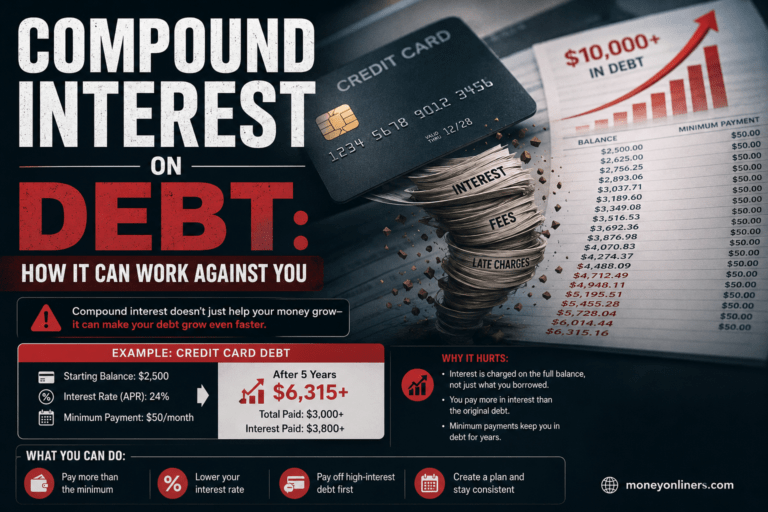
Compound Interest on Debt: How It Can Work Against You
Compound Interest on Debt: How It Can Work Against You | MoneyOnliners MoneyOnliners • Debt → Compound Interest Compound Interest on Debt: How It Can Work Against You Compound interest can help savings and investments grow, but the same basic mathematics can become expensive when you owe money. If unpaid interest becomes part of a…
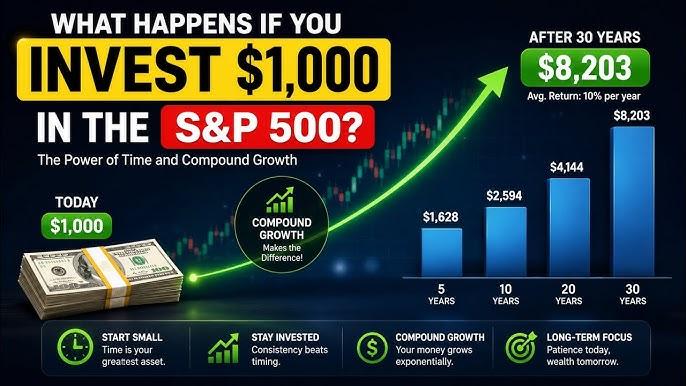
$1,000 Invested for 10, 20 and 30 Years: What Could Compound Growth Do?
$1,000 Invested for 10, 20 and 30 Years: What Could Compound Growth Do? | MoneyOnliners MoneyOnliners • Investing → Compound Growth $1,000 Invested for 10, 20 and 30 Years: What Could Compound Growth Do? One thousand dollars is not enough to guarantee financial independence, but it is large enough to demonstrate something important: time can…
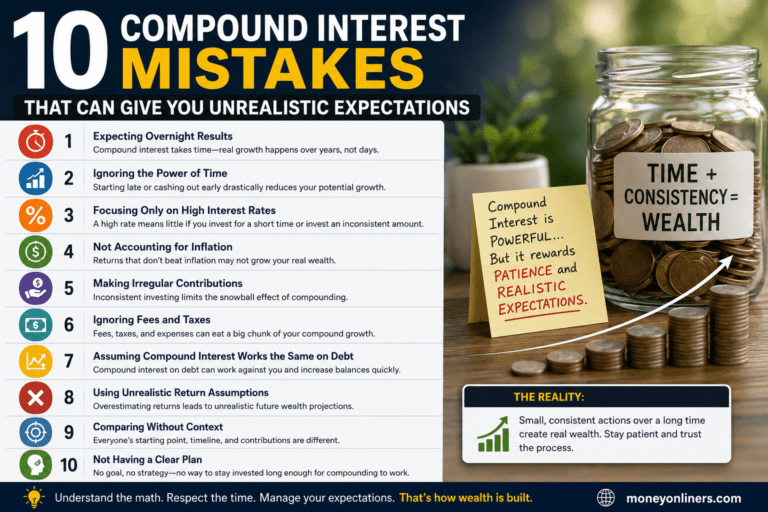
10 Compound Interest Mistakes That Can Give You Unrealistic Expectations
10 Compound Interest Mistakes That Can Give You Unrealistic Expectations | MoneyOnliners MoneyOnliners • Compound Interest → Reality Check 10 Compound Interest Mistakes That Can Give You Unrealistic Expectations Compound interest is one of the most useful ideas in long-term finance, but it is also one of the easiest to misunderstand. A calculator can make…
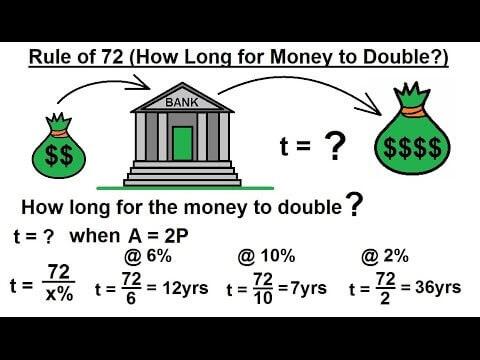
How Long Does It Take to Double Your Money? The Rule of 72 Explained
How Long Does It Take to Double Your Money? The Rule of 72 Explained | MoneyOnliners MoneyOnliners • Compound Growth → Rule of 72 How Long Does It Take to Double Your Money? The Rule of 72 Explained If your money is growing at 4%, 6%, 8% or 10% a year, how long might it…
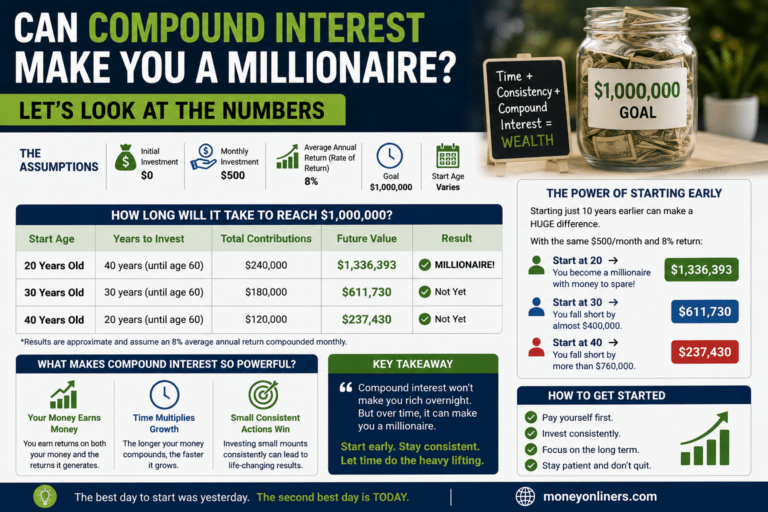
Can Compound Interest Make You a Millionaire? Let’s Look at the Numbers
Can Compound Interest Make You a Millionaire? Let’s Look at the Numbers | MoneyOnliners MoneyOnliners • Compound Interest → Millionaire Math Can Compound Interest Make You a Millionaire? Let’s Look at the Numbers Becoming a millionaire through compound growth is mathematically possible, but the word “millionaire” can make the process sound easier than it really…
Compound Interest Explained With 10 Simple Real-Life Examples
Compound Interest Explained With 10 Simple Real-Life Examples | MoneyOnliners MoneyOnliners • Wealth Building → Compound Interest Compound Interest Explained With 10 Simple Real-Life Examples Compound interest can sound like complicated financial mathematics, but the basic idea is remarkably simple: your money can earn a return, and later that return may begin earning additional returns…