How Much Money Do You Really Need to Retire Comfortably?
How Much Money Do You Really Need to Retire Comfortably?
Is $500,000 enough to retire? What about $1 million, $1.5 million or $2 million? There is no universal retirement number because comfortable retirement depends on what you spend, where your income comes from, how long retirement lasts, healthcare, taxes, housing, inflation and how much flexibility you have when markets struggle.
There is no single answer to how much money do you need to retire comfortably. A practical starting point is to estimate your annual retirement spending, subtract reliable income such as pensions or government retirement benefits, and calculate how much must come from your investment portfolio.
For example, if you expect to spend $60,000 per year but receive $25,000 from reliable retirement income, your portfolio needs to provide approximately $35,000. Using a simple 4% illustration, that corresponds to about $875,000. At 3.5%, the same $35,000 would require approximately $1 million. These are planning illustrations—not guarantees.
Table of Contents
What Does “Retire Comfortably” Actually Mean?
Comfortable retirement is personal.
For one household, it may mean owning a modest home, cooking most meals at home and taking one vacation each year.
For another, comfortable retirement may include international travel, expensive hobbies, supporting family members and maintaining multiple properties.
Your Retirement Lifestyle May Include
- Housing
- Food
- Utilities
- Transportation
- Healthcare
- Insurance
- Taxes
- Travel
- Entertainment
- Home maintenance
- Family support
- Hobbies
- Unexpected expenses

A Simple Way to Estimate How Much You Need to Retire
Begin with annual retirement spending.
Next, subtract reliable retirement income.
The remaining amount is what your portfolio may need to provide.
Annual Spending − Reliable Retirement Income = Portfolio Income Needed
Example
Expected annual spending:
$60,000
Pension and other reliable retirement income:
$25,000
Portfolio requirement:
$60,000 − $25,000 = $35,000
Then Apply a Planning Withdrawal Rate
At 4%:
$35,000 ÷ 0.04 = $875,000
At 3.5%:
$35,000 ÷ 0.035 = $1,000,000
Withdrawal rates are planning assumptions. Market returns, inflation, asset allocation, retirement length, taxes and spending flexibility can affect whether a portfolio lasts.
How Much Might You Need at Different Spending Levels?
| Annual Portfolio Spending | 4% Illustration | 3.5% Illustration | 3% Illustration |
|---|---|---|---|
| $20,000 | $500,000 | About $571,429 | About $666,667 |
| $30,000 | $750,000 | About $857,143 | $1,000,000 |
| $40,000 | $1,000,000 | About $1,142,857 | About $1,333,333 |
| $50,000 | $1,250,000 | About $1,428,571 | About $1,666,667 |
| $60,000 | $1,500,000 | About $1,714,286 | $2,000,000 |
| $75,000 | $1,875,000 | About $2,142,857 | $2,500,000 |
| $80,000 | $2,000,000 | About $2,285,714 | About $2,666,667 |
| $100,000 | $2,500,000 | About $2,857,143 | About $3,333,333 |
Do not automatically multiply your entire retirement budget by 25. First subtract reliable income that will not need to come from your investment portfolio.
Reliable Retirement Income Can Reduce the Portfolio You Need
One of the biggest mistakes in retirement calculations is pretending your portfolio must fund every dollar of spending.
Other Retirement Income May Include
- Government retirement benefits
- Pensions
- Annuity income
- Reliable rental cash flow
- Part-time work
- Other dependable recurring income
Example: $70,000 Retirement Lifestyle
Annual retirement spending:
$70,000
Pension:
$20,000
Other reliable retirement income:
$15,000
Portfolio income needed:
$70,000 − $35,000 = $35,000
At 4%:
$35,000 ÷ 0.04 = $875,000
Without the $35,000 of other income, the same $70,000 lifestyle would produce a $1.75 million 4% illustration.

Why You Should Compare More Than One Withdrawal Rate
A common retirement shortcut uses 4%.
However, no single rate is guaranteed to work for every retiree.
A longer retirement, unfavorable market sequence or high inflation can change the outcome.
Example: You Need $40,000 From Investments
| Starting Withdrawal Assumption | Illustrative Portfolio |
|---|---|
| 4% | $1,000,000 |
| 3.9% | About $1,025,641 |
| 3.5% | About $1,142,857 |
| 3% | About $1,333,333 |
The difference between the 4% and 3% scenarios is more than $333,000.
What Does That Tell You?
Your retirement number depends heavily on assumptions.
Therefore, calculate a range rather than pretending one number is perfect.
Retirement-income research changes as market valuations, bond yields, inflation assumptions and other conditions change. A withdrawal rate should therefore be treated as part of an ongoing plan rather than a permanent guarantee.
Housing Can Change Your Retirement Number by Hundreds of Thousands
Housing is often one of the largest household expenses.
Suppose Household A Spends $30,000 Annually Excluding Housing
Housing adds $24,000 per year.
Total annual spending = $54,000
Household B Has Lower Housing Costs
Housing adds only $12,000.
Total annual spending = $42,000
Difference
$54,000 − $42,000 = $12,000 per year
At the simple 25× illustration:
$12,000 × 25 = $300,000
A paid-off home may reduce monthly spending, but property taxes, insurance, repairs, utilities and maintenance still belong in the retirement budget.
Healthcare Can Make an Apparently Comfortable Retirement Much Tighter
Healthcare is one of the expenses most likely to change as you age.
Potential Costs Include
- Insurance premiums
- Deductibles
- Prescriptions
- Dental treatment
- Vision care
- Specialist care
- Long-term care
- Out-of-pocket medical expenses
Hypothetical Example
You initially estimate retirement spending at $50,000.
Then realistic healthcare planning adds $8,000.
Revised spending = $58,000
At 4%, that $8,000 difference corresponds mathematically to:
$8,000 ÷ 0.04 = $200,000
Healthcare systems differ substantially by country. Use the costs and insurance structure that apply where you expect to live in retirement.

Taxes Can Make Gross Retirement Income Different From Spendable Income
A $50,000 portfolio withdrawal does not necessarily mean you have $50,000 available to spend.
Tax treatment depends on your country, account structure, investments and other income.
Hypothetical Illustration
Suppose you need $50,000 after taxes.
For illustration only, assume an effective 15% tax burden applies to the relevant retirement income.
$50,000 ÷ 0.85 ≈ $58,824 gross income required
At 4%:
$58,824 ÷ 0.04 ≈ $1,470,600
If you mistakenly used $50,000:
$50,000 ÷ 0.04 = $1,250,000
That simplified difference is more than $220,000.
The 15% figure is hypothetical. Retirement taxation varies considerably and may require professional tax guidance.
Inflation Can Change What “Comfortable” Costs Over Time
Retirement can last decades.
During that time, purchasing power may decline.
Simple Example
You begin retirement spending $50,000 annually.
If inflation were 3%:
Year 2 equivalent ≈ $51,500
Another 3% would produce:
Year 3 equivalent ≈ $53,045
Over long periods, inflation can materially change nominal spending requirements.
Your Retirement Length Can Change How Much Margin You Need
Someone retiring at 70 and someone retiring at 45 face very different timelines.
A Longer Retirement Means More Exposure To
- Market downturns
- Inflation
- Healthcare changes
- Tax changes
- Housing costs
- Unexpected family expenses
Early Retirement Requires Extra Caution
A portfolio that needs to support 50 years may require different assumptions from one designed around approximately 25 or 30 years.
The earlier you retire, the more important flexibility, diversification and conservative stress testing can become.
Can You Retire Comfortably With $500,000?
Possibly, depending on spending and other income.
At a 4% Illustration
$500,000 × 4% = $20,000
At 3.5%
$500,000 × 3.5% = $17,500
If you also receive $30,000 of dependable retirement income, total first-year resources in the simple 4% illustration could be:
$20,000 + $30,000 = $50,000
Therefore, $500,000 could be workable for one household and clearly insufficient for another.
Can You Retire Comfortably With $1 Million?
Again, it depends.
Illustrative Portfolio Income
| Withdrawal Assumption | First-Year Illustration |
|---|---|
| 4% | $40,000 |
| 3.9% | $39,000 |
| 3.5% | $35,000 |
| 3% | $30,000 |
Add Other Income
If a pension provides $20,000:
$40,000 + $20,000 = $60,000
That could produce a comfortable retirement for some households.
For someone spending $100,000 annually, it may be insufficient.
Is $2 Million Enough to Retire Comfortably?
4% Illustration
$2,000,000 × 4% = $80,000
3.5% Illustration
$2,000,000 × 3.5% = $70,000
3% Illustration
$2,000,000 × 3% = $60,000
Additional pension or government benefits could increase total retirement income.
However, high taxes, expensive healthcare, substantial housing costs or a luxury lifestyle can still make $2 million feel tighter than expected.
MoneyOnliners Original Analysis: The Retirement Comfort Gap
Retirement Comfort Gap = Planned Annual Spending − Reliable Non-Portfolio Income
Example
| Item | Amount |
|---|---|
| Planned spending | $75,000 |
| Pension | $20,000 |
| Government benefit | $18,000 |
| Other dependable income | $7,000 |
| Retirement Comfort Gap | $30,000 |
Portfolio Needed for the $30,000 Gap
| Assumption | Illustrative Target |
|---|---|
| 4% | $750,000 |
| 3.9% | About $769,231 |
| 3.5% | About $857,143 |
| 3% | $1,000,000 |
The retirement question becomes much clearer when you stop asking “Do I need $1 million?” and start asking “How large is the annual gap my portfolio actually needs to fund?”
MoneyOnliners Retirement Comfort Scorecard
| Area | Question to Ask | Why It Matters |
|---|---|---|
| Spending | What will my lifestyle actually cost? | Determines cash needs |
| Income | What reliable income will continue? | Reduces portfolio burden |
| Housing | Will housing costs rise or fall? | Often one of the largest expenses |
| Healthcare | Have I budgeted realistically? | Can materially raise spending |
| Taxes | How much income is actually spendable? | Gross and net income can differ |
| Inflation | Can the plan maintain purchasing power? | Retirement may last decades |
| Portfolio | How much can it reasonably support? | Determines sustainable withdrawals |
| Flexibility | Can I reduce optional spending if needed? | May improve resilience |
This scorecard is a MoneyOnliners editorial framework rather than a standardized financial-planning assessment.
MoneyOnliners Research-Based Evidence Note
This article is a research-based retirement education guide.
MoneyOnliners does not claim personal first-hand retirement experience or individualized portfolio-management experience for every scenario described.
The retirement calculations, portfolio examples and case studies are independently prepared hypothetical illustrations.
External retirement and investing research is used to help identify relevant planning risks, while MoneyOnliners adds original comparison frameworks and calculations to make those risks easier for beginners to understand.
Hypothetical retirement outcomes are never presented as testimonials, personal investment results or guarantees.
7 Steps to Calculate Your Own Retirement Number
1. Estimate Your Retirement Lifestyle
Calculate realistic annual spending.
2. Separate Essential and Optional Spending
Knowing which expenses are flexible can improve retirement resilience.
3. Calculate Reliable Income
Include pensions and other dependable sources.
4. Calculate the Retirement Comfort Gap
Spending − Reliable Income = Portfolio Income Needed
5. Compare Multiple Withdrawal Assumptions
Test 4%, 3.5%, 3% and other scenarios appropriate to your circumstances.
6. Add Taxes, Healthcare and Irregular Expenses
Do not build a retirement number from an incomplete budget.
7. Stress-Test the Result
Ask what happens if markets fall, inflation stays high or retirement lasts longer than expected.
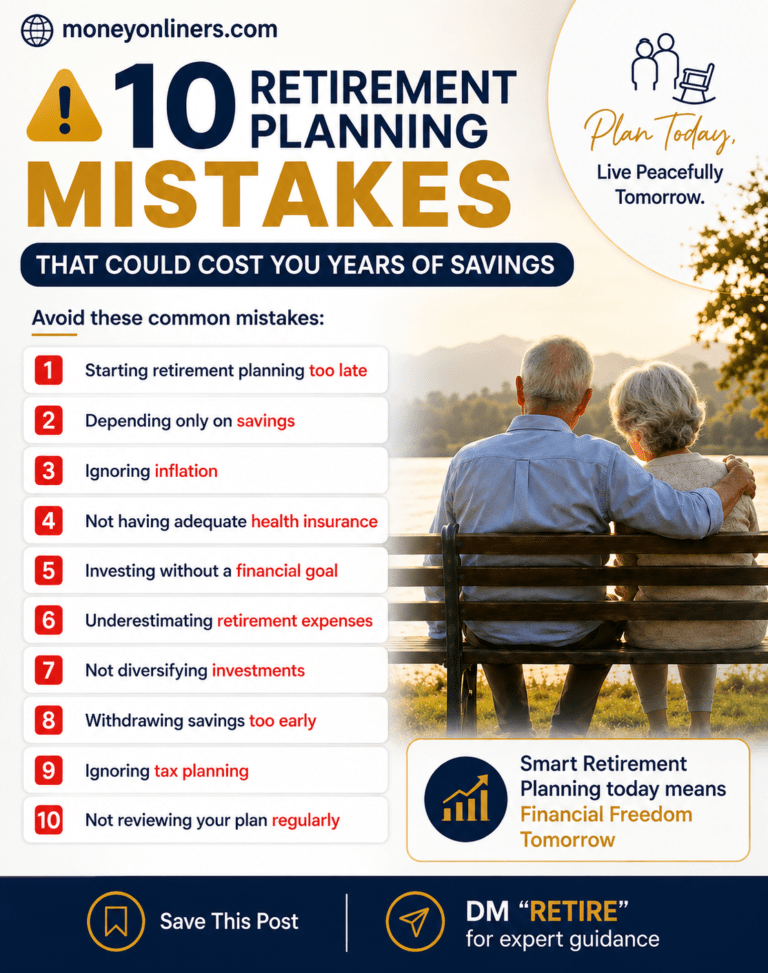
10 Retirement Number Mistakes That Can Make “Enough” Look Misleading
1. Using Salary Instead of Retirement Spending
Your retirement target should reflect the amount you actually expect to spend.
2. Ignoring Other Retirement Income
Pensions and other dependable income may reduce portfolio needs.
3. Forgetting Taxes
Gross income may not equal spendable income.
4. Forgetting Healthcare
Medical costs can materially increase annual spending.
5. Assuming the Mortgage Is the Only Housing Cost
Repairs, insurance, taxes and maintenance continue.
6. Ignoring Inflation
A comfortable budget today may not buy the same lifestyle decades from now.
7. Assuming 4% Is Guaranteed
No fixed withdrawal rate guarantees success.
8. Using Unrealistically High Investment Returns
Optimistic projections can make an underfunded plan appear stronger than it is.
9. Ignoring Retirement Length
A 50-year retirement creates different risks from a shorter retirement.
10. Having No Spending Flexibility
A plan with no room to adjust can be more vulnerable during difficult markets.
No investment, annuity, trading system, cryptocurrency or withdrawal formula can guarantee a comfortable retirement. Be cautious of anyone promising guaranteed wealth or guaranteed lifetime portfolio success.
Retirement Number Checklist
- I know my estimated annual retirement spending.
- I have separated essential and discretionary expenses.
- I know my expected pension and other reliable income.
- I know my Retirement Comfort Gap.
- I have included housing costs.
- I have included healthcare.
- I have considered taxes.
- I have considered inflation.
- I have estimated how long retirement may last.
- I understand investment returns are uncertain.
- I have compared several withdrawal assumptions.
- I have emergency reserves.
- I understand sequence-of-returns risk.
- I have considered spending flexibility.
- I review the calculation as circumstances change.
Why Knowing How Much Money You Need to Retire Comfortably Matters
1. A retirement target turns a vague goal into something measurable.
2. Knowing expected spending helps you avoid copying somebody else's retirement number.
3. Reliable pension income can reduce the amount investments need to provide.
4. Housing choices can materially change annual retirement spending.
5. Healthcare can raise the amount needed beyond a basic lifestyle budget.
6. Taxes can make gross portfolio withdrawals different from spendable income.
7. Inflation means today's retirement budget may not maintain the same purchasing power forever.
8. A longer retirement can require additional planning margin.
9. Early retirees may need their assets to last considerably longer.
10. Comparing several withdrawal assumptions shows how sensitive retirement numbers can be.
11. Emergency savings can reduce the need to sell investments for every unexpected expense.
12. Diversification can reduce dependence on one investment or sector.
13. Spending flexibility can help a plan respond to difficult markets.
14. Retirement income planning should consider both portfolio and non-portfolio resources.
15. A million-dollar portfolio is not automatically enough for every household.
16. A portfolio below $1 million is not automatically inadequate when spending is modest and other income is strong.
17. Retirement comfort depends on lifestyle as much as net worth.
18. Regular reviews allow the plan to adapt when markets, health or family circumstances change.
19. A range of retirement targets is usually more useful than one supposedly perfect number.
20. Ultimately, understanding how much money do you need to retire comfortably helps you connect savings and investments to the life those assets are actually intended to support.
Continue Learning on MoneyOnliners
Recommended External Resources
Consumer Financial Protection Bureau — Retirement Planning
Planning for Retirement — CFPB
Investor.gov — Retirement Estimate Tool
Ballpark Retirement Estimate — Investor.gov
Morningstar — Retirement Income Research
Retirement-Income Research — Morningstar
Investor.gov — Introduction to Investing
Introduction to Investing — Investor.gov
MoneyOnliners provides general educational information and does not provide individualized retirement, investment, tax, insurance, legal or financial advice. Withdrawal-rate calculations are hypothetical planning illustrations rather than guaranteed portfolio outcomes. Investments can lose value, retirement expenses can change and personal circumstances differ substantially.
Frequently Asked Questions
How much money do you need to retire comfortably?
There is no universal amount.
Begin with your expected annual retirement spending.
Then subtract reliable income.
The remaining amount is what your investment portfolio may need to provide.
Taxes, healthcare and inflation should also be included.
Is $500,000 enough to retire?
It can be for some households.
At a 4% illustration, $500,000 corresponds to approximately $20,000 of first-year portfolio withdrawals.
Pensions and other reliable income may increase total available resources.
However, higher-spending households may require substantially more.
There is no guaranteed answer.
Is $1 million enough to retire comfortably?
Potentially.
At 4%, $1 million corresponds to approximately $40,000 of first-year portfolio withdrawals.
At 3.5%, the illustration is $35,000.
Other retirement income can make the portfolio go further.
Your real spending determines whether that feels comfortable.
Is $2 million enough to retire?
For many households it may provide substantial financial resources.
At 4%, the first-year illustration is $80,000.
At 3.5%, it is $70,000.
However, high spending can make even a large portfolio insufficient.
Taxes and healthcare also matter.
How much do I need for $50,000 a year?
If the entire $50,000 must come from investments, the 4% illustration gives $1.25 million.
At 3.5%, it is approximately $1.43 million.
At 3%, it is approximately $1.67 million.
Reliable income can reduce those portfolio targets.
These are not guarantees.
How much do I need for $60,000 a year?
At 4%, approximately $1.5 million.
At 3.5%, approximately $1.71 million.
At 3%, approximately $2 million.
Those figures assume the entire $60,000 comes from the portfolio.
Pension income can reduce the requirement.
How much do I need for $80,000 per year?
At a 4% illustration, approximately $2 million.
At 3.5%, approximately $2.29 million.
At 3%, approximately $2.67 million.
Taxes can increase gross income needs.
Other dependable income can reduce them.
How much do I need for $100,000 a year?
At 4%, approximately $2.5 million.
At 3.5%, approximately $2.86 million.
At 3%, approximately $3.33 million.
These are mathematical illustrations.
Actual retirement planning requires more detail.
Should I use the 4% rule?
It can be useful as a starting reference.
It is not guaranteed.
Retirement length matters.
Portfolio allocation matters.
Inflation and spending flexibility matter too.
Should I use 3.5% instead?
A lower starting assumption creates a larger portfolio target.
That may provide additional planning margin.
However, no percentage is automatically correct for everyone.
Personal circumstances matter.
Compare several scenarios.
Does a pension reduce how much I need?
Yes, potentially.
A dependable pension can cover part of your annual expenses.
That reduces the amount your investment portfolio needs to provide.
Use after-tax values where appropriate.
Also consider inflation protection.
Should healthcare be included?
Yes.
Healthcare can become a major retirement expense.
Insurance premiums can change.
Medical needs can increase.
Include realistic healthcare costs directly in the budget.
Does paying off my mortgage mean I need much less?
Potentially.
Removing a mortgage payment can reduce annual spending materially.
However, homeownership still has costs.
Property taxes, insurance and repairs remain.
Include those costs in the calculation.
How important is inflation?
Very important.
Retirement can last several decades.
Prices can rise substantially during that period.
Your spending strategy should consider purchasing power.
Nominal dollars alone can be misleading.
What if I retire early?
An early retirement can create a much longer withdrawal horizon.
That increases exposure to market and inflation risk.
Healthcare planning may also become more important.
More conservative stress testing can be useful.
Flexibility becomes especially valuable.
Research Methodology
This MoneyOnliners guide evaluates how much money do you need to retire comfortably by starting with annual spending rather than using one universal portfolio target.
Reliable retirement income is subtracted from expected spending because an investment portfolio may not need to fund the entire household budget.
Multiple withdrawal assumptions are compared because no single percentage guarantees that a retirement portfolio will last.
Current retirement-income research is considered when discussing withdrawal-rate uncertainty, but this article does not present any research estimate as universally appropriate.
Housing is treated separately because it can represent one of the largest retirement expenses.
Healthcare is included because costs may increase materially with age and differ substantially between countries.
Taxes are included because gross retirement income may differ from spendable income.
Inflation is included because future purchasing power matters over a retirement that may span decades.
Retirement length is considered because an early retiree may require assets to last substantially longer than someone retiring later.
The MoneyOnliners Retirement Comfort Gap and Retirement Comfort Scorecard are original editorial frameworks designed to make retirement-number calculations more practical and easier to understand.
All calculations and household examples are hypothetical educational illustrations.
No withdrawal rate, investment return, retirement date or portfolio outcome is guaranteed.
Conclusion: Your Comfortable Retirement Number Is Personal
There is no universal answer to how much money do you need to retire comfortably.
$500,000 can be enough for one household.
It can be inadequate for another.
The same is true of $1 million.
And even $2 million.
Start With Your Lifestyle
Estimate what retirement will realistically cost.
Subtract Reliable Income
Pensions and other dependable sources reduce the amount your portfolio must provide.
Calculate the Gap
That is your MoneyOnliners Retirement Comfort Gap.
Compare Several Portfolio Scenarios
Do not rely on one withdrawal percentage.
Add the Expenses People Forget
Healthcare.
Taxes.
Housing repairs.
Insurance.
Inflation.
Unexpected expenses.
Then Add Flexibility
A strong retirement plan can adjust when markets or life do not follow the spreadsheet.