How Long Does It Take to Reach Financial Independence? 7 Factors That Matter
How Long Does It Take to Reach Financial Independence? 7 Factors That Matter
There is no universal number of years required to reach financial independence. One household may need 12 years, another 25 years, while someone else may need much longer. Your timeline depends on how much you earn, how much you keep, what lifestyle you want to fund, how much you already have invested and how your assets perform over time.
There is no fixed answer to how long does it take to reach financial independence. For many people, the process can take decades, while high savings rates, strong income growth, low expenses and substantial existing investments can shorten the timeline. The seven biggest factors are your savings rate, income, annual spending, starting assets, investment returns, debt and changes in lifestyle or family costs. Instead of chasing one exact date, build a realistic range and update it as your finances change.
Table of Contents
Is There a Typical Financial Independence Timeline?
Not really.
Two people can begin on the same day and reach financial independence years apart.
That is because the journey is determined by several variables operating at the same time.
Someone May Reach Financial Independence Faster If They:
- Save a large percentage of income.
- Already have significant investments.
- Earn substantially more than they spend.
- Keep housing and transportation costs manageable.
- Increase income throughout their career.
- Invest consistently for many years.
Someone May Need Longer If They:
- Have little room between income and expenses.
- Carry expensive debt.
- Start with no savings.
- Begin investing later.
- Have large family obligations.
- Expect a high-spending retirement lifestyle.
1. Your Savings Rate Can Have a Huge Effect
Savings rate measures how much of your available income you keep for future goals instead of spending.
Simple Example
You bring home $5,000 per month.
You save and invest $1,000.
Savings rate = $1,000 ÷ $5,000 = 20%
Another household earns the same amount but invests $2,000.
Savings rate = 40%
The second household contributes twice as much while also living on a lower annual spending level.
That combination can materially reduce the time required to reach financial independence.
Why Savings Rate Works From Two Directions
You Build Assets Faster
More money goes into savings and investments.
You May Need a Smaller Portfolio
If your lifestyle costs less, the amount your future assets must support can also be lower.
Do not chase a 50%, 60% or 70% savings rate simply because someone online does it. The strongest rate is one that is meaningful, realistic and sustainable for your household.

2. Your Income Can Speed Up or Slow Down the Journey
A higher income does not automatically create financial independence.
However, it can make larger savings contributions possible.
Example
Household A brings home $4,000 monthly and spends $3,500.
Potential surplus = $500
Household B brings home $7,000 and spends $4,500.
Potential surplus = $2,500
Household B has five times as much monthly financial capacity.
Therefore, income growth can dramatically shorten a financial-independence timeline if spending does not rise just as quickly.
Ways Income Can Grow
Career Advancement
Build skills that qualify you for higher-paying positions.
Salary Negotiation
Research compensation and document the value you provide.
Job Changes
Changing employers can sometimes create stronger income growth.
Freelancing
Turn an existing skill into additional income.
Side Hustles
Use extra income to increase saving and investing.
Business
A profitable business can potentially create larger income upside.
3. Your Annual Expenses Determine the Size of the Goal
Financial independence depends heavily on how much money your future lifestyle requires.
25× Planning Illustration
| Annual Portfolio Spending | Illustrative 25× Target |
|---|---|
| $30,000 | $750,000 |
| $40,000 | $1,000,000 |
| $50,000 | $1,250,000 |
| $60,000 | $1,500,000 |
| $80,000 | $2,000,000 |
| $100,000 | $2,500,000 |
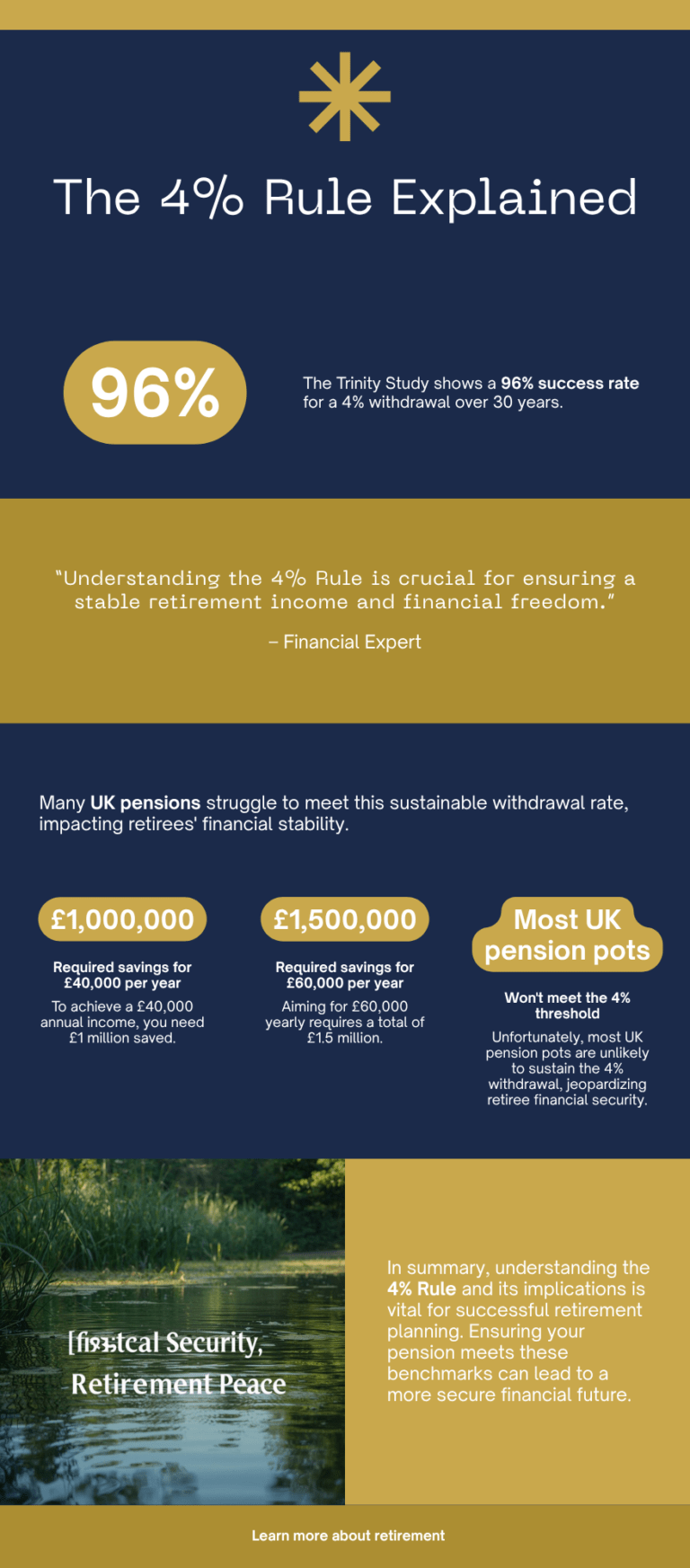
The difference between a $40,000 lifestyle and an $80,000 lifestyle is approximately $1 million under the simple 25× illustration.
The 25× shortcut is connected to a 4% starting withdrawal assumption and does not guarantee portfolio sustainability.
Focus on Major Expenses
- Housing
- Transportation
- Insurance
- Debt payments
- Healthcare
- Food
Reduce expenses that provide little value, but do not design a financial-independence lifestyle you would dislike living for decades.
4. Your Starting Assets Can Change the Timeline Dramatically
Someone starting with $0 has a very different journey from someone who already has $250,000 invested.
Example
Two people both want a $1 million portfolio.
| Person | Starting Investments | Amount Remaining to $1 Million |
|---|---|---|
| A | $0 | $1,000,000 |
| B | $250,000 | $750,000 |
More importantly, Person B already has a larger asset base capable of participating in future market growth.
Starting Earlier Can Help
A person who invests consistently from age 25 may have decades of potential compounding before retirement.
Someone starting at 50 can still build significant wealth, but higher contributions or a later target date may become more important.

5. Investment Returns Matter—but You Cannot Control Them
Investment growth can accelerate wealth building.
However, returns are uncertain.
Why Return Assumptions Matter
A financial projection assuming 10% annual growth will produce a much shorter timeline than one assuming 5%.
That does not mean the 10% projection is more realistic.
Markets Can Produce
- Strong positive years
- Small gains
- Flat periods
- Major declines
Therefore, a projected FIRE date should not be based on one perfect return every year.
Do not take excessive investment risk simply because a spreadsheet shows that a higher expected return would let you retire sooner.
Control What You Can
You cannot determine next year's stock-market return.
You have more control over:
- How much you contribute
- Investment fees
- Diversification
- Debt costs
- Your savings rate
- Your income development
6. Debt Can Add Years to the Journey
High-interest debt can work directly against wealth accumulation.
Example
You spend $600 every month servicing expensive consumer debt.
$600 × 12 = $7,200 annually
Once the debt is eliminated, part or all of that cash may become available for saving and investing.
Debt Can Slow Financial Independence Because It:
- Reduces monthly surplus
- Creates interest costs
- Raises required monthly expenses
- Reduces financial flexibility
Not All Debt Is Identical
A low-rate mortgage and a high-rate credit-card balance may deserve different treatment.
Consider interest rates, liquidity, taxes and financial risk.
Eliminating expensive debt can simultaneously reduce required expenses and increase money available for future assets.
7. Lifestyle and Family Changes Can Move the Finish Line
Your financial life at 30 may look very different at 50.
Expenses Can Rise Because of:
- Children
- Housing changes
- Caregiving responsibilities
- Healthcare
- Education
- Travel goals
- Inflation
Expenses Can Also Fall
A mortgage may be paid off.
Children may become financially independent.
A household may relocate to a lower-cost area.
Income Can Change Too
Career growth may accelerate the plan.
Job loss or a career break may slow it.
Your estimated financial-independence date should be reviewed whenever your income, family, housing or spending changes materially.

Example Financial Independence Timelines
The examples below are intentionally simplified.
They are not predictions.
Example A: Lower Savings Capacity
Take-home income: $4,000 per month.
Expenses: $3,500.
Available surplus: $500 per month.
Starting investments: $10,000.
This household may require a long accumulation period unless income rises, expenses fall or both.
Example B: Stronger Savings Rate
Take-home income: $5,500 per month.
Expenses: $3,500.
Potential surplus: $2,000 per month.
Starting investments: $50,000.
This household has substantially more contribution capacity and a larger starting asset base.
Example C: High Income but High Lifestyle Costs
Take-home income: $10,000 per month.
Expenses: $9,000.
Potential surplus: $1,000 per month.
Despite earning much more, this household may build wealth more slowly than expected because the lifestyle absorbs most income.
Example D: Income Growth Changes Everything
A household initially saves $500 per month.
After several years, career growth increases take-home income by $1,500 monthly.
They direct $1,000 of the increase toward investments.
New monthly contribution = $1,500
Annual contributions rise from $6,000 to $18,000.
Key lesson: Future income growth can matter more than today's starting salary.
How Savings Rate Can Change the Journey
| Take-Home Income | Savings Rate | Annual Amount Saved |
|---|---|---|
| $60,000 | 10% | $6,000 |
| $60,000 | 20% | $12,000 |
| $60,000 | 30% | $18,000 |
| $60,000 | 40% | $24,000 |
| $60,000 | 50% | $30,000 |
The difference between saving 10% and 40% in this example is $18,000 each year.
Over 20 years, that represents $360,000 in additional contributions before investment returns.
This does not mean every household should or can save 40%. Essential living costs and income levels vary significantly.
Why the First $100,000 Can Feel So Slow
During the early years of investing, your own contributions usually create most of the portfolio growth.
Later, investment gains can become much larger in dollar terms because the asset base is larger.
Hypothetical 7% Illustration
| Portfolio | 7% Illustration |
|---|---|
| $10,000 | $700 |
| $50,000 | $3,500 |
| $100,000 | $7,000 |
| $250,000 | $17,500 |
| $500,000 | $35,000 |
Investment markets do not provide fixed 7% returns every year. Returns can be positive or negative.
7 Ways to Potentially Reach Financial Independence Faster
1. Increase Your Income
Career development can create more investable surplus.
2. Increase Savings Gradually
Raise contributions when income increases.
3. Reduce Expensive Debt
Free cash flow that is currently going toward interest.
4. Control Major Recurring Expenses
Housing and transportation can have a large effect.
5. Start Investing Earlier
More time can increase the potential impact of compounding.
6. Avoid Lifestyle Inflation
Do not automatically spend every raise.
7. Keep the FI Lifestyle Realistic
A sustainable lower spending target can reduce the portfolio required.
Try to improve several variables gradually instead of relying on one extreme strategy.
You Can Become More Financially Independent Before Reaching 100%
Financial independence does not have to happen in one moment.
Milestone 1: Emergency Security
You can handle small emergencies without borrowing.
Milestone 2: Several Months of Expenses
Job loss becomes less immediately dangerous.
Milestone 3: Investments Cover One Month of Annual Spending
Part of your life is effectively supported by assets.
Milestone 4: Coast FIRE
Existing assets may have enough time to potentially grow toward a later retirement target.
Milestone 5: 25% Financial Independence
A meaningful portion of annual spending can potentially be supported without full-time employment.
Milestone 6: 50% Financial Independence
Half of required spending is potentially supported by assets and other reliable resources.
Milestone 7: Full Financial Independence
Your financial resources can support most or all of your planned lifestyle.
Can You Reach Financial Independence Faster With Passive Income?
Potentially.
However, passive income should be evaluated carefully.
Possible Sources Include
- Investment income
- Rental cash flow
- Digital products
- Royalties
- Business distributions
Use realistic net income.
For example, gross rental income should be reduced by vacancies, repairs, insurance, taxes and financing costs.
Business income, rental cash flow and investments can all change.
10 Financial Independence Timeline Mistakes to Avoid
1. Expecting One Exact FIRE Date
Investment returns and life events are uncertain.
2. Assuming Your Income Never Changes
Career growth can accelerate the journey.
3. Assuming Your Spending Never Changes
Family and lifestyle costs evolve.
4. Using Unrealistically High Investment Returns
Optimistic assumptions can create false confidence.
5. Ignoring Taxes
Taxes can affect both contributions and future withdrawals.
6. Ignoring Healthcare
Healthcare can become a major long-term expense.
7. Ignoring High-Interest Debt
Interest can reduce saving and investing capacity.
8. Comparing Your Timeline With High Earners
Different income and expenses create different paths.
9. Sacrificing Everything to Retire a Few Years Earlier
A financial plan should support life rather than make life unbearable.
10. Ignoring Partial Financial Independence
More savings and assets can create valuable freedom long before full FIRE.
Be skeptical of anyone promising a guaranteed financial-independence date through one investment, trading system, cryptocurrency or passive-income opportunity.
Financial Independence Timeline Checklist
- I know my annual spending.
- I know my current savings rate.
- I know my monthly investment contribution.
- I know my current invested assets.
- I understand my debt interest rates.
- I have considered income growth.
- I have considered housing costs.
- I understand investment returns are uncertain.
- I have considered taxes.
- I have considered healthcare.
- I have considered inflation.
- I know my approximate FI target.
- I compare more than one scenario.
- I review the timeline when life changes.
- I track partial independence milestones too.
Continue Learning on MoneyOnliners
Recommended External Resources
Investor.gov — Introduction to Investing
Introduction to Investing — Investor.gov
Investor.gov — Compound Interest Calculator
Compound Interest Calculator — Investor.gov
Investor.gov — Diversification
Diversify Your Investments — Investor.gov
Consumer Financial Protection Bureau — Consumer Tools
Consumer Financial Tools — CFPB
This article provides general educational information and is not individualized financial, investment, retirement, tax, insurance or legal advice. Financial-independence timelines are highly uncertain because income, expenses, investment returns, taxes, inflation and personal circumstances change over time. All calculations and examples are hypothetical illustrations rather than guaranteed outcomes.
Frequently Asked Questions
How long does it take to reach financial independence?
There is no universal timeframe.
Some people may reach it in a decade or two, while others may need several decades.
Can financial independence take 10 years?
Potentially.
That usually requires a strong starting position, high savings capacity or substantial income relative to expenses.
Can it take 20 years?
Yes.
A 20-year timeline can be realistic for some households depending on savings, starting assets and investment results.
Can it take 30 years?
Yes.
Many people build financial independence gradually over much of their working lives.
What affects the timeline most?
Savings rate, income, expenses, starting assets, investment returns, debt and lifestyle changes are major factors.
Does a high salary guarantee fast financial independence?
No.
A high earner who spends nearly everything may progress slowly.
Does savings rate matter more than salary?
Both matter.
Savings rate shows how much income becomes available for future assets.
How much should I save for financial independence?
There is no universal percentage.
The best amount is meaningful and sustainable for your household.
Will saving 10% be enough?
Potentially for some long-term retirement goals.
However, the result depends on age, starting assets, investment returns and spending needs.
Will saving 20% make financial independence faster?
Generally, saving more increases investable contributions and can shorten the timeline if other factors remain similar.
Do I need to save 50%?
No.
High savings rates can speed progress, but they are not realistic for every household.
Can increasing income shorten the timeline?
Yes, particularly when part of the additional income is saved or invested.
Can reducing expenses shorten the timeline?
Yes.
Lower expenses can increase current surplus and reduce the future lifestyle amount your assets must support.
Which expenses matter most?
Housing, transportation, debt, healthcare, insurance and food can have significant effects.
Does paying debt help?
Paying high-interest debt can free cash flow and reduce interest expenses.
Does starting earlier matter?
Yes.
Starting earlier provides more time for contributions and potential investment growth.
Can I start at 40?
Yes.
You may need larger contributions, stronger income growth or a later target age.
Can I start at 50?
Yes.
The goal may focus more on retirement security than extremely early FIRE.
Can investment returns speed up financial independence?
Yes, but returns are uncertain.
They should not be treated as guaranteed.
Should I assume 10% returns?
Be cautious with aggressive return assumptions.
Financial projections should include more conservative scenarios as well.
Can passive income shorten the timeline?
Potentially.
Only realistic net income should be included.
Can a side hustle help?
Yes.
Extra income can accelerate debt payoff, saving and investing.
Does Coast FIRE shorten the journey?
Coast FIRE changes the goal.
You may still need current earned income, but future retirement contributions may become less demanding under your assumptions.
What is partial financial independence?
It means your assets and other reliable resources support part of your lifestyle rather than all of it.
Can I change my FIRE target?
Yes.
Targets should change when income, spending, housing, family or goals change.
Should I update my timeline every year?
An annual review can be useful.
You may also review it after major financial changes.
What if the market falls?
A market decline can temporarily delay progress.
Long-term plans should expect periods of volatility.
What if my income falls?
Your timeline may lengthen.
Emergency savings can help protect investments during temporary income disruptions.
What if my expenses increase?
The portfolio target can rise and monthly contribution capacity can fall.
Can I reach financial independence without retiring early?
Yes.
Financial independence and early retirement are related but not identical.
What is the biggest financial independence timeline mistake?
One major mistake is treating a spreadsheet date as guaranteed while ignoring changes in income, expenses and investment performance.
Research Methodology
This MoneyOnliners guide evaluates how long does it take to reach financial independence using seven major variables: savings rate, income, annual expenses, starting assets, investment returns, debt and changes in lifestyle or family costs.
Savings rate is included because it determines how much current income can be converted into future assets.
Income growth is evaluated separately because increasing earning power can substantially raise contribution capacity without requiring additional spending cuts.
Annual expenses are included because the lifestyle a portfolio must support has a major effect on the eventual financial-independence target.
Starting assets are considered because someone beginning with an existing portfolio has both less capital remaining to accumulate and more money participating in future market returns.
Investment returns are treated as uncertain rather than fixed because markets can produce both gains and losses.
Debt is included because interest payments can reduce monthly financial surplus and increase required living expenses.
Family and lifestyle changes are included because financial-independence plans commonly span decades during which housing, healthcare, income and household responsibilities can change substantially.
The 25× examples are identified as simplified planning illustrations connected to a 4% starting-withdrawal assumption rather than guaranteed retirement targets.
All timelines, investment examples and case studies are hypothetical educational illustrations.
No investment return, FIRE date or financial-independence outcome is guaranteed.
Final Thoughts: Your Financial Independence Timeline Is Built, Not Predicted
There is no perfect answer to how long does it take to reach financial independence.
Your timeline can change every year.
Your Savings Rate Matters
Keeping more income creates more fuel for future assets.
Your Income Matters
Growing earning power can dramatically increase financial capacity.
Your Spending Matters
Lower sustainable expenses can reduce the amount of wealth required.
Your Starting Assets Matter
The more you already have invested, the more capital can participate in future growth.
Investment Returns Matter
But they remain uncertain and largely outside your control.
Debt Matters
High interest can drain money that could otherwise build your future.
Life Changes Matter
Family, housing, healthcare and career decisions can move the target.
Do Not Build Your Life Around One Spreadsheet Date
Build emergency savings.
Reduce expensive debt.
Increase income.
Invest consistently.
Keep major expenses under control.
Measure partial independence.
Update the plan as your circumstances change.
You may discover that financial freedom begins long before your investments can cover 100% of your lifestyle.
When one emergency no longer creates debt, you have gained freedom.
When six months of expenses are saved, you have gained freedom.
When you can leave a bad job without immediate panic, you have gained freedom.
When your assets can support part of your annual spending, you have gained even more.
Ultimately, the financial-independence journey is not about predicting the exact year you will become free.
It is about making each year leave you less financially dependent than the year before.
Similar Posts
FIRE Movement Explained: Is Early Retirement Actually Realistic?
FIRE Movement Explained: Is Early Retirement Actually Realistic? | MoneyOnliners MoneyOnliners • Financial Independence → FIRE FIRE Movement Explained: Is Early Retirement Actually Realistic? The FIRE movement has inspired people to save aggressively, invest consistently and build enough financial resources to reduce their dependence on traditional employment much earlier than normal retirement age. But retiring…
Can You Reach Financial Independence on an Average Income?
Can You Reach Financial Independence on an Average Income? | MoneyOnliners MoneyOnliners • Financial Independence → Everyday Income Can You Reach Financial Independence on an Average Income? Financial independence is often presented through stories about six-figure salaries, extreme savings rates and million-dollar portfolios. That can make ordinary earners feel as though the goal is only…
10 Financial Independence Mistakes That Can Set You Back Years
10 Financial Independence Mistakes That Can Set You Back Years | MoneyOnliners MoneyOnliners • Financial Independence → Mistakes to Avoid 10 Financial Independence Mistakes That Can Set You Back Years Financial independence is usually delayed by ordinary financial decisions rather than one dramatic failure. Lifestyle inflation, expensive debt, weak savings habits, unrealistic investment assumptions and…
Financial Independence: 10 Steps to Take More Control of Your Money and Future
Financial Independence: 10 Steps to Take More Control of Your Money and Future | MoneyOnliners MoneyOnliners • Financial Freedom → Long-Term Planning Financial Independence: 10 Steps to Take More Control of Your Money and Future Financial independence does not have to mean becoming extremely wealthy or retiring unusually early. At its core, it means building…
Lean FIRE vs Fat FIRE vs Coast FIRE Which Path Fits You Best
Lean FIRE vs Fat FIRE vs Coast FIRE: Which Path Fits You Best? | MoneyOnliners MoneyOnliners • Financial Independence → FIRE Strategies Lean FIRE vs Fat FIRE vs Coast FIRE: Which Path Fits You Best? Financial independence does not have one required lifestyle. Lean FIRE aims for a lower-cost version of independence, Fat FIRE targets…
The 4% Rule Explained: Can It Really Help You Reach Financial Independence?
The 4% Rule Explained: Can It Really Help You Reach Financial Independence? | MoneyOnliners MoneyOnliners • Financial Independence → Retirement Planning The 4% Rule Explained: Can It Really Help You Reach Financial Independence? The 4% rule is one of the best-known retirement and financial-independence planning guidelines. It can help turn annual spending into an estimated…