10 Financial Independence Mistakes That Can Set You Back Years
10 Financial Independence Mistakes That Can Set You Back Years
Financial independence is usually delayed by ordinary financial decisions rather than one dramatic failure. Lifestyle inflation, expensive debt, weak savings habits, unrealistic investment assumptions and poorly planned FIRE targets can quietly add years to the journey. Understanding these mistakes early can protect both your money and your time.
The biggest financial independence mistakes include allowing expenses to rise with every pay increase, carrying high-interest debt, failing to build emergency savings, saving too little, ignoring income growth, chasing unrealistic investment returns, using an unrealistic FIRE number, investing without diversification, depending on one income source and treating financial independence as all-or-nothing. Any one of these mistakes can slow progress. Several happening together can add many years to the journey.
Table of Contents
Why Financial Independence Mistakes Can Cost You Years
Financial independence is a long-term mathematical process.
You earn money.
You spend part of it.
You save and invest the difference.
Over time, assets may grow and eventually support part or all of your lifestyle.
Anything that reduces your savings rate, raises your required lifestyle spending or causes large financial losses can extend the journey.
10 Financial Independence Mistakes at a Glance
| # | Mistake | Main Damage | Better Approach |
|---|---|---|---|
| 1 | Lifestyle inflation | Raises future FI target | Save part of every raise |
| 2 | High-interest debt | Consumes cash flow | Prioritize expensive balances |
| 3 | No emergency fund | Forces borrowing or asset sales | Build accessible reserves |
| 4 | Saving too little | Slows asset growth | Increase savings sustainably |
| 5 | Ignoring income growth | Limits future contributions | Build earning power |
| 6 | Chasing high returns | Raises loss risk | Use realistic assumptions |
| 7 | Bad FIRE target | Creates false finish line | Include taxes, healthcare and real spending |
| 8 | Poor diversification | Concentration risk | Spread investment exposure |
| 9 | One income source | Financial fragility | Build reserves and optional income |
| 10 | All-or-nothing thinking | Ignores meaningful progress | Track partial independence |
1. Letting Lifestyle Inflation Absorb Every Raise
Lifestyle inflation occurs when spending increases as income increases.
Some increase is natural.
The problem begins when every raise immediately becomes a larger car payment, more expensive housing, more subscriptions and higher discretionary spending.
Example
You receive a $500 monthly increase in take-home income.
If the entire $500 becomes new spending:
Additional annual spending = $6,000
Under a simple 25× FI illustration:
$6,000 × 25 = $150,000
So the lifestyle increase may not only reduce today's savings.
It can also increase your eventual FI target by approximately $150,000 under that simplified framework.
When income rises, allow some lifestyle improvement while automatically directing part of the raise toward debt reduction, savings and investing.

2. Carrying High-Interest Debt for Years
Expensive debt can become one of the strongest forces working against financial independence.
Example
Suppose high-interest debt requires $500 per month.
$500 × 12 = $6,000 per year
That money cannot simultaneously build emergency savings, investment assets or other financial goals.
Interest Makes the Problem Worse
When interest rates are high, the balance can remain expensive even while regular payments are being made.
Debt Can Delay FI in Three Ways
- It reduces current savings capacity.
- It increases monthly required expenses.
- It creates guaranteed interest costs.
3. Investing Aggressively Without Emergency Savings
Investing is important for long-term asset growth.
However, investing every available dollar while keeping no accessible emergency reserve can create financial fragility.
Imagine This
You invest nearly all available cash.
The stock market falls.
Then your car requires an urgent repair.
You may be forced to:
- Use expensive credit
- Sell investments during a decline
- Miss other important payments
Emergency Savings Serve a Different Purpose
Investments are designed primarily for long-term growth.
Emergency savings prioritize accessibility and stability.
Build enough liquid reserves for your circumstances so ordinary emergencies do not repeatedly interrupt long-term investing.

4. Saving Too Little for Too Long
Small contributions are far better than no contributions.
However, a savings rate that never increases even as income rises can slow the journey considerably.
Example
You save $300 monthly.
$300 × 12 = $3,600 per year
Later, your income increases substantially.
If your contribution remains at $300 for another decade while lifestyle spending absorbs every raise, you may lose a large opportunity to accelerate wealth building.
Increase Contributions Gradually
One practical approach is to increase saving whenever income rises.
For example:
- Start at $300 per month.
- Increase to $400 after a raise.
- Increase to $500 after debt is repaid.
- Increase again when income grows.
A sustainable savings rate that gradually rises can be more powerful than an extreme rate you cannot maintain.
5. Focusing Only on Cutting Expenses While Ignoring Income Growth
Frugality receives enormous attention in FIRE discussions.
However, there is a limit to how much you can cut.
Income has more potential upside.
Example
You reduce spending by $150 per month.
$150 × 12 = $1,800 per year
That is useful.
However, building a higher-value skill might eventually increase take-home income by $800 per month.
$800 × 12 = $9,600 per year
If part of that increase becomes invested, the impact can be substantially larger.
Ways to Improve Earning Power
- Professional certifications
- Digital skills
- Job changes
- Negotiating compensation
- Freelancing
- Side businesses

6. Chasing Unrealistically High Investment Returns
A spreadsheet can make financial independence look much faster if you assume higher investment returns.
That does not make the assumption realistic.
Why People Chase Returns
Suppose your timeline looks too long using moderate return assumptions.
It can be tempting to solve the problem by choosing investments promising 15%, 20% or even higher returns.
That usually means taking substantially more risk.
Higher Expected Return Often Means Higher Risk
- More volatile investments
- Concentrated positions
- Speculation
- Leverage
- Unproven assets
If your FI timeline is too long, safer levers may include increasing contributions, earning more, reducing major expenses or extending the timeline.
7. Using an Unrealistic FIRE Number
A financial-independence number can create false confidence if important expenses are missing.
Commonly Forgotten Costs
- Taxes
- Healthcare
- Insurance
- Home maintenance
- Vehicle replacement
- Travel
- Family support
- Inflation
- Irregular major expenses
Example
You estimate annual expenses at $40,000.
Using 25×:
$40,000 × 25 = $1,000,000
Later you realize $8,000 of realistic annual healthcare, taxes and irregular costs were excluded.
New annual spending:
$48,000
New 25× illustration:
$48,000 × 25 = $1,200,000
Your initial plan understated the target by $200,000.
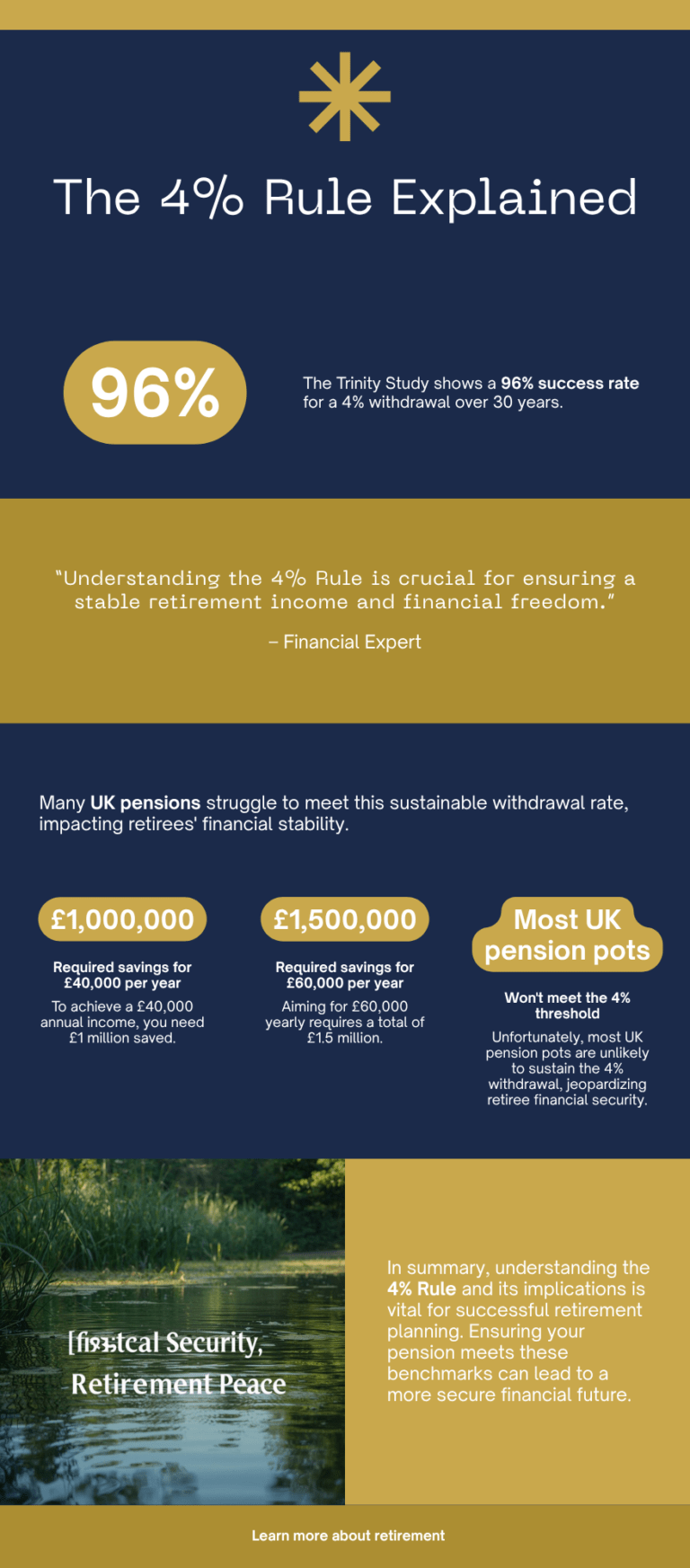
The 25× rule itself is only a planning shortcut tied to a 4% starting-withdrawal assumption. It is not a guarantee of long-term portfolio sustainability.
8. Putting Too Much Money Into One Investment
Concentration can make wealth grow quickly when the investment performs well.
It can also destroy years of progress when the investment performs badly.
Examples of Concentration Risk
- Most retirement savings in one stock
- Most net worth in one speculative asset
- Heavy exposure to one industry
- One rental property with no other assets
- One cryptocurrency representing most investments
Diversification Does Not Eliminate Risk
Markets can still fall.
However, diversification can reduce dependence on the success of one asset.
Build an investment strategy that matches your goals, timeframe and tolerance for risk rather than depending on one winner.

9. Depending Completely on One Income Source
A stable salary can be powerful.
However, total dependence on one employer can create vulnerability.
A Job Loss Can Affect
- Monthly cash flow
- Investment contributions
- Debt payments
- Health insurance in some countries
- Emergency savings
You Do Not Need Ten Income Streams
Building financial resilience does not require collecting every possible side hustle.
A stronger approach can include:
- Emergency savings
- Valuable job skills
- A professional network
- Optional freelance income
- Investments
- A small side business where appropriate
The goal is not maximum complexity. The goal is making sure one income disruption does not immediately become a financial crisis.
10. Treating Financial Independence as All-or-Nothing
This mistake can damage motivation and lead to poor decisions.
You may believe you have achieved nothing until investments cover 100% of your lifestyle.
That is not true.
Financial Independence Can Happen in Stages
- Starter emergency fund
- One month of expenses saved
- High-interest debt eliminated
- $10,000 invested
- $50,000 invested
- $100,000 invested
- Coast FIRE
- Assets cover 25% of expenses
- Assets cover 50% of expenses
- Work becomes partially optional
- Full financial independence
MoneyOnliners Original Analysis: Which Mistakes Can Do the Most Damage?
| Mistake | Cash-Flow Damage | Raises FI Target | Capital-Loss Risk | Overall Concern |
|---|---|---|---|---|
| Lifestyle inflation | High | High | Low | Very High |
| High-interest debt | High | Moderate | Low | Very High |
| No emergency fund | Moderate | Low | Moderate | High |
| Saving too little | High | Low | Low | High |
| Ignoring income growth | Moderate | Low | Low | High |
| Chasing returns | Low | Low | Very High | Very High |
| Bad FIRE target | Low | Very High | Moderate | Very High |
| Poor diversification | Low | Low | Very High | Very High |
| One income source | Very High during disruption | Low | Low | High |
| All-or-nothing thinking | Indirect | Low | Indirect | Moderate |
The table is a MoneyOnliners editorial framework rather than a statistical ranking.
Its purpose is to show that lifestyle inflation, expensive debt, unrealistic FIRE assumptions and excessive investment risk can affect more than one part of the financial-independence equation.
The most dangerous FI mistakes are often the ones that simultaneously reduce monthly savings, increase future spending needs or expose existing capital to unnecessary loss.
MoneyOnliners Research-Based Evidence Note
This article is a research-based financial education guide.
MoneyOnliners is not claiming first-hand personal experience with every financial scenario described.
The numerical examples are independently prepared educational illustrations designed to show how debt payments, lifestyle inflation, savings rates and portfolio targets can interact.
Where MoneyOnliners has direct website-building, budgeting-content or financial-education publishing experience, that practical editorial experience helps shape how examples are explained. However, hypothetical household outcomes are never presented as personal results or testimonials.
Real-Life Example: Lifestyle Inflation Delays the Goal
A fictional professional earns $60,000 in take-home income.
Annual spending is $40,000.
Potential savings:
$20,000 per year
Several years later, income rises to $80,000.
Instead of increasing savings substantially, annual spending rises to $60,000.
Savings remain $20,000.
What Changed?
The person earns $20,000 more.
However, annual investable surplus did not improve.
Meanwhile, the future lifestyle target increased.
25× Illustration
$40,000 × 25 = $1,000,000
versus:
$60,000 × 25 = $1,500,000
The target increased by $500,000.
Key lesson: Earning more does not automatically shorten the FI journey if every dollar of higher income becomes permanent spending.
Mini Case Study: High-Interest Debt vs Investing
A fictional household has $12,000 of high-interest credit-card debt.
The card charges 22% annually.
At the same time, the household wants to invest aggressively because it feels behind on retirement.
The Problem
The debt carries a very high guaranteed cost.
Investment returns are uncertain.
Therefore, adding significant investment risk while carrying expensive debt may weaken the household's overall financial position.
Better Sequence
- Maintain an appropriate starter emergency reserve.
- Capture valuable employer retirement benefits where applicable.
- Prioritize very expensive debt.
- Increase investing as cash flow improves.
Key lesson: Financial independence is not only about maximizing investments. It is about improving the entire financial system.
How to Recover if You Have Made Several of These Mistakes
| Step | Action |
|---|---|
| 1 | Calculate real monthly income and spending |
| 2 | List all debt balances and interest rates |
| 3 | Build appropriate emergency savings |
| 4 | Prioritize expensive debt |
| 5 | Set a sustainable savings target |
| 6 | Increase contributions when income rises |
| 7 | Improve earning power |
| 8 | Use diversified investments appropriate to your circumstances |
| 9 | Recalculate your FI target realistically |
| 10 | Track partial independence milestones |
Financial Independence Mistakes Checklist
- I know my real annual spending.
- I know my savings rate.
- I have emergency savings.
- I know my debt interest rates.
- I have a plan for high-interest debt.
- I save part of future raises.
- I work on increasing earning power.
- I do not chase unrealistic investment returns.
- I understand diversification.
- I include taxes and healthcare in long-term planning.
- I understand that 25× is only a planning shortcut.
- I avoid depending entirely on one fragile income source.
- I track partial financial independence.
- I review my FIRE number when circumstances change.
- I measure progress over years rather than weeks.
Continue Learning on MoneyOnliners
Recommended External Resources
Investor.gov — Introduction to Investing
Introduction to Investing — Investor.gov
Investor.gov — Diversification
Diversify Your Investments — Investor.gov
Investor.gov — Understanding Investment Risk
Consumer Financial Protection Bureau — Consumer Tools
Consumer Financial Tools — CFPB
Federal Trade Commission — Scam Guidance
Scams — Federal Trade Commission
This article provides general educational information and is not individualized financial, investment, retirement, tax, insurance or legal advice. Financial-independence calculations are hypothetical planning illustrations. Investments can lose value, debt costs vary, taxes can change, income can fall and household expenses can change substantially over time.
Frequently Asked Questions
What are the biggest financial independence mistakes?
Major mistakes include lifestyle inflation, carrying expensive debt, failing to build emergency savings, saving too little and chasing unrealistic investment returns.
Can financial mistakes delay FIRE by years?
Yes.
Lower savings, higher lifestyle costs or large investment losses can materially extend the journey.
Is lifestyle inflation really that dangerous?
It can be.
Permanent spending increases reduce current savings and increase the amount future assets need to support.
Should I never improve my lifestyle?
No.
The goal is intentional improvement rather than automatically spending every raise.
Does high-interest debt delay financial independence?
Yes.
It can reduce savings capacity and create substantial interest costs.
Should I invest while paying debt?
The right balance depends on the interest rate, employer benefits, emergency savings, taxes and your personal circumstances.
Is emergency savings really necessary?
Emergency savings can protect long-term investments from short-term financial shocks.
How much should I save?
There is no universal savings rate.
Choose a meaningful amount that is sustainable and increase it when circumstances allow.
Can saving too little delay FIRE?
Yes.
Lower contributions generally slow asset accumulation.
Should I focus on earning more or spending less?
Both can help.
Expense control creates immediate surplus while income growth increases future capacity.
What is lifestyle inflation?
Lifestyle inflation occurs when expenses rise alongside income.
Can a higher salary still leave me far from financial independence?
Yes.
If spending rises just as quickly, the savings gap may remain small.
Should I assume high investment returns to reach FIRE faster?
No.
Aggressive assumptions can create false confidence and encourage unnecessary risk.
Does diversification matter for FIRE?
Yes.
Diversification can reduce dependence on the success of one investment.
Can diversification prevent all losses?
No.
Diversified portfolios can still decline.
What is a FIRE number?
It is an estimated amount of assets required to support your planned financial-independence lifestyle.
Is the 25× rule guaranteed?
No.
It is a simplified planning shortcut connected to a 4% starting-withdrawal assumption.
What expenses should be included in a FIRE number?
Include normal living expenses plus taxes, healthcare, insurance, housing maintenance and realistic irregular expenses.
Does inflation affect financial independence?
Yes.
Future living costs can rise substantially.
Can I rely on one job forever?
You can build substantial wealth through one job, but emergency reserves and transferable skills can reduce the risk of an income disruption.
Do I need several income streams?
No fixed number is required.
Reliability matters more than collecting many small income streams.
Can passive income help?
Potentially.
However, passive-income sources can fluctuate and should not be treated as guaranteed.
What is partial financial independence?
It means your assets and other reliable financial resources support part of your lifestyle rather than all of it.
Does partial FI matter?
Yes.
Even partial financial support can increase career and lifestyle flexibility.
What is Coast FIRE?
Coast FIRE generally means existing investments may have enough time to potentially grow toward a later retirement target under your planning assumptions.
Should I compare my FIRE number with other people?
Not directly.
Different households have different spending, taxes, housing and family obligations.
Can financial independence plans change?
Yes.
They should change when income, spending, family or investment circumstances change.
Can one bad investment destroy FIRE progress?
A large concentrated loss can significantly damage a portfolio.
That is one reason diversification and risk management matter.
Should I quit my job when I reach my FIRE number?
Not automatically.
Review taxes, healthcare, portfolio risk, emergency reserves and spending assumptions before making a major transition.
What is the biggest financial independence mistake?
There is no single universal answer.
However, lifestyle inflation, expensive debt, unrealistic assumptions and excessive investment risk can all have large long-term effects.
Research Methodology
This MoneyOnliners guide evaluates financial independence mistakes according to their potential effect on cash flow, portfolio growth, required lifestyle spending and financial resilience.
Lifestyle inflation is included because permanent increases in annual spending can both reduce current savings and increase the eventual portfolio target.
High-interest debt is treated separately because expensive borrowing creates a direct financial cost and reduces available monthly surplus.
Emergency savings are included because short-term financial shocks can otherwise force borrowing or investment sales.
Savings rate and income growth are analyzed separately because one determines how much existing income is converted into assets while the other affects the future size of available income.
Investment-return assumptions are treated cautiously because higher expected returns usually involve greater uncertainty and all investments can lose value.
The FIRE-number discussion includes taxes, healthcare, housing and irregular expenses because simplified annual-spending estimates can understate actual financial needs.
Diversification is included because concentration in one investment can expose years of accumulated savings to unnecessary single-asset risk.
Income diversification is discussed as a resilience tool rather than as a requirement to build a large number of side hustles.
Partial financial independence is included because financial flexibility can improve long before a household reaches full FIRE.
The MoneyOnliners original analysis table is an editorial framework designed to compare different types of financial damage. It is not a statistical study or investment ranking.
All calculations and case studies are hypothetical educational illustrations.
No investment return, FIRE timeline or financial-independence outcome is guaranteed.
Final Thoughts: Avoiding the Wrong Decisions Can Be as Powerful as Making the Right Ones
Financial independence is usually built slowly.
That means mistakes can also compound slowly.
Lifestyle Inflation Can Raise the Finish Line
More spending today can mean a larger portfolio tomorrow.
High-Interest Debt Can Drain Cash Flow
Interest can work against the same wealth you are trying to build.
No Emergency Fund Can Make Small Problems Expensive
One unexpected expense should not repeatedly force new debt.
Saving Too Little Can Delay Asset Growth
Small contributions matter, but increasing them over time can accelerate progress.
Ignoring Income Growth Can Limit Your Potential
Earning power deserves as much attention as frugality.
Chasing Investment Returns Can Destroy Progress
You do not need reckless risk to become financially independent.
An Unrealistic FIRE Number Can Create False Confidence
Taxes, healthcare, housing and irregular expenses belong in the calculation.
Poor Diversification Can Put Too Much at Risk
One investment should not control your entire future.
One Income Source Can Create Fragility
Build reserves, skills and optional income gradually.
All-or-Nothing Thinking Can Hide Real Progress
Emergency savings matter.
Debt freedom matters.
Your first $10,000 invested matters.
Your first $100,000 matters.
Coast FIRE matters.
Partial financial independence matters.
Greater career flexibility matters.
Ultimately, avoiding these financial independence mistakes can protect something even more valuable than your investment balance:
the years of your life that financial independence is meant to give back to you.



One Comment