Digital Products for Passive Income: 15 Ideas You Can Create Once and Sell Repeatedly
Digital Products for Passive Income: 15 Ideas You Can Create Once and Sell Repeatedly
Digital products can turn knowledge, skills, systems and creative work into reusable assets. Unlike client work, you usually do not need to recreate the entire product for every new customer. However, that does not mean effortless money. Strong digital products still require research, creation, marketing, customer support, updates and a clear reason for someone to buy.
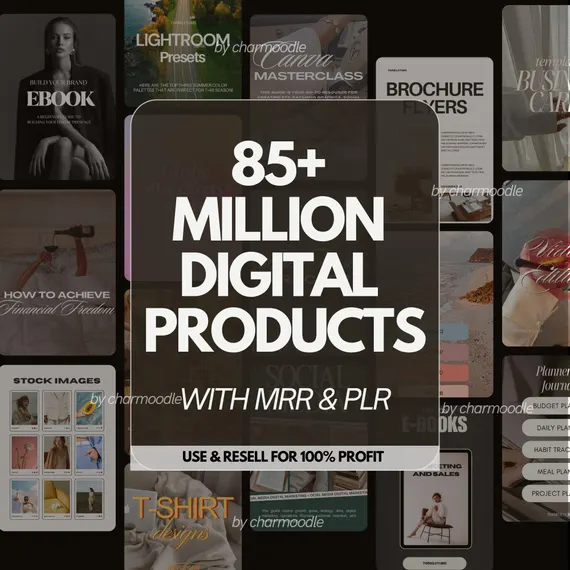
Some of the strongest digital products for passive income include templates, spreadsheets, ebooks, printable planners, checklists, online courses, workbooks, stock photos, graphics, presets, audio files, swipe files, digital memberships, calculators and simple software tools. The biggest advantage is scalability: one finished digital asset can potentially be sold repeatedly without physical inventory. However, sales are never guaranteed, and successful products usually require customer research, marketing, updates, support and platform management.
What Is a Digital Product?
A digital product is something customers receive electronically rather than as a physical item.
It can be downloaded, accessed online or delivered automatically after purchase.
Examples Include
- PDF guides
- Spreadsheets
- Templates
- Online courses
- Digital planners
- Photos
- Graphics
- Audio files
- Software
- Member-only resources
The major business advantage is that the same finished file or system can often serve multiple customers.
A freelancer may need to complete another project to earn another payment.
By contrast, a creator can potentially sell the same useful template to 10, 100 or 1,000 customers.
Why Digital Products Can Become Semi-Passive Income
Many digital products can automate three parts of the sales process.
Payment
A customer pays through an online checkout system.
Delivery
The product can be delivered automatically.
Reuse
The same product can be sold again without being rebuilt from the beginning.
However, other work usually remains.
- Marketing
- Customer support
- Product updates
- Refund handling
- Platform management
- Accounting
- Copyright protection
Most digital-product income is scalable and semi-passive rather than completely hands-off.
15 Digital Products for Passive Income at a Glance
| # | Digital Product | Startup Cost | Creation Effort | Update Needs |
|---|---|---|---|---|
| 1 | Spreadsheet templates | Low | Moderate | Low |
| 2 | Business document templates | Low | Moderate | Low |
| 3 | Printable planners | Low | Moderate | Low |
| 4 | Checklists and worksheets | Low | Low–Moderate | Low |
| 5 | Ebooks | Low | High | Low–Moderate |
| 6 | Mini-guides | Low | Moderate | Low |
| 7 | Online courses | Low–Moderate | High | Moderate |
| 8 | Workbooks | Low | Moderate–High | Low |
| 9 | Stock photos | Low if equipment owned | Moderate–High | Low |
| 10 | Graphics and design assets | Low | High | Low |
| 11 | Photo presets | Low | Moderate | Low |
| 12 | Audio and sound files | Low–Moderate | High | Low |
| 13 | Swipe files and script packs | Low | Moderate | Low–Moderate |
| 14 | Paid digital resource libraries | Low–Moderate | High | Moderate–High |
| 15 | Calculators and simple software tools | Low–High | High | Moderate |
Startup costs vary by software, marketplace, payment system, hosting, equipment and whether you perform the work yourself.
1. Spreadsheet Templates
Spreadsheet templates can solve practical problems without requiring customers to build complex formulas themselves.
Possible Products
- Monthly budget trackers
- Debt payoff calculators
- Business expense trackers
- Sales dashboards
- Freelance income trackers
- Inventory sheets
- Project trackers
- Content calendars
Why They Can Sell Repeatedly
The underlying system remains the same for each customer.
A buyer receives a reusable file rather than custom consulting.
What Makes a Strong Spreadsheet?
- Clear instructions
- Simple layout
- Useful automation
- Easy customization
- Accurate formulas
- Good mobile and desktop usability where possible
Build the spreadsheet around a specific job rather than adding complicated features simply to make it look impressive.
2. Business Document Templates
Businesses repeatedly need similar documents.
That creates opportunities for reusable templates.
Examples
- Invoice templates
- Client onboarding documents
- Meeting agendas
- Project briefs
- Proposal templates
- Business planning documents
- Content briefs
- Standard operating procedure layouts
Important Legal Limitation
Be cautious with documents that could be interpreted as individualized legal advice.
Contracts, employment agreements and other legal documents may require qualified professional review.
3. Printable Planners
Printables are digital files customers download and print themselves.
The creator avoids holding physical inventory.
Printable Ideas
- Budget planners
- Savings trackers
- Weekly planners
- Meal planners
- Study planners
- Fitness logs
- Household schedules
- Kids' activity sheets
- Business planning pages
Why Printables Can Be Scalable
The same PDF can potentially be purchased repeatedly.
Delivery can also be automated through a suitable platform.
Main Challenge
Generic planner categories are highly competitive.
A more targeted product can often be easier to position.
4. Checklists and Worksheets
A checklist may look simple, but simplicity can be valuable when it helps someone avoid forgetting important steps.
Examples
- Website launch checklist
- Moving checklist
- Job interview preparation checklist
- Freelance onboarding checklist
- Monthly money review worksheet
- Business startup checklist
- Travel planning worksheet
Sell the Outcome, Not the Page Count
Customers do not necessarily need 100 pages.
They need a product that helps them complete a task.

5. Ebooks
Ebooks can transform expertise, experience or research into a reusable information product.
Good Ebook Topics
Strong topics usually solve a specific problem.
- Beginner budgeting
- Starting a particular freelance service
- Learning a digital skill
- Organizing a small business
- Planning a specific type of project
- Using a particular tool
Where the Work Happens
Research.
Writing.
Editing.
Formatting.
Cover design.
Marketing.
Where Scalability Appears
Once the finished ebook exists, the same file can potentially serve many customers.
6. Short Digital Guides
Not every information product needs to become a complete book.
A 10- to 30-page guide can be enough when the problem is narrow.
Examples
- First freelance proposal guide
- Beginner SEO audit guide
- Home-office setup guide
- Interview preparation guide
- Online safety checklist and guide
- First-month budgeting guide
Advantages
Shorter development time can make these products useful for testing demand.
If nobody buys the small guide, you may avoid spending months building a much larger product around the wrong topic.
7. Online Courses
Online courses allow creators to package structured teaching into lessons that multiple students can access.
Possible Formats
- Recorded video
- Audio lessons
- Written modules
- Quizzes
- Assignments
- Downloadable templates
- Workbooks
Why Courses Can Scale
You do not necessarily need to repeat every lesson live for each student.
Why Courses Are Usually Semi-Passive
Students may need support.
Lessons can become outdated.
Platforms need management.
Marketing remains necessary.
Do not promise that purchasing or completing a course guarantees employment, income or business success.

8. Digital Workbooks
Workbooks are action-focused digital products.
Instead of only teaching information, they guide the customer through a process.
Examples
- Business idea validation workbook
- Personal budgeting workbook
- Career planning workbook
- Freelance pricing workbook
- Content strategy workbook
- Goal-setting workbook
Why Workbooks Can Be Valuable
People often understand information but struggle to apply it.
A structured workbook can turn knowledge into action.
9. Stock Photography
Original photographs can potentially be licensed repeatedly under marketplace or direct licensing terms.
Commercial Photography Ideas
- Business scenes
- Remote work
- Technology use
- Personal finance
- Education
- Family life
- Food preparation
- Travel
- Healthcare concepts
The Asset Is the Library
One image may earn little or nothing.
A broad portfolio of useful images can create more opportunities for licensing.
Rights Matter
You may need appropriate model or property releases depending on the image and marketplace rules.
10. Graphics and Design Assets
Designers can create reusable visual assets for other creators and businesses.
Examples
- Icons
- Illustrations
- Presentation elements
- Patterns
- Social-media layouts
- Infographic elements
- Website graphics
- Backgrounds
Copyright and Licensing
You must own or have suitable rights to everything included in the product.
Do not take another creator's graphics, photographs, logos, characters or protected artwork and resell them as digital products.

11. Photo Presets and Editing Profiles
Photographers and editors can package reusable editing settings into downloadable products.
Possible Customers
- Photographers
- Content creators
- Small businesses
- Social-media managers
- Bloggers
The Product Needs a Clear Result
Show customers what the preset is designed to accomplish.
However, avoid implying that one preset will produce identical results across every camera, image and lighting condition.
12. Audio, Music and Sound Effects
Original audio assets may be licensed or sold for use in videos, podcasts, games and other media.
Products Could Include
- Music tracks
- Sound effects
- Audio loops
- Intro music
- Meditation audio
- Voiceover packs
Licensing Terms Matter
Customers should understand what uses are permitted.
Creators should also verify that samples, recordings and other source material are legally usable.
13. Swipe Files, Scripts and Prompt Packs
A swipe file is a collection of reusable examples, frameworks or starting points that help customers perform a task faster.
Examples
- Email subject-line frameworks
- Sales-call question lists
- Customer-support scripts
- Interview question packs
- Content brief templates
- AI workflow prompts
- Client onboarding scripts
Do Not Sell Generic Noise
A list of hundreds of random prompts may provide little practical value.
A smaller collection organized around one useful workflow can be more valuable.
The customer is paying for reduced confusion and saved time—not merely a large number of pages.
14. Paid Digital Resource Libraries
A resource library combines multiple digital assets into one paid collection.
Possible Resources
- Templates
- Guides
- Calculators
- Checklists
- Research
- Lessons
- Scripts
- Updates
One-Time Payment Model
Customers pay once for access to the current library.
Membership Model
Customers pay regularly for continuing access and updates.
15. Calculators, Generators and Simple Software Tools
A small digital tool can solve a repetitive problem more efficiently than a static PDF.
Examples
- Budget calculator
- Loan comparison calculator
- Profit-margin calculator
- Freelance rate calculator
- Content planner
- Business reporting tool
- Niche generator
- Simple workflow application
Possible Revenue Models
- One-time purchase
- Monthly subscription
- Annual subscription
- Free basic version with paid upgrade
Software Is Not Completely Passive
Hosting continues.
Security matters.
Bugs appear.
Customers need support.
External services may change.
Solve one narrow, valuable problem well before building a complicated software platform.

Which Digital Product Should You Create First?
Start with your existing skills.
If You Are Good With Spreadsheets
Build calculators, trackers or dashboards.
If You Can Write
Create ebooks, guides, worksheets or swipe files.
If You Can Design
Build templates, graphics, printables or visual assets.
If You Can Teach
Create courses, workbooks or resource libraries.
If You Can Photograph
Build stock-photo libraries or editing products.
If You Can Code
Build calculators, generators or small software tools.
Start With a Problem, Not a Product
Beginners often reverse the process.
They decide they want to sell an ebook.
Then they search for something to write about.
A stronger process starts with the customer's problem.
Ask:
- What task takes people too long?
- What process confuses beginners?
- What repeated work can be simplified?
- What information is difficult to organize?
- What result could a reusable tool help produce?
How Much Can You Charge for a Digital Product?
There is no universal price.
Pricing can depend on the problem solved, target customer, quality, competition, support and business value.
Illustrative Pricing Categories
| Product Type | Possible Pricing Position |
|---|---|
| Simple checklist | Low-cost product |
| Detailed template | Low to moderate |
| Ebook | Low to moderate |
| Professional business toolkit | Moderate to premium |
| Focused course | Moderate to premium |
| Software tool | One-time or recurring pricing |
Avoid pricing only by page count.
A three-page calculator saving a business hours of work can be more valuable than a 200-page ebook nobody uses.
How Many Sales Would You Need to Make $1,000?
| Net Profit Per Sale | Sales Needed for $1,000 |
|---|---|
| $5 | 200 |
| $10 | 100 |
| $20 | 50 |
| $25 | 40 |
| $50 | 20 |
| $100 | 10 |
Use net profit per sale rather than sales price. Platform fees, refunds, payment processing, advertising and other expenses reduce what you keep.
Real-Life Example: Turning Client Work Into a Product
A Freelance Social-Media Manager Sees a Pattern
A fictional freelancer creates monthly content calendars for several clients.
Each calendar begins with the same framework.
She realizes that many small-business owners need the framework but cannot afford custom consulting.
She Builds a Reusable Product
She creates a polished content-calendar spreadsheet.
Then she adds:
- Instructions
- Content categories
- Example posts
- Tracking columns
- Planning guidance
The Business Model Changes
Instead of billing every customer for several hours of custom work, customers can purchase the reusable template.
She still provides support and updates the template occasionally.
However, another sale no longer requires another full custom project.
Key lesson: Repeated client work can reveal strong digital-product opportunities.
Mini Case Study: $3,000 in Sales Is Not $3,000 in Profit
A fictional creator sells $3,000 worth of digital products during one month.
| Item | Illustrative Amount |
|---|---|
| Gross sales | $3,000 |
| Marketplace fees | -$300 |
| Payment processing | -$120 |
| Advertising | -$650 |
| Software | -$130 |
| Refunds | -$100 |
| Illustrative amount before tax | $1,700 |
The numbers are hypothetical.
The lesson is straightforward.
Key lesson: Track net profit, not impressive sales screenshots.
Where Can You Sell Digital Products?
Digital products can be sold through your own website or third-party marketplaces.
Your Own Website
- Greater brand control
- More direct customer relationship
- Potential email-list growth
- More responsibility for technology and payments
Third-Party Marketplace
- Potential built-in audience
- Simpler initial setup
- Marketplace fees
- Platform dependence
- Changing policies
You Can Use Both
Some creators use marketplaces for discovery while gradually building their own audience and website.
Do not assume a third-party platform will keep the same fees, ranking system, traffic or seller rules forever.
How Customers Can Find Your Digital Products
Creating the product is only half the job.
People need to discover it.
Possible Traffic Sources
SEO
Useful search content can attract people already looking for solutions.
Subscribers can become repeat customers.
YouTube
Educational videos can demonstrate the problem your product solves.
Social Media
Short-form content can introduce products to an audience.
Marketplaces
Some platforms provide internal search and discovery.
Affiliate Partners
Partners may promote your product for an agreed commission.
How to Make a Digital Product More Passive
You cannot automate demand.
However, you can automate some repetitive operations.
Automate Product Delivery
Customers should receive their purchase without manual emailing where possible.
Create Strong Instructions
Clear documentation can reduce repetitive customer questions.
Build an FAQ
Answer predictable questions before they become support requests.
Create an Email Sequence
An automated onboarding sequence can help customers use the product correctly.
Standardize Updates
Use version numbers and update notes.
Track Common Support Problems
Repeated questions can reveal where the product needs improvement.
Automate repetitive work after you understand it. Do not automate a broken customer experience.
15 Mistakes to Avoid When Selling Digital Products
1. Creating Before Researching Demand
A finished product cannot force customers to want it.
2. Making the Product Too Broad
Specific products are often easier to understand and position.
3. Copying Other Creators
Build original products and respect intellectual property.
4. Ignoring Instructions
Customers may struggle even with a good product if onboarding is poor.
5. Using Revenue as Profit
Subtract fees and operating costs.
6. Spending Too Much Before Validation
Test demand before building an expensive system.
7. Relying on One Marketplace
Platform rules can change.
8. Ignoring Refunds
Refund policies affect profitability.
9. Selling Outdated Information
Update products when important facts or software change.
10. Using Copyrighted Material Without Permission
Only sell assets you have appropriate rights to use.
11. Promising Guaranteed Results
A budget template cannot guarantee wealth.
A course cannot guarantee employment.
A business guide cannot guarantee profit.
12. Ignoring Customer Support
Digital delivery does not remove customer expectations.
13. Creating Too Many Products at Once
Build one useful product before creating a large catalog.
14. Focusing Only on Design
Function and customer outcome matter more than decoration.
15. Assuming Digital Products Are Completely Passive
Marketing, support and updates can remain necessary.
No digital product guarantees income. Products can fail to sell, advertising can lose money, platforms can change and competitors can enter the market.
A 10-Step Digital Product Roadmap
| Step | Action |
|---|---|
| 1 | Identify a problem you understand |
| 2 | Identify the specific customer |
| 3 | Research existing solutions |
| 4 | Choose the smallest useful product format |
| 5 | Create the first version |
| 6 | Test it with real users |
| 7 | Improve based on feedback |
| 8 | Set up payment and automatic delivery |
| 9 | Build a traffic strategy |
| 10 | Track profit and improve what works |
Digital Product Checklist
- I know exactly who the product is for.
- I know the problem it solves.
- I researched existing alternatives.
- I created something original.
- I have rights to every asset included.
- I tested the product.
- I created clear customer instructions.
- I know the selling price.
- I know marketplace and payment fees.
- I understand my refund policy.
- I have a delivery system.
- I know how potential customers will find it.
- I track profit rather than sales alone.
- I know what updates may be required.
- I understand that income is not guaranteed.
Continue Learning on MoneyOnliners
Recommended External Resources
Federal Trade Commission — Business Opportunity Scams
When a Business Offer or Coaching Program Is a Scam — FTC
Federal Trade Commission — Advertising and Marketing Basics
Advertising and Marketing — Federal Trade Commission
U.S. Copyright Office — Copyright Basics
What Is Copyright? — U.S. Copyright Office
IRS — Self-Employed Individuals Tax Center
Self-Employed Individuals Tax Center — IRS
This article provides general educational information and is not individualized financial, tax, legal or business advice. Digital-product earnings are not guaranteed. Marketplace fees, tax rules, copyright requirements, refund rules and consumer-protection obligations vary by platform and jurisdiction. Businesses can lose money, products can fail to sell and platform policies can change.
Frequently Asked Questions
What are digital products for passive income?
They are reusable digital assets that can potentially be sold repeatedly after the original product has been created.
Are digital products really passive income?
Usually they are better described as semi-passive.
The same product can be sold repeatedly, but marketing, customer support and updates may still be required.
What is the easiest digital product to create?
There is no universal easiest product.
The easiest starting point is often something based on a skill or process you already understand.
Can I sell spreadsheets?
Yes, provided the spreadsheet is your original work or you have appropriate rights to everything included.
Can printables make passive income?
Potentially.
The same printable can be sold repeatedly, but customer demand is not guaranteed.
Can ebooks make passive income?
Yes.
An ebook can continue selling after publication, though discoverability, marketing and updates remain important.
Are online courses passive income?
Recorded lessons can serve multiple students without repeating each class live.
However, courses normally require customer support and updates.
Can I sell digital products without a website?
Yes.
Third-party marketplaces can host and deliver certain digital products.
Your own website can provide more brand and customer control.
Do I need money to start selling digital products?
Not necessarily a large amount.
If you already own a computer and use free tools, some products can be tested cheaply.
Can I start with $50?
Potentially.
A small budget may cover limited software, marketplace or domain costs depending on the model.
Can I start with $100?
Yes, for many simple digital-product models.
However, the amount spent does not guarantee sales.
How much should I charge?
Pricing depends on the problem solved, customer value, market, complexity, support and competition.
How many digital products should I create?
Beginners may benefit from building one strong product before creating a large catalog.
How many sales do I need to make $1,000?
It depends on net profit per sale.
At $20 net profit, you need 50 sales.
At $50 net profit, you need 20 sales.
Is revenue the same as profit?
No.
Revenue is total sales before expenses.
Profit is what remains after relevant costs.
What fees should I consider?
Possible fees include marketplace fees, payment processing, software, hosting, advertising and refunds.
How do customers find digital products?
Traffic can come from search engines, email, marketplaces, YouTube, social media, referrals and affiliate partners.
Can I use AI to create digital products?
AI can assist with brainstorming, drafting, design support, coding and workflow automation.
However, creators remain responsible for accuracy, originality, customer value, copyright and quality.
Can I sell AI-generated content?
Platform rules and applicable intellectual-property issues can vary.
Do not assume AI output automatically gives you unrestricted rights or guarantees originality.
Can I copy another person's template and sell it?
No.
Create original work or use assets under licenses that clearly permit your intended commercial use.
Do digital products need updates?
Some do.
A timeless printable may require few updates, while a software course or tax-related guide could become outdated quickly.
What digital product is best for beginners?
A small, focused product connected to an existing skill and a clear customer problem can be a strong place to start.
How long does it take to make money?
There is no standard timeframe.
Some products may make early sales, while others may never become profitable.
Are digital-product earnings guaranteed?
No.
Demand, pricing, competition, traffic and product quality all affect results.
What is the biggest digital-product mistake?
One major mistake is creating a large product before confirming that real customers want the solution.
Research Methodology
This MoneyOnliners guide evaluates digital products according to repeatability, startup cost, upfront creation work, ongoing maintenance, customer value, intellectual-property risk and profit potential.
Products were selected because the same digital asset can potentially be delivered to multiple customers without rebuilding the entire product for every sale.
The guide deliberately describes most digital-product models as semi-passive because customer support, marketing, updates, payment systems and platform management may continue after creation.
Business examples distinguish gross revenue from net profit because marketplace fees, payment processing, advertising, software, refunds and taxes can significantly reduce actual earnings.
The article emphasizes customer problems before product formats because repeatable sales depend on demand rather than simply creating downloadable files.
Copyright and licensing considerations are included because creators should only sell intellectual property they own or have appropriate commercial rights to use.
No income amount, number of sales, profit margin or business outcome is guaranteed.
All financial and business examples are hypothetical educational illustrations.
Final Thoughts: Create Once Does Not Mean Work Once
Digital products can be powerful because one useful asset may serve many customers.
A Spreadsheet Can Be Sold Repeatedly
The formulas do not need to be rebuilt for every buyer.
An Ebook Can Be Downloaded Repeatedly
The author does not need to rewrite the book after every sale.
A Course Can Teach Multiple Students
Recorded lessons can scale beyond one live classroom.
A Tool Can Serve Many Users
Software can automate a repetitive problem.
But the Business Still Needs Attention
Customers need to discover the product.
Some products need updates.
Support questions arise.
Platforms change.
Expenses continue.
Start With Value
Do not begin by asking which digital product is easiest to sell.
Begin by asking which problem you understand well enough to solve.
Then Build the Smallest Useful Asset
Test it.
Improve it.
Automate delivery.
Measure profit.
Build distribution.
Then create additional products only after the first system proves useful.
Ultimately, the strongest digital products for passive income are not random downloads created because passive income sounds attractive.
They are reusable solutions that save customers time, reduce confusion, teach a useful skill or make a difficult task easier.
Create once.
Improve when necessary.
Sell repeatedly when demand exists.
And treat the income as the result of customer value—not as a guaranteed reward for uploading a file.



One Comment