Diversification Explained: How Many Investments Do You Actually Need?
Diversification Explained: How Many Investments Do You Actually Need?
Diversification sounds simple: do not put all your money in one investment. However, beginners often discover that the real question is much harder. Is five stocks enough? Do you need 20? Is one ETF diversified? Should you own stocks, bonds and cash too? The answer depends less on reaching a magic number and more on how your investments are actually spread across companies, sectors, markets and asset classes.
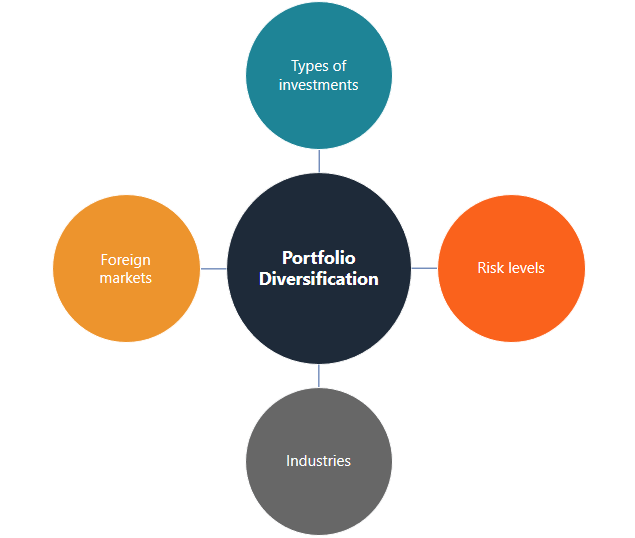
There is no single number of investments that guarantees diversification. A portfolio with 20 highly similar technology stocks may be less diversified than one broad fund containing hundreds or thousands of companies. Diversification works at multiple levels: across asset classes such as stocks and bonds, within those asset classes, across industries, company sizes and geographic markets. Investor.gov notes that four or five individual stocks generally would not provide sufficient stock diversification and that at least a dozen carefully selected individual stocks may be needed, while diversified mutual funds and ETFs can make broad exposure easier.
What Does Diversification Mean?
Diversification means spreading investment exposure instead of allowing one company, industry, market or asset class to determine most of your financial outcome.
The concept is often summarized as not putting all your eggs in one basket.
Suppose all your investment money is in one company.
If that company experiences serious financial problems, your entire portfolio can suffer.
Now imagine that your money is spread across many companies operating in different industries.
One company's decline may have a smaller effect on the entire portfolio.
You can diversify even further by holding different types of assets.
Stocks, bonds and cash-like investments can respond differently to changing economic conditions.
What Diversification Does—and Does Not Do
| Diversification Can Help | Diversification Cannot Guarantee |
|---|---|
| Reduce company-specific concentration | That your portfolio never falls |
| Spread sector exposure | A positive return every year |
| Spread investments across asset classes | Protection from every market decline |
| Reduce dependence on one investment outcome | That every holding performs well |
| Make portfolio risk more balanced | That you will reach your financial goal |
Diversification is a risk-management strategy. It does not guarantee profits or eliminate investment losses.
How Many Investments Do You Actually Need?
There is no universal number.
The answer depends heavily on what you own.
Five individual stocks are very different from five diversified funds.
Twenty stocks concentrated in one industry are different from twenty companies spread across multiple industries and markets.
Likewise, one broad-market fund can potentially own hundreds or thousands of securities.
A Useful Beginner Framework
| Portfolio | Number of Holdings | Likely Diversification |
|---|---|---|
| One individual stock | 1 company | Very concentrated |
| Five individual stocks | 5 companies | Usually still concentrated |
| 12+ carefully selected stocks | 12+ companies | Potentially more diversified, depending on sectors and markets |
| 20 technology stocks | 20 companies | Still concentrated by sector |
| One broad-market ETF | Potentially hundreds or thousands | Can provide substantial company diversification |
| One narrow sector ETF | Potentially many companies | Still concentrated by sector |
Therefore, counting ticker symbols alone does not tell you whether your portfolio is diversified.
1. Diversify Across Individual Companies
The first level of diversification is avoiding excessive dependence on one business.
Individual companies can experience problems that have little to do with the broader market.
A product can fail.
A competitor can gain market share.
Management can make poor decisions.
A lawsuit or regulatory change can damage profitability.
Why Five Stocks May Not Be Enough
Investor.gov's beginner diversification guidance specifically notes that owning only four or five individual stocks would generally not provide adequate stock diversification.
Its educational guidance suggests at least a dozen carefully selected individual stocks may be needed to build meaningful diversification within a direct-stock portfolio.
But Even 12 Is Not a Magic Number
Imagine all 12 companies are banks.
You may be diversified among companies but heavily concentrated in one industry.
Ask what risks your investments share—not only how many investments you own.

2. Diversify Across Industries
Companies within the same industry often face similar economic pressures.
For example, rising energy prices may affect airlines differently from energy producers.
Interest-rate changes may affect financial companies differently from some consumer businesses.
Technology regulation may primarily affect certain technology companies.
Common Stock-Market Sectors Include
- Technology
- Healthcare
- Financial services
- Consumer discretionary
- Consumer staples
- Energy
- Industrials
- Utilities
- Real estate
- Communication services
- Materials
You do not necessarily need to manually buy a company from every sector.
A sufficiently broad fund may already provide exposure across many of them.
3. Diversify Across Company Sizes
Companies are often grouped by market capitalization.
Large companies can behave differently from smaller businesses.
Smaller companies may offer different growth potential but can also experience greater volatility.
| Company Category | General Characteristic |
|---|---|
| Large-cap | Larger established companies |
| Mid-cap | Medium-sized companies |
| Small-cap | Smaller companies that may have different growth and risk characteristics |
Diversifying by company size can help reduce dependence on one segment of the equity market.
4. Diversify Geographically
Owning companies from only one country concentrates your exposure to that country's economy, currency, regulation and political environment.
International diversification can provide exposure to other markets.
Geographic Categories Can Include
- Domestic markets
- Developed international markets
- Emerging markets
- Different geographic regions
International Investing Adds New Risks
Foreign investments can involve currency fluctuations.
Political risks can differ.
Accounting standards may differ.
Market regulations can differ too.
International diversification can spread geographic exposure, but it also introduces additional risks. More countries does not automatically mean lower risk in every situation.

5. Diversify Across Asset Classes
Company diversification is only one part of portfolio diversification.
Investor.gov emphasizes diversification both within and across asset categories.
Common asset classes include:
Stocks
Ownership exposure with significant long-term growth potential and market volatility.
Bonds
Debt investments with credit, interest-rate and inflation risks.
Cash and Cash Equivalents
Typically lower volatility but also lower expected long-term returns.
Real Estate
Potential property income and growth with different market risks.
Why Asset Classes Matter
Different asset classes do not always respond identically to economic conditions.
That difference can help reduce portfolio volatility.
However, relationships between assets change over time, and several asset classes can fall simultaneously.
Asset Allocation vs Diversification
The terms are related but not identical.
Asset Allocation
Asset allocation describes how your total portfolio is divided among asset classes such as stocks, bonds and cash.
Diversification
Diversification describes how broadly your investments are spread both between and within those categories.
| Concept | Example |
|---|---|
| Asset allocation | 70% stocks, 25% bonds, 5% cash |
| Stock diversification | Large, medium and small companies across multiple sectors |
| Bond diversification | Different issuers, maturities and credit qualities |
| Geographic diversification | Domestic and international exposure |
The 70/25/5 allocation above is an illustration, not a MoneyOnliners recommendation. Appropriate asset allocation depends on goals, time horizon, financial circumstances and risk tolerance.
6. Diversify Within Bonds Too
Bond investing also involves concentration risk.
Owning bonds from only one company creates dependence on that issuer's ability to repay.
Bond diversification may involve:
- Different issuers
- Government and corporate debt
- Different maturities
- Different credit qualities
- Different geographic exposure
However, more yield often comes with more risk.
A high-yield bond portfolio can behave very differently from high-quality government debt.
7. Broad Funds Can Simplify Diversification
Manually selecting dozens of companies requires research and ongoing monitoring.
Mutual funds and ETFs can make broad exposure easier.
A total-market fund, for example, may own hundreds or thousands of companies.
That can provide more company-level diversification than a beginner could easily build manually.
But the Fund Must Actually Be Broad
A fund containing 50 semiconductor companies is diversified across companies.
However, it remains highly concentrated in one industry.
Is One ETF Enough to Be Diversified?
Sometimes it may provide substantial diversification within a particular asset class.
However, the answer depends entirely on what the ETF owns.
One Broad-Market ETF
A broad-market ETF may hold hundreds or thousands of stocks across industries.
That can create strong company-level diversification.
One Sector ETF
A technology-sector ETF may hold many companies but remain concentrated in technology.
One Stock ETF or Specialized Product
Some products can create extremely concentrated exposure despite having ETF in the name.
- Number of holdings
- Largest holdings
- Sector exposure
- Geographic exposure
- Asset-class exposure
- Fund strategy
Can Two ETFs Be Diversified?
Possibly.
But two funds can also own many of the same investments.
For example, you might own a broad U.S. stock-market ETF and another fund focused on large U.S. companies.
Those portfolios may overlap heavily.
More Funds Can Create the Illusion of Diversification
Ten ETFs do not necessarily provide ten different sources of diversification.
They may simply duplicate many of the same companies.
Check the largest holdings of funds you own. Portfolio overlap can make a portfolio more concentrated than the number of funds suggests.

How Many ETFs Do Beginners Need?
There is no universal answer.
Depending on what they hold, one or a few broad funds may provide substantial diversification.
Other portfolios may require several funds because each one covers only a narrow asset class or market segment.
| Portfolio | Possible Diversification |
|---|---|
| 1 broad global stock ETF | Potentially many companies and countries |
| 1 technology ETF | Many companies but heavy sector concentration |
| 3 broad funds covering stocks and bonds | Potential diversification across multiple asset categories |
| 8 similar large-cap stock ETFs | May contain substantial duplication |
The number itself is therefore less important than the exposures inside each fund.
Does Owning More Investments Always Reduce Risk?
No.
At some point, adding another similar investment may provide little additional diversification.
It may instead create complexity.
Example
Suppose your portfolio already owns a broad fund containing 3,000 companies.
Adding one individual company that is already a major holding in the fund does not necessarily improve diversification.
It may actually increase concentration in that company.
Diversification Has Diminishing Benefits
Moving from one individual stock to ten well-chosen stocks can significantly spread company-specific risk.
Moving from a diversified portfolio of hundreds of companies to one containing 50 more similar companies may change the risk much less.
Over-Diversification: Can You Own Too Many Investments?
The phrase over-diversification is sometimes used when portfolios become unnecessarily complicated.
The problem is not simply owning many securities.
Broad funds may legitimately own thousands.
The problem is when an investor accumulates many overlapping products without understanding what each contributes.
Possible Signs of Unnecessary Complexity
- You own many funds with nearly identical holdings.
- You cannot explain why each investment is in the portfolio.
- Your portfolio requires excessive monitoring.
- Several investments duplicate the same market exposure.
- Fees increase without adding meaningful diversification.
- Rebalancing becomes unnecessarily complicated.
Real-Life Example: 15 Stocks but Almost No Diversification
Kevin Owns 15 Technology Companies
Kevin believes his portfolio is diversified because he owns 15 different stocks.
However, almost every company operates in technology or digital services.
When technology valuations fall broadly, nearly every holding declines at the same time.
Kevin realizes that the number of companies did not solve the underlying concentration problem.
He had diversified company names but not economic exposure.
Key lesson: Fifteen similar investments can still behave like one concentrated bet.
Case Study: One Fund Provides Hundreds of Holdings
A Beginner Chooses Simplicity
A fictional beginner wants broad stock exposure but does not feel prepared to research dozens of companies.
She studies a diversified broad-market fund.
The fund contains hundreds of companies across multiple industries.
Instead of buying 30 individual stocks manually, she uses the broad fund as a simpler way of obtaining company diversification.
She still reviews the fund's fees, holdings, risk and geographic exposure.
Key lesson: The number of products in your account and the number of underlying investments can be very different.
Diversification vs Concentration: Simple Comparison
| Portfolio | Concentration Level | Main Risk |
|---|---|---|
| 100% in one company | Very high | Company-specific failure |
| 10 companies in one industry | High | Industry concentration |
| 50 companies across industries | Lower company concentration | Broad stock-market risk remains |
| Broad stock-market fund | Potentially low company concentration | Equity-market risk remains |
| Stocks + bonds | Multiple asset classes | Both asset classes can still experience losses |
| Global multi-asset portfolio | Broader diversification | Market, currency, interest-rate and other risks remain |
What Is Concentration Risk?
Concentration risk occurs when too much of a portfolio depends on one investment, company, sector, geographic region or asset class.
Common Concentration Examples
- Half your portfolio in one stock
- Most investments in technology
- All stocks from one country
- Several funds owning the same companies
- Most wealth tied to employer stock
- Most assets concentrated in one property market
Employer Stock Can Create Hidden Concentration
Employees sometimes accumulate significant shares in the company where they work.
That can create two sources of financial dependence on the same business.
Your salary depends on the employer.
Your investments may depend on the employer too.
If the company experiences severe difficulty, employment and investment wealth could both be affected.
Employer-stock decisions can involve tax, compensation and plan-specific considerations. Review the relevant rules and, where appropriate, seek qualified financial or tax guidance.
Rebalancing: Keeping Diversification From Drifting
Portfolio weights change over time because investments do not grow at identical rates.
Suppose you begin with a particular mix of stocks and bonds.
After a strong stock-market period, stocks may become a much larger percentage of the portfolio.
That means your risk exposure has changed.
What Rebalancing Means
Rebalancing means bringing the portfolio closer to its intended allocation.
This might happen by directing new contributions toward underweight categories or by buying and selling investments.
Before selling to rebalance, consider transaction costs, taxes and account rules.
How Often Should You Check Diversification?
Constant portfolio changes are usually unnecessary for a long-term diversification strategy.
Investor.gov notes that some investors review allocations at regular intervals, such as every six or twelve months, while others rebalance when allocations move beyond predetermined ranges.
Review When Your Life Changes Too
You may also need to reconsider diversification when:
- Your financial goal changes.
- Your investment time horizon becomes shorter.
- Your income changes materially.
- Your risk tolerance changes.
- A concentrated holding becomes unusually large.
- You approach the date when the money will be needed.
How Risk Tolerance Affects Diversification
Diversification does not determine how aggressive your portfolio should be.
A portfolio can be well diversified but still aggressive.
For example, a portfolio containing thousands of global stocks may be diversified across companies but still be 100% equities.
That means it can experience substantial stock-market volatility.
Risk Tolerance Matters
Your willingness and ability to tolerate losses should influence how your portfolio is allocated across asset classes.
How Time Horizon Affects Diversification
Someone investing for a goal 30 years away may accept more market volatility than someone who needs the money in two years.
As a goal approaches, capital preservation and liquidity can become increasingly important.

10 Diversification Mistakes Beginners Should Avoid
1. Thinking Five Stocks Automatically Means Diversified
A handful of companies can still create substantial company-specific risk.
2. Counting Investments Instead of Examining Exposure
Twenty similar investments can remain highly concentrated.
3. Assuming Every ETF Is Diversified
Some ETFs focus narrowly on one industry, country or theme.
4. Owning Multiple Funds With the Same Holdings
Portfolio overlap can create hidden concentration.
5. Ignoring International Exposure
Depending entirely on one country's market can create geographic concentration.
6. Ignoring Asset Classes
Holding hundreds of stocks is still an equity-heavy portfolio if no other asset categories are present.
7. Assuming Diversification Prevents Losses
A broad market decline can affect many holdings at the same time.
8. Adding Investments Just to Increase the Number
New holdings should add meaningful exposure or serve a clear portfolio purpose.
9. Never Rebalancing
Strong performance in one area can gradually create unintended concentration.
10. Diversifying Into Investments You Do Not Understand
Owning more complicated products does not automatically improve portfolio quality.
Beginner Diversification Checklist
- I know how much of my portfolio is in stocks, bonds and cash-like investments.
- I know whether one company represents a large percentage of my portfolio.
- I have checked sector concentration.
- I have checked geographic concentration.
- I understand whether my funds overlap.
- I know what my largest fund holdings are.
- I understand that one broad fund can hold hundreds or thousands of securities.
- I know that multiple ETFs do not automatically mean better diversification.
- I understand that diversification cannot prevent all losses.
- I have considered my risk tolerance.
- I have considered my investment time horizon.
- I know why each investment belongs in my portfolio.
- I periodically review whether my target allocation has drifted.
Simple Portfolio Diversification Questions
| Question | Why It Matters |
|---|---|
| What is my largest individual investment? | Reveals company concentration |
| What is my largest sector? | Reveals industry concentration |
| Which countries do I own? | Reveals geographic exposure |
| Which asset classes do I own? | Reveals asset-allocation concentration |
| Do my funds overlap? | Reveals hidden duplication |
| Would one company's failure materially damage my portfolio? | Tests company-specific dependence |
| Does my portfolio match my time horizon? | Connects diversification with financial goals |
Continue Learning on MoneyOnliners
Recommended External Resources
Investor.gov — Asset Allocation and Diversification
Asset Allocation and Diversification — Investor.gov
Investor.gov — Beginner's Guide to Asset Allocation, Diversification and Rebalancing
Beginner's Guide to Asset Allocation and Diversification — Investor.gov
Investor.gov — Diversify Your Investments
Diversify Your Investments — Investor.gov
FINRA — Asset Allocation and Diversification
Asset Allocation and Diversification — FINRA
Investor.gov — Introduction to Investing
Introduction to Investing — Investor.gov
This article provides general educational information and is not individualized investment, financial, tax or legal advice. Diversification can help manage investment risk but cannot guarantee profits or prevent all losses. Stocks, bonds, funds, real estate and other investments can lose value. Appropriate diversification and asset allocation depend on your goals, financial circumstances, time horizon and risk tolerance.
Frequently Asked Questions
What is diversification in investing?
Diversification means spreading money among different investments to reduce excessive dependence on one company, sector, market or asset class.
How many investments do I need to be diversified?
There is no universal number.
The answer depends on what the investments actually contain and how different their underlying risks are.
Are five stocks enough for diversification?
Investor.gov's beginner guidance indicates that four or five individual stocks generally would not provide sufficient stock diversification.
Several companies can still leave substantial company-specific and sector risk.
Are 10 stocks enough?
Ten carefully selected stocks may provide more diversification than one or two, but diversification also depends on industries, company sizes and geographic exposure.
There is no guaranteed magic number.
Are 12 stocks enough?
Investor.gov has noted that at least a dozen carefully selected individual stocks may be needed for meaningful stock diversification.
However, twelve companies concentrated in one sector can still leave substantial concentration risk.
Are 20 stocks enough to be diversified?
Potentially, if they are sufficiently spread across companies and industries.
However, twenty similar stocks may still be concentrated.
Is one ETF enough for diversification?
It can provide substantial diversification if it is a broadly diversified ETF containing many securities.
A narrow sector or thematic ETF may not provide the same benefit.
How many ETFs should beginners own?
There is no universal number.
One or a few broad ETFs may provide substantial exposure, while multiple narrow funds may still leave major concentration.
Can you own too many ETFs?
Yes, in the sense that adding many overlapping funds can create unnecessary complexity without materially improving diversification.
What is portfolio overlap?
Portfolio overlap happens when different funds own many of the same underlying securities.
That can create more concentration than the number of funds suggests.
Does diversification guarantee that I will not lose money?
No.
Diversification can reduce certain risks, but broad market declines can still reduce the value of a diversified portfolio.
What is concentration risk?
Concentration risk occurs when too much of your portfolio depends on one investment, sector, country or asset class.
Should I diversify across countries?
International exposure can reduce dependence on one national market.
However, it introduces currency, political, regulatory and other risks.
Should I diversify across stocks and bonds?
Asset allocation across stocks, bonds and other categories can be part of diversification.
The appropriate mix depends on goals, time horizon and risk tolerance.
What is asset allocation?
Asset allocation refers to how your portfolio is divided among asset classes such as stocks, bonds and cash.
What is the difference between asset allocation and diversification?
Asset allocation determines how much money goes into different asset classes.
Diversification spreads exposure both between and within those classes.
What is rebalancing?
Rebalancing means adjusting a portfolio back toward its intended asset allocation after market movements or other changes cause the proportions to drift.
How often should I rebalance?
Some investors review at intervals such as every six or twelve months, while others use predetermined allocation thresholds.
Taxes, transaction costs and account rules should also be considered.
Are index funds diversified?
Many broad index funds are highly diversified across companies.
However, some indexes focus on narrow sectors, countries or investment themes.
Is diversification the same as owning many investments?
No.
A large number of similar investments can remain concentrated.
Can diversification reduce returns?
Diversification means you are unlikely to have all your money concentrated in the single best-performing investment.
However, its purpose is to manage risk rather than maximize exposure to one potential winner.
Should beginners own individual stocks or diversified funds?
Either can be used.
Broad funds can make diversification easier because one investment may contain hundreds or thousands of securities.
What is the biggest diversification mistake?
One major mistake is assuming that the number of holdings proves a portfolio is diversified without checking what those holdings actually own and what risks they share.
Research Methodology
This MoneyOnliners guide was developed using current investor-education material from Investor.gov and FINRA covering diversification, asset allocation, risk tolerance and portfolio rebalancing.
Investor.gov defines diversification as spreading money among different investments to reduce risk and emphasizes diversification both between asset classes and within them.
Its beginner asset-allocation guide specifically notes that a stock portfolio containing only four or five individual stocks generally would not be adequately diversified and suggests that at least a dozen carefully selected individual stocks may be needed for meaningful direct-stock diversification.
The guide also recognizes that mutual funds and ETFs can simplify diversification because a single pooled investment may contain a much larger number of securities.
FINRA emphasizes that diversification should occur both among and within asset classes and warns that investors should look beyond the number of holdings to sectors, company sizes, geographic exposure and fund overlap.
The article does not present twelve, twenty or any other number of investments as a guaranteed diversification threshold.
All examples and portfolio allocations are educational illustrations rather than individualized investment recommendations.
Final Thoughts: Diversification Is About Different Risks, Not Just More Investments
A portfolio does not become diversified simply because the investment count increases.
One Stock Is Highly Concentrated
Your financial result depends heavily on one company.
Five Stocks May Still Leave Significant Risk
Especially when those companies belong to the same industry.
A Dozen or More Carefully Selected Stocks Can Improve Direct-Stock Diversification
However, industry, geographic and company-size exposure still matter.
A Broad Fund Can Simplify the Process
One appropriately broad mutual fund or ETF may contain hundreds or thousands of securities.
That can create more company-level diversification than a beginner could easily construct manually.
But One Fund Is Not Automatically Enough
A narrow sector fund can still leave significant concentration.
Look Beyond the Number
Check companies.
Check sectors.
Check countries.
Check asset classes.
Check fund overlap.
Ultimately, diversification explained properly comes down to one principle: your portfolio should not depend unnecessarily on one investment or one type of risk.
There is no magic number of investments.
What matters is whether the investments you own actually give you meaningfully different exposure while still matching your goals, time horizon and ability to tolerate risk.