
Investing $100 a Month: How Much Could It Grow Over 10, 20 or 30 Years?
Investing $100 a Month: How Much Could It Grow Over 10, 20 or 30 Years?
One hundred dollars a month may not feel like a large investing amount. However, regular contributions combined with many years of compound growth can produce a very different result from simply adding up the deposits. This guide shows what $100 a month could hypothetically become over 10, 20 and 30 years—and why the actual outcome can be higher or lower.
If you invest $100 every month, you would personally contribute $12,000 over 10 years, $24,000 over 20 years and $36,000 over 30 years. At a hypothetical 7% annual return compounded monthly, those contributions could grow to about $17,308 after 10 years, $52,093 after 20 years and $121,997 after 30 years. These are illustrations, not predictions. Actual investment returns fluctuate, fees and taxes can reduce results, and investments can lose value.
How Much Could $100 a Month Grow?
The answer depends heavily on the return your investments actually earn.
Because future returns are unknown, a responsible projection should use multiple hypothetical scenarios rather than presenting one number as guaranteed.
Illustrative Growth of $100 Invested Every Month
| Time | Total You Contribute | At 5% Hypothetical Return | At 7% Hypothetical Return | At 10% Hypothetical Return |
|---|---|---|---|---|
| 10 years | $12,000 | $15,528 | $17,308 | $20,485 |
| 20 years | $24,000 | $41,103 | $52,093 | $75,937 |
| 30 years | $36,000 | $83,226 | $121,997 | $226,049 |
These figures assume $100 contributed at the end of every month, monthly compounding and constant hypothetical annual returns of 5%, 7% or 10%. Real markets do not produce smooth fixed returns. The examples exclude taxes, investment fees, inflation and withdrawals.
Your Contributions vs Potential Growth
| Time | Your Contributions | Hypothetical Value at 7% | Hypothetical Growth Above Contributions |
|---|---|---|---|
| 10 years | $12,000 | $17,308 | $5,308 |
| 20 years | $24,000 | $52,093 | $28,093 |
| 30 years | $36,000 | $121,997 | $85,997 |
Notice what happens over longer periods.
During the first 10 years, most of the portfolio still comes from your own contributions.
By year 30 in the hypothetical 7% scenario, the projected growth is substantially larger than the $36,000 personally contributed.
That is the effect of compounding.
How Compound Growth Works
Compound growth occurs when investment returns can themselves generate additional returns.
Suppose money in your account earns a return.
If those gains remain invested, future returns can apply to both the money you originally contributed and the previous gains.
Investor.gov describes compound growth as earning returns on your invested money as well as on earlier returns. :contentReference[oaicite:1]{index=1}
A Simple Example
If $100 grows by 5%, it becomes $105.
If the entire $105 then earns another 5%, the next year's gain is calculated on $105 rather than only the original $100.
Over a few years, that difference may appear small.
Over several decades, it can become much more important.

Why Time Makes Such a Big Difference
Compare the hypothetical 7% examples again.
| Years Invested | Total Deposited | Hypothetical Portfolio |
|---|---|---|
| 10 | $12,000 | $17,308 |
| 20 | $24,000 | $52,093 |
| 30 | $36,000 | $121,997 |
From year 10 to year 20, you add another $12,000 of your own money.
Yet the hypothetical portfolio increases by almost $35,000.
From year 20 to year 30, you again add only another $12,000.
However, the hypothetical portfolio increases by almost $70,000.
The growing balance has more time to participate in future gains.
With long-term investing, time is not merely how long you wait. Time determines how many opportunities previous gains have to generate additional gains.
What Happens After 10 Years?
Ten years is long enough for compounding to become visible, but the effect is still relatively modest compared with later decades.
If You Contribute $100 Every Month
You contribute:
$100 × 12 months × 10 years = $12,000
Hypothetical outcomes include approximately:
5% Return
$15,528
7% Return
$17,308
10% Return
$20,485
The difference between the scenarios demonstrates why return assumptions matter.
A few percentage points compounded for many years can significantly change the final result.
What Happens After 20 Years?
Over 20 years, your total personal contributions equal $24,000.
5% Return
$41,103
7% Return
$52,093
10% Return
$75,937
At this point, compounding has had much more time to influence the outcome.

What Happens After 30 Years?
Over 30 years, you personally contribute $36,000.
5% Return
$83,226
7% Return
$121,997
10% Return
$226,049
The hypothetical 10% outcome is dramatically higher than the 5% outcome.
However, that should not be interpreted as a reason to chase investments promising higher returns.
Higher potential return generally involves higher risk or greater uncertainty.
Do not choose a portfolio merely because a calculator produces a more exciting number when you enter a higher expected return. Investment risk, diversification, fees, time horizon and your ability to tolerate losses matter too.
Does a 7% Return Make Sense as an Example?
A 7% return is commonly used in long-term investing illustrations, but it is not a promise.
Investor.gov currently notes that some experts use approximately 7% to 10% as a useful long-term estimate for diversified U.S. stock investments based on historical averages. It also explicitly states that investing does not have a set rate of return and that markets fluctuate. :contentReference[oaicite:2]{index=2}
Why We Use Multiple Scenarios
Showing 5%, 7% and 10% makes the uncertainty visible.
A real portfolio may return less.
It could return more.
Some years may be strongly positive.
Other years may be deeply negative.
What If Returns Are Negative for Several Years?
That can happen.
Stocks and other market investments can experience prolonged declines.
Regular contributions do not guarantee that a portfolio's value will always remain above the amount contributed.
During a decline, new contributions may purchase more shares at lower prices.
However, this only helps if the investments later recover or grow.
Long-Term Does Not Mean Guaranteed
Longer time horizons can provide more opportunity to experience different market cycles.
They do not eliminate investment risk.
What If You Increase the $100 Contribution Over Time?
One of the biggest advantages available to many long-term investors is not finding a higher-return investment.
It is increasing contributions as income grows.
Investor.gov encourages investors, where possible, to use salary increases to raise regular investment contributions. :contentReference[oaicite:3]{index=3}
Example Contribution Progression
| Career Stage | Monthly Investment |
|---|---|
| Starting out | $100 |
| After income increase | $150 |
| After another raise | $200 |
| Later career | $300+ |
You do not need to make these exact increases.
The principle is simply that contribution growth can become another powerful driver of long-term wealth.
What If You Invest $100 a Month but Start 10 Years Later?
Starting later reduces the amount of time available for compounding.
For example, someone investing for 20 years receives 120 fewer monthly compounding periods than someone investing for 30 years.
That can produce a large difference even when the monthly contribution is identical.
Starting Earlier vs Contributing More Later
Someone who starts later may still build substantial investments.
However, they may need larger future contributions to pursue the same target.
Starting earlier can reduce how much of the future result must come directly from your own contributions.
Real-Life Example: Starting With Only $100 a Month
Daniel Thinks $100 Is Too Small to Matter
Daniel wants to start investing but believes $100 a month is not enough to make a meaningful difference.
Instead of waiting until he can invest $500 every month, he reviews his financial situation and decides $100 is currently sustainable.
He creates a regular monthly investing routine.
Several years later, his income increases.
He raises the contribution to $150 and later to $200.
The most important result from the original $100 was not simply the first year's balance.
It was creating a habit that could grow alongside his income.
Key lesson: A modest contribution can be a strong beginning when it becomes part of a long-term system.
Case Study: Chasing a Higher Return Changes the Risk
A Calculator Makes 15% Look Exciting
A fictional beginner enters a 15% annual return into an investment calculator.
The future value looks enormous.
She begins searching for investments promising 15% or more every year.
Several opportunities advertise unusually high returns with supposedly little risk.
Instead of assuming the calculator proves those returns are realistic, she recognizes that higher return assumptions generally involve more uncertainty and risk.
She returns to building a diversified plan she understands.
Key lesson: A calculator can illustrate compounding, but it cannot tell you which future return is guaranteed.

How Fees Affect Investing $100 a Month
Fees can have an especially noticeable effect when contributions are small.
Investor.gov warns that fees and expenses reduce the amount of money remaining in your portfolio to earn future returns and that seemingly small fees can create large long-term differences. :contentReference[oaicite:4]{index=4}
Example: A $5 Monthly Fee
If you invest $100 each month but pay a $5 monthly platform fee, that fixed cost equals 5% of the monthly contribution before considering any other expenses.
That can be a significant hurdle.
Costs to Check
- Fund expense ratios
- Account maintenance fees
- Monthly subscriptions
- Advisory fees
- Trading commissions
- Bid-ask spreads
- Currency-conversion fees
- Transfer fees
Investor.gov has highlighted that fixed subscription fees can consume a particularly large percentage of smaller account balances. :contentReference[oaicite:5]{index=5}
Inflation Matters Too
A future balance of $121,997 will not necessarily buy the same amount of goods and services that $121,997 buys today.
Inflation reduces purchasing power over time.
Therefore, long-term investment projections should be considered in both nominal dollars and real purchasing-power terms.
Why This Matters
Suppose your portfolio grows over 30 years.
That is useful.
However, living costs may also increase over those three decades.
The financial goal should therefore be based on what you eventually need the money to accomplish—not merely reaching a large nominal account balance.
Taxes Can Reduce What You Keep
Investment taxation depends on account type, investment, transaction history and country.
A taxable brokerage account may produce different after-tax results from a tax-advantaged retirement account.
Dividends, interest and capital gains may also receive different tax treatment.
Tax rules and investment-account structures vary significantly by jurisdiction. Do not assume U.S. retirement-account or capital-gains rules apply where you live.
Where Could You Invest $100 a Month?
There is no universal investment that is correct for every beginner.
Possible investment types include stocks, bonds, mutual funds, ETFs and index funds.
The choice should reflect your goals, time horizon, risk tolerance, fees and diversification needs.
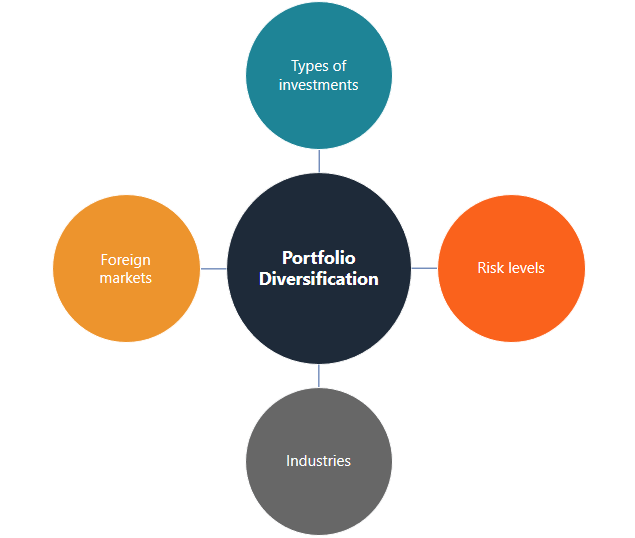
Broad Diversified Funds
Some beginners use diversified funds because one investment may provide exposure to many underlying securities.
However, not every ETF or index fund is broadly diversified.
Always review what the fund actually owns.
Should You Automate the $100 Monthly Investment?
Automation can make regular investing easier.
You may schedule an investment after payday so the contribution happens before the money is absorbed by discretionary spending.
However, the automated amount should fit actual cash flow.
Automate financial progress, but never automate a contribution so aggressively that it causes missed bills, overdrafts or new debt.
Dollar-Cost Averaging and $100 Monthly Investing
Investing $100 every month regardless of short-term market movements is a form of dollar-cost averaging when the contribution stays relatively consistent.
The approach can reduce repeated market-timing decisions.
However, it does not guarantee a profit or lower average purchase price.
10 Things That Determine Your Actual Result
| # | Factor | Why It Matters |
|---|---|---|
| 1 | Contribution amount | More invested generally increases potential ending value |
| 2 | Time invested | More time creates additional compounding opportunities |
| 3 | Market returns | Actual returns may differ greatly from assumptions |
| 4 | Investment fees | Costs reduce money available to compound |
| 5 | Taxes | Can reduce after-tax returns |
| 6 | Inflation | Reduces future purchasing power |
| 7 | Diversification | Affects concentration and portfolio risk |
| 8 | Investment behavior | Panic selling or performance chasing can alter results |
| 9 | Contribution increases | Higher future deposits can accelerate wealth building |
| 10 | Withdrawals | Removing money reduces the amount left to compound |
Investing $100 a Month vs Simply Saving $100 a Month
| Feature | Cash Saving | Long-Term Investing |
|---|---|---|
| Main purpose | Safety and shorter-term needs | Potential long-term growth |
| Principal volatility | Generally lower in suitable deposit accounts | Can fluctuate significantly |
| Potential return | Usually lower | Potentially higher but uncertain |
| Emergency fund use | Often appropriate | Generally less suitable for money needed immediately |
| Long-term inflation protection | Depends on interest rate | Growth assets may offer greater long-term potential but also greater risk |
Saving and investing serve different purposes. Emergency savings should not automatically be invested simply because the hypothetical long-term return is higher.
What If $100 a Month Is Too Much?
Start with an amount that fits your finances.
Perhaps that is $25 or $50.
The habit can increase later.
What If $100 Is Easy?
You may consider increasing the contribution if doing so aligns with your goals and does not undermine other important financial priorities.
Beginner Checklist Before Investing $100 a Month
- I can cover my essential monthly bills.
- I have considered appropriate emergency savings.
- I have reviewed expensive high-interest debt.
- I know what financial goal I am investing for.
- I understand my time horizon.
- I know that investments can lose money.
- I understand what I am investing in.
- I have considered diversification.
- I know the investment and account fees.
- I understand that projected returns are not guaranteed.
- I can afford to keep the money invested for the intended period.
- I am using an appropriately regulated investment provider.
- I plan to review the contribution as my income changes.
Continue Learning on MoneyOnliners
Recommended External Resources
Investor.gov — Introduction to Investing
Introduction to Investing — Investor.gov
Investor.gov — Compound Interest Calculator
Compound Interest Calculator — Investor.gov
Investor.gov — Savings Goal Calculator
Savings Goal Calculator — Investor.gov
Investor.gov — Understanding Fees
Understanding Fees — Investor.gov
Investor.gov — Free Financial Planning Tools
Free Financial Planning Tools — Investor.gov
This article provides general educational information and is not individualized investment, financial, tax or legal advice. All future-value calculations are hypothetical and depend on assumed constant returns that real investments will not produce consistently. Investments can lose value, including loss of principal. Fees, taxes, inflation and withdrawals can materially change actual outcomes.
Frequently Asked Questions
Is investing $100 a month worth it?
It can be a meaningful way to begin building a long-term investment habit when the amount fits your finances.
The eventual result depends on time, returns, fees, taxes and investment choices.
How much will $100 a month grow in 10 years?
You would contribute $12,000.
At a hypothetical 7% annual return compounded monthly, the balance would be approximately $17,308.
That is an illustration rather than a guaranteed outcome.
How much will $100 a month grow in 20 years?
You would contribute $24,000.
At a hypothetical 7% annual return, the projected value would be approximately $52,093.
How much will $100 a month grow in 30 years?
You would contribute $36,000.
At a hypothetical 7% annual return, the projected value would be approximately $121,997.
What if the return is only 5%?
Using monthly compounding and $100 monthly contributions, hypothetical values would be approximately $15,528 after 10 years, $41,103 after 20 years and $83,226 after 30 years.
What if the return averages 10%?
The hypothetical balances would be approximately $20,485 after 10 years, $75,937 after 20 years and $226,049 after 30 years.
A 10% assumption should never be treated as guaranteed.
Is 7% a guaranteed investment return?
No.
Investor.gov notes that investing has no fixed return, even though 7% to 10% may sometimes be used as a historical long-term illustration for diversified U.S. stocks.
How much do I personally contribute over 30 years?
At $100 per month, you contribute $36,000 over 30 years.
Why can the balance become much larger than $36,000?
Because previous investment gains can remain invested and potentially generate additional gains through compounding.
Does compound growth happen every year?
Investment values can rise or fall in individual years.
Compound-growth examples generally simplify the mathematics by using an assumed average return.
Should I invest $100 every month even when markets fall?
A regular investing strategy may continue through market declines, but you should still ensure the investment remains appropriate for your goals and risk tolerance.
Can I lose money investing $100 a month?
Yes.
Regular investing does not protect against investment losses.
Should I invest $100 or save it?
That depends on the purpose of the money.
Money needed for emergencies or near-term expenses may belong in an appropriate savings vehicle rather than a volatile investment.
Can fees significantly affect a $100 monthly investment?
Yes.
Fixed monthly fees can represent a large percentage of small contributions, while ongoing percentage fees can reduce long-term compounding.
What should I invest $100 a month in?
There is no universal answer.
Consider goals, time horizon, risk tolerance, diversification, fees and your understanding of the investment.
Is an ETF good for investing $100 a month?
Some ETFs may be suitable for recurring investments, particularly when fractional shares are available.
However, not every ETF is diversified or appropriate for beginners.
Can I invest $100 a month in index funds?
Possibly, depending on the fund and platform minimums.
Index mutual funds and index ETFs can both support recurring investment strategies in some accounts.
Should I increase my contribution later?
If your income increases and other priorities remain protected, increasing contributions can significantly improve long-term results.
What matters more: return or contribution amount?
Both matter.
However, investors control contribution amounts more directly than future market returns.
Does investing earlier really matter?
Yes, because earlier contributions have more time to potentially compound.
What is the biggest mistake with investment-growth calculators?
Treating an assumed annual return as if it were a guaranteed future return.
Research Methodology
This MoneyOnliners guide uses standard future-value calculations for recurring monthly investments and current educational guidance from Investor.gov.
The hypothetical scenarios assume $100 contributed at the end of each month with monthly compounding at annual rates of 5%, 7% and 10%.
At 7%, the calculated hypothetical balances are approximately $17,308 after 10 years, $52,093 after 20 years and $121,997 after 30 years.
Investor.gov explains that compound growth occurs when investment returns can themselves earn additional returns and emphasizes that regular investing and longer time horizons can increase the effect of compounding.
Investor.gov also states that investments do not have fixed guaranteed returns and that all investments involve risk.
The guide uses multiple hypothetical rates so readers can see how sensitive long-term projections are to return assumptions.
The calculations intentionally exclude taxes, fees, inflation and withdrawals unless specifically discussed, because those variables depend on the investor and account.
No projected balance in this article should be interpreted as a promised future portfolio value.
Final Thoughts: $100 a Month Can Matter More Than It Looks
A $100 monthly investment starts small.
After one year, you have contributed only $1,200.
Ten Years Gives Compounding Time to Appear
At a hypothetical 7% return, $12,000 of contributions could become roughly $17,308.
Twenty Years Changes the Picture
Your own contributions total $24,000, while the same hypothetical return produces approximately $52,093.
Thirty Years Shows Why Time Matters
After contributing $36,000, the hypothetical 7% projection reaches about $121,997.
But the Projection Is Not the Promise
Real markets rise and fall.
Returns vary.
Fees, taxes and inflation matter.
Some investments lose money.
Focus on What You Can Control
You cannot control future market returns.
You can control how much you contribute, how early you begin, what fees you accept, how diversified your portfolio is and whether you continue following a sensible long-term plan.
Ultimately, investing $100 a month can become meaningful because small recurring contributions gain something a one-time deposit cannot create by itself: repeated contributions combined with years—and potentially decades—of compounding opportunity.




2 Comments