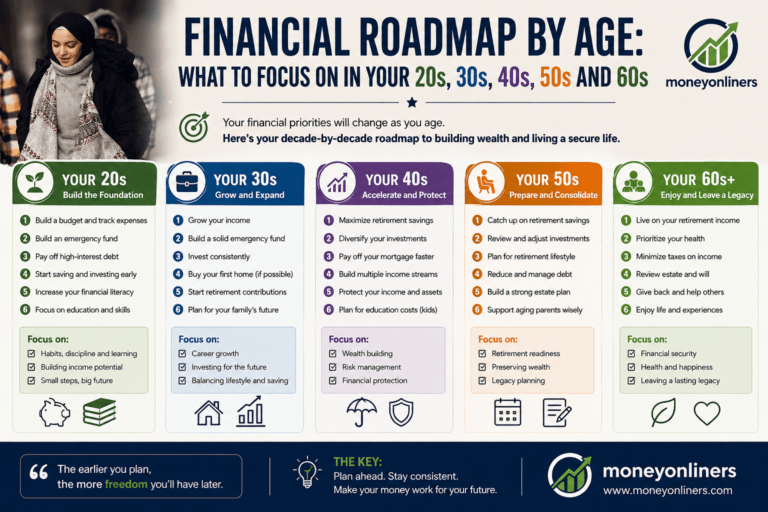
Short-Term vs Long-Term Financial Goals: 20 Real-Life Examples
Short-Term vs Long-Term Financial Goals: 20 Real-Life Examples
Some financial goals belong in the next few months, while others may take decades. Building a $2,000 emergency fund is very different from funding retirement 30 years from now. Therefore, the most useful question is not simply how much money you need, but when you need it and what level of risk is appropriate for that timeline.
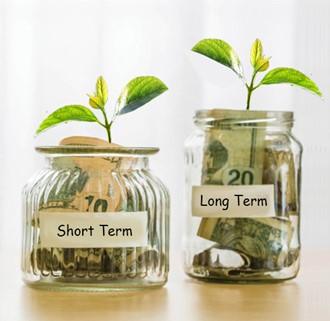
The main difference between short-term vs long-term financial goals is the amount of time available before the money is needed.
Generally, short-term goals may fall within the next few months to roughly three years. Meanwhile, long-term goals often extend beyond five or ten years.
| Feature | Short-Term Financial Goals | Long-Term Financial Goals |
|---|---|---|
| Typical timeline | Months to about 1–3 years | Usually 5–10+ years |
| Main purpose | Stability and near-term needs | Asset building and future security |
| Examples | Emergency fund, debt payoff, vacation, car repair | Retirement, financial independence, home payoff, major net worth goal |
| Risk tolerance | Usually lower because money is needed sooner | Potentially higher depending on the goal and circumstances |
| Main priority | Liquidity and stability | Long-term growth and purchasing power |
The sooner you need the money, the more important stability and accessibility become. Conversely, a longer time horizon may provide more ability to tolerate investment fluctuations.
Table of Contents
What Are Short-Term and Long-Term Financial Goals?
A financial goal is a specific result you want your money to help you achieve. However, that goal becomes much more useful once you attach a realistic deadline.
Short-Term Financial Goal
A short-term goal is something you expect to fund relatively soon. For example, you may want to build $3,000 of emergency savings within 12 months.
Because the money is needed soon, stability and accessibility usually matter more than chasing higher potential returns.
Long-Term Financial Goal
By contrast, a long-term goal generally gives you many years for saving, investing or debt reduction.
For instance, retirement could be 25 years away. Likewise, reaching financial independence may require decades of asset building.
Why the Time Horizon Matters
A financial time horizon is simply the amount of time available before the money is needed.
Therefore, choosing the correct timeline is not a minor detail. Instead, it can influence how aggressively or conservatively the money is managed.
Short-Term vs Long-Term Financial Goals: 10 Key Differences
At first, short-term and long-term financial goals may appear to differ only by deadline. However, the time available can also affect liquidity, investment risk, contribution strategy and the impact of inflation.
| # | Factor | Short-Term Goal | Long-Term Goal |
|---|---|---|---|
| 1 | Timeline | Months to a few years | Many years or decades |
| 2 | Urgency | Usually higher | Usually lower today |
| 3 | Investment risk | Usually lower | May tolerate more volatility |
| 4 | Liquidity | Usually high | Often lower |
| 5 | Compound growth | Limited | Potentially much greater |
| 6 | Inflation impact | Usually smaller | Potentially substantial |
| 7 | Goal uncertainty | Often easier to estimate | Greater uncertainty |
| 8 | Contribution strategy | Often fixed monthly target | Can rise with future income |
| 9 | Examples | Emergency fund, small purchase | Retirement, financial independence |
| 10 | Review frequency | Monthly or quarterly | At least annually |
Short-term goals protect your present financial life. Meanwhile, long-term goals help today's income build future assets. Therefore, a strong financial plan usually needs both.
10 Real-Life Short-Term Financial Goal Examples
Short-term goals usually focus on financial control, stability and expenses that are already visible.
Because the money may be needed soon, protecting what you have saved can be more important than maximizing potential returns.
In addition, completing one short-term goal often creates room for another. For example, paying off a credit card can free monthly cash flow for emergency savings or investing.

1 Build a $1,000 Starter Emergency Fund
A starter emergency fund is one of the clearest short-term goals because unexpected expenses can happen immediately.
Goal
$1,000 within 10 months
Monthly Amount
Once completed, this reserve could help handle smaller emergencies without automatically turning to a credit card.
Next step: After reaching the starter target, gradually build a larger emergency reserve.
2 Save One Month of Essential Expenses
A small emergency fund can cover minor shocks. However, one full month of essential expenses provides a stronger financial buffer.
If Essential Expenses Are
$3,000 per month
Goal
$3,000 within 18 months
Therefore, the approximate monthly savings requirement would be:
Once that milestone is reached, you could continue building toward several months of essential expenses.
3 Pay Off a High-Interest Credit Card
High-interest debt can compete directly with saving and investing goals. Consequently, eliminating an expensive balance may improve several areas of your finances at once.
Example Balance
$4,000
Goal
Pay it off within 12 months.
In practice, the required payment depends on the interest rate, payment timing and whether new charges are added.
Therefore, use the issuer's statement or an appropriate payoff calculator when determining the exact monthly amount.
After the balance reaches zero, consider redirecting the previous payment toward emergency savings, another debt or long-term investing.
4 Save for a Vacation Without Using Debt
Not every financial goal needs to involve emergencies or retirement. In fact, planning enjoyable spending in advance can also improve financial control.
Example
Trip budget: $3,600
Time available: 12 months
Monthly Goal
As a result, the trip can be funded before departure instead of becoming months of credit-card payments afterward.
5 Build a Car Repair or Replacement Fund
Vehicle expenses often feel unexpected. Nevertheless, maintenance and eventual replacement are predictable parts of owning a car.
Example Goal
$2,400 within two years
Monthly Savings
Consequently, future repair bills may become planned expenses instead of sudden financial emergencies.
6 Save for a Laptop, Phone or Work Equipment
Technology purchases can be useful short-term financial goals, particularly when the equipment supports employment or business income.
Example
Equipment cost: $1,800
Deadline: 9 months
Monthly Savings Requirement
By saving in advance, you may have more flexibility to compare prices. Moreover, you may avoid taking financing simply because the equipment is needed immediately.
7 Build a Medical or Insurance Deductible Fund
A known insurance deductible can create a measurable savings target. Therefore, you do not have to wait until an expense occurs before preparing for the possible cost.
Example
$2,000 deductible
Instead of hoping the expense never occurs, you could gradually reserve enough cash to cover it.
However, this dedicated reserve may sit alongside your broader emergency fund rather than replacing it.
8 Save for Moving Costs or a Rental Deposit
Moving often creates several costs at nearly the same time. Therefore, planning the total expense can be more useful than saving only for the rental deposit.
Potential Costs
- Security deposit
- First month's rent
- Moving service
- Travel
- Furniture
- Utility setup
Example Goal
$5,000 within 20 months
Monthly Requirement
As a result, the move can become a planned financial transition rather than a sudden drain on credit.
9 Increase Your Monthly Income
A financial goal does not always require cutting expenses. Instead, increasing income can create additional capacity for almost every other goal.
Goal
Increase take-home income by $500 per month within 12 months.
Possible Methods
- Promotion
- Job change
- Salary negotiation
- Freelancing
- Business income
- Additional professional skill
If sustained, an additional $500 per month could create up to $6,000 of extra annual financial capacity before considering taxes or new expenses.
Therefore, income growth can sometimes accelerate a financial plan more effectively than repeatedly cutting small expenses.
10 Improve Monthly Cash Flow
Sometimes the most valuable short-term goal is simply creating a reliable monthly surplus.
Starting Situation
Take-home income: $4,500
Monthly spending: $4,450
Current surplus: $50
Goal
Increase the monthly surplus to $500.
For example, part of the improvement could come from lower recurring expenses. Meanwhile, another portion might come from higher income.
Once achieved, the $500 monthly surplus could fund emergency savings, investing, debt reduction or another priority.
10 Real-Life Long-Term Financial Goal Examples
Long-term goals give saving and investing substantially more time to work.
Nevertheless, longer timelines create additional uncertainty. Inflation, income, family responsibilities, taxes and investment returns can all change before the goal is reached.
Therefore, long-term goals generally require regular reviews rather than a plan that remains unchanged for decades.

11 Build 3–6 Months of Emergency Savings
Emergency savings often begins as a short-term priority. However, building a larger reserve may continue for several years.
If Essential Expenses Are $4,000 Monthly
| Reserve | Target |
|---|---|
| 1 month | $4,000 |
| 3 months | $12,000 |
| 6 months | $24,000 |
The appropriate amount varies by household. For example, someone with unstable self-employment income may prefer a larger reserve than someone in a stable dual-income household.
12 Save for a Home Purchase
Buying a home can require several years of preparation. Moreover, the down payment is only one part of the financial goal.
Potential Costs Include
- Down payment
- Closing costs
- Moving costs
- Initial repairs
- Emergency reserves
- Ongoing taxes and insurance
Example Savings Goal
$60,000 within six years
Ignoring interest for simplicity, the required monthly amount would be approximately:
Therefore, calculating the full ownership cost before buying can prevent the home goal from overwhelming retirement, emergency savings or other priorities.

13 Build a $100,000 Net Worth
Net Worth Formula
Suppose your current net worth is:
$25,000
Goal
$100,000 within 8 years
Required Increase
$75,000
That progress could come from several places. For instance, saving, retirement contributions, investment growth, business equity, home equity and debt reduction can all improve net worth.
As a result, a net-worth goal does not depend on only one investment account.
14 Build a Retirement Portfolio
Retirement is one of the clearest examples of a genuinely long-term financial goal.
For younger adults, the time horizon may extend 30 or 40 years. Therefore, starting earlier can create more time for contributions and potential compound growth.
Possible Goal
Invest 10% of income toward retirement and gradually increase the percentage after future raises.
Retirement planning should also consider inflation, healthcare, taxes, future spending, pensions or government benefits and the expected retirement age.
15 Pay Off a Mortgage
A mortgage payoff can be a long-term goal. However, paying it off early is not automatically the best decision for every household.
Important Variables
- Mortgage interest rate
- Retirement contribution needs
- Emergency reserves
- Other debts
- Tax situation
- Investment alternatives
Example Goal
Enter retirement without a mortgage.
For some households, that could reduce the amount of monthly income required during retirement.
16 Build Multiple Income Streams
Reducing dependence on a single paycheck can be a useful long-term objective.
Possible Sources
- Primary employment
- Freelancing
- Business income
- Rental income
- Investment income
- Digital products
Goal
Build a second reliable income source that covers 20% of household expenses within 10 years.
Importantly, multiple income streams also create additional complexity, risk, taxes and work. Therefore, quality matters more than simply collecting as many streams as possible.
17 Fund a Child's Education
Education is a useful example of a goal whose strategy may change as the deadline approaches.
When a child is young, there may be many years available. However, as enrollment gets closer, protecting the accumulated money from large short-term losses may become more important.
Therefore, the appropriate asset mix may change over time.
Parents should also consider retirement security before directing every available dollar toward education.
18 Build a Valuable Business Asset
A business can become part of long-term net worth when it develops durable economic value.
Potential Value Drivers
- Recurring revenue
- Brand recognition
- Customer relationships
- Systems
- Intellectual property
- Profitable operations
Example Goal
Build a profitable business that generates $50,000 of annual owner income within seven years.
Business outcomes are uncertain. Nevertheless, building productive assets can be an important part of a broader wealth plan.
19 Reach Financial Independence
Financial independence generally means having enough resources that paid employment becomes less necessary for covering ongoing living costs.
Example
Suppose annual spending is approximately:
$50,000
The amount required depends on investment strategy, taxes, inflation, other income sources, withdrawal assumptions and time horizon.
Therefore, there is no universal financial-independence number.
Withdrawal rules such as the 4% rule are planning frameworks rather than guaranteed outcomes.
20 Build Greater Financial Freedom
Financial freedom is broader than reaching one portfolio number.
For example, it might mean being able to leave an unhealthy job, take several months away from work, start a business or retire earlier.
Long-Term Goal
Build enough savings, assets and income flexibility that one paycheck no longer controls every major financial choice.
What About Medium-Term Financial Goals?
Not every financial objective fits neatly into a short-term or long-term category. Consequently, a middle category can be useful for goals roughly three to seven years away.
Examples
- Home down payment
- Graduate school
- Business launch
- Vehicle replacement
- Large wedding
- Major relocation
Why Medium-Term Goals Can Be Difficult
These goals may be far enough away for investment growth to look attractive. However, they can also be close enough that a major market decline shortly before the deadline creates a serious problem.
Therefore, medium-term goals often require especially careful consideration of risk, liquidity and deadline flexibility.
How to Match Your Money to the Goal Timeline
The time horizon and your ability to tolerate losses should help shape financial decisions. Therefore, a goal should not be separated from the date when the money will actually be needed.
Money Needed Soon
In general, near-term money requires a stronger focus on:
- Liquidity
- Principal stability
- Accessibility
Money Needed Decades From Now
By contrast, a long horizon may allow more exposure to investments that fluctuate because there is potentially more time to recover from downturns.
| Goal | Possible Time Horizon | Main Priority |
|---|---|---|
| Emergency fund | Immediate | Accessibility and stability |
| Vacation | 1 year | Protect target amount |
| Home purchase | 5 years | Balance growth with deadline risk |
| Retirement | 30 years | Long-term growth and appropriate diversification |
Instead, the appropriate risk level should reflect the deadline, the importance of the goal and your ability to tolerate losses.
MoneyOnliners Original Analysis: The Goal Horizon Test
MoneyOnliners Goal Urgency Formula
MoneyOnliners Goal Funding Formula
MoneyOnliners Goal Horizon Scorecard
| Question | Shorter-Horizon Direction | Longer-Horizon Direction |
|---|---|---|
| Is the money needed soon? | Yes | No |
| Is principal stability important? | Very important | Depends |
| Can the deadline move? | Usually little | Sometimes more |
| Is market volatility acceptable? | Usually less | Potentially more |
| Is compound growth important? | Less | Much more |
| Does inflation matter? | Less | More |
| Should contributions rise with income? | Sometimes | Often useful |
| Should the plan be reviewed? | Frequently | At least annually |
The MoneyOnliners Goal Horizon Test, Goal Urgency Formula, Goal Funding Formula and Goal Horizon Scorecard are original educational tools designed to connect the importance of a goal with its deadline, funding requirement and acceptable level of risk.
Why Short-Term vs Long-Term Financial Goals Matter
1. First, financial goals become easier to fund when they have clear deadlines.
2. In addition, short-term goals can improve immediate financial stability.
3. Meanwhile, long-term goals can support future asset growth.
4. For example, emergency savings can reduce dependence on new debt.
5. Likewise, high-interest debt reduction can free future cash flow.
6. Generally, short-term savings need greater accessibility.
7. By contrast, longer time horizons may permit more investment volatility.
8. However, investment risk should still match personal tolerance.
9. Moreover, a goal's deadline affects how much needs to be saved monthly.
10. Over time, longer timelines create greater opportunity for compound growth.
11. In addition, inflation becomes increasingly important for distant goals.
12. Similarly, income growth can accelerate both short- and long-term goals.
13. Meanwhile, medium-term goals require careful balancing between growth and stability.
14. Importantly, homeownership should reflect personal circumstances rather than social expectations.
15. Likewise, retirement goals can benefit from starting earlier when possible.
16. Furthermore, net-worth goals combine both asset growth and liability reduction.
17. As a result, financial freedom can require several long-term goals working together.
18. Because timelines differ, separate goals may require different accounts and strategies.
19. Therefore, annual reviews help keep future goals aligned with reality.
20. Ultimately, understanding short-term vs long-term financial goals helps you decide what your money should accomplish, when it must accomplish it and how much uncertainty the deadline can reasonably tolerate.
10 Short-Term vs Long-Term Financial Goal Mistakes to Avoid
1. Treating Every Goal as Equally Urgent
A retirement goal 30 years away should not automatically receive the same immediate priority as overdue high-interest debt.
2. Investing Money Needed Next Year Too Aggressively
A market decline shortly before the deadline could leave the goal underfunded.
3. Keeping Every Long-Term Dollar in Cash
Although cash is useful for stability, long-term goals can lose purchasing power to inflation when growth is too low.
4. Setting a Goal Without a Deadline
Without timing, you cannot calculate a meaningful monthly contribution.
5. Setting a Deadline Without Calculating the Cost
A $30,000 goal in five years requires a different contribution from the same goal in ten years.
6. Ignoring Emergency Savings While Investing
Without liquid reserves, an unexpected expense may force you to sell investments at a poor time.
7. Assuming Long-Term Returns Are Guaranteed
Longer time horizons create more opportunity for growth, but they do not remove investment risk.
8. Never Updating a Long-Term Target for Inflation
A future home, education or retirement budget may cost substantially more than today's estimate.
9. Keeping Contributions Flat After Income Rises
Future raises can strengthen long-term goals without requiring unrealistic investment returns.
10. Refusing to Change the Goal
A new child, job loss, relocation or health issue may justify changing both the amount and deadline.
Updating a goal when circumstances change can make a financial plan more realistic rather than less disciplined.
Incoming Link Opportunities
25 Financial Goals Worth Setting for the Next 1, 5 and 10 Years
https://moneyonliners.com/financial-goals/
10-Year Financial Plan: What Should You Actually Be Planning For?
https://moneyonliners.com/10-year-financial-plan/
10 Steps to Build a Long-Term Financial Plan That Can Grow With You
https://moneyonliners.com/long-term-financial-plan/
How to Build Wealth From Nothing: 10 Steps for Beginners
https://moneyonliners.com/how-to-build-wealth-from-nothing/
How to Calculate Your Net Worth in 5 Simple Steps
https://moneyonliners.com/how-to-calculate-net-worth/
High-Priority Incoming Links
$0 to $100,000 Net Worth: A Realistic Roadmap for Building Your First Six Figures
https://moneyonliners.com/0-to-100000-net-worth/
15 Wealth-Building Strategies That Can Grow Your Money Over Time
https://moneyonliners.com/wealth-building-strategies/
10 Wealth-Building Habits That Can Make a Big Difference Over 10 Years
https://moneyonliners.com/wealth-building-habits/
Retirement Planning: 15 Things to Start Doing Before You Retire
https://moneyonliners.com/retirement-planning/
Topic Cluster Incoming Links
Financial Independence: 10 Steps to Take More Control of Your Money and Future
https://moneyonliners.com/financial-independence/
How Much Money Do You Need for Financial Independence?
https://moneyonliners.com/how-much-money-for-financial-independence/
Your First $100,000: Why This Wealth Milestone Can Be So Powerful
https://moneyonliners.com/first-100000-wealth-milestone/
20 Assets That Can Help Build Wealth Over the Long Term
https://moneyonliners.com/assets-that-build-wealth/
Continue Learning on MoneyOnliners
Recommended External Resources
1. Investor.gov — Define Your Goals
Define Your Goals — Investor.gov
2. Investor.gov — Time Horizon
3. Investor.gov — Introduction to Investing
Introduction to Investing — Investor.gov
4. Investor.gov — Asset Allocation and Diversification
Asset Allocation and Diversification — Investor.gov
5. Investor.gov — Invest for Your Goals
Invest for Your Goals — Investor.gov
6. Investor.gov — Save and Invest
Save and Invest — Investor.gov
7. Consumer Financial Protection Bureau — Financial Well-Being
Why Financial Well-Being? — CFPB
8. Consumer Financial Protection Bureau — Saving
9. Investor.gov — Compound Interest Calculator
Compound Interest Calculator — Investor.gov
10. Federal Trade Commission — Investment Scams
Investment Scams — Federal Trade Commission
This article provides general educational information and is not individualized financial, investment, retirement, tax or legal advice. Appropriate savings and investment choices depend on the goal, time horizon, risk tolerance, financial circumstances, account rules and jurisdiction. Investment returns are not guaranteed.
Frequently Asked Questions
What is the difference between short-term and long-term financial goals?
The primary difference is time. Short-term goals usually need funding relatively soon, whereas long-term goals may extend across many years or decades.
Because the timelines differ, the appropriate level of investment risk can also change.
For example, money needed next year generally requires more stability. By contrast, money needed decades later may have more time to recover from market fluctuations.
What are examples of short-term financial goals?
Examples include building a starter emergency fund, paying off a credit card and saving for a vacation.
In addition, you may save for car repairs, a rental deposit or work equipment.
Increasing income can also be a useful short-term goal. Likewise, improving monthly cash flow can create capacity for several other priorities.
What are examples of long-term financial goals?
Retirement is one of the clearest long-term examples. However, other goals may include buying a home, building net worth or paying off a mortgage.
In addition, financial independence, business ownership and education funding can require long timelines.
Because circumstances change, these goals should be reviewed regularly.
Is three years short term or long term?
There is no universal dividing line. Nevertheless, three years can reasonably be viewed as short-to-medium term.
More importantly, consider whether you could tolerate a significant investment loss shortly before the deadline.
Therefore, focus on flexibility and risk rather than only the label attached to the goal.
Is five years a long-term financial goal?
Five years is often treated as medium-to-long term. However, it is still short enough for market losses near the deadline to matter.
For example, a five-year home down-payment goal may need a different strategy from a retirement goal 30 years away.
Therefore, both timing and risk tolerance matter.
Should short-term financial goals be invested?
Not automatically. If the money is needed soon, a market decline could disrupt the goal.
Therefore, short-term funds often require greater stability and liquidity.
The appropriate account depends on available products and personal circumstances.
Should long-term financial goals always be invested?
Not necessarily. However, investing may be appropriate for many long-term goals because there is potentially more time to manage market volatility.
Risk tolerance and diversification still matter.
Most importantly, no investment strategy guarantees success.
How many financial goals should I have?
You can have many future goals. However, managing only a few active priorities is often easier.
For example, three to six active goals may be more manageable than trying to fund 20 goals simultaneously.
As one goal is completed, additional money can then be redirected toward another.
Should emergency savings be a short-term goal?
Yes. Building the first layer of emergency savings is generally a short-term priority.
However, expanding that reserve to several months of expenses can continue over a longer period.
Therefore, emergency saving can span more than one planning horizon.
Is paying off debt a short-term or long-term goal?
It can be either. For instance, a small credit-card balance might reasonably be eliminated within one year.
A mortgage, by contrast, may remain for decades.
Consequently, the interest rate, balance and repayment terms should influence the priority.
Is buying a home a short-term or long-term financial goal?
It depends on the intended purchase date. A home purchase next year is a short-term goal, whereas a purchase six years away is more medium term.
In addition, remember that the down payment is not the only cost.
Closing costs, repairs, insurance and ongoing ownership expenses should also be considered.
Is retirement always a long-term goal?
Retirement is long term for younger adults. However, someone retiring in three years has a much shorter horizon for money that may soon be needed.
Therefore, retirement planning can become increasingly complex as withdrawals approach.
Asset allocation, expected spending and income sources may all need to change.
How do I prioritize short-term and long-term financial goals?
Begin with financial stability. For example, essential bills, emergency savings and expensive debt may deserve immediate attention.
At the same time, avoid ignoring retirement indefinitely.
Therefore, some households may reasonably fund several goals at once.
Can I work on short-term and long-term goals at the same time?
Yes. For example, you might save toward an emergency fund while also contributing to retirement.
Meanwhile, an available workplace retirement match could influence how money is divided between those goals.
Once a short-term goal is completed, its monthly contribution can then be redirected toward a longer-term priority.
Which matters more: short-term or long-term financial goals?
Both matter. Short-term goals help protect today's finances, while long-term goals help current income build future assets and flexibility.
Neglecting either side can eventually create problems.
Ultimately, a strong financial plan connects short-term stability with long-term progress.
Research Methodology
MoneyOnliners organized the 20 examples into 10 shorter-term goals and 10 longer-term goals. However, exact classifications can vary because individuals may have different deadlines for the same goal.
Time-Horizon Research
Investor education guidance was reviewed to support the principle that financial goals should be connected to the number of months, years or decades available.
Saving vs Investing
Shorter-term saving needs and longer-term investing were treated differently. Therefore, this article does not assume every financial goal should use the same account or strategy.
Risk and Asset Allocation
Time horizon and risk tolerance can influence how much volatility may be appropriate. As a result, investment risk is treated differently for near-term and distant goals.
Original MoneyOnliners Analysis
The Goal Horizon Test, Goal Urgency Formula, Goal Funding Formula and Goal Horizon Scorecard are original MoneyOnliners educational resources.
First-Hand Evidence Standard
MoneyOnliners presents personal savings histories, debt-payoff outcomes, investment records or goal-tracking screenshots only when genuine first-hand evidence exists and can be represented accurately.
Accordingly, no personal financial-goal outcome is claimed in this article.
Limitations
Goal classifications differ, while investment returns, interest rates and inflation can change over time.
In addition, household circumstances vary substantially. Therefore, short-term and long-term labels should be used as planning guides rather than rigid universal definitions.
Google Search Console Checklist
- Confirm final URL: /short-term-vs-long-term-financial-goals/
- Confirm canonical matches the published URL.
- Use short-term vs long-term financial goals naturally in the title, introduction, comparison table, FAQ and conclusion.
- Use related phrases: short-term financial goals, long-term financial goals, financial goal examples, financial time horizon and personal finance goals.
- Use real financial-planning imagery in the hero.
- Use budgeting imagery for short-term sections.
- Use property imagery only for housing sections.
- Use older-adult imagery for retirement and long-term planning.
- Avoid repeating generic calculator images.
- Keep every image alt description unique.
- Confirm Recommended External Resources contains 6–10 authoritative sources.
- Check all internal links.
- Check tables carefully on mobile.
- Confirm article is indexable.
- Confirm URL appears in the XML sitemap.
- Inspect the published URL in Google Search Console.
- Request indexing after publication if appropriate.
- Monitor “short term vs long term financial goals.”
- Monitor “short term financial goals examples.”
- Monitor “long term financial goals examples.”
- Monitor “financial goal time horizon.”
Conclusion: Give Every Financial Goal the Right Timeline
The difference between short-term vs long-term financial goals is not simply that one goal is smaller while another is larger.
Short-Term Goals Protect the Present
For example, emergency savings can protect against unexpected expenses. Meanwhile, reducing expensive debt can improve monthly cash flow.
In addition, planning known purchases in advance can reduce dependence on borrowing.
Long-Term Goals Build the Future
Over longer periods, regular investing can help build retirement assets and net worth.
Likewise, income growth and productive assets can create greater future flexibility.
The Timeline Changes the Strategy
Money needed next year generally cannot tolerate the same amount of uncertainty as money needed 30 years from now.
Therefore, the deadline should influence how much risk you take, how much you save each month and where the money is held.
Start With the Goal
First, decide what you want to accomplish. Next, estimate how much it will cost.
Then, attach a realistic deadline. Afterward, calculate the recurring contribution needed.
Finally, choose a saving or investing approach that matches both the time horizon and your ability to tolerate losses.