Where Should Your Money Go First? A 7-Step Financial Priority Checklist
Where Should Your Money Go First? A 7-Step Financial Priority Checklist
When several financial goals compete for the same paycheck, knowing what to do first can be harder than knowing what to do eventually. Should extra money build an emergency fund, eliminate debt, fund retirement, invest or save for a home? This financial priority checklist creates a practical order while recognizing that high-interest debt, employer benefits and urgent life circumstances can sometimes change the sequence.
A practical financial priority checklist can usually begin with survival and stability before moving toward long-term growth.
| Priority | Where Money Goes | Main Purpose |
|---|---|---|
| 1 | Essential bills and minimum obligations | Keep the household financially functional |
| 2 | Starter emergency fund | Reduce immediate financial fragility |
| 3 | Very high-interest debt | Stop expensive interest from draining cash flow |
| 4 | Important employer benefits or retirement match | Avoid leaving valuable compensation unused |
| 5 | Fuller emergency savings and sinking funds | Prepare for shocks and predictable expenses |
| 6 | Retirement and long-term investing | Build future assets and financial independence |
| 7 | Additional goals and lower-priority debt | Accelerate wealth, major purchases and flexibility |
For example, an overdue rent payment can be more urgent than investing. Likewise, a valuable employer retirement match may justify contributing before aggressively paying moderately priced debt. Your actual sequence should reflect urgency, interest rates, available benefits and household risk.
Table of Contents
Why Financial Priorities Matter
Most people have more financial goals than available monthly cash.
Therefore, prioritization determines which goals receive money first and which ones temporarily wait.
Imagine You Have $800 of Extra Monthly Cash Flow
Possible uses might include:
- Emergency savings
- Credit-card debt
- Retirement contributions
- Home down payment
- Vehicle replacement
- Investing
- Extra mortgage payments
Putting $114 into all seven goals may appear balanced. However, it may leave urgent problems unresolved for much longer.
By contrast, temporarily concentrating more money on the highest-priority weakness can sometimes improve the rest of the financial plan faster.
The 7-Step Financial Priority Checklist
| Step | Priority | Why It Comes Here |
|---|---|---|
| 1 | Essential obligations | Prevents immediate financial damage |
| 2 | Starter cash buffer | Reduces reliance on new borrowing |
| 3 | Very high-interest debt | Stops expensive recurring losses |
| 4 | Employer match / high-value benefit | May provide unusually valuable compensation |
| 5 | Full emergency fund and sinking funds | Strengthens resilience |
| 6 | Retirement and long-term investing | Builds productive long-term assets |
| 7 | Additional financial goals | Accelerates flexibility after foundations strengthen |
You can fund several steps simultaneously. Nevertheless, the checklist helps determine where additional money should usually receive the greatest emphasis.
1 Pay Essential Bills and Minimum Obligations
Before investing aggressively or paying extra on optional goals, protect the financial foundation.
Essential Priorities Can Include
- Housing
- Food
- Utilities
- Transportation needed for work
- Basic insurance
- Required taxes
- Minimum debt payments
Why This Comes First
Missing essential obligations can create immediate consequences such as late fees, service disconnection, housing instability or damaged credit.
Example
Suppose you have $600 available but rent is $400 short.
In that situation, investing the entire $600 while leaving rent unpaid would usually create unnecessary financial risk.
Prevent immediate financial damage before optimizing long-term growth.

2 Build a Starter Emergency Fund
After essential bills are current, create a small layer of financial protection.
Possible Starter Goal
$500–$1,500 or another amount appropriate to your household expenses.
Why Not Attack Debt With Every Dollar?
Without any cash reserve, the next repair or medical expense may go straight back onto a credit card.
Therefore, a small emergency fund can make the debt-payoff plan more durable.
Possible Uses
- Urgent car repair
- Medical expense
- Essential appliance replacement
- Unexpected travel
- Short income disruption
3 Attack Very High-Interest Debt
Once a small cash buffer exists, expensive debt can deserve aggressive attention.
Example
Credit-card balance: $7,500
APR: 26%
An interest rate that high can consume cash flow rapidly.
Why This Often Comes Before Extra Investing
Eliminating a 26% debt cost produces a certain reduction in future interest expense, whereas investment returns remain uncertain.
This does not mean every debt should always be paid before investing. Mortgage debt, student loans and other lower-rate obligations can involve different tradeoffs.
After the Debt Is Gone
Redirect the old payment rather than absorbing it into lifestyle spending.

4 Capture Important Employer Benefits
Some employer benefits can materially change the normal priority order.
A Common Example
An employer may match part of your retirement contribution.
For instance, suppose you contribute:
$200 per month
and the employer contributes another:
$200
That creates $400 of retirement funding from $200 of your own contribution, subject to the employer's actual plan rules.
Other Benefits May Matter Too
- Health savings benefits
- Pension contributions
- Stock plans
- Insurance benefits
- Education assistance
Understand what value you may be leaving unused and whether vesting, tax or eligibility rules apply.
5 Build Stronger Emergency Savings and Sinking Funds
After the most expensive immediate weaknesses are under better control, strengthen your cash reserves.
Emergency Fund
A larger reserve may eventually cover several months of essential expenses.
Sinking Funds
Meanwhile, known future expenses can receive separate savings buckets.
| Fund | Purpose |
|---|---|
| Emergency fund | Unexpected financial shocks |
| Vehicle fund | Future repair or replacement |
| Home repair fund | Known ownership costs |
| Medical fund | Expected deductible or procedure |
| Travel fund | Planned travel |
Example
Essential expenses:
$3,500 per month
Three-month emergency target:
$10,500
If funded over 30 months:
6 Increase Retirement and Long-Term Investing
Once the financial foundation is stronger, long-term asset building can receive more money.
Possible Priorities
- Workplace retirement account
- IRA or equivalent retirement account
- Diversified taxable investments
- Long-term education investing
- Financial-independence portfolio
Why This Matters
Cash reserves provide stability. However, long-term goals may also need growth to outpace inflation over decades.
Illustrative Example
Investing:
$500 every month
creates direct contributions of:
$60,000 over 10 years
and:
$180,000 over 30 years
before considering any investment gains or losses.
Choose investments based on the goal, time horizon, diversification needs and your ability to tolerate losses.

7 Fund Additional Goals and Accelerate Progress
After core financial priorities are functioning, extra cash can fund more flexible goals.
Examples
- Home down payment
- Early mortgage payoff
- Vehicle replacement
- Business capital
- Travel
- Additional investing
- Education
- Earlier financial independence
Now You Have More Choice
At this stage, financial decisions often become less about avoiding damage and more about choosing which future you value most.
What If Several Financial Priorities Matter at the Same Time?
Financial planning does not always require completing one goal entirely before touching the next.
Example: $1,000 of Monthly Financial Capacity
| Priority | Monthly Amount |
|---|---|
| High-interest debt | $450 |
| Emergency savings | $250 |
| Employer-match retirement contribution | $200 |
| Vehicle sinking fund | $100 |
| Total | $1,000 |
Once the high-interest debt is eliminated, its $450 allocation can move to emergency savings and long-term investing.
MoneyOnliners Priority Cascade
This approach allows completed priorities to increase funding for the goals that follow.
Debt vs Investing: Which Should Get Your Money First?
The answer depends heavily on the debt cost and available investment benefits.
| Situation | Potential Priority |
|---|---|
| Credit card at 28% APR | Debt often deserves very strong priority |
| Employer provides valuable retirement match | Capturing available match may deserve priority |
| Low-rate mortgage | Investing may deserve more consideration |
| No emergency fund | Some cash savings may come first |
| Retirement only a few years away | Long-term funding urgency increases |
Do not compare a guaranteed debt interest rate mechanically with an assumed investment return. Future investment performance is uncertain.
Where Should a Pay Raise Go First?
A raise can accelerate several financial priorities without requiring cuts to your existing lifestyle.
Example
Monthly take-home pay increases by:
$700
Possible Allocation
| Use | Amount |
|---|---|
| Retirement | $200 |
| Debt payoff | $150 |
| Emergency / sinking fund | $150 |
| Long-term investing | $100 |
| Lifestyle improvement | $100 |
The correct split depends on your priorities. Nevertheless, directing part of each raise toward financial goals can prevent every income increase from becoming permanent lifestyle inflation.
When your paycheck receives a raise, give at least one important future goal a raise too.
MoneyOnliners Original Analysis: The Priority Decision Tree
MoneyOnliners Priority Pressure Formula
MoneyOnliners Financial Triage Rule
The MoneyOnliners Priority Decision Tree, Priority Pressure Formula and Financial Triage Rule are original educational resources designed to help readers decide which competing financial goal should receive the next available dollar.
MoneyOnliners Financial Triage Score
Use the following questions when several priorities compete.
| Question | Score 0 | Score 1 | Score 2 |
|---|---|---|---|
| How urgent is it? | Years away | Months away | Immediate |
| How serious is the consequence? | Minor | Moderate | Major |
| Is the cost guaranteed? | No | Partly | Yes |
| Will delay make it more expensive? | Little | Possibly | Significantly |
| Does it protect other goals? | Little | Somewhat | Strongly |
Example
A 27% credit-card balance could score highly because the interest is expensive, delay increases the cost and eliminating it improves future cash flow.
Meanwhile, a flexible vacation five years away may score much lower.
The score is a prioritization aid, not individualized financial advice. Important tax, legal, retirement-plan or insurance rules may override a simple score.
10 Financial Priority Mistakes to Avoid
1. Investing While Essential Bills Are Overdue
Prevent immediate financial damage first.
2. Paying Debt With Every Dollar and Keeping Zero Cash
Without a buffer, the next emergency can recreate the debt.
3. Treating All Debt as Equally Urgent
A 28% credit card and a low-rate mortgage create very different financial costs.
4. Ignoring an Employer Retirement Match
Understand valuable workplace benefits before deciding not to participate.
5. Building a Huge Emergency Fund While Ignoring Expensive Debt
After a reasonable reserve exists, additional cash may have a more valuable use elsewhere.
6. Funding a Vacation Before a Known Major Repair
Prioritize expenses with more serious consequences.
7. Waiting Until Every Debt Is Gone Before Investing Anything
Some lower-rate debts may not require an all-or-nothing approach.
8. Increasing Lifestyle Spending After Every Raise
Higher income should ideally strengthen future goals too.
9. Trying to Fund Ten Goals Equally
A small allocation to everything can leave serious problems unresolved.
10. Never Updating the Priority Order
A new child, job loss, debt payoff or approaching retirement can change what deserves money first.
Once one problem is solved, redirect the money toward the next highest-value priority.
Why a Financial Priority Checklist Matters
1. First, essential expenses keep the household functioning.
2. Next, starter emergency savings reduces immediate fragility.
3. Meanwhile, expensive debt can drain future cash flow.
4. Therefore, high-interest balances may deserve aggressive attention.
5. Valuable employer benefits can change the normal priority sequence.
6. In addition, a fuller emergency fund can protect long-term plans.
7. Sinking funds prepare for predictable future expenses.
8. Long-term investing can build productive assets.
9. However, investment returns remain uncertain.
10. Retirement deserves recurring attention even when it is decades away.
11. Extra debt payoff can become more attractive as retirement approaches.
12. Income growth creates additional capacity for multiple priorities.
13. Redirecting old debt payments can accelerate future goals.
14. Similarly, raises can increase retirement and investment contributions.
15. Not every financial goal needs equal funding at the same time.
16. Urgency helps determine which goal deserves attention first.
17. Financial consequences matter as much as the size of the goal.
18. Priorities should change as financial weaknesses are corrected.
19. Ultimately, financial planning becomes easier when every new dollar has a clear job.
20. Therefore, a strong financial priority checklist matters because it helps you protect today's stability, remove expensive financial drag and systematically redirect more money toward long-term security and wealth building.
Incoming Link Opportunities
10 Financial Planning Mistakes That Can Cost You Years of Progress
https://moneyonliners.com/financial-planning-mistakes/
How Much Should You Save Every Month for Your Future?
https://moneyonliners.com/how-much-should-you-save-every-month/
25 Financial Goals Worth Setting for the Next 1, 5 and 10 Years
https://moneyonliners.com/financial-goals/
Short-Term vs Long-Term Financial Goals: 20 Real-Life Examples
https://moneyonliners.com/short-term-vs-long-term-financial-goals/
10 Steps to Build a Long-Term Financial Plan That Can Grow With You
https://moneyonliners.com/long-term-financial-plan/
High-Priority Incoming Links
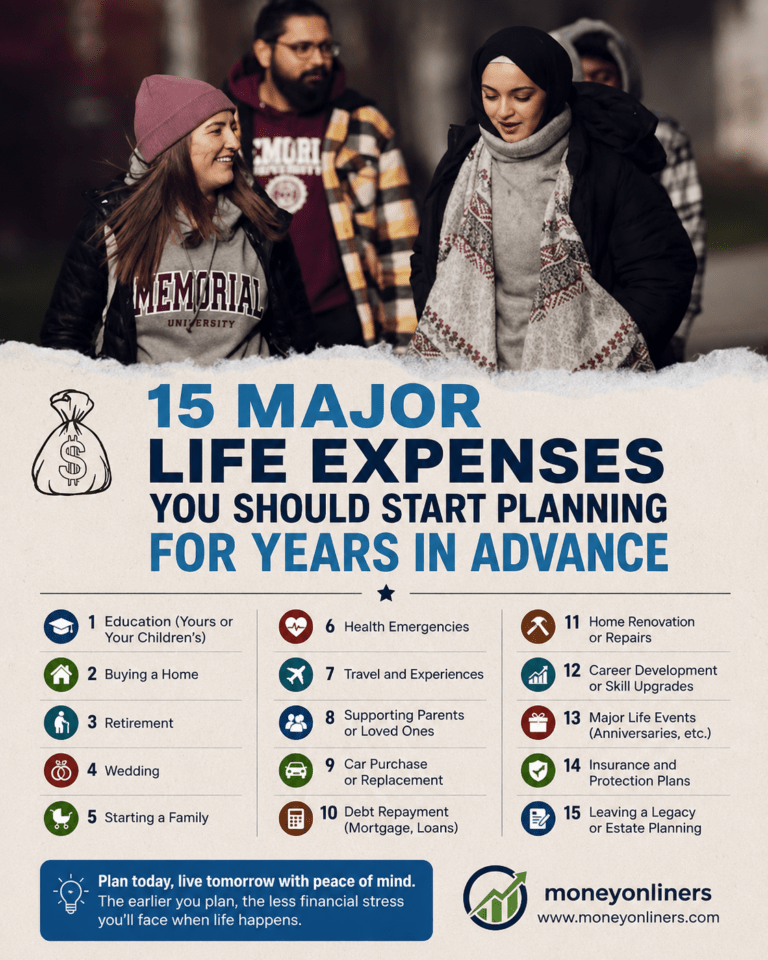
15 Major Life Expenses You Should Start Planning for Years in Advance
https://moneyonliners.com/major-life-expenses/
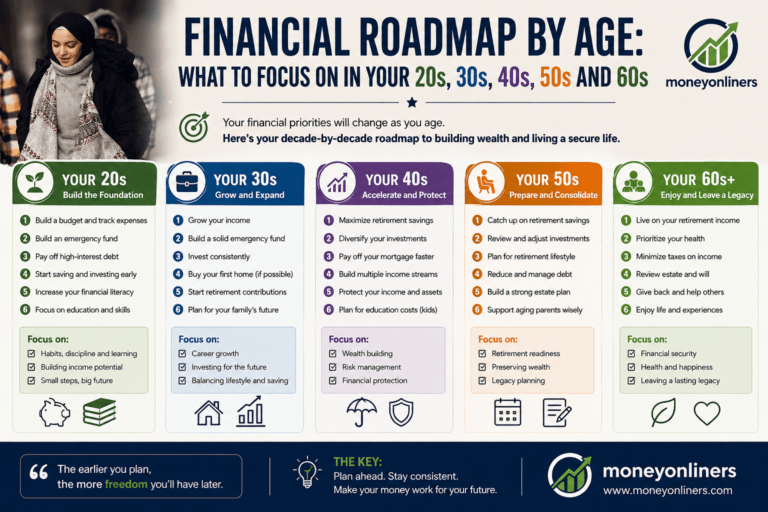
Financial Roadmap by Age: What to Focus on in Your 20s, 30s, 40s, 50s and 60s
https://moneyonliners.com/financial-roadmap-by-age/
How to Build Wealth From Nothing: 10 Steps for Beginners
https://moneyonliners.com/how-to-build-wealth-from-nothing/
Retirement Planning: 15 Things to Start Doing Before You Retire
https://moneyonliners.com/retirement-planning/
Topic Cluster Incoming Links
How to Calculate Your Net Worth in 5 Simple Steps
https://moneyonliners.com/how-to-calculate-net-worth/
15 Wealth-Building Strategies That Can Grow Your Money Over Time
https://moneyonliners.com/wealth-building-strategies/
10 Wealth-Building Habits That Can Make a Big Difference Over 10 Years
https://moneyonliners.com/wealth-building-habits/
Starting Retirement Savings Late? 10 Moves That Can Help You Catch Up
https://moneyonliners.com/starting-retirement-savings-late/
Continue Learning on MoneyOnliners
Recommended External Resources
1. Consumer Financial Protection Bureau — Saving
Saving — Consumer Financial Protection Bureau
Provides practical resources for building savings and improving financial resilience.
2. Consumer Financial Protection Bureau — Emergency Fund Guide
An Essential Guide to Building an Emergency Fund — CFPB
Explains why accessible emergency savings can reduce the financial damage caused by unexpected expenses.
3. Investor.gov — Save and Invest
Save and Invest — Investor.gov
Provides educational guidance on financial goals, high-interest debt, emergency savings and investing.
4. Investor.gov — Define Your Goals
Define Your Goals — Investor.gov
Explains why financial goals should be prioritized and connected to realistic time horizons.
5. Investor.gov — Asset Allocation and Diversification
Asset Allocation and Diversification — Investor.gov
Explains how time horizon and risk tolerance can affect long-term investment decisions.
6. Investor.gov — Compound Interest Calculator
Compound Interest Calculator — Investor.gov
Useful for testing how recurring long-term contributions could grow under different assumptions.
7. Federal Trade Commission — Getting Out of Debt
How to Get Out of Debt — Federal Trade Commission
Provides consumer information about debt management and avoiding deceptive debt-relief practices.
8. IRS — Retirement Plans
Provides official U.S. information about retirement accounts, contribution rules and employer-sponsored plans.
9. Department of Labor — Retirement Savings
Retirement — U.S. Department of Labor
Provides educational information about workplace retirement plans and employee benefits.
This article provides general educational information and is not individualized financial, investment, retirement, debt, tax, insurance or legal advice. The correct priority order can change based on interest rates, employer benefits, household obligations, income stability, taxes, insurance coverage and personal goals.
Frequently Asked Questions
Where should my money go first?
Start with essential financial obligations.
Housing, food, utilities and required minimum payments generally deserve immediate attention.
Next, consider a small emergency reserve.
Afterward, very high-interest debt can deserve strong priority.
Then long-term saving and investing can receive more emphasis as the foundation strengthens.
Should I save or pay debt first?
A small emergency fund can be useful before sending every available dollar toward debt.
Otherwise, the next emergency may recreate the balance.
However, very high-interest debt can become extremely expensive if left outstanding.
Therefore, many people use a blended approach.
Build some cash protection while aggressively reducing the most expensive debt.
Should I pay off debt before investing?
It depends on the debt.
Very high-interest revolving debt may deserve priority.
However, a valuable employer retirement match can change the calculation.
Lower-rate debt can involve more nuanced tradeoffs.
Compare the guaranteed debt cost with your other financial priorities rather than using one rule for every liability.
Should an emergency fund come before retirement?
Some emergency savings can protect your retirement plan from unexpected withdrawals or new borrowing.
However, completely ignoring retirement until a large emergency fund is finished may not always be ideal.
An employer match can also change the sequence.
Therefore, some households fund both simultaneously.
The percentages can change as each goal progresses.
How big should a starter emergency fund be?
There is no universal number.
A smaller starter reserve might be several hundred dollars.
Another household may need more because expenses are higher.
The first goal is reducing immediate fragility.
Afterward, the reserve can grow toward several months of essential expenses.
Should I maximize retirement contributions before saving for a house?
Not automatically.
Retirement and homeownership are different goals with different timelines.
A house needed in three years requires accessible money.
Meanwhile, retirement contributions serve a much longer-term purpose.
Your plan may reasonably fund both.
Should I pay my mortgage off early?
Early mortgage payoff can reduce future interest and required monthly expenses.
However, the mortgage rate matters.
Emergency savings and retirement progress also matter.
Therefore, extra mortgage payments often come after more urgent financial weaknesses have been addressed.
Compare the opportunity cost carefully.
Where should extra money from a bonus go?
Start with your highest-priority financial weakness.
For example, a bonus could eliminate high-interest debt.
Alternatively, it might complete an emergency fund.
Once the foundation is strong, part could support retirement or investing.
You can also reserve a reasonable portion for current enjoyment.
Where should my tax refund go?
Use the same priority checklist.
First, address urgent bills or financial instability.
Next, consider emergency savings and expensive debt.
Afterward, fund important long-term goals.
The best use depends on your current weakest financial area.
Can I save, invest and pay debt at the same time?
Yes.
Financial priorities do not need to be completely sequential.
For example, you might pay extra toward a credit card while contributing enough to receive an employer match.
Meanwhile, a smaller amount can build emergency savings.
Once the debt disappears, redirect its payment toward the remaining goals.
What debt should I pay first?
One strategy is prioritizing the highest interest rate first.
This is commonly called the debt avalanche approach.
Another approach targets the smallest balance first for psychological momentum.
However, accounts with urgent legal or collateral consequences may need special attention.
Choose a method you can sustain.
Should I build an emergency fund before a sinking fund?
A starter emergency fund may deserve priority because unexpected costs can happen at any time.
However, known expenses should not be ignored indefinitely.
For example, a car that clearly needs replacement next year deserves a sinking fund.
Therefore, the two types of savings can overlap.
One protects against surprises while the other prepares for predictable costs.
How many financial goals should I fund at once?
You can have many goals but fewer active priorities.
Three to five active allocations may be easier to manage than ten.
Concentrating money on higher-priority problems can also create faster progress.
As one goal is completed, redirect its contribution.
This creates a financial priority cascade.
How often should I change my financial priorities?
Review them at least annually.
In addition, reconsider the order after major financial changes.
A debt payoff can release cash flow.
A new child may increase emergency and insurance needs.
Approaching retirement can make long-term savings more urgent.
What is the most important financial priority?
There is no universal answer.
For someone behind on rent, housing may be the immediate priority.
For another person, 29% credit-card debt may be the biggest problem.
Someone financially stable may need to prioritize retirement investing.
The strongest priority is usually the one that prevents the greatest financial damage or creates the greatest improvement from the next available dollar.
Research Methodology
Priority Framework
MoneyOnliners organized the article around seven financial stages: essential obligations, starter liquidity, high-interest debt, valuable employer benefits, stronger reserves, long-term investing and additional goals.
Debt vs Saving
The framework avoids an all-or-nothing approach because some emergency liquidity can protect a debt-payoff strategy from being reversed by unexpected costs.
Employer Benefits
Workplace benefits are treated as a potential exception to the standard order because an employer match or similar benefit can materially change the value of a contribution.
Long-Term Investing
Long-term investment examples use direct contributions rather than guaranteed return assumptions.
Original MoneyOnliners Analysis
The Priority Decision Tree, Priority Pressure Formula, Financial Triage Rule and Financial Triage Score are original MoneyOnliners educational resources.
First-Hand Evidence Standard
MoneyOnliners only presents genuine personal debt balances, retirement records, savings screenshots, employer-benefit documents or financial outcomes when first-hand evidence exists and can be represented accurately.
Accordingly, no personal financial-priority outcome is claimed in this article.
Limitations
Interest rates, employer plans, taxes, household expenses and financial goals differ substantially.
In addition, retirement rules and investment outcomes can change. Therefore, the seven-step checklist should be used as a flexible educational framework rather than an individualized financial prescription.
Google Search Console Checklist
- Confirm final URL: /financial-priority-checklist/
- Confirm canonical matches the published URL.
- Use financial priority checklist naturally in the title, introduction, FAQ and conclusion.
- Use related phrases naturally: where should my money go first, financial priorities, money priority order, save or pay debt first, emergency fund vs debt and debt vs investing.
- Use real household budgeting imagery in the hero.
- Use bill-paying imagery only around essential obligations.
- Use debt imagery in the high-interest debt section.
- Use future-oriented couple imagery around retirement and investing.
- Avoid repeating calculator and cash-stack images.
- Keep every image alt description unique.
- Confirm Recommended External Resources contains at least 6 authoritative links.
- Check employer-benefit language for accuracy.
- Check all internal links before publication.
- Check all tables carefully on mobile.
- Confirm article is indexable.
- Confirm URL appears in XML sitemap.
- Inspect the published URL in Google Search Console.
- Request indexing after publication if appropriate.
- Monitor “financial priority checklist.”
- Monitor “where should my money go first.”
- Monitor “financial priorities in order.”
- Monitor “save or pay debt first.”
- Monitor “emergency fund or debt first.”
- Monitor “debt vs investing.”
Conclusion: Give the Next Dollar to the Priority That Improves Your Financial Position Most
A strong financial priority checklist can simplify what otherwise feels like a complicated set of competing goals.
First, Protect the Present
Keep essential bills and minimum obligations current.
Next, Reduce Financial Fragility
Build enough emergency cash to handle smaller disruptions.
Then Remove Expensive Drag
Attack very high-interest debt that repeatedly consumes future income.
Do Not Ignore Valuable Benefits
Understand employer contributions and other benefits before leaving them unused.
Strengthen Your Reserves
Build a larger emergency fund and sinking funds for predictable expenses.
Build Long-Term Assets
Increase retirement contributions and appropriate investments.
Finally, Use Stronger Cash Flow to Create More Choices
Fund a home, business, education, additional investing or other goals that matter to you.
Most importantly, redirect money whenever a priority is completed.