Negative Net Worth? 10 Steps That Can Help You Turn It Around
Negative Net Worth? 10 Steps That Can Help You Turn It Around
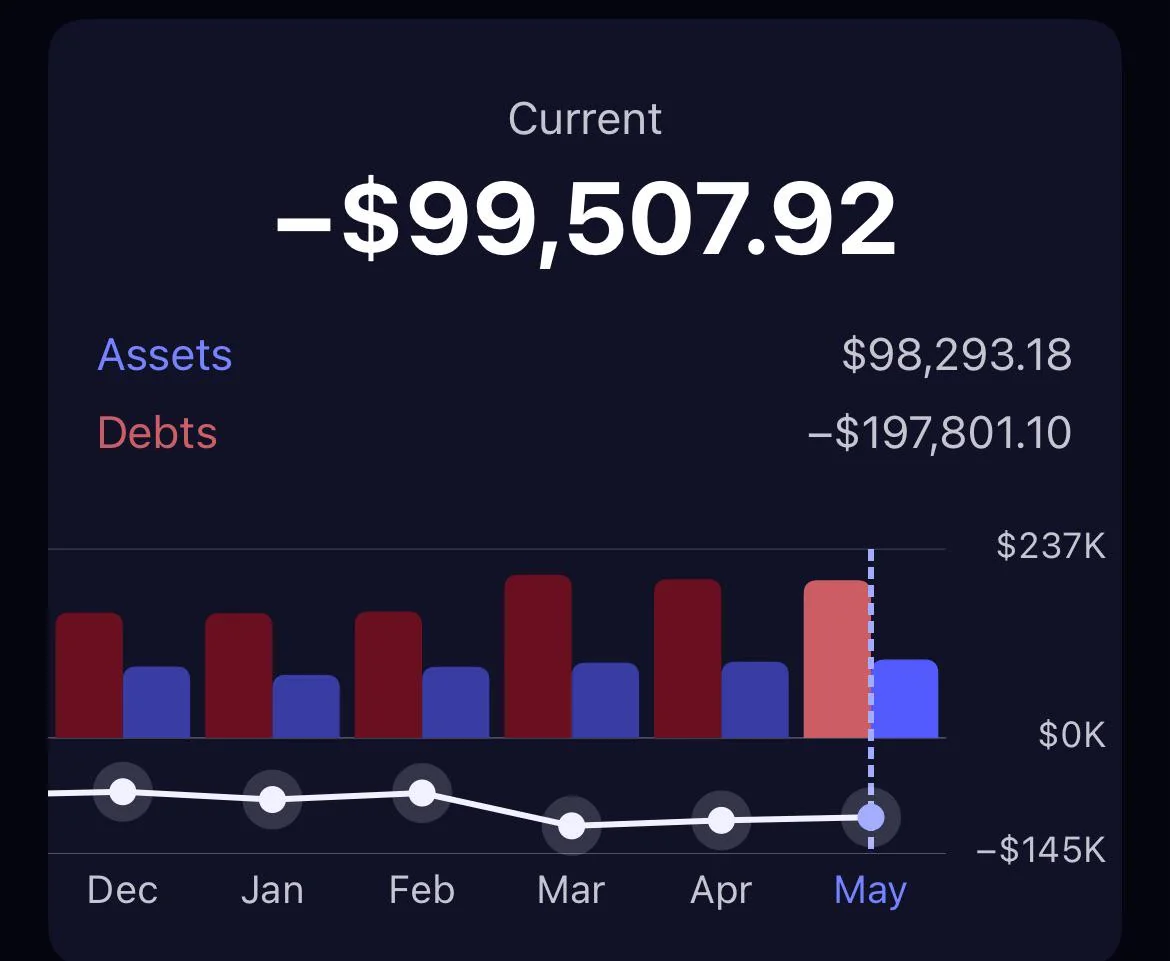
Seeing a negative number on your net-worth calculation can be uncomfortable. However, negative net worth is simply a financial measurement: at this moment, the debts you owe are larger than the financial value of the assets you own. The important question is what happens next. By improving cash flow, reducing expensive liabilities, building reserves, growing income and accumulating productive assets, the balance sheet can gradually move in a stronger direction.
A negative net worth means your total liabilities exceed your total assets.
Net Worth = Assets − Liabilities
For example, if you have $40,000 in assets and $75,000 in debt, your net worth is negative $35,000.
Turning that around generally requires progress on both sides of the equation. Reduce liabilities while gradually increasing cash savings, retirement accounts, investments and other productive assets. You do not necessarily need to reach positive net worth immediately; the first objective is to make the number consistently less negative.
Table of Contents
What Does Negative Net Worth Mean?
Negative net worth occurs when your liabilities are greater than your assets.
Simple Formula
Total Assets − Total Liabilities = Net Worth
Positive Example
Assets:
$100,000
Liabilities:
$60,000
Net worth:
$40,000
Negative Example
Assets:
$30,000
Liabilities:
$70,000
Net worth:
-$40,000
How Can This Happen?
- Student loans
- Credit-card debt
- Vehicle loans
- Personal loans
- Medical debt
- Business debt
- Large mortgage balances
- Very limited savings or investments
Negative net worth can be particularly common during earlier stages of adult life when someone has education debt but has not yet had many years to accumulate investments.
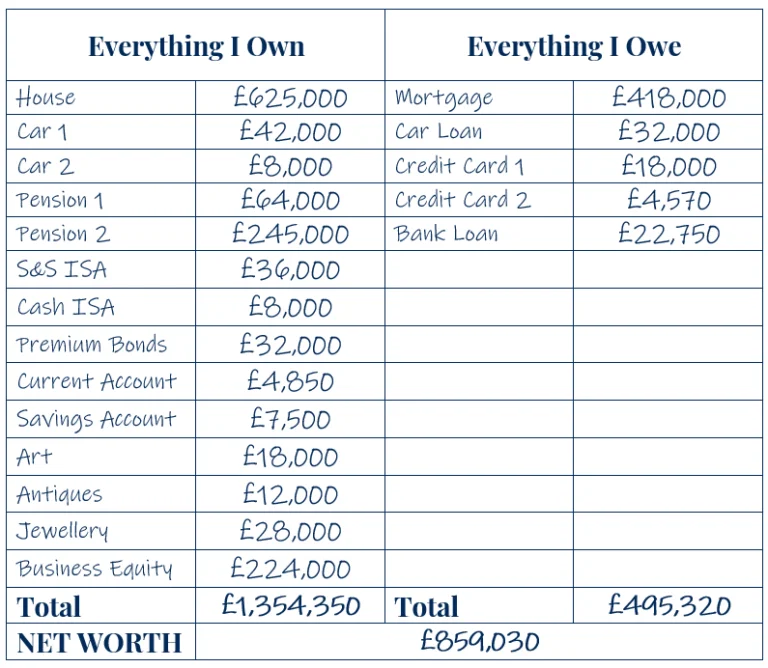
A Complete Negative Net Worth Example
| Assets | Value |
|---|---|
| Checking account | $2,500 |
| Emergency savings | $3,500 |
| 401(k) | $15,000 |
| Vehicle | $12,000 |
| Total Assets | $33,000 |
Liabilities
| Liability | Balance |
|---|---|
| Student loans | $35,000 |
| Vehicle loan | $9,000 |
| Credit cards | $14,000 |
| Personal loan | $8,000 |
| Total Liabilities | $66,000 |
Net Worth
$33,000 − $66,000 = -$33,000
The goal is not necessarily to find $33,000 immediately.
Instead, the household can improve the number through several smaller moves.
- Pay down $10,000 of debt
- Add $5,000 to retirement investments
- Build another $3,000 of savings
- Avoid adding new high-interest debt
Every improvement moves the balance sheet toward zero.
1 Calculate the Exact Net Worth Gap
You cannot create a useful recovery plan until you know the actual starting point.
List Your Assets
- Cash
- Savings
- Investment accounts
- Retirement accounts
- Home value
- Vehicle value
- Business equity
- Other meaningful assets
Then List Your Liabilities
- Credit cards
- Student loans
- Mortgage
- Vehicle loans
- Personal loans
- Medical debt
- Other outstanding debts
Calculate
Assets − Liabilities = Current Net Worth
Do not estimate the monthly payment as the liability.
Use the actual outstanding balance.
Know whether the gap is -$5,000, -$25,000 or -$100,000. Different starting points require different timelines and strategies.
2 Stop the Number From Getting Worse
Before trying to move quickly toward positive net worth, prevent avoidable liabilities from continuing to grow.
That Could Mean
- Stop adding new revolving credit-card balances
- Avoid unnecessary personal loans
- Delay a vehicle upgrade
- Review recurring expenses
- Avoid financing purchases you can postpone
- Address bills before they move into collections where possible
For example, paying $500 toward debt each month does little if another $450 of new debt is added at the same time.
Debt Payoff
$500
New Borrowing
$450
Real Monthly Improvement
Only $50 before interest
3 Build a Starter Emergency Fund
It can feel strange to save cash while you have debt.
However, having no emergency savings can make debt repayment fragile.
Imagine a $900 Car Repair
Without cash reserves, you might use a credit card.
Then the debt balance rises again.
With a Starter Emergency Fund
The same repair may be paid without creating another liability.
Possible Starter Target
There is no universal amount.
However, you might begin with a manageable initial goal such as:
- $500
- $1,000
- One essential bill cycle
- Another amount based on your household risks
Later, the emergency fund can grow toward a more substantial reserve.
Cash reserves do not only improve the asset side of your net worth. They can also reduce the chance that future emergencies create new liabilities.

4 Prioritize High-Interest Debt
Not every liability creates the same level of financial urgency.
High-interest revolving debt can be particularly damaging because interest consumes future cash flow.
Two Common Strategies
Debt Avalanche
Prioritize the highest interest rate while maintaining minimum payments on the others.
Debt Snowball
Prioritize the smallest balance to create quicker account closures and psychological momentum.
Mathematically, the avalanche can generally reduce interest expense more efficiently when all else is equal.
Nevertheless, a repayment strategy you can sustain may be more useful than a theoretically perfect plan you abandon.
Example
| Debt | Balance | Interest Rate |
|---|---|---|
| Credit Card A | $4,000 | 25% |
| Personal loan | $7,000 | 12% |
| Student loan | $20,000 | 5% |
The high-rate credit-card debt could deserve more urgency than the lower-rate student loan.
Be cautious with companies promising to erase debt quickly, guarantee forgiveness or requiring upfront payment before providing meaningful debt-relief services. Verify organizations carefully and understand any agreement before signing.
5 Create More Monthly Financial Surplus
Debt repayment and asset building both require cash flow.
Simple Formula
Income − Spending = Financial Surplus
Example
Monthly take-home income:
$4,000
Current spending:
$3,850
Available surplus:
$150
Suppose a budget review reduces recurring expenses by $250.
New Monthly Surplus
$400
Annual Difference
$4,800
That additional surplus can accelerate debt reduction or asset building.
Review Large Expenses First
- Housing
- Vehicles
- Insurance
- Food
- Recurring debt payments
Small expenses matter too, but major recurring costs can often affect the recovery timeline more substantially.
6 Increase Your Income
Expense reduction has a limit.
Income growth can create additional upside.
Potential Income-Growth Paths
- Requesting a raise
- Changing employers
- Learning a higher-value skill
- Professional certification
- Freelancing
- Remote work
- Starting a small business
- Adding a carefully chosen side hustle
Example
Additional take-home income:
$600 per month
Amount directed to debt:
$400
Amount retained for saving or other priorities:
$200
Additional Annual Debt Reduction Capacity
$4,800
As a result, growing income can shorten the time required to move from negative to positive net worth.
When net worth is deeply negative, increasing earning power can sometimes change the recovery timeline more dramatically than cutting another small household expense.

7 Redirect Debt Payments After a Balance Is Eliminated
Paying off a debt creates more than a smaller liability.
It can also free monthly cash flow.
Example
Old credit-card payment:
$300 per month
After the balance reaches zero, avoid automatically absorbing the $300 into lifestyle spending.
Possible Redirection
$200 → next debt
$100 → emergency savings
Later, once high-interest debt is under control:
$300 → long-term investing
Five Years of $300 Monthly Investing
$18,000 of contributions
That excludes potential investment gains or losses.
8 Start Building Productive Assets
You cannot reach stronger net worth through debt reduction alone forever.
Eventually, the asset side of the equation must grow too.
Potential Assets Include
- Cash reserves
- Employer retirement plans
- IRAs
- Diversified investment funds
- Bonds
- Home equity
- Business equity
- Other productive assets appropriate to your goals
Should You Invest While Still in Debt?
There is no universal answer.
Several factors matter:
- Debt interest rate
- Employer matching contributions
- Emergency savings
- Job stability
- Tax advantages
- Household obligations
For example, someone with extremely expensive credit-card debt may prioritize repayment more aggressively.
Meanwhile, an employee retirement match may still deserve consideration.
Investment gains are uncertain. High-risk speculation can deepen negative net worth if the investment falls substantially.
9 Protect Yourself From New Financial Setbacks
Net-worth recovery can take years.
Therefore, protection matters throughout the process.
Protection Can Include
- Emergency savings
- Appropriate insurance
- Avoiding excessive leverage
- Account security
- Fraud awareness
- Realistic housing and vehicle costs
- Careful borrowing
Debt-Relief Scams
Financial pressure can make fast solutions especially attractive.
Unfortunately, scammers know this.
The FTC warns that dishonest debt-relief companies may promise dramatic debt reduction, request upfront fees or ask for personal financial information after unexpected contact.
Before working with any provider, understand:
- What service is actually being provided
- What fees are charged
- Whether payments to creditors will stop
- How your credit may be affected
- Whether tax consequences may apply
- Whether claims sound unrealistically guaranteed
10 Track Net Worth Regularly
Debt balances can decline slowly enough that progress feels invisible.
Tracking net worth makes the change measurable.
Example
| Date | Assets | Liabilities | Net Worth |
|---|---|---|---|
| Year 1 | $25,000 | $70,000 | -$45,000 |
| Year 2 | $30,000 | $60,000 | -$30,000 |
| Year 3 | $38,000 | $50,000 | -$12,000 |
| Year 4 | $48,000 | $44,000 | +$4,000 |
Over four years, the household moves from negative $45,000 to positive $4,000.
That improvement comes from both:
- Increasing assets by $23,000
- Reducing liabilities by $26,000
Moving from -$50,000 to -$35,000 is meaningful progress even though the number remains negative.

How Long Could It Take to Move From Negative Net Worth to Zero?
The timeline depends heavily on the size of the gap and how quickly assets and liabilities change.
Contribution-Only Illustration
| Starting Negative Net Worth | Monthly Improvement | Approximate Time to Reach Zero* |
|---|---|---|
| -$10,000 | $250 | 40 months |
| -$10,000 | $500 | 20 months |
| -$25,000 | $500 | 50 months |
| -$25,000 | $1,000 | 25 months |
| -$50,000 | $750 | About 67 months |
| -$50,000 | $1,500 | About 34 months |
*Simplified illustration assuming net worth improves by a fixed amount each month. Real debt interest, investment returns, asset depreciation, emergencies and income changes will alter the timeline.
The Important Variable Is Monthly Improvement
You may not control the starting gap.
However, you can work on the amount by which the balance sheet improves each month.
Hypothetical Case Study: From -$42,000 Toward Positive Net Worth
Starting Position
Assets:
$18,000
Liabilities:
$60,000
Net worth:
-$42,000
Main Problems
- $12,000 of credit-card debt
- $8,000 personal loan
- $30,000 student loan
- $10,000 car loan
- Only $1,000 emergency savings
- Very small retirement contributions
Year 1 Actions
- Build emergency savings to $3,000
- Stop adding credit-card debt
- Reduce recurring spending
- Direct $700 per month toward expensive debt
Year 2
- Credit-card debt eliminated
- Former card payments redirected to personal loan
- Income rises after a job move
- Retirement contribution increases
Year 3
- Personal loan eliminated
- Emergency savings stronger
- Monthly investing increases
- Student and vehicle debt continue declining
What Changed?
No lottery win occurred.
No investment doubled overnight.
Instead, the household gradually stopped financial leakage and redirected more cash flow toward a stronger balance sheet.
Key lesson: A negative net worth recovery can be built through many ordinary improvements working simultaneously.
MoneyOnliners Original Analysis: The Net Worth Recovery Framework
Stage 1: Stabilize
Create basic emergency liquidity and understand cash flow.
Stage 2: Stop Leakage
Prevent new high-interest debt and unnecessary liabilities from appearing.
Stage 3: Reduce Debt
Prioritize expensive liabilities and redirect freed payments.
Stage 4: Build Assets
Increase cash reserves, retirement balances and other productive assets.
Stage 5: Accelerate
Use higher income and eliminated debt payments to increase investment contributions.
The MoneyOnliners Net Worth Recovery Scorecard
| Area | Warning Sign | Improving Direction |
|---|---|---|
| Cash flow | Spending exceeds income | Positive monthly surplus |
| Emergency savings | No buffer | Growing cash reserve |
| Credit cards | Balance growing | Balance declining |
| High-interest debt | Minimum payments only | Accelerated repayment |
| Income | Stagnant | Growing where realistic |
| Retirement assets | No contributions | Regular contributions where appropriate |
| New borrowing | Repeated | Controlled |
| Net worth | More negative | Less negative each review |
The Net Worth Recovery Framework and Recovery Scorecard are original MoneyOnliners educational tools rather than standardized financial-planning assessments.
Milestones Worth Celebrating Before Your Net Worth Turns Positive
1. You Calculate the Real Number
You now know the actual starting point instead of guessing.
2. You Stop Adding High-Interest Debt
The balance sheet stops deteriorating as quickly.
3. You Build Your First Emergency Reserve
Unexpected costs become less likely to create new debt.
4. Your First Credit Card Reaches Zero
One financial obligation is removed.
5. You Reach -$25,000
If you started at -$50,000, half of the gap has disappeared.
6. You Reach -$10,000
Positive net worth becomes increasingly visible.
7. You Reach $0
Assets now equal liabilities.
8. You Reach Your First Positive $10,000
The balance sheet has moved beyond break-even.
A person moving from -$80,000 to -$30,000 has made substantial financial progress even before crossing zero.
MoneyOnliners Research-Based Evidence Note
This article is a research-based debt and net-worth recovery guide.
MoneyOnliners does not claim that hypothetical debt balances, income increases, payoff schedules or net-worth examples represent personal financial results achieved by MoneyOnliners or its editorial team.
The article uses the standard net-worth formula of assets minus liabilities.
Investor education guidance supports maintaining emergency savings, controlling expensive debt and gradually building investments for long-term goals.
FTC consumer guidance was used for debt-relief scam warnings. The FTC warns consumers about debt-relief companies that request upfront payment, guarantee fast debt forgiveness or make unrealistic promises.
MoneyOnliners does not fabricate debt payoff results, investment performance, screenshots or testimonials.
The Net Worth Recovery Framework, Recovery Scorecard and milestone system are original MoneyOnliners analytical resources.
10 Mistakes That Can Make Negative Net Worth Harder to Fix
1. Avoiding the Calculation
Not knowing the number makes planning harder.
2. Paying Debt While Continuing to Borrow
New liabilities can cancel out repayment progress.
3. Having No Emergency Savings
Every unexpected expense can restart the debt cycle.
4. Treating Every Debt the Same
Interest rates and consequences differ.
5. Only Cutting Small Expenses
Housing, vehicles and income often affect the timeline more substantially.
6. Ignoring Income Growth
Expense cuts are useful, but earning power can create greater long-term capacity.
7. Increasing Lifestyle Spending After a Debt Is Paid Off
The old payment can instead become the next debt payment or an investment contribution.
8. Investing Aggressively to Try to Catch Up
A major investment loss can deepen negative net worth.
9. Falling for Debt-Relief Scams
Promises of fast forgiveness or guaranteed debt elimination deserve serious caution.
10. Comparing Your Balance Sheet With Someone Else's
Starting circumstances, income, education debt, housing and family obligations differ substantially.
If you cannot make required payments, face collection activity or are considering formal debt relief, speak with a reputable qualified professional or recognized nonprofit credit counselor who can evaluate your specific situation and explain consequences before you act.
Why Turning Around Negative Net Worth Matters
1. Negative net worth means liabilities currently exceed assets.
2. The number can improve from both debt reduction and asset growth.
3. Calculating the gap makes progress measurable.
4. Stopping new high-interest borrowing can prevent the balance sheet from worsening.
5. Emergency savings can reduce future reliance on debt.
6. High-interest liabilities can consume significant future cash flow.
7. Debt payoff can free money for future financial goals.
8. A positive monthly surplus makes recovery easier.
9. Income growth can substantially increase debt-repayment capacity.
10. Career development can therefore become part of net-worth recovery.
11. Productive assets eventually need to grow alongside debt reduction.
12. Employer retirement benefits can help build assets where appropriate.
13. Diversified investing can support longer-term wealth building after the foundation strengthens.
14. Excessive investment risk can make recovery slower rather than faster.
15. Debt-relief scams can target people who feel financial pressure.
16. Tracking net worth can make gradual improvement visible.
17. Moving from deeply negative to less negative is real progress.
18. Reaching zero is an important milestone but not the final financial goal.
19. The same habits used to reach zero can later help build positive wealth.
20. Ultimately, recovering from negative net worth is about gradually turning more future income into assets while reducing the amount already committed to liabilities.
Incoming Link Opportunities
How to Calculate Your Net Worth in 5 Simple Steps
https://moneyonliners.com/how-to-calculate-net-worth/
What Should Your Net Worth Be at 30, 40, 50 and 60?
https://moneyonliners.com/net-worth-by-age/
15 Wealth-Building Mistakes That Can Keep Your Net Worth Stuck
https://moneyonliners.com/wealth-building-mistakes/
How to Build Wealth From Nothing: 10 Steps for Beginners
https://moneyonliners.com/how-to-build-wealth-from-nothing/
Income vs Wealth: 10 Differences That Explain Why a High Salary Isn't Everything
https://moneyonliners.com/income-vs-wealth/
High-Priority Incoming Links
10 Wealth-Building Habits That Can Make a Big Difference Over 10 Years
https://moneyonliners.com/wealth-building-habits/
15 Wealth-Building Strategies That Can Grow Your Money Over Time
https://moneyonliners.com/wealth-building-strategies/
Your First $100,000: Why This Wealth Milestone Can Be So Powerful
https://moneyonliners.com/first-100000-wealth-milestone/
Saving vs Building Wealth: Why Saving Money Alone May Not Be Enough
https://moneyonliners.com/saving-vs-building-wealth/
Topic Cluster Incoming Links
How Long Does It Take to Build Wealth? 8 Factors That Matter Most
https://moneyonliners.com/how-long-does-it-take-to-build-wealth/
Building Wealth in Your 20s, 30s, 40s and 50s: What Changes?
https://moneyonliners.com/building-wealth-by-age/
Investing for Beginners: 10 Simple Steps to Start Building Wealth
https://moneyonliners.com/investing-for-beginners/
Financial Independence: 10 Steps to Take More Control of Your Money and Future
https://moneyonliners.com/financial-independence/
Continue Learning on MoneyOnliners
Recommended External Resources
1. Investor.gov — Figure Out Your Finances
Figure Out Your Finances — Investor.gov
Explains assets, liabilities, income, expenses and the basic net-worth calculation.
2. Investor.gov — Build Wealth Over Time Through Saving and Investing
Build Wealth Over Time Through Saving and Investing — Investor.gov
Discusses emergency savings, high-interest debt and long-term investing as parts of a stronger financial foundation.
3. Consumer Financial Protection Bureau — Saving
Saving — Consumer Financial Protection Bureau
Consumer resources for building savings and financial resilience.
4. Consumer Financial Protection Bureau — Financial Well-Being
Explains financial resilience, control over everyday finances, progress toward goals and freedom of choice.
5. FTC — How to Get Out of Debt
How to Get Out of Debt — Federal Trade Commission
Explains budgeting, working directly with creditors, debt counseling, debt settlement and consumer rights.
6. FTC — Looking for Debt Relief? Here's How to Avoid a Scam
Looking for Debt Relief? Here's How to Avoid a Scam — FTC
Current 2026 guidance warning about upfront fees, guaranteed settlements and dishonest debt-relief providers.
7. FTC — Debt Collection: Know Your Rights, Avoid Scams
Debt Collection: Know Your Rights, Avoid Scams — FTC
Explains validation information, disputes, payment plans and common debt-collection scams.
8. FTC — Fixing Your Credit FAQs
Explains legal credit-repair options and warning signs of fraudulent credit-repair companies.
9. Investor.gov — Diversify Your Investments
Diversify Your Investments — Investor.gov
Useful once a household begins shifting from debt recovery toward long-term investment accumulation.
10. Investor.gov — Understanding Investment Fees
Understanding Investment Fees — Investor.gov
Explains how investment expenses can affect the amount investors keep over longer periods.
MoneyOnliners prioritizes government agencies and regulators for debt, consumer-protection and investment guidance. Debt laws, collection rules and available repayment programs can vary, so readers should verify information relevant to their jurisdiction and specific debts.
This article provides general educational information and is not individualized financial, debt, credit, legal, tax, bankruptcy or investment advice. Debt repayment strategies can have different credit, tax and legal consequences depending on your situation.
Frequently Asked Questions
What does negative net worth mean?
Negative net worth means your liabilities exceed your assets.
For example, $30,000 of assets and $50,000 of liabilities produces negative $20,000 net worth.
It is a balance-sheet measurement.
The number can change.
Reducing debt and increasing assets can improve it.
Is negative net worth bad?
It indicates that you currently owe more than you own.
That is useful financial information.
However, context matters.
Someone early in a career may have education debt and limited accumulated assets.
The important question is whether the trend is improving.
Can you have negative net worth with a high income?
Yes.
Income and net worth measure different things.
A high earner can carry large debts.
Likewise, expensive lifestyle commitments can limit asset accumulation.
Therefore, salary alone does not reveal net worth.
How do I get out of negative net worth?
First calculate your assets and liabilities.
Then stop unnecessary new debt.
Build a starter emergency reserve.
Prioritize expensive liabilities and create more monthly surplus.
Finally, increase productive assets as your financial position strengthens.
Should I save money while paying off debt?
Some emergency savings can be valuable.
Without reserves, unexpected expenses may create new debt.
However, the appropriate cash amount varies.
Debt interest rates also matter.
Balance liquidity with repayment needs.
Should I invest while I have negative net worth?
Possibly.
Employer matching contributions may matter.
Debt interest rates matter too.
Emergency savings and household stability also matter.
There is no universal rule for everyone.
Should I pay off my highest-interest debt first?
The debt-avalanche strategy does this.
It generally minimizes interest expense when all other factors are equal.
However, the debt-snowball strategy prioritizes small balances.
Some people find the quicker wins motivating.
Choose a sustainable strategy after understanding the costs.
Can student loans cause negative net worth?
Yes.
A large student-loan balance can exceed a young worker's current assets.
That can produce negative net worth.
Nevertheless, future earning power may improve substantially.
Track both debt reduction and asset growth over time.
Does a mortgage make your net worth negative?
Not necessarily.
The home is also an asset.
For example, a $400,000 home with a $300,000 mortgage represents roughly $100,000 of home equity before transaction costs.
Other assets and liabilities matter too.
Calculate the full balance sheet.
Does paying debt increase net worth?
Generally, reducing a liability improves net worth when the payment comes from current income rather than simply exchanging one asset for another in a way that leaves the balance sheet unchanged.
Debt payoff can also free future cash flow.
That money can later support saving and investing.
High-interest debt payoff can therefore have multiple benefits.
Track the total balance sheet.
How long does it take to go from negative to positive net worth?
The timeline varies.
The size of the starting gap matters.
Monthly surplus matters.
Debt interest and income growth matter too.
Focus on increasing the amount by which net worth improves each year.
Should I use debt consolidation?
It can help in some situations.
However, compare interest rates, fees and repayment terms carefully.
A lower monthly payment does not automatically mean lower total cost.
Also avoid using consolidation as permission to create new credit-card balances.
Understand the full agreement first.
Are debt-relief companies legitimate?
Some organizations provide legitimate services.
However, debt relief is also a common area for scams.
Be cautious with upfront fees and guaranteed promises.
Verify providers independently.
Never share sensitive financial information with unexpected callers.
Should I count my car when calculating net worth?
You can include its reasonable current resale value.
Then include any outstanding vehicle loan as a liability.
Cars generally depreciate.
Therefore, update the estimated value periodically.
Avoid using the original purchase price forever.
What comes after reaching zero net worth?
Continue the same core system.
Maintain emergency savings.
Avoid expensive new debt.
Increase investment contributions.
Then work toward increasingly positive net-worth milestones.
Research Methodology
How Negative Net Worth Was Defined
MoneyOnliners uses the standard personal-finance calculation:
Assets − Liabilities = Net Worth
A result below zero is described as negative net worth.
Why Emergency Savings Were Included
Emergency savings can reduce the likelihood that unexpected expenses create additional debt.
Therefore, cash reserves form part of the recovery strategy even when debt remains.
Why High-Interest Debt Was Prioritized
High-rate liabilities can consume substantial cash flow and compound against the borrower.
Reducing those balances can therefore improve both liabilities and future monthly flexibility.
Why Income Growth Was Included
Cost reduction has practical limits.
Income growth can increase the amount available for repayment, saving and investing.
Why Investing Was Included Carefully
Productive asset ownership is eventually necessary for long-term wealth building.
However, investment returns are uncertain and should not be presented as a guaranteed solution to expensive debt.
Debt-Relief Consumer Protection
FTC guidance was used to strengthen warnings about upfront debt-relief fees, fast-forgiveness promises and fraudulent credit-repair claims.
Original MoneyOnliners Analysis
The Net Worth Recovery Framework, Recovery Scorecard and recovery milestone structure are original MoneyOnliners educational resources.
Limitations
Debt laws, interest rates, taxes, collection rules and repayment options vary by debt type and jurisdiction.
Likewise, bankruptcy or formal debt settlement can have major legal, tax and credit consequences.
Therefore, complicated or severe debt situations may require individualized professional guidance.
Google Search Console Checklist
- Confirm final URL: /negative-net-worth/
- Confirm canonical matches the published URL.
- Use negative net worth naturally in the title, introduction, headings and conclusion.
- Use related phrases naturally: how to fix negative net worth, how to get positive net worth, negative net worth meaning, debt greater than assets and improve net worth.
- Use savings imagery for emergency-fund sections.
- Use career/professional imagery for income-growth sections.
- Use family/security imagery for long-term recovery outcomes.
- Avoid repeating generic calculator-only photographs.
- Keep image alt descriptions unique.
- Confirm Recommended External Resources contains 6–10 authoritative links.
- Confirm FTC debt-relief links remain current.
- Confirm internal links point to live canonical URLs.
- Confirm the article is indexable.
- Confirm the URL appears in the XML sitemap.
- Check debt and net-worth tables on mobile.
- Inspect the final URL in Google Search Console.
- Request indexing after publication if appropriate.
- Monitor searches such as “negative net worth,” “how to fix negative net worth,” “how to get out of negative net worth,” “negative net worth at 30,” “how to reach positive net worth” and “assets less than debt.”
Conclusion: Negative Net Worth Is a Starting Point, Not the End of the Story
A negative net worth can look discouraging.
However, the calculation is simply:
Assets − Liabilities
Start With the Real Number
Calculate exactly what you own and exactly what you owe.
Stop New Financial Leakage
Avoid unnecessary new high-interest liabilities.
Build a Cash Buffer
Give unexpected expenses somewhere to go besides a credit card.
Reduce Expensive Debt
Prioritize the liabilities that create the greatest financial drag.
Create More Surplus
Improve the gap between income and spending.
Grow Your Income
Increase the amount available to repair the balance sheet.
Redirect Old Payments
When one debt disappears, send part of the former payment toward the next financial goal.
Build Assets
Gradually increase savings, retirement accounts and other appropriate productive assets.
Protect Your Progress
Avoid scams, unnecessary leverage and financial decisions that could reverse years of work.
Track the Trend
Moving from -$40,000 to -$20,000 is progress.
Moving from -$20,000 to -$5,000 is progress.
Eventually, zero becomes possible.
Then the same financial system can continue toward positive wealth.
Similar Posts
What Should Your Net Worth Be at 30, 40, 50 and 60?
What Should Your Net Worth Be at 30, 40, 50 and 60? | MoneyOnliners MoneyOnliners • Build Wealth → Net Worth by Age What Should Your Net Worth Be at 30, 40, 50 and 60? Age-based net worth benchmarks can be useful, but they can also be misleading when treated as rules. A 40-year-old homeowner…
Net Worth vs Income: Which Number Matters More for Building Wealth?
Net Worth vs Income: Which Number Matters More for Building Wealth? | MoneyOnliners MoneyOnliners • Build Wealth → Net Worth vs Income Net Worth vs Income: Which Number Matters More for Building Wealth? A six-figure salary can look impressive, while a seven-figure net worth can look even more impressive. However, income and net worth measure…
How to Calculate Your Net Worth in 5 Simple Steps
How to Calculate Your Net Worth in 5 Simple Steps | MoneyOnliners MoneyOnliners • Build Wealth → Track Net Worth How to Calculate Your Net Worth in 5 Simple Steps Your salary tells you how much money you earn. Your bank balance tells you how much cash you currently have. However, neither number alone shows…
15 Ways to Increase Your Net Worth Without Becoming a Millionaire Overnight
15 Ways to Increase Your Net Worth Without Becoming a Millionaire Overnight | MoneyOnliners MoneyOnliners • Build Wealth → Grow Net Worth 15 Ways to Increase Your Net Worth Without Becoming a Millionaire Overnight You do not need a lottery win, viral business or speculative investment to improve your financial position. Net worth usually grows…
Does Your Home Count Toward Net Worth? Here’s How the Math Works
Does Your Home Count Toward Net Worth? Here’s How the Math Works | MoneyOnliners MoneyOnliners • Net Worth → Home Equity Does Your Home Count Toward Net Worth? Here’s How the Math Works Your home may be the largest asset you own, but the number that matters for net worth is not simply the home’s…
Assets vs Liabilities: 25 Real-Life Examples That Affect Your Net Worth
Assets vs Liabilities: 25 Real-Life Examples That Affect Your Net Worth | MoneyOnliners MoneyOnliners • Net Worth → Assets vs Liabilities Assets vs Liabilities: 25 Real-Life Examples That Affect Your Net Worth Understanding the difference between assets and liabilities is one of the simplest ways to understand your financial position. Assets generally represent things you…




One Comment