Assets vs Liabilities: 25 Real-Life Examples That Affect Your Net Worth
Assets vs Liabilities: 25 Real-Life Examples That Affect Your Net Worth
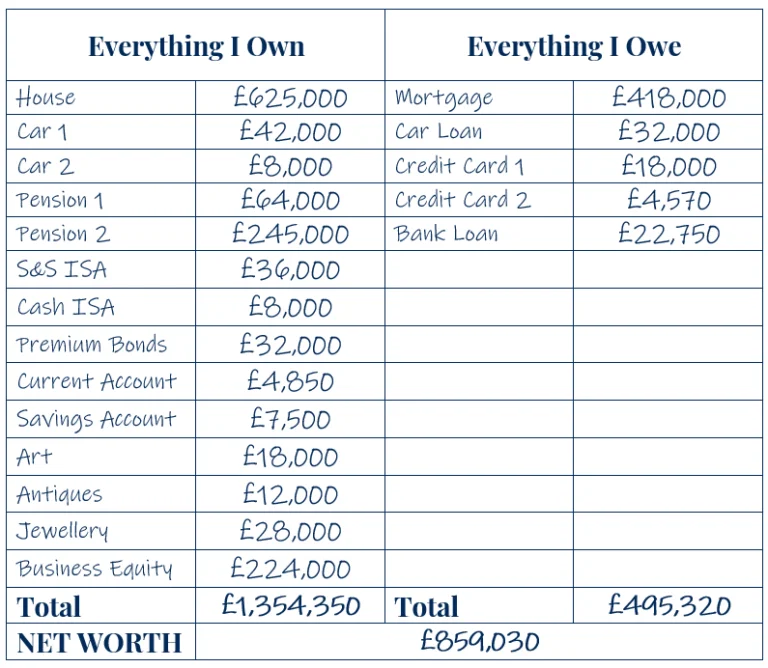
Understanding the difference between assets and liabilities is one of the simplest ways to understand your financial position. Assets generally represent things you own that have financial value. Liabilities represent debts and obligations you owe. Put them together, and they determine one of the most useful measurements in personal finance: your net worth.
In the assets vs liabilities comparison, assets are things you own that have financial value, while liabilities are debts or financial obligations you owe.
Net Worth = Total Assets − Total Liabilities
For example, a $400,000 home is an asset. If the remaining mortgage is $250,000, the mortgage is a liability. Ignoring transaction costs, the difference represents approximately $150,000 of home equity.
Similarly, a $20,000 car may be an asset, while its $12,000 auto loan is a liability. Understanding both sides prevents you from looking only at what you own while forgetting what you still owe.
Table of Contents
Assets vs Liabilities: What Is the Difference?
Assets
Assets are things you own that have financial value.
Examples include:
- Cash
- Investments
- Retirement accounts
- Real estate
- Business ownership
Liabilities
Liabilities are debts or financial obligations you owe.
Examples include:
- Mortgages
- Credit-card debt
- Student loans
- Auto loans
- Personal loans
The Net Worth Equation
Assets − Liabilities = Net Worth
Example
Total assets:
$500,000
Total liabilities:
$300,000
Net Worth
$500,000 − $300,000 = $200,000
25 Real-Life Assets and Liabilities at a Glance
| # | Example | Asset or Liability? | How It Affects Net Worth |
|---|---|---|---|
| 1 | Cash | Asset | Increases assets |
| 2 | Savings account | Asset | Increases assets |
| 3 | Certificate of deposit | Asset | Increases assets |
| 4 | Brokerage investments | Asset | Market value affects assets |
| 5 | 401(k), IRA or retirement account | Asset | Increases financial assets |
| 6 | Bonds | Asset | Current value contributes to assets |
| 7 | Home | Asset | Current estimated value adds to assets |
| 8 | Rental property | Asset | Property value adds to assets |
| 9 | Vehicle | Asset | Realistic resale value adds to assets |
| 10 | Business equity | Asset | Reasonable ownership value may add to assets |
| 11 | Land | Asset | Estimated current value adds to assets |
| 12 | Valuable collectibles | Potential asset | Only realistic resale value should be counted |
| 13 | Mortgage | Liability | Reduces net worth |
| 14 | Credit-card debt | Liability | Reduces net worth |
| 15 | Student loan | Liability | Reduces net worth |
| 16 | Auto loan | Liability | Reduces net worth |
| 17 | Personal loan | Liability | Reduces net worth |
| 18 | Home-equity loan | Liability | Reduces net worth |
| 19 | Medical debt | Liability | Reduces net worth |
| 20 | Business debt personally owed | Liability | Can reduce personal net worth |
| 21 | Buy now, pay later balance | Liability | Repayment obligation reduces net worth |
| 22 | Taxes owed | Liability | Outstanding obligation can reduce net worth |
| 23 | Margin loan | Liability | Investment borrowing reduces net worth |
| 24 | Money owed to another person | Liability | Reduces net worth if repayment is required |
| 25 | Other enforceable outstanding debt | Liability | Reduces net worth |
1 Cash
Cash is one of the simplest assets.
Example
$2,500 cash
That $2,500 contributes directly to total assets.
Why Cash Matters
Cash has high liquidity.
Therefore, it can cover near-term expenses without requiring you to sell investments or borrow money.
2 Savings Accounts
Money held in a bank savings account is a financial asset.
Example
$15,000 emergency savings
That adds $15,000 to the asset side of your net-worth statement.
Additionally, an emergency reserve may reduce the chance that an unexpected expense creates new debt.
Savings increase assets while also protecting the rest of your balance sheet from financial shocks.
3 Certificates of Deposit
A certificate of deposit, or CD, generally represents money deposited with a bank for a defined period under specific withdrawal conditions.
Example Value
$10,000
Its current account value can contribute to financial assets.
However, liquidity may be lower than a regular savings account because early withdrawal terms can apply.
4 Brokerage Investments
Stocks, ETFs and mutual funds held in a brokerage account are financial assets.
Example
Current brokerage account value: $75,000
That $75,000 can be included in total assets.
But Values Change
If the market declines and the account falls to $65,000, net worth may fall by approximately $10,000, assuming nothing else changes.
Likewise, market gains can increase net worth.
A financial asset can still decline in value.
5 Retirement Accounts
Retirement accounts generally count as financial assets.
Examples Include
- 401(k)
- 403(b)
- 457 plan
- Traditional IRA
- Roth IRA
- SEP IRA
Example
401(k): $125,000
The current account value can be included in your net worth.
Nevertheless, retirement accounts may have tax consequences and withdrawal restrictions.
Therefore, total net worth and immediately spendable cash are different measurements.
6 Bonds
Bonds you own can contribute to your financial assets.
Example
Bond holdings worth $20,000
The appropriate current value contributes to total assets.
Bond values can change with interest rates, credit conditions and other factors.
7 Your Home
A home can be one of the largest assets on a household balance sheet.
Estimated Home Value
$450,000
Mortgage Balance
$290,000
Approximate Equity
$160,000
The home is the asset.
The mortgage is a liability.
You do not subtract the mortgage before listing the house as an asset if you are preparing a full assets-and-liabilities statement. List the property value on one side and the mortgage separately on the liability side.

8 Rental Property
A rental property can represent both an asset and a potential source of income.
Property Value
$300,000
Rental Mortgage
$200,000
Approximate Equity
$100,000
However, property ownership also involves maintenance, taxes, insurance, vacancies and transaction costs.
Therefore, property value alone does not reveal profitability.
9 Your Vehicle
A vehicle can be included as an asset because it has resale value.
Current Resale Value
$22,000
Vehicle Loan
$14,000
Approximate Net Contribution
$8,000
However, vehicles generally depreciate.
Therefore, use realistic current resale value rather than the original purchase price.

10 Business Equity
Ownership in a profitable business can be a valuable asset.
However, private businesses can be difficult to value accurately.
Do Not Confuse Revenue With Business Value
A business generating:
$500,000 annual revenue
is not automatically worth $500,000.
Expenses, profit, recurring customers, debt, growth, assets and market demand all matter.
If a business has no realistic market valuation, avoid inflating personal net worth with an unsupported number.

11 Land
Land you own can be included as an asset at a reasonable current market value.
Example
Estimated land value: $80,000
If the land was purchased using a loan and $30,000 remains unpaid, the loan belongs on the liability side.
As with property generally, selling costs and market conditions can affect the amount actually realized.
12 Valuable Collectibles
Certain collectibles may have meaningful resale value.
Examples
- Rare coins
- Collectible art
- High-value watches
- Rare memorabilia
- Other genuinely marketable collectibles
Be Conservative
The original purchase price does not automatically equal current market value.
Likewise, sentimental value should not be treated as financial value.
Only include collectibles when there is a reasonable basis for estimating what a willing buyer might actually pay.
13 Mortgage
A mortgage is a liability.
Example
Outstanding mortgage: $275,000
That amount reduces net worth.
Monthly Payment vs Balance
If your mortgage payment is $2,100 per month, you do not list $2,100 as the liability.
Instead, use the current outstanding loan balance.
14 Credit-Card Debt
An unpaid credit-card balance is a liability.
Example
$8,500 outstanding balance
That reduces net worth by $8,500 before considering any other changes.
High-interest credit-card balances can also weaken future wealth building because interest consumes cash that could otherwise be saved or invested.
Paying only minimum amounts can keep expensive balances outstanding for a long time. Review the interest rate and repayment strategy carefully.
15 Student Loans
Student loans are liabilities because they represent money you owe.
Example
$35,000 student-loan balance
That reduces current net worth.
But Education Itself Is Different
Education may increase earning power.
However, future earning potential is generally not entered as a dollar asset in a conventional personal net-worth statement.
Therefore, someone can have negative current net worth while also having strong future income potential.
16 Auto Loans
An outstanding car loan is a liability.
Vehicle
Current value: $25,000
Auto Loan
Outstanding: $18,000
Approximate Equity
$7,000
If the vehicle's market value falls below the outstanding loan balance, you can have negative equity.
17 Personal Loans
Personal loans generally belong on the liability side.
Example
$9,000 outstanding personal loan
The entire outstanding amount reduces net worth.
Moreover, interest payments can reduce future cash available for wealth building.
18 Home-Equity Loans
Borrowing against home equity creates another liability.
Example
Home value:
$500,000
First mortgage:
$280,000
Home-equity loan:
$50,000
Total Property-Related Liabilities
$330,000
Approximate Remaining Equity
$170,000
19 Medical Debt
Outstanding medical bills that you are required to pay can represent liabilities.
Example
$4,000 outstanding medical balance
That financial obligation reduces the household's balance-sheet position.
Payment arrangements, insurance disputes and local rules can complicate specific situations, so verify amounts carefully.
20 Business Debt You Are Personally Responsible For
Business borrowing requires careful classification.
If the debt belongs solely to a separate legal business entity and you are not personally responsible for it, personal net-worth treatment can differ.
However, personally guaranteed or directly owed business debt can affect your personal balance sheet.
Business accounting and personal net-worth accounting can become complicated. Significant business ownership or debt may require professional accounting or legal guidance.
21 Buy Now, Pay Later Balances
A buy now, pay later obligation is still money you are required to repay.
Example
$1,200 remaining across several installment purchases
Although the amount may be split into small payments, the outstanding obligation still belongs on the liability side of your financial picture.
When calculating net worth, add all outstanding installment obligations together rather than looking only at each individual payment.
22 Taxes Owed
Taxes that are due and legally owed can represent financial liabilities.
Example
$6,000 tax obligation
That amount can reduce the household's true financial position.
Because tax situations vary considerably, unresolved or disputed tax obligations may require professional guidance.
23 Margin or Investment Loans
Borrowing money to invest creates a liability even though the borrowed money is used to purchase assets.
Example
Investments:
$50,000
Margin loan:
$20,000
Net Financial Position Before Other Assets
$30,000
If the investments decline substantially, the debt still exists.
Borrowing to invest can amplify gains, but it can also amplify losses and create forced-sale risk. It should not be treated as guaranteed wealth acceleration.
24 Money You Owe Another Person
A genuine personal debt does not disappear from your financial position simply because the lender is a family member or friend.
Example
$3,000 borrowed and still owed
If repayment is required, it can reasonably be treated as a liability.
25 Other Outstanding Debt Obligations
Any other enforceable financial obligation should be considered when building a complete net-worth statement.
Examples Could Include
- Unpaid financing agreements
- Installment debts
- Secured loans
- Other outstanding personal borrowing
The goal is not to create an artificially attractive balance sheet.
Instead, aim for an honest estimate of what you own and what you owe.
Complete Example: Assets vs Liabilities for a Household
Assets
| Asset | Current Estimated Value |
|---|---|
| Checking account | $5,000 |
| Emergency savings | $20,000 |
| 401(k) | $140,000 |
| IRA | $35,000 |
| Brokerage investments | $55,000 |
| Home | $450,000 |
| Vehicles | $30,000 |
| Total Assets | $735,000 |
Liabilities
| Liability | Outstanding Balance |
|---|---|
| Mortgage | $275,000 |
| Auto loan | $12,000 |
| Student loan | $20,000 |
| Credit-card debt | $4,000 |
| Total Liabilities | $311,000 |
Net Worth
$735,000 − $311,000 = $424,000
What Happens If the Household Pays Off $20,000 of Debt From New Income?
Assuming asset values do not otherwise change:
New liabilities: $291,000
Net worth would rise to approximately:
$444,000
What Happens If Investments Then Gain $25,000?
Approximate net worth: $469,000
Of course, investment values can decline as well.
Key lesson: Net worth can improve when assets rise, liabilities fall or both happen together.
MoneyOnliners Original Analysis: The Four-Quadrant Balance-Sheet Framework
1. Liquid Assets
These provide financial flexibility.
- Cash
- Savings
- Other highly accessible financial reserves
2. Growth or Productive Assets
These have the potential to appreciate or produce income.
- Investments
- Retirement assets
- Businesses
- Rental property
3. Debt Connected to Potentially Productive Assets
Examples may include:
- A mortgage financing a home
- A carefully structured rental-property mortgage
- Business financing used for productive activity
The debt is still a liability.
However, the borrowing may be associated with an asset that also appears on the balance sheet.
4. Consumption Debt
This is borrowing associated primarily with consumption rather than productive asset ownership.
- High-interest credit-card spending
- Some personal loans
- Repeated consumer financing
Calling debt “productive” does not make it safe. The loan remains a liability and the related asset can still lose value.
The MoneyOnliners Asset Quality Test
| Question | Why It Matters |
|---|---|
| Does the asset have a realistic market value? | Prevents inflated net-worth estimates |
| Can it be converted to cash relatively easily? | Measures liquidity |
| Can it potentially grow? | Measures long-term wealth-building potential |
| Can it generate income? | Measures productivity |
| Does it require substantial recurring costs? | Reveals ongoing cash-flow burden |
| Is debt attached to it? | Reveals the true net contribution to wealth |
| Could its value fall significantly? | Highlights risk |
The Four-Quadrant Balance-Sheet Framework and Asset Quality Test are original MoneyOnliners educational resources rather than formal accounting standards.
MoneyOnliners Net Worth Classification Checklist
- List meaningful assets at realistic current values.
- Do not use emotional or sentimental value.
- Do not automatically use original purchase price.
- List debts separately from the assets they financed.
- Use outstanding loan balances rather than monthly payments.
- Include retirement accounts.
- Include home equity through the full home value and mortgage calculation.
- Use realistic vehicle resale values.
- Be conservative when valuing a private business.
- Include credit-card debt.
- Include student and vehicle loans.
- Include personally owed business borrowing.
- Include installment obligations such as BNPL balances.
- Separate total net worth from liquid net worth.
- Update the calculation periodically.
The MoneyOnliners Four-Quadrant Balance-Sheet Framework, Asset Quality Test and Net Worth Classification Checklist are original resources that can be referenced when explaining the practical difference between assets and liabilities.
10 Assets vs Liabilities Mistakes That Can Distort Your Net Worth
1. Counting Your Salary as an Asset
Salary is income rather than an asset balance.
2. Ignoring Debt Attached to an Asset
A $500,000 house does not add $500,000 of net worth when a $400,000 mortgage remains.
3. Using the Original Price of a Car
Vehicles generally depreciate.
4. Treating Credit Limits as Assets
Available credit is borrowing capacity, not money you own.
5. Ignoring Retirement Accounts
They can be major financial assets.
6. Valuing a Business Based Only on Revenue
Revenue is not the same as business equity value.
7. Ignoring Small Debts
BNPL and installment balances can add up.
8. Treating Every Asset as Equally Useful
$100,000 in cash provides different liquidity from $100,000 of home equity.
9. Assuming an Asset Can Never Lose Value
Stocks, real estate, businesses, vehicles and collectibles can all decline.
10. Counting a Speculative Investment at an Unrealistic Value
Use credible current values rather than expected future prices.
Be cautious when someone promotes an “asset” by promising guaranteed high returns, unusually fast wealth or little to no investment risk. Legitimate investments involve uncertainty.
Why Understanding Assets vs Liabilities Matters
1. Assets and liabilities determine net worth.
2. Assets represent financial value you own.
3. Liabilities represent financial obligations you owe.
4. Cash is an asset.
5. Savings accounts are assets.
6. Investments are assets whose values can fluctuate.
7. Retirement accounts can be significant net-worth assets.
8. Homes can contribute substantial household wealth.
9. Mortgages reduce the net contribution of property to wealth.
10. Vehicles can be assets while their loans remain liabilities.
11. Private business equity can be valuable but difficult to estimate.
12. Credit-card debt directly reduces net worth.
13. Student loans can create negative net worth early in a career.
14. Personal loans reduce the balance sheet even if monthly payments seem manageable.
15. Installment borrowing can become significant when multiple balances accumulate.
16. Paying down liabilities can improve net worth.
17. Adding productive assets can improve net worth.
18. Liquidity matters in addition to total asset value.
19. A strong balance sheet generally combines growing assets with manageable liabilities.
20. Ultimately, understanding assets vs liabilities helps you see which financial decisions add lasting value to your balance sheet and which create obligations that future income must repay.
Incoming Link Opportunities
How to Calculate Your Net Worth in 5 Simple Steps
https://moneyonliners.com/how-to-calculate-net-worth/
15 Ways to Increase Your Net Worth Without Becoming a Millionaire Overnight
https://moneyonliners.com/increase-your-net-worth/
Net Worth vs Income: Which Number Matters More for Building Wealth?
https://moneyonliners.com/net-worth-vs-income/
Negative Net Worth? 10 Steps That Can Help You Turn It Around
https://moneyonliners.com/negative-net-worth/
20 Assets That Can Help Build Wealth Over the Long Term
https://moneyonliners.com/assets-that-build-wealth/
High-Priority Incoming Links
What Should Your Net Worth Be at 30, 40, 50 and 60?
https://moneyonliners.com/net-worth-by-age/
15 Wealth-Building Mistakes That Can Keep Your Net Worth Stuck
https://moneyonliners.com/wealth-building-mistakes/
Your First $100,000: Why This Wealth Milestone Can Be So Powerful
https://moneyonliners.com/first-100000-wealth-milestone/
Income vs Wealth: 10 Differences That Explain Why a High Salary Isn't Everything
https://moneyonliners.com/income-vs-wealth/
Topic Cluster Incoming Links
15 Wealth-Building Strategies That Can Grow Your Money Over Time
https://moneyonliners.com/wealth-building-strategies/
How to Build Wealth From Nothing: 10 Steps for Beginners
https://moneyonliners.com/how-to-build-wealth-from-nothing/
Saving vs Building Wealth: Why Saving Money Alone May Not Be Enough
https://moneyonliners.com/saving-vs-building-wealth/
How Long Does It Take to Build Wealth? 8 Factors That Matter Most
https://moneyonliners.com/how-long-does-it-take-to-build-wealth/
Continue Learning on MoneyOnliners
Recommended External Resources
1. Investor.gov — Figure Out Your Finances
Figure Out Your Finances — Investor.gov
Explains the basic personal net-worth statement by listing assets, liabilities, income and expenses.
2. Investor.gov — Build Wealth Over Time Through Saving and Investing
Build Wealth Over Time Through Saving and Investing — Investor.gov
Provides investor education about saving, debt and long-term asset accumulation.
3. Investor.gov — Diversify Your Investments
Diversify Your Investments — Investor.gov
Explains diversification and why financial assets should not automatically depend on one investment.
4. Investor.gov — Understanding Investment Fees
Understanding Investment Fees — Investor.gov
Explains costs that can reduce investment returns retained over time.
5. Consumer Financial Protection Bureau — Saving
Saving — Consumer Financial Protection Bureau
Provides practical resources for building savings and financial resilience.
6. Consumer Financial Protection Bureau — Financial Well-Being
Explains why financial health depends on security and resilience as well as headline wealth figures.
7. Federal Trade Commission — Investment Scams
Investment Scams — Federal Trade Commission
Explains common warning signs including guaranteed returns, unusually large-profit claims and supposedly risk-free investments.
8. Federal Trade Commission — Avoiding Investment Scams
How to Spot and Avoid Investment Scams — FTC
Current 2026 consumer guidance covering common investment-scam tactics.
9. Federal Trade Commission — Debt Relief and Credit Repair Scams
Debt Relief and Credit Repair Scams — FTC
Useful consumer-protection guidance for people managing debt liabilities.
10. Federal Trade Commission — Debt and Credit Scams
Debt and Credit Scams — FTC Consumer Advice
Provides current consumer warnings related to debt, credit repair and dishonest financial services.
MoneyOnliners prioritizes government agencies and financial regulators for investor education, consumer protection and debt guidance.
This article provides general educational information and is not individualized financial, accounting, investment, tax, legal, insurance or retirement advice. Asset valuations can change, some liabilities require specialized accounting treatment and individual financial circumstances differ.
Frequently Asked Questions
What is the difference between assets and liabilities?
Assets represent things you own that have financial value.
Liabilities represent debts or obligations you owe.
Both appear on a net-worth statement.
Assets increase the asset side.
Liabilities reduce net worth.
What are examples of assets?
Cash is an asset.
Savings accounts are assets.
Investments and retirement accounts are also assets.
Real estate and business equity may count too.
Use realistic current values.
What are examples of liabilities?
Mortgages are liabilities.
Credit-card balances are liabilities.
Student and auto loans count too.
Personal loans are another example.
Other outstanding debts should generally be considered as well.
How do assets and liabilities affect net worth?
Net worth subtracts liabilities from assets.
Assets − Liabilities = Net Worth
More assets can increase the result.
More liabilities can decrease it.
Therefore, both sides matter.
Is a house an asset or liability?
The house itself is generally an asset.
The mortgage is a liability.
The difference contributes to home equity.
For example, a $400,000 property with a $250,000 mortgage has approximately $150,000 of equity before transaction costs.
Keep the two items separate.
Is a car an asset or liability?
The vehicle can be an asset.
The car loan is a liability.
Use the vehicle's realistic current resale value.
Vehicles generally depreciate.
Therefore, update the value periodically.
Is a mortgage an asset?
No.
The mortgage is debt.
Therefore, it is a liability.
The property financed by the mortgage is the asset.
Do not confuse the two.
Is a credit card an asset or liability?
The card itself is neither meaningful wealth nor an asset balance.
An unpaid card balance is a liability.
Available credit is borrowing capacity.
It is not money you own.
Therefore, do not add credit limits to net worth.
Is a 401(k) an asset?
Yes.
The current account balance is a financial asset.
It can contribute to total net worth.
However, retirement-account withdrawal and tax rules may apply.
Therefore, it is not identical to cash.
Is student-loan debt a liability?
Yes.
Outstanding student loans are financial obligations.
They reduce current net worth.
Education may increase future earning power.
However, that future income potential is not normally listed as a conventional personal asset.
Is income an asset?
Income itself is financial flow.
Salary is not normally added to a net-worth statement as an asset.
However, income can become an asset after it is saved or invested.
It can also reduce liabilities when used for debt repayment.
Therefore, income strongly influences future net worth.
Are investments always assets?
Owned investments generally represent assets.
However, they can lose value.
Some investments may also be illiquid.
A fraudulent investment may have little or no real value.
Use verified current values rather than promised future values.
Can an asset also have a liability attached to it?
Yes.
Homes often have mortgages.
Vehicles often have auto loans.
Rental properties may have investment-property mortgages.
List the asset and liability separately.
Are all liabilities bad?
Not necessarily.
A mortgage may help someone buy a home.
Business debt may help finance productive activity.
However, the debt remains a liability.
The cost, risk and purpose of borrowing matter.
How can I improve my assets vs liabilities balance?
Increase productive assets.
Build savings.
Invest consistently where appropriate.
Reduce expensive liabilities.
Track the complete balance sheet over time.
Research Methodology
How Assets Were Defined
MoneyOnliners treats assets as items a person or household owns that have meaningful financial value.
How Liabilities Were Defined
Liabilities are debts and other financial obligations the household owes.
Primary Net Worth Framework
The underlying methodology follows the conventional net-worth calculation:
Total Assets − Total Liabilities = Net Worth
Primary Educational Source
Investor.gov explains a net-worth statement by separating what someone owns from what they owe.
How Asset Values Were Treated
MoneyOnliners uses reasonable current values rather than automatically using historical purchase prices.
This is particularly important for homes, vehicles, investments, businesses and collectibles.
Why Liquidity Was Included
Assets with equal dollar values do not necessarily provide equal financial flexibility.
Cash is generally more liquid than a house or private business interest.
Why Debt Purpose Was Included
All debt reduces the liability side of a conventional net-worth calculation.
However, the purpose, interest rate and related asset can affect how financially harmful or useful that borrowing may be.
Consumer Protection
FTC guidance was reviewed because fraudulent “investment assets” and dishonest debt-relief offers can directly destroy net worth.
Original MoneyOnliners Analysis
The Four-Quadrant Balance-Sheet Framework, Asset Quality Test and Net Worth Classification Checklist are original MoneyOnliners educational resources.
First-Hand Evidence Standard
MoneyOnliners only uses first-hand screenshots, valuations, financial results, testing observations or personal examples when those materials genuinely exist and can be represented accurately.
No personal investment balance, property valuation or business valuation is claimed in this article.
Limitations
Real-estate values can change.
Private-business valuations can be uncertain.
Investments can fluctuate.
Tax consequences and selling costs may also reduce the amount ultimately realized from some assets.
Therefore, a personal net-worth statement is often best treated as a useful estimate rather than a perfect liquidation-value calculation.
Google Search Console Checklist
- Confirm final URL: /assets-vs-liabilities/
- Confirm canonical matches the published URL.
- Use assets vs liabilities naturally in the title, introduction, headings and conclusion.
- Use related phrases naturally: examples of assets and liabilities, assets and liabilities for net worth, asset vs debt, what counts as an asset and what counts as a liability.
- Use a financial-planning image in the hero.
- Use house imagery for home/mortgage examples.
- Use vehicle imagery for car/auto-loan examples.
- Use business imagery for business-equity examples.
- Avoid repeating generic laptop imagery.
- Keep every image alt description unique.
- Confirm Recommended External Resources contains 6–10 authoritative sources.
- Confirm all internal links point to live canonical URLs.
- Check the 25-example table carefully on mobile.
- Confirm the article is indexable.
- Confirm the URL appears in the XML sitemap.
- Inspect the final URL in Google Search Console.
- Request indexing after publication if appropriate.
- Monitor queries such as “assets vs liabilities,” “examples of assets and liabilities,” “is a house an asset,” “is a car an asset,” “what is a liability,” “assets and liabilities net worth” and “asset vs liability examples.”
Conclusion: Assets Build the Balance Sheet; Liabilities Reduce It
The difference between assets vs liabilities is simple in principle.
Assets
They represent meaningful financial value you own.
Liabilities
They represent financial obligations you owe.
Your Home Can Be an Asset
The mortgage is the liability attached to it.
Your Car Can Have Value
The auto loan remains debt.
Your Investments Can Build Wealth
However, market values can decline.
Your Retirement Accounts Count
Even though the money may not be immediately accessible.
Your Credit-Card Balance Counts Too
Ignoring debt does not make it disappear from the balance sheet.
Measure Both Sides
List what you own.
List what you owe.
Use realistic current values.
Then calculate:
Assets − Liabilities = Net Worth
Finally, Improve the Equation
Build cash reserves.
Accumulate productive assets.
Invest consistently where appropriate.
Reduce expensive debt.
Keep major liabilities manageable.
Then review the balance sheet periodically.