$1,000, $5,000 or 6 Months? How Much Emergency Fund Do You Really Need?
$1,000, $5,000 or 6 Months? How Much Emergency Fund Do You Really Need?
The right emergency fund is not one magic dollar amount. It depends on your essential expenses, job stability, household responsibilities, insurance, debt and how quickly you could replace lost income.
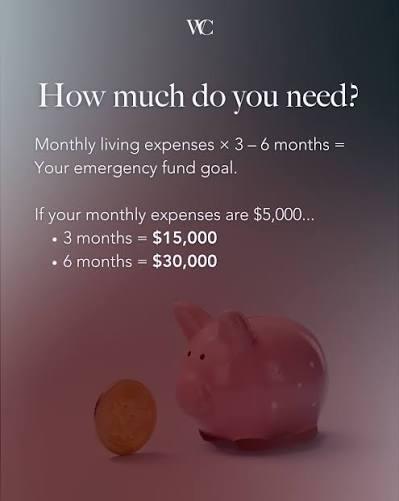
If you are starting from zero, $1,000 can be a useful first milestone, but it is not a universal finish line. A $5,000 fund may be strong for someone with low essential expenses yet inadequate for a household spending $4,000 a month. For a mature emergency fund, a common rule of thumb is roughly three to six months of essential expenses. However, the Consumer Financial Protection Bureau emphasizes that the amount depends on your situation, while FDIC consumer guidance notes that income, expenses and household size matter. The best target is therefore calculated from your own financial risk rather than copied from someone else's bank balance.
Why There Is No Perfect Emergency Fund Number
Search for emergency-fund advice and you will quickly encounter competing targets: $500, $1,000, $5,000, three months of expenses or six months of expenses. At first, those recommendations can seem contradictory.
In reality, they often describe different stages of financial preparedness. A $1,000 fund can protect a beginner from a moderate unexpected bill. Meanwhile, several months of expenses are designed for a much larger disruption, such as unemployment or a prolonged reduction in income.
A Dollar Target Is Simple but Not Personal
Fixed targets are easy to understand. However, $5,000 means something very different to a student spending $900 per month than to a family whose essential monthly costs are $4,500.
An Expense-Based Target Adjusts to Your Life
Instead of asking only how many dollars you should save, calculate how many months of essential expenses those dollars would cover. This approach makes the target responsive to housing costs, family size and other obligations.
| Emergency Fund Level | What It Can Represent | Best Viewed As |
|---|---|---|
| $500 | Small repair or urgent bill | Mini starter buffer |
| $1,000 | Stronger protection against moderate surprises | Common starter milestone |
| $5,000 | Could be several months for one household or barely one month for another | Useful only in context |
| 3 months of essentials | Shorter income disruption | Meaningful reserve |
| 6 months of essentials | Longer unemployment or major disruption | Stronger reserve |
| 9–12 months | Extra protection for unusually high uncertainty | Situation-specific target |

Is $1,000 Enough for an Emergency Fund?
For many beginners, $1,000 is a meaningful achievement. It can absorb costs that might otherwise go directly onto a credit card or force you to miss another bill.
When $1,000 Can Be a Good First Goal
If you currently have no emergency savings, reaching $1,000 can transform your financial position. For example, it might cover a car repair, an urgent flight, a medical deductible or several smaller unexpected expenses.
Moreover, a concrete four-digit target is psychologically easier to pursue than immediately trying to save six months of expenses.
Why $1,000 Is Usually a Milestone, Not the Finish Line
The limitation becomes clear when the emergency is loss of income. If your essential monthly expenses are $2,500, a $1,000 fund covers less than half a month.
Therefore, once you reach $1,000, calculate your monthly essentials and continue building toward an expense-based target.
Jordan Has $0 Saved and $1,700 in Essential Monthly Expenses
Jordan starts with a $1,000 goal because it feels achievable. After reaching it, he does not stop. Instead, his next target becomes one full month of essentials: $1,700.
From there, he works toward $5,100, which equals three months of essential expenses.
Key lesson: the $1,000 target gets the system started; monthly expenses determine where it should eventually go.
Is $5,000 a Good Emergency Fund?
$5,000 sounds substantial because it is a large fixed number. Nevertheless, whether it is enough depends on how quickly your household consumes that money during an emergency.
When $5,000 May Be More Than Three Months
Someone with essential expenses of $1,500 per month has about 3.3 months of coverage with $5,000. For that person, the fund is already meaningful.
When $5,000 May Cover Barely One Month
A household with $4,500 in monthly essentials has only about 1.1 months of coverage. Consequently, the exact same savings balance provides much less protection.
| Essential Monthly Expenses | How Long $1,000 Lasts | How Long $5,000 Lasts | 6-Month Target |
|---|---|---|---|
| $1,000 | 1 month | 5 months | $6,000 |
| $1,500 | 0.7 month | 3.3 months | $9,000 |
| $2,500 | 0.4 month | 2 months | $15,000 |
| $3,500 | 0.3 month | 1.4 months | $21,000 |
| $5,000 | 0.2 month | 1 month | $30,000 |
Do You Really Need 6 Months of Expenses?
Six months is a widely used benchmark, but it should be understood as a rule of thumb rather than a law. FDIC consumer guidance says financial experts generally recommend emergency savings of several months, with recent guidance describing three to six months depending on circumstances.
Why Six Months Can Be Powerful
A six-month reserve provides time. If income stops, you have more room to search for work, recover from illness, handle a family crisis or adjust your spending without immediately depending on debt.
Why Three Months May Be Reasonable for Some Households
A household with two stable incomes, strong insurance, low debt and flexible expenses may feel comfortable at the lower end of the range. In addition, someone with highly marketable skills and multiple income sources may be able to replace lost income faster.
Why Some People May Want More Than Six Months
By contrast, self-employed workers, sole earners, people in volatile industries or households with significant dependents may prefer a larger cushion. The same can apply when income replacement would likely take a long time.
Do not bankrupt your current budget trying to reach a six-month target immediately. A large emergency fund is built in stages. Protect essential bills, establish a starter buffer, and then increase the reserve steadily.
How to Calculate How Much Emergency Fund You Really Need
Instead of using your total lifestyle spending, begin with the expenses you would still need to pay during a serious financial disruption.
Step 1: Calculate Essential Monthly Expenses
Include housing, basic food, utilities, essential transportation, insurance, minimum required debt payments, necessary healthcare and essential family obligations.
Step 2: Remove Flexible Spending
Restaurant meals, vacations, entertainment subscriptions, nonessential shopping and optional upgrades can often be reduced during an emergency. Therefore, they do not necessarily need full replacement in your emergency-fund calculation.
Step 3: Choose a Coverage Period
Next, decide whether your situation points toward three months, six months or a larger buffer. Consider how stable your income is and how many people depend on it.
Step 4: Add Known Risk Where Appropriate
If you have a high insurance deductible, an older vehicle or another significant financial vulnerability, you may choose to add a separate buffer. However, predictable annual costs should normally be handled through sinking funds rather than counted as emergencies.
Step 5: Recalculate Once or Twice a Year
Your target should change when your life changes. A new child, mortgage, move, job change or major reduction in expenses can all affect the amount of protection you need.
A Household With $2,800 of Essential Monthly Expenses
A three-month emergency fund would be $8,400. Meanwhile, six months would require $16,800.
The household does not need to jump directly from $0 to $16,800. Instead, it could build through milestones: $1,000 → $2,800 → $5,000 → $8,400 → $16,800.
Key lesson: a large final target becomes more manageable when divided into meaningful stages.
Which Target Fits Your Situation?
| Your Situation | Possible Direction | Why |
|---|---|---|
| Starting from $0 | Build a small starter fund first | Immediate protection matters before a distant six-month goal |
| Stable job, low fixed costs, dual-income household | Often lower end of 3–6 months | Income and expense flexibility may reduce risk |
| Single-income household | Consider stronger reserves | One lost income can affect the entire household |
| Freelancer or irregular income | Often toward 6 months or more | Income volatility increases uncertainty |
| Self-employed business owner | Personal emergency fund plus separate business reserves | Business and household shocks should not rely on one pot of money |
| High job uncertainty | Consider 6+ months | Income replacement may take longer |
| Retired household | Personalized cash reserve | Income structure and portfolio withdrawals differ from employment |
If You Have Irregular Income
Base the calculation on essential expenses rather than an average paycheck. Furthermore, a larger buffer may help cover both unexpected bills and periods when income arrives late or below normal.
If You Have Children or Other Dependents
Households supporting other people often have fewer expenses they can immediately cut. As a result, a stronger reserve may provide valuable flexibility.
If You Have Two Reliable Incomes
Two incomes can reduce the chance that household income falls to zero at once. However, consider whether both jobs depend on the same employer, industry or local economy.
If Your Job Is Uncertain
When layoffs are possible or finding a comparable job may take months, building toward the higher end of the range can be sensible.
Four Real-Life Style Emergency Fund Examples
These examples are hypothetical. They demonstrate why the right emergency fund changes with circumstances rather than nationality or income alone.
A Freelancer With Irregular Income
A freelance designer has essential monthly expenses equivalent to $900. Because client income fluctuates, a $1,000 fund covers only slightly more than one month.
She first reaches $1,000, then builds toward $2,700 for three months. Eventually, her preferred target becomes $5,400, or six months.
Lesson: volatile income can justify a larger cushion even when monthly expenses are relatively low.
A Dual-Income Household With Stable Employment
A couple has $3,200 in essential monthly costs. Both have stable jobs in different industries, so they initially target three months, or $9,600.
Later, they decide to move toward six months without delaying retirement contributions indefinitely.
Lesson: risk, not an arbitrary round number, guides their target.
A Single Parent With Dependents
A single parent has essential monthly costs of $2,600. Because the household relies primarily on one income, £/$5,000-equivalent savings would not provide much time after a job loss.
The parent builds through several milestones and ultimately prefers a larger multi-month reserve.
Lesson: household responsibility can matter as much as salary.
A Worker With Low Expenses and Family Support
A worker has modest essential expenses and reliable employment. In addition, close family could temporarily provide housing if a major disruption occurred.
His target may reasonably differ from someone with the same income but a mortgage and several dependents.
Lesson: financial resilience includes both expenses and the resources available around you.

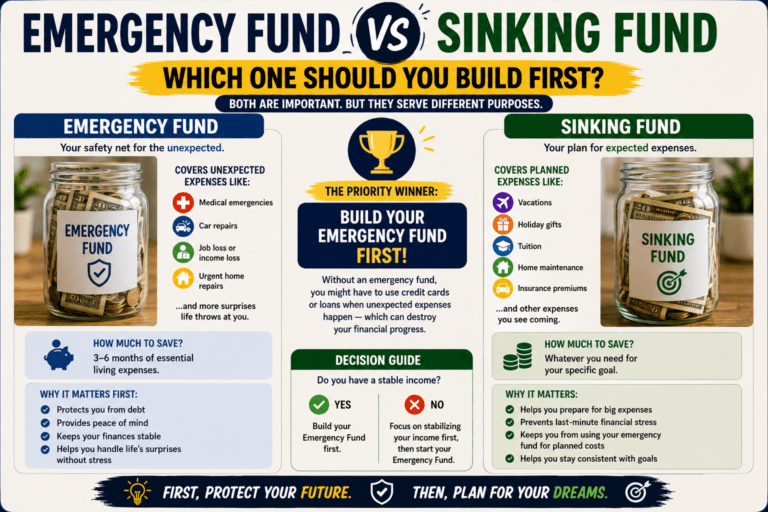
Emergency Fund vs Sinking Fund: Do Not Mix Them Up
A strong emergency fund can still fail if you repeatedly use it for expenses that were predictable.
Emergency Fund
This money is for genuinely unplanned financial shocks, such as unexpected loss of income, an urgent medical expense or a necessary repair that could not reasonably be planned.
Sinking Fund
A sinking fund is money saved gradually for an expense you know is coming. Examples include annual insurance, school costs, holiday spending, planned car maintenance and a future appliance replacement.
Why You Need Both
If annual bills repeatedly drain your emergency account, you never reach your real protection target. Therefore, create separate savings buckets where practical.
Should You Build an Emergency Fund While Paying Off Debt?
This is one of the hardest trade-offs because high-interest debt can be expensive while having no cash buffer creates its own risk.
A Starter Fund Can Prevent New Borrowing
If every small emergency goes onto a credit card, aggressively paying debt without any cash reserve can become a cycle. A starter emergency fund may reduce the need to borrow again.
High-Interest Debt Still Deserves Attention
At the same time, carrying expensive debt while slowly accumulating a very large cash balance can have a substantial interest cost. Consequently, many people use a staged approach: establish a basic cushion, attack costly debt, and continue building the emergency reserve.
Do Not Ignore Employer Benefits
If your employer offers valuable matching contributions or other benefits, consider those opportunity costs before stopping everything to build a very large emergency fund.
Debt rates, job security, insurance, retirement benefits and household risk can change the best sequence. The article provides an educational framework rather than individualized financial advice.
Where Should You Keep a Large Emergency Fund?
Prioritize Safety
Emergency money has a short-term job. Therefore, avoid exposing the core reserve to large market swings simply to chase higher returns.
Prioritize Access
The CFPB recommends keeping emergency savings somewhere safe and accessible. A dedicated bank or credit-union savings account can be one option, depending on the protections and products available in your country.
Consider Yield After Safety and Access
A competitive savings rate can help, particularly when the balance becomes large. Nevertheless, a slightly higher rate is not worth excessive fees, difficult access or inappropriate risk.
Keep It Separate From Everyday Spending
A separate account or savings bucket creates a useful psychological barrier. You can still reach the money when a genuine emergency occurs without seeing it as available spending cash every day.
When Should You Stop Building Your Emergency Fund?
You do not necessarily need to save emergency cash forever. Eventually, keeping every additional dollar in cash may slow other long-term goals.
Stop at a Target Based on Risk
Once you have reached the coverage level appropriate for your situation, redirect new savings toward other goals such as retirement, investing, debt reduction, education or a home purchase.
Review Instead of Constantly Adding
After reaching the target, check it periodically. Inflation, rent increases and family changes can make an old target too small.
Rebuild After Every Withdrawal
If a genuine emergency reduces the fund, rebuilding the used amount becomes an important financial priority. The fund is designed to be used when necessary, not preserved untouched at all costs.
A Practical Emergency Fund Roadmap From $0 to 6 Months
| Milestone | Goal | What to Do Next |
|---|---|---|
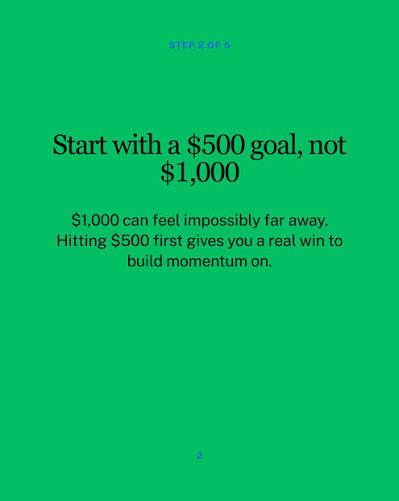
| Stage 1 | $100–$500 | Create immediate breathing room |
| Stage 2 | $1,000 | Protect against moderate unexpected bills |
| Stage 3 | 1 month of essential expenses | Move from a round number to a personal target |
| Stage 4 | 3 months | Build meaningful income-loss protection |
| Stage 5 | 6 months | Create a stronger reserve where appropriate |
| Stage 6 | 6+ months if needed | Adjust for unusually high income or household risk |
Most importantly, you do not fail simply because you have not reached the final stage. Someone with $1,000 after starting at $0 is financially stronger than before. Continue progressing without allowing a distant target to make today's improvement feel meaningless.
Incoming Link Opportunities
Recommended External Resources
Consumer Financial Protection Bureau
The CFPB explains that the amount needed in an emergency fund depends on the individual's situation and recommends considering the unexpected expenses you have experienced before. It also emphasizes keeping emergency savings safe and accessible.
An Essential Guide to Building an Emergency Fund — CFPB
Federal Deposit Insurance Corporation
FDIC consumer guidance discusses building emergency savings and notes common recommendations of several months of living expenses. Its May 2026 guidance specifically says the amount depends on income, expenses and household size and describes three to six months as a general recommendation.
Saving for the Unexpected and Your Future — FDIC
FDIC: Preparing for Tax Season
This updated consumer resource explains that emergency-fund size depends on factors such as income, expenses and household size and references the three-to-six-month range.
Preparing for Tax Season — FDIC
The CFPB and FDIC are U.S. institutions. Their emergency-savings principles can still provide useful educational context internationally, but deposit insurance, savings products, taxes and banking protections differ by country.
Frequently Asked Questions
Is $1,000 enough for an emergency fund?
$1,000 can be an excellent starter emergency fund, particularly if you are beginning from zero.
However, it may not cover a prolonged income loss.
Compare the amount with your essential monthly expenses.
Next, continue toward one month of expenses if your budget allows.
Ultimately, your risk level should determine the longer-term target.
Is $5,000 a good emergency fund?
It can be.
For someone spending $1,500 a month on essentials, $5,000 covers more than three months.
By contrast, someone with $5,000 of essential monthly expenses has only one month.
Therefore, judge the balance by months of coverage.
A fixed number alone does not show whether you are fully prepared.
Do I really need six months of emergency savings?
Not everyone needs exactly six months.
Three to six months is a common general range in consumer financial guidance.
However, irregular income or high job uncertainty may justify more.
A stable dual-income household may be comfortable with less.
Use the range as a framework rather than a rigid rule.
Should an emergency fund be based on income or expenses?
Essential expenses are usually the more useful starting point.
During an income emergency, you may reduce optional spending.
Therefore, calculate the costs you would still need to cover.
Include housing, food, utilities, required transport, insurance and other necessities.
Then multiply that amount by your desired months of protection.
Should I save three months or six months of expenses?
Consider job stability, income sources, dependents, insurance and how quickly you could replace income.
For example, a highly stable dual-income household may choose the lower end.
Meanwhile, a freelancer may prefer the higher end.
Neither number is universally correct.
Your target should reflect your actual financial risk.
Can I have too much money in an emergency fund?
Potentially.
Once you have sufficient emergency protection, keeping excessive additional cash may slow other goals.
However, what counts as excessive depends on your circumstances.
Review the target periodically.
After reaching it, consider directing additional money toward appropriate long-term goals.
Should I count investments as my emergency fund?
The core emergency reserve should prioritize safety and liquidity.
Investments can fall in value when you need the money.
As a result, relying entirely on volatile assets can create additional risk.
Long-term investments can serve a different financial purpose.
Keep the roles clear.
What happens if I use my emergency fund?
Using the fund for a genuine emergency is exactly why it exists.
First, deal with the urgent expense.
Next, reassess your cash flow.
Then restart contributions when practical.
Rebuilding after use is part of maintaining the system.
Research Methodology
This MoneyOnliners guide compares fixed-dollar emergency-fund milestones with expense-based targets. The central framework uses essential monthly expenses, income stability, household obligations and financial risk rather than presenting $1,000, $5,000 or six months as universally correct. Current public guidance was checked against Consumer Financial Protection Bureau and FDIC consumer resources in August 2026. Examples and case studies in this article are illustrative rather than claims about specific readers.
Final Verdict: $1,000, $5,000 or 6 Months?
$1,000 is a strong starting milestone. It can provide immediate protection and help break the cycle of borrowing for every unexpected expense.
$5,000 can be excellent or inadequate. Its usefulness depends entirely on your monthly essential costs.
Three to six months of essential expenses is a more personalized long-term framework. Even then, the exact target should reflect job stability, dependents, insurance, income sources and your ability to recover from a financial shock.
Therefore, do not wait until you can afford the “perfect” emergency fund. Start with the first milestone, calculate one month of essential expenses, and build from there. Financial resilience grows in stages.