15 Emergency Fund Mistakes That Could Leave You Short on Cash
15 Emergency Fund Mistakes That Could Leave You Short on Cash
Building emergency savings is only half the job. Avoiding the mistakes that quietly weaken your safety net can be just as important when the next unexpected expense arrives.
The biggest emergency fund mistakes include never defining what counts as an emergency, saving without a target, keeping too little cash, using the fund for predictable expenses, mixing it with everyday spending, investing money you may need soon, forgetting to rebuild after a withdrawal and failing to adjust the target as your life changes. A strong emergency fund should be safe, reasonably accessible and reserved primarily for genuine financial shocks.
Why Emergency Fund Mistakes Matter
An emergency fund is a cash reserve specifically set aside for unplanned expenses or financial emergencies. The Consumer Financial Protection Bureau gives examples such as unexpected car repairs, home repairs, medical bills and loss of income.
Without savings, even a relatively small financial shock can lead to borrowing. Consequently, the purpose of emergency savings is not simply to accumulate money. The fund should help you absorb a surprise without immediately turning to credit cards, loans or long-term savings.
Still, a savings balance can create a false sense of security when the fund is poorly designed. You may technically have emergency savings while keeping too little, spending it on predictable costs or storing it somewhere that is difficult to access when you actually need it.
Emergency Fund Mistakes at a Glance
| Mistake | Why It Can Hurt | Better Approach |
|---|---|---|
| No clear emergency definition | Ordinary wants can drain the account | Create withdrawal rules |
| No savings target | You cannot measure readiness | Use milestones and essential expenses |
| Saving too little for your risks | A major shock can overwhelm the fund | Review income and household risks |
| Waiting for a perfect starting amount | You remain completely unprotected | Start small |
| Using it for predictable expenses | Cash disappears before a real emergency | Use sinking funds |
| Keeping it in checking | Easy to spend accidentally | Separate emergency savings |
| Making it too hard to access | Cash may not be available when needed | Balance access with discipline |
| Taking unnecessary investment risk | Value may fall before an emergency | Prioritize safety and liquidity |
| Ignoring insurance | Savings must cover avoidable gaps | Review coverage and deductibles |
| Never rebuilding | Protection shrinks after each withdrawal | Replenish the fund |
15 Emergency Fund Mistakes to Avoid
Not Defining What Counts as an Emergency
If “emergency” means anything you suddenly want, the account can become a second checking account. A sale, vacation opportunity or new phone may feel urgent, yet that does not make it a financial emergency.
The CFPB recommends setting personal guidelines for what constitutes an emergency or unplanned expense and staying consistent. A useful MoneyOnliners test is to ask whether the situation is unplanned, necessary and urgent.
Saving Without a Clear Target
“Save more” is a direction, not a measurable goal. Without a target, you may stop too early or keep moving money into emergency savings while ignoring other important priorities.
Begin with a starter milestone if necessary. Afterward, calculate essential monthly expenses and consider how long you would need the fund to support you during a major income disruption.
Assuming the Same Emergency Fund Amount Works for Everyone
A single worker with stable employment and low fixed expenses may face different risks from a one-income family with children, a homeowner or a self-employed person whose income varies every month.
The CFPB says the amount needed depends on your situation. Meanwhile, recent FDIC consumer guidance describes three to six months of expenses as a general recommendation, while another FDIC resource notes that experts generally recommend at least six months of living expenses.
Those figures are useful benchmarks rather than universal commandments. Your own income stability, household size, insurance, essential expenses and likely financial shocks should shape the final target.
Waiting Until You Can Save a Large Amount
Some people postpone saving because they cannot put aside $500 or $1,000 immediately. Unfortunately, waiting leaves the household with no cushion at all.
The CFPB emphasizes that even a small amount can provide some financial security. Similarly, FDIC guidance encourages realistic savings goals and regular saving.
For example, $20 every two weeks equals $520 over 26 pay periods before interest. Small contributions are not meaningless when they are repeated.

Using Emergency Savings for Predictable Expenses
Christmas comes every year. Vehicle registration renews on a schedule. Annual insurance premiums and routine servicing are also generally foreseeable.
These costs may be irregular, but irregular does not automatically mean unexpected. When predictable bills repeatedly come from emergency savings, the fund may be depleted before a genuine crisis arrives.
Keeping Emergency Money Mixed With Everyday Spending
When emergency cash sits beside grocery and entertainment money, it becomes difficult to know what is actually available for spending. The balance can gradually shrink without one obvious withdrawal.
FDIC guidance recommends considering a separate savings account so emergency money is easier to protect from everyday spending. The CFPB likewise recommends keeping the fund somewhere safe, accessible and not overly tempting.
Making the Money Too Difficult to Access
Separating emergency savings is helpful, but accessibility still matters. A genuine emergency can require money quickly.
For example, locking every dollar into a product with early-withdrawal restrictions can create a problem when an urgent repair or medical expense arrives. FDIC guidance notes that certificates of deposit may carry early-withdrawal penalties.
Investing Emergency Savings Too Aggressively
Stocks and other investments can be appropriate for long-term goals, but their values can fluctuate. An emergency can happen during a market decline, forcing you to sell when the balance is lower.
The FDIC notes that stocks, bonds and mutual funds are subject to market fluctuations and are not FDIC-insured deposits. Emergency money has a different job from long-term investment capital.
Never Automating Contributions
Saving only whatever happens to remain at the end of the month can produce inconsistent results. Often, the money gets absorbed by other spending first.
Both CFPB and FDIC guidance identify recurring automatic transfers as a practical way to build savings. Automation does not make the amount larger, but it can make the habit more reliable.
Saving So Aggressively That You Create a Cash-Flow Crisis
There is little benefit in transferring $400 into savings if you must pull $350 back three days later to cover food or utilities. An unrealistic contribution can also trigger overdrafts, missed bills or reliance on credit.
The CFPB recommends paying attention to cash flow—the timing of income and expenses—when developing a savings strategy.

Ignoring Insurance While Building the Fund
Emergency savings and insurance solve different parts of financial risk. Savings can handle immediate expenses and uncovered gaps, while appropriate insurance may protect against losses that would otherwise overwhelm a household's cash.
FDIC disaster guidance recommends periodically reviewing homeowners or renters insurance and determining whether coverage is adequate for relevant risks. It also explains that emergency savings can provide immediate money and help fill gaps.
Using the Fund for Lifestyle Upgrades
A working phone that you would like to replace is different from an essential phone that unexpectedly fails. Likewise, wanting a newer car is not the same as paying for an urgent repair needed to get to work.
Emergency status should not become permission to buy a premium version of whatever broke. Even during a genuine emergency, compare practical repair and replacement options.
Being Too Afraid to Use the Fund
This mistake is the opposite of overspending the account. Some savers become so attached to the balance that they use expensive debt for a genuine emergency just to avoid touching savings.
The CFPB explicitly says not to be afraid to use emergency savings when you need them. A reserve fund can help you avoid credit or loans that may make a one-time expense more expensive through interest and fees.
Forgetting to Rebuild After a Withdrawal
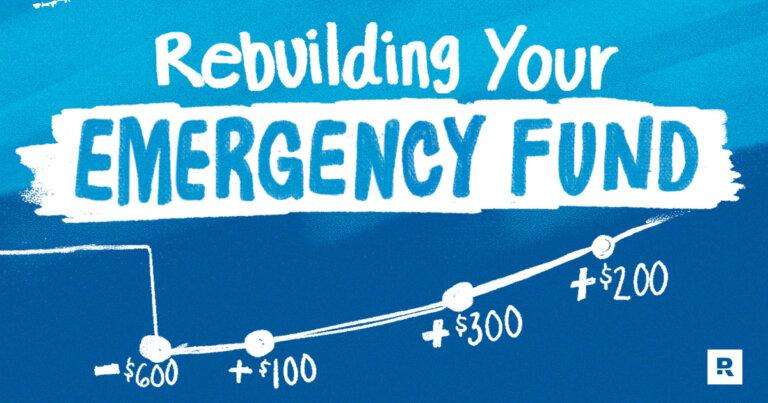
An emergency fund can work perfectly once and still leave you exposed to the next shock if the balance is never restored.
The FDIC specifically recommends developing a plan to replenish withdrawals from an emergency fund. The CFPB also advises rebuilding the balance after using it.
Restart with a manageable contribution rather than waiting until you can replace the entire amount at once.
Never Updating Your Emergency Fund Target
Your financial life changes. A fund that was appropriate when you rented a small apartment may no longer match your risk after buying a home, having children, becoming self-employed or moving to a one-income household.
Inflation and higher essential expenses can also reduce how far an old dollar target will stretch. Therefore, emergency-fund planning should not be a one-time exercise.
Real-Life Style Case Studies: How Small Mistakes Become Big Problems
The following examples are hypothetical, but they illustrate how emergency-fund decisions can affect real household cash flow.
The Emergency Fund That Became a Shopping Account
A worker saves the equivalent of $900 for emergencies but keeps it in the same account used for ordinary spending. Over six months, small withdrawals for meals, clothing and entertainment reduce the balance to $420.
Then an urgent car repair costs $700. Instead of having enough cash, the worker must find another $280.
Lesson: separating emergency savings can make the boundary between “available to spend” and “reserved for emergencies” much clearer.
Saving Too Aggressively Backfires
A household decides to transfer $500 to emergency savings every payday even though the budget can reliably support only $250. The larger transfer repeatedly leaves checking short before utility and grocery expenses arrive.
Eventually, they use a credit card for routine spending while cash sits in savings.
Lesson: a sustainable $250 contribution can be stronger than a $500 contribution that creates new debt or must constantly be reversed.
A Freelancer Keeps the Same Target After Income Changes
A freelancer originally builds a $1,000 starter fund. Two years later, freelance work becomes the household's primary income, yet the emergency target never changes.
When a major client contract ends, $1,000 covers only a small part of the income gap.
Lesson: greater income volatility can justify reassessing how much accessible emergency cash is appropriate.
Predictable Bills Keep Draining the Fund
A family has $2,500 in emergency savings. During the year, annual insurance, holiday gifts and routine car servicing all come from that account. By the time an unexpected home repair arrives, only $1,100 remains.
Lesson: sinking funds for foreseeable expenses can protect the emergency reserve for true surprises.
Emergency Fund vs. Sinking Fund: Don't Confuse the Two
Many emergency-fund mistakes begin because predictable expenses and unexpected financial shocks are stored in one mental bucket.
| Expense | Emergency Fund? | Better Source When Predictable |
|---|---|---|
| Unexpected job loss | Yes | Emergency fund |
| Sudden urgent medical bill | Often yes | Health sinking fund for known costs |
| Major unexpected car breakdown | Often yes | Car fund for routine upkeep |
| Oil change | Usually no | Car maintenance fund |
| Annual insurance premium | Usually no | Insurance sinking fund |
| Christmas gifts | No | Holiday fund |
| Vacation | No | Travel fund |
| Urgent major home repair | Often yes | Home fund for foreseeable upkeep |
| New furniture by choice | No | Home-purchase sinking fund |
A sinking fund prepares for a cost you know is likely to arrive. Emergency savings protect you from a financial shock you could not reasonably schedule. Building both systems can prevent predictable costs from weakening your emergency cushion.
How to Fix a Weak Emergency Fund in 30 Days
Week 1: Audit the Fund
Write down the current balance, where the money is held and the last several withdrawals. Then identify whether any withdrawals were actually predictable expenses.
Week 2: Set Your Rules and Next Milestone
Define what qualifies as an emergency. Next, choose a reachable savings milestone rather than focusing only on a distant final target.
Week 3: Improve the System
Separate the account from everyday spending if appropriate. Then establish an automatic transfer that fits your cash flow.
Week 4: Close the Gaps
Create sinking funds for recurring expenses that have been draining the account. Review insurance and deductibles as well. Finally, decide when you will reassess your emergency-fund target.
A 30-day reset will not necessarily fully fund your account. Its purpose is to fix the structure so that future contributions have a better chance of staying saved until a genuine emergency arrives.
How Much Emergency Savings Should You Aim For?
There is no perfect number for every reader. The CFPB says your target depends on your situation and suggests considering the types and costs of unexpected expenses you have experienced in the past.
For someone starting from $0, an initial $500 or $1,000 milestone may make the goal feel manageable. FDIC educational materials have also highlighted $500 to $1,000 as an amount that can cover many unexpected expenses, while more recent FDIC consumer guidance discusses multi-month reserves for larger financial shocks.
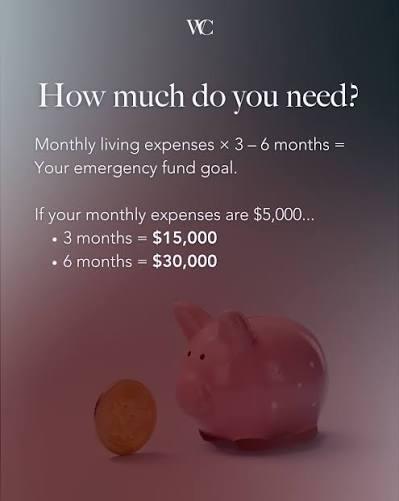
As your fund grows, move from a simple dollar target toward essential monthly expenses. Recent FDIC guidance gives three to six months of expenses as a general recommendation, while another FDIC resource says financial experts generally recommend at least six months of living expenses.
Rather than treating one figure as universally correct, consider job stability, whether your household has one or multiple incomes, housing responsibilities, dependents, insurance, health-related risks and how quickly lost income could realistically be replaced.
Incoming Link Opportunities
Recommended External Resources
Consumer Financial Protection Bureau — Emergency Fund Guide
An Essential Guide to Building an Emergency Fund — CFPB
This guide explains what emergency savings are, how to build them, where to keep them and when to use them.
FDIC — Saving for the Unexpected and Your Future
Saving for the Unexpected and Your Future — FDIC
The FDIC discusses emergency-savings targets, automatic deposits, windfalls, accessibility and separating savings from everyday spending.
FDIC — Starting Small Can Lead to Big Savings
Starting Small Can Lead to Big Savings — FDIC
This resource covers regular saving, separate emergency accounts and the importance of replenishing withdrawals.
FDIC — Preparing Your Finances for an Unanticipated Disaster
Preparing Your Finances for an Unanticipated Disaster — FDIC
This guide explains the relationship between insurance, immediate emergency expenses and maintaining an emergency savings fund.
The CFPB and FDIC are U.S. authorities. Their general emergency-savings principles can be useful elsewhere, but deposit protection, banking products, insurance and consumer rules differ by country.
Frequently Asked Questions
What is the biggest emergency fund mistake?
One of the biggest mistakes is failing to define what the money is for.
Without rules, normal spending can slowly drain the account.
Use emergency savings primarily for genuine financial shocks.
Keep predictable expenses in separate sinking funds.
Then review your rules periodically.
Is $1,000 enough for an emergency fund?
$1,000 can be a useful starter milestone.
However, it may not cover a major income disruption.
Your eventual target should reflect your household's expenses and risks.
Multi-month reserves can provide greater protection.
Start where you can and build progressively.
Should my emergency fund be in my checking account?
It can be accessible without being mixed with daily spending.
A separate savings account may create a clearer boundary.
FDIC guidance specifically notes that separation can reduce the temptation to spend emergency money.
Accessibility still matters.
Choose an arrangement appropriate for your circumstances.
Should I invest my emergency fund?
Emergency savings generally has a short-term protection role.
Investments can fluctuate in value.
You may need emergency cash during a market decline.
Therefore, safety and accessibility are important considerations.
Keep long-term investing goals separate from short-term emergency needs.
Is it wrong to use emergency savings?
No, if you face a genuine emergency.
The CFPB specifically says not to be afraid to use the fund when needed.
That is why you built it.
After the crisis, calculate what remains.
Then begin replenishing the account.
Should I use my emergency fund for annual bills?
Usually not when the bill is predictable.
Annual expenses can be divided into monthly savings amounts.
A sinking fund works well for these costs.
That leaves emergency savings available for genuine surprises.
Review your annual expenses when building a budget.
What if I can only save a small amount?
Start with the small amount.
The CFPB notes that even modest savings can provide some financial security.
Consistency can turn small deposits into a meaningful balance.
Increase contributions when your income or cash flow improves.
Do not wait for perfect circumstances.
How often should I review my emergency fund?
Review it periodically and after major life changes.
Changes in income can affect your target.
So can housing, dependents and essential expenses.
Insurance changes may matter as well.
Update the goal when the old number no longer reflects your risks.
What should I do after draining my emergency fund?
First, stabilize the immediate crisis.
Next, calculate your remaining balance.
Choose a new savings milestone.
Restart regular contributions when your budget allows.
Finally, fix any predictable expense that should have had its own sinking fund.
Can I have too much money in an emergency fund?
Potentially, depending on your circumstances and other goals.
Emergency cash prioritizes safety and accessibility rather than maximum long-term growth.
Once your chosen reserve is adequately funded, additional money may have other jobs.
Those could include long-term goals, debt reduction or investing depending on your financial plan.
Your target should be deliberate rather than unlimited.
Research Methodology
This MoneyOnliners guide was developed using current consumer guidance from the Consumer Financial Protection Bureau and Federal Deposit Insurance Corporation. We checked core recommendations concerning the purpose of emergency savings, small starter amounts, multi-month targets, automatic transfers, account separation, accessibility, market risk, insurance and replenishing withdrawals. The 15-mistake framework, examples, 30-day reset and case studies are MoneyOnliners editorial tools designed to make those principles practical. Case studies are hypothetical rather than reported individual outcomes.
Final Thoughts: Build an Emergency Fund That Actually Works When You Need It
An emergency fund is not strong merely because an account exists. It needs a realistic target, clear withdrawal rules, an appropriate place to keep the money and a plan for rebuilding after it is used.
Therefore, avoid treating predictable bills as emergencies. Separate the fund from everyday spending, but keep legitimate emergency access practical. Likewise, do not take unnecessary market risk with cash you may need suddenly.
Most importantly, do not let perfection prevent progress. If you are starting with $0, save what you can. If you already have a starter fund, work toward a target that reflects your real expenses and risks. If you recently drained the account for a genuine emergency, rebuild it in manageable stages.
The best emergency fund is not necessarily the one with the biggest headline number. It is the one designed around your household and still available when an unexpected financial shock arrives.