15 Ways to Build an Emergency Fund When Money Is Already Tight
15 Ways to Build an Emergency Fund When Money Is Already Tight
Saving for emergencies is hardest when every paycheck already has a job. This guide focuses on realistic ways to create a financial cushion without pretending you can simply cut essential expenses or magically find hundreds of extra dollars.
When money is tight, build an emergency fund by starting smaller than you think you should. Save a manageable amount after income arrives, use flexible percentages if your pay changes, redirect one recurring expense, save part of windfalls, sell unused items and use extra income strategically. The CFPB specifically says that even a small amount can provide some financial security and recommends strategies such as managing cash flow, one-time savings opportunities and automatic transfers. The goal is to build protection without causing missed essential bills or overdraft fees.
Can You Really Build an Emergency Fund on a Tight Budget?
Yes, but the strategy looks different when your budget has little breathing room. Advice such as “save 20% of your income” may be unrealistic when housing, food, transport, utilities and debt already consume most of what you earn.
Instead, begin with your actual cash flow. Protect necessities first. Then look for small, repeatable opportunities to save rather than forcing a contribution your budget cannot support.
Small Savings Still Count
The CFPB notes that people living paycheck to paycheck or dealing with fluctuating income may find saving difficult, yet even a small amount can provide financial security. Similarly, Canada's Financial Consumer Agency advises starting with a realistic amount—even $5 per week—and building gradually.
Your First Goal Does Not Need to Be Six Months
A large emergency reserve can be a long-term goal. However, someone starting at $0 benefits from the first $50, $100 or $500 long before reaching several months of expenses.
Do Not Create an Emergency to Fund an Emergency
If an automatic savings transfer causes an overdraft, a missed utility payment or insufficient grocery money, the amount is too aggressive. Reduce it. Your emergency fund should strengthen your finances rather than destabilize today's essentials.
| If You Can Save... | After 3 Months | After 6 Months | After 12 Months |
|---|---|---|---|
| $5/week | About $65 | About $130 | $260 |
| $10/week | About $130 | About $260 | $520 |
| $15/week | About $195 | About $390 | $780 |
| $20/week | About $260 | About $520 | $1,040 |
| $25/week | About $325 | About $650 | $1,300 |
Illustrative figures use 52 weeks per year and exclude interest, taxes and fees.

15 Realistic Ways to Build an Emergency Fund When Money Is Tight
You do not need to use all 15 strategies at once. In fact, doing too much can make the plan harder to maintain. Pick two or three methods that fit your income and household, then add others when your cash flow improves.
Start With $1, $5 or Whatever You Can Actually Afford
When money is already tight, the wrong first goal is an amount that makes your budget collapse. Start with an amount small enough to repeat. If $5 per week works, that is $260 over 52 weeks before interest. If only $2 works right now, begin there and increase it later.
A small contribution is not meaningless. It creates the habit, proves that your balance can move upward and gives you at least some cash for the next surprise. The CFPB specifically notes that even a small amount can provide financial security when saving is difficult.
Create a Tiny Starter Goal Before Thinking About Six Months
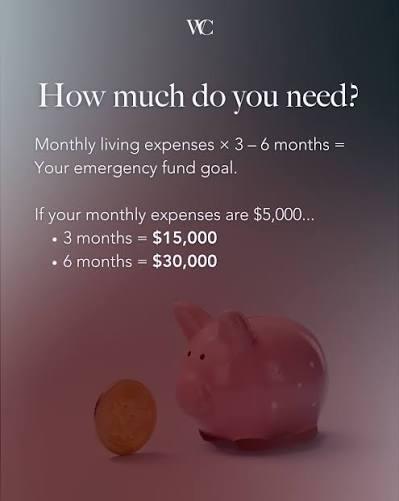
A three-to-six-month emergency fund can feel impossible when the current balance is $0. Therefore, break the goal into stages: $50, $100, $250, $500, $1,000, one month of essentials and then larger milestones.
Each stage has a job. Your first $100 might cover an urgent prescription or small repair. Meanwhile, $500 or $1,000 can absorb a more substantial financial shock. Milestones make progress visible instead of making you feel permanently behind.
Save Immediately After Income Arrives
Waiting until the end of the month often means there is nothing left. Instead, move a small amount shortly after payday, a client payment or another regular income event.
The amount does not have to be large. A $10 transfer after each biweekly paycheck is easier for some households than finding $260 all at once at year-end. Most importantly, schedule the transfer only when you are confident essential bills will remain covered.
Use a Percentage Rule for Irregular Income
A fixed $50 transfer may work badly when your income changes every month. In that case, try a small percentage of income instead. For example, you could save 2%, 5% or another realistic percentage whenever money arrives.
During a weak month, the contribution automatically falls. During a stronger month, it rises. As a result, the emergency fund grows without forcing an inflexible savings amount onto unpredictable cash flow.
Redirect One Small Expense Instead of Cutting Everything
Extreme spending cuts are difficult to sustain. Choose one flexible expense and redirect the exact amount you save. It might be one subscription, one takeaway meal, an unused membership or a convenience purchase you no longer value.
For example, eliminating a $12 monthly subscription creates $144 over a year. The important step is transferring that $12 to savings rather than letting it disappear into another category.
Save Part of Every Windfall
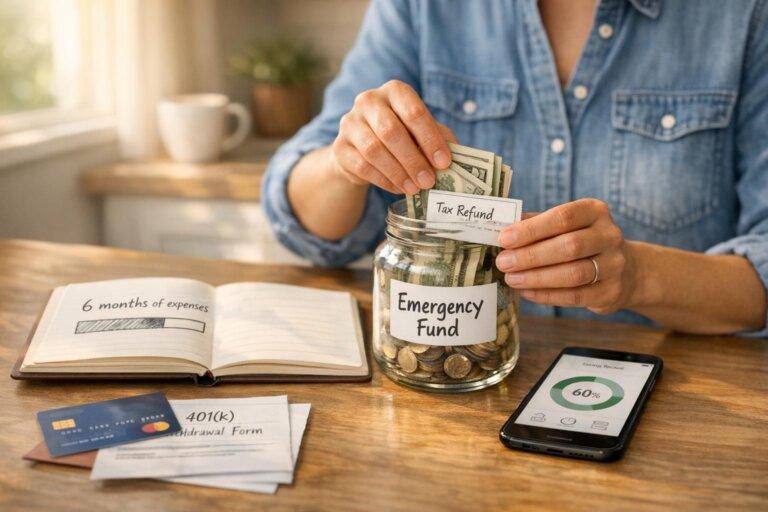
Tax refunds, bonuses, gifts, rebates, overtime and unexpected client payments can create rare breathing room. Decide on your savings percentage before the money arrives.
You do not necessarily have to save the entire windfall. If your household needs part of it, divide it deliberately. Even sending 20% or 30% to the emergency fund can create a meaningful jump without ignoring current needs.
Sell Things You No Longer Use
Unused electronics, furniture, clothing, tools, toys or hobby equipment can turn clutter into a starter emergency fund. Begin with items that have real resale value and that you genuinely no longer need.
Use reputable marketplaces and follow local safety practices when meeting buyers. Once an item sells, move the proceeds to the emergency fund immediately. Otherwise, the one-time cash can easily become ordinary spending.
Use Cash-Back and Rewards Carefully
Cash-back rewards can supplement an emergency fund when they come from purchases you already planned to make. Redeem legitimate rewards as cash where possible and transfer the money to savings.
However, never spend extra merely to earn rewards. Paying $50 for something unnecessary to receive $1 back makes you poorer, not richer. Rewards should follow planned spending rather than create new spending.
Lower One Recurring Bill and Bank the Difference
Recurring bills can produce recurring savings. Compare phone plans, internet packages, insurance options and subscriptions where appropriate. If you reduce a bill from $80 to $65, send the $15 difference to your emergency fund each month.
This strategy works especially well because your lifestyle has already adapted to the higher bill. Therefore, redirecting the difference can feel easier than finding a brand-new $15 in the budget.
Try a No-Spend Day or Low-Spend Weekend
A no-spend challenge does not need to last a month. Pick one day or weekend when you avoid optional purchases and use food, entertainment and supplies you already have.
Estimate what you would normally have spent and transfer some or all of that amount to savings. A short challenge can reveal spending habits without creating the burnout that sometimes comes with extreme long-term restrictions.
Put Raises and Paid-Off Bills to Work
When income rises or a debt payment disappears, lifestyle spending can quickly expand to absorb the difference. Instead, send part of the new breathing room to your emergency fund.
For example, after paying off a $60 monthly obligation, you might redirect $40 to emergency savings and keep $20 for another goal. This allows your quality of life to improve while your financial resilience improves too.
Use Separate Savings So the Money Is Harder to Spend
Keeping emergency savings inside your everyday spending account can make the balance look available. A separate savings account or clearly labeled savings bucket creates useful separation.
Choose a safe, accessible account with appropriate deposit protection and low fees in your country. The goal is not to make your money impossible to reach. Instead, create enough friction that you pause before using it for a non-emergency.
Build a Small Side-Income Stream for the Fund
If cutting expenses has reached its limit, earning a little more may be more realistic than cutting deeper. A few hours of freelance work, local services, overtime, tutoring, delivery work or selling a useful skill can provide extra cash.
Do not assume every side hustle is profitable. Account for transport, platform fees, taxes, supplies and your time. Then direct the net extra income—not the headline revenue—to your emergency fund.
Temporarily Slow a Lower-Priority Savings Goal
When you have no emergency cushion, it may make sense to temporarily reduce contributions to a flexible short-term goal such as a vacation, gadget or optional purchase.
This does not mean abandoning every long-term priority. Employer retirement matches, high-cost debt and other important obligations can complicate the decision. Instead, identify truly flexible goals and redirect only what makes sense until you have a basic cash buffer.
Review the Fund Every Month and Increase Slowly
A tight budget today may not stay tight forever. Review your emergency savings once a month and ask whether you can safely increase the contribution by $1, $5, 1% of income or another modest amount.
Small increases compound. More importantly, the review keeps your emergency fund connected to your real cash flow. If income falls, you can also reduce the contribution rather than abandoning the habit completely.
What Should You Cut When There Is Almost Nothing Left to Cut?
When the budget is already lean, repeatedly hearing “spend less” can be unhelpful. At some point, the problem is not excessive discretionary spending; it is that income is too close to essential expenses.
Separate Needs From Flexible Wants
Start by identifying what truly must be paid: housing, basic food, utilities, essential transportation, required insurance, healthcare and minimum obligations. Then review flexible spending without assuming every nonessential purchase must disappear.
Look for Structural Savings Before Tiny Deprivations
Reducing a recurring bill by $20 per month can be more valuable than repeatedly denying yourself a $2 purchase. Therefore, review recurring charges, plan levels, insurance pricing and other fixed costs first where changing them is practical.
Know When the Real Answer Is More Income
If your essential expenses consume nearly all income, further cuts may be unsafe or impossible. At that point, additional hours, a higher-paying role, a small side service or another legitimate income source may have more impact than extreme frugality.
Use Assistance You Qualify For
If your household qualifies for public or community assistance with food, utilities, healthcare, housing or other necessities, using legitimate support can protect essential needs. Eligibility and programs vary widely by country and locality, so check official government or recognized nonprofit sources.
Never recommend skipping medication, adequate food, necessary insurance, essential utilities or safe housing merely to make an emergency-fund number rise faster.
How to Build Your First $500 Without Feeling Overwhelmed
Milestone 1: Reach $50
Your first $50 proves that saving is possible. Use tiny transfers, spare cash or the proceeds from one unused item. At this stage, consistency matters more than speed.
Milestone 2: Reach $100
Once you reach $50, keep the same system running. Add a small windfall or one low-spend weekend if available. Reaching $100 creates a modest cushion for small urgent expenses.
Milestone 3: Reach $250
At $250, review whether one recurring bill can be reduced. Meanwhile, continue your regular contribution. Avoid celebrating the milestone by spending the fund itself.
Milestone 4: Reach $500
After $500, calculate one month of essential expenses. Your next goal can then become more personal rather than relying only on round numbers.
| Milestone | Main Purpose | Possible Next Step |
|---|---|---|
| $50 | Prove the habit works | Keep the contribution automatic or scheduled |
| $100 | Handle a small surprise | Add one bill-saving strategy |
| $250 | Build a stronger mini-buffer | Use windfalls to accelerate progress |
| $500 | Meaningful starter cushion | Calculate one month of essentials |
| $1,000 | Stronger starter fund | Work toward an expense-based target |
Real-Life Style Case Studies: Tight Budgets, Different Solutions
The following examples are hypothetical. They illustrate how emergency-fund strategies can change depending on income patterns, family obligations and available opportunities.
A Parent Starts With the Equivalent of $3 Per Week
A parent has very little money left after rent, food, school needs and transport. Instead of setting an unrealistic target, she begins with the local-currency equivalent of roughly $3 per week.
During stronger weeks, she adds more. After selling two unused household items, she deposits the proceeds rather than increasing ordinary spending.
Key lesson: a small baseline plus occasional boosts can work better than a large fixed target.
A Worker Uses a Bill Reduction
A worker already has a tight budget, so he reviews recurring expenses rather than cutting groceries further. He switches to a less expensive phone plan and saves $22 per month.
Next, he creates an automatic $20 monthly transfer shortly after payday. The remaining $2 stays as additional breathing room.
Key lesson: structural savings can create an emergency-fund contribution without requiring repeated daily sacrifices.
A Freelancer Uses a Percentage Instead of a Fixed Amount
A freelancer earns different amounts each month. A $50 automatic transfer repeatedly fails during slow periods. Therefore, she switches to saving 5% of each client payment.
During stronger months, the fund grows faster. During weaker months, the contribution falls naturally.
Key lesson: variable income often needs a variable savings rule.
A Household Combines Three Small Strategies
A couple cannot find one large monthly amount to save. Instead, they combine a £/$-equivalent small payday transfer, one cancelled subscription and part of occasional overtime pay.
None of the strategies is dramatic alone. Together, however, they build the first starter cushion without requiring an extreme budget.
Key lesson: several small savings streams can become one meaningful emergency fund.

Should You Automate Savings When Money Is Tight?
Automation can be useful, but it requires more care when account balances frequently run low. The CFPB recommends automatic transfers as one way to create consistent savings while also warning people to monitor balances to avoid overdraft fees.
Automate a Conservative Amount
Choose an amount you can afford during an ordinary month, not only during your best month. Starting too high can cause repeated cancellations or fees.
Schedule It After Income Arrives
If you are paid regularly, schedule the transfer shortly after payday rather than immediately before major bills. Review your bill calendar first.
Use Manual Transfers for Highly Variable Income
Automation is not mandatory. If your income is unpredictable, a manual percentage-based transfer after each payment may give you better control.
Increase It Gradually
Once a small automatic transfer feels invisible to the budget, consider increasing it slightly. For example, move from $5 to $7 rather than jumping immediately to $25.
Emergency Fund vs Debt When Every Dollar Is Tight
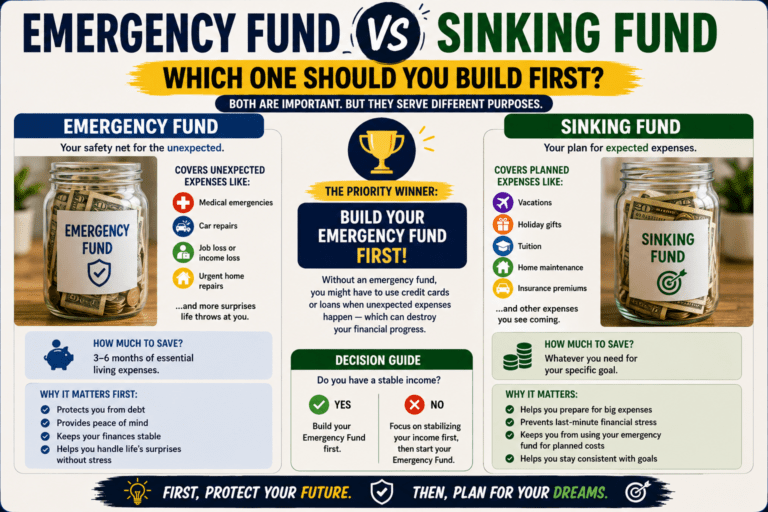
Debt repayment and emergency savings can compete for the same limited dollars. There is no single sequence that fits every household because interest rates, minimum payments and financial risks differ.
A Small Buffer Can Reduce New Borrowing
Without any cash reserve, a $200 emergency may go straight back onto a credit card after you worked hard to reduce the balance. A starter fund can help interrupt that cycle.
High-Cost Debt Still Matters
At the same time, very expensive debt can grow rapidly. Therefore, after creating a basic cushion, compare the cost of the debt with the benefit of building a much larger cash balance.
Never Miss Required Payments to Inflate Savings
Minimum debt payments and essential obligations need to be included in your budget. An emergency fund should not be built by intentionally creating late fees, defaults or other avoidable problems.
Where Should You Keep a Small Emergency Fund?
Even a small fund should be protected. The CFPB recommends a location that is safe, accessible and not too tempting for non-emergency spending.
Use a Separate Savings Account Where Practical
A regulated bank or credit-union savings account can create separation while preserving access. Check local deposit protection, fees, minimum balances and withdrawal rules.
Avoid Fees That Consume Your Progress
If you have only $100 saved, a recurring account fee can be especially damaging. Compare no-fee or low-fee options available in your market.
Keep a Modest Cash Backup Only If Useful
Physical cash can help during a temporary payment or network outage. However, it can be lost, stolen or destroyed. Consequently, avoid keeping the entire fund as cash at home.
A 12-Month Emergency Fund Plan for a Tight Budget
This example uses a modest baseline and occasional boosts. Adjust every amount to your own currency, income and essential expenses.
| Period | Action | Illustrative Goal |
|---|---|---|
| Months 1–2 | Start a tiny weekly or payday contribution | First $50–$100 |
| Months 3–4 | Reduce one recurring bill | Add the monthly difference |
| Months 5–6 | Sell unused items or use a windfall | Move toward $250 |
| Months 7–8 | Review income opportunities | Add small net side income |
| Months 9–10 | Increase the regular contribution slightly | Move toward $500 |
| Months 11–12 | Review progress and calculate essentials | Set the next personalized target |
Your actual balance may be lower or higher. That is fine. The roadmap is designed to create a repeatable savings system, not a pass-or-fail deadline.
Incoming Link Opportunities
Recommended External Resources
Consumer Financial Protection Bureau — Emergency Fund Guide
The CFPB explains how small contributions, cash-flow management, one-time savings opportunities and automatic transfers can help people build emergency savings.
An Essential Guide to Building an Emergency Fund — CFPB
Consumer Financial Protection Bureau — Automatic Savings
The CFPB explains recurring transfers and paycheck splitting while warning savers to monitor balances so automation does not create overdraft fees.
Looking for an Easy Way to Save Money? Make It Automatic — CFPB
Financial Consumer Agency of Canada — Setting Up an Emergency Fund
Canada's financial consumer agency recommends starting with a realistic amount, saving gradually and considering automatic transfers on payday.
Setting Up an Emergency Fund — Canada.ca
FDIC — Saving for the Unexpected and Your Future
The FDIC discusses automatic transfers and maintaining emergency savings for major unexpected expenses or income disruption.
Saving for the Unexpected and Your Future — FDIC
Some external resources above are U.S. or Canadian. The broad savings principles can be useful internationally, but banking rules, assistance programs, deposit insurance, taxes and account products differ by country.
Frequently Asked Questions
How can I build an emergency fund when I have no extra money?
Begin by reviewing cash flow rather than forcing a large savings target.
Look for one small recurring expense, occasional windfall or extra-income opportunity.
If nothing can safely be cut, start with a very small amount.
Even a few dollars can establish the habit.
Increase the contribution when your financial situation improves.
Is saving $5 a week worth it?
Yes.
Five dollars per week equals $260 over 52 weeks before interest.
More importantly, it creates a repeatable savings habit.
You can add windfalls or extra income later.
A sustainable $5 contribution is better than an unsustainable $50 plan.
Should I save an emergency fund if I am living paycheck to paycheck?
A small emergency cushion can still be valuable.
However, protect essential bills and necessities first.
Do not set an automatic transfer that causes overdrafts.
Use small contributions and one-time opportunities where possible.
As cash flow improves, increase the target gradually.
Should I pay debt or build emergency savings first?
The answer depends on debt cost and your financial risks.
A small starter fund can reduce the need to borrow again after a surprise expense.
Meanwhile, high-interest debt may deserve aggressive attention.
Many households therefore build a basic buffer while continuing required debt payments.
Then they reassess the balance between savings and faster repayment.
How much should my first emergency fund be?
Choose a first target that feels reachable.
That might be $50, $100, $250, $500 or $1,000.
The exact amount depends on your circumstances.
After reaching a starter milestone, calculate one month of essential expenses.
Then continue building toward a stronger personalized reserve.
What if my income changes every month?
A percentage-based savings rule may be easier than a fixed transfer.
For example, save a small percentage whenever income arrives.
Strong months will produce larger contributions.
Weak months will require less.
This keeps the habit connected to actual cash flow.
Should I automate emergency savings on a tight budget?
Automation can help if income is predictable enough.
Start with a conservative amount.
Schedule it around your pay and bill dates.
Monitor balances to avoid overdraft fees.
If income is highly irregular, manual transfers may work better.
Can I use side-hustle money for my emergency fund?
Yes, net side-income can accelerate the fund.
First subtract expenses required to earn that money.
Also consider applicable taxes.
Then decide what percentage of the remaining income will go to savings.
A consistent rule can prevent the extra income from disappearing into everyday spending.
What should I do after I reach $500?
Celebrate the progress without spending the fund.
Next, calculate one month of essential expenses.
Compare that amount with your $500 balance.
Set the next milestone based on the gap.
Continue using the savings methods that have worked reliably.
Research Methodology
This MoneyOnliners article focuses specifically on households with limited savings capacity. Strategies were evaluated for practicality, repeatability and the risk of causing cash-flow problems. Current consumer guidance was checked against the Consumer Financial Protection Bureau, FDIC and Financial Consumer Agency of Canada in August 2026. The article distinguishes illustrative calculations and hypothetical case studies from guaranteed outcomes, and it avoids assuming that every tight budget contains large discretionary expenses.
Final Thoughts: Build the Fund Your Budget Can Support Today
You do not need to wait until you earn more money to begin building financial protection. At the same time, you should not pretend a tight budget has room that simply is not there.
Start with the amount your finances can safely support. Next, combine small recurring contributions with occasional boosts from windfalls, reduced bills, unused-item sales or legitimate extra income. As your situation improves, increase the contribution gradually.
Most importantly, judge progress from where you started. Going from $0 to $100 matters. Moving from $100 to $500 matters. Eventually, those smaller milestones can become one month of essential expenses and then a stronger emergency reserve.
An emergency fund built slowly is still an emergency fund—and every dollar you can safely set aside gives your future self another option when something unexpected happens.