$500 vs $1,000 Emergency Fund: Which Goal Should You Hit First?
$500 vs $1,000 Emergency Fund: Which Goal Should You Hit First?
If you are starting emergency savings from $0, both $500 and $1,000 can feel important. The better first target is not about choosing the “perfect” number—it is about building a useful financial buffer you can realistically reach and then continuing beyond it.
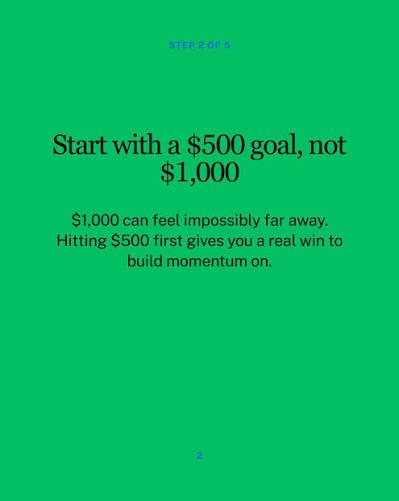
If you currently have little or no emergency savings, $500 is often the better first milestone because it is faster and more achievable. Once you reach $500, continue toward $1,000 rather than treating $500 as the finish line. A $1,000 reserve provides more protection against larger repairs, medical costs or temporary income disruptions. Ultimately, neither number is a universal final target: the CFPB says the amount you need depends on your situation, while longer-term emergency savings are often based on essential living expenses.
$500 vs $1,000 Emergency Fund at a Glance
| Question | $500 Fund | $1,000 Fund |
|---|---|---|
| Best role | Starter milestone | Stronger starter reserve |
| Difficulty from $0 | Easier | Requires twice as much saving |
| Small emergencies | Can cover many | Provides more room |
| Larger repair | May cover only part | More useful, but may still fall short |
| Income loss | Limited protection | Better, but often less than one month of expenses |
| Psychological benefit | Faster early win | Stronger feeling of cushion |
| Should you stop here? | Usually no | Usually no |
| MoneyOnliners view | Hit this first if $1,000 feels distant | Make this the next milestone |
Why These Two Numbers Are So Popular
Round numbers make savings goals easy to understand. More importantly, a starter target gives someone with $0 a concrete finish line instead of immediately asking them to accumulate several months of expenses.
An older CFPB financial-empowerment toolkit used $500 as an initial goal and suggested moving toward $1,000 afterward. Current CFPB guidance is more individualized: it says the amount you need depends on your circumstances and the unexpected expenses you are likely to face.
The Important Difference Between a Milestone and a Final Goal
Neither $500 nor $1,000 automatically represents a complete emergency fund. For a household spending $3,000 per month on necessities, $1,000 covers only about one-third of one month. Therefore, think of these numbers as stepping stones.

Why $500 Can Be the Right First Goal
It Is Close Enough to Feel Achievable
Going from $0 to $10,000 can feel impossible. Going from $0 to $500 is still challenging, but the target is psychologically closer. That matters because an achievable goal can help you establish the saving habit needed for larger targets.
It Can Handle Smaller Financial Shocks
A $500 cushion could cover or reduce the impact of many common surprises: a minor vehicle repair, urgent travel, a replacement appliance, an insurance deductible or an unexpected bill. Costs vary substantially, so $500 will not solve every emergency. Nevertheless, it can reduce how much you need to borrow.
You Reach Protection Sooner
Suppose you can save $25 each week. Reaching $500 takes about 20 weeks, while $1,000 takes about 40 weeks, excluding interest. The first milestone therefore gives you a meaningful buffer months earlier.
It Builds Momentum
Seeing a three-digit savings balance grow into $500 can make the next target feel more realistic. Once the habit exists, continuing the same transfers toward $1,000 becomes simpler.
When $500 May Not Be Enough
Five hundred dollars can disappear quickly when an emergency involves lost income, a major vehicle failure, urgent home repairs or substantial healthcare costs. Consequently, it should rarely be treated as the permanent destination.
If you have dependents, an older vehicle, unstable income, high insurance deductibles or homeownership responsibilities, your exposure to large financial shocks may be greater. In those situations, move toward $1,000—and eventually an expense-based reserve—as quickly as your budget safely allows.
Why $1,000 Is a Stronger Starter Emergency Fund
It Gives You Twice the Immediate Capacity
The obvious advantage is mathematical: $1,000 provides twice the cash of $500. That extra $500 can be the difference between fully covering a moderate emergency and needing a credit card or loan for the remainder.
It Can Cover Multiple Smaller Problems
Emergencies do not always arrive one at a time. A car problem can occur during the same month as a medical bill. With $1,000, you have more room to absorb two smaller shocks without exhausting the fund immediately.
It Creates More Time During Income Disruption
A thousand dollars is not a full income-replacement plan for most households. However, it can pay essential bills for longer than $500 while you wait for another paycheck, client payment or benefit.
It Is Still a Manageable Milestone
Compared with a $10,000 or six-month target, $1,000 remains concrete and understandable. Therefore, it works well as the second milestone after $500.
When $1,000 Still Is Not Enough
A $1,000 emergency fund sounds substantial until you compare it with actual essential expenses. Rent or mortgage payments alone can exceed that amount in many locations. Add food, utilities, transportation, insurance and healthcare, and the limitation becomes clear.
For this reason, once you hit $1,000, calculate your essential monthly spending. Your next goal should increasingly reflect your real life rather than another arbitrary round number.
Which Goal Should You Hit First? Use This Decision Guide
Choose $500 First If...
- You are starting from $0 or almost $0.
- Your budget is already very tight.
- A $1,000 goal feels discouragingly far away.
- You need a fast starter cushion while paying required bills.
- You are building the savings habit for the first time.
Push Toward $1,000 Quickly If...
- You can reach $500 without straining essential expenses.
- You have children or other dependents.
- Your income fluctuates or your job feels less secure.
- You depend on a vehicle for work.
- Your likely emergencies frequently cost more than $500.
- You have higher insurance deductibles or significant home responsibilities.
Skip the Debate and Go Beyond $1,000 If...
If you already have $1,000 saved, there is little reason to reduce the fund to $500 merely because you encountered this comparison. Instead, calculate essential expenses and continue building toward a personalized target.
How Long Will It Take to Save $500 or $1,000?
The timeline depends on how much you can safely contribute. The examples below assume consistent contributions and do not include interest.
| Regular Saving | Approx. Time to $500 | Approx. Time to $1,000 |
|---|---|---|
| $5/week | 100 weeks | 200 weeks |
| $10/week | 50 weeks | 100 weeks |
| $20/week | 25 weeks | 50 weeks |
| $25/week | 20 weeks | 40 weeks |
| $50/week | 10 weeks | 20 weeks |
| $100/month | 5 months | 10 months |
| $200/month | 2.5 months | 5 months |
| $250/month | 2 months | 4 months |
Do Not Let a Slow Timeline Stop You
If you can save only $5 or $10 per week, your progress is still real. Current CFPB guidance emphasizes that even a small amount can provide some financial security, particularly when saving is difficult.
Use One-Time Money to Accelerate the Goal
Tax refunds, bonuses, gifts, rebates, overtime and proceeds from selling unused items can shorten the timeline. You do not have to save every dollar of a windfall. Instead, decide in advance what portion will go toward your emergency fund.
Increase Contributions When Your Cash Flow Improves
Your first contribution is not a lifetime contract. A person who starts at $10 per week can later increase to $15, $20 or more after a raise, paid-off bill or reduced recurring expense.
Four Real-Life Style Case Studies
These examples are hypothetical and use simplified numbers. Their purpose is to show why the better first target depends on the household.
A Parent Starting From $0
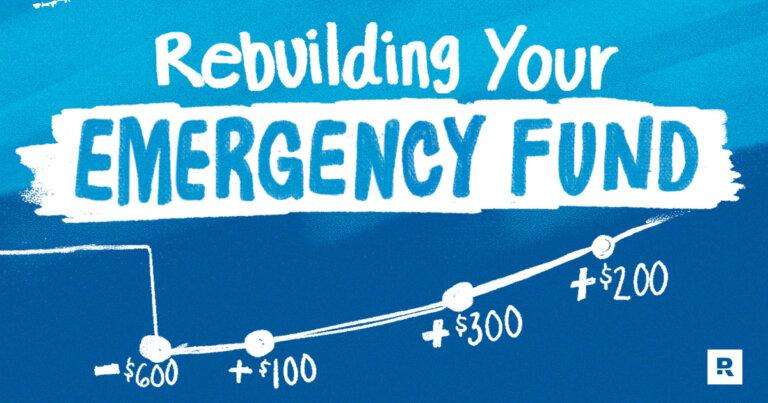
A parent has little room after housing, food, transport and school costs. Saving the equivalent of $1,000 immediately feels impossible, so she chooses $100, then $250 and finally $500 as sequential milestones.
Once she reaches $500, she keeps the same saving system running toward $1,000.
Key lesson: $500 works well when a smaller milestone keeps the plan achievable.
A Driver With an Older Car
A worker depends on an older vehicle to reach his job. Because a serious repair could easily exceed a few hundred dollars, he does not stop at $500.
He treats $500 as milestone one and immediately continues to $1,000. Afterward, he begins building one month of essential expenses.
Key lesson: your likely emergency costs should influence how quickly you move beyond $500.
A Freelancer With Irregular Income
A freelancer earns different amounts each month. She reaches $500 by saving a percentage of every client payment rather than using a fixed monthly transfer.
Because income can temporarily disappear between projects, she sees $1,000 as only the next step. Her longer-term goal is several months of essential expenses.
Key lesson: income instability can justify a larger eventual reserve.
A Household Already Holding $1,000
A household discovers the $500-versus-$1,000 debate after already accumulating $1,000. Rather than reducing the account or stopping contributions, they calculate essential monthly costs.
Their next target becomes one month of necessities, followed by a larger reserve.
Key lesson: starter milestones become less useful once you have already passed them.

What Comes After the $1,000 Emergency Fund?
Step 1: Calculate Essential Monthly Expenses
Add the costs you would still need to pay during a financial emergency: housing, basic food, utilities, necessary transportation, insurance, healthcare, minimum debt payments and other unavoidable household needs.
Step 2: Aim for One Month of Essentials
If your essential spending is $2,400 per month, moving from $1,000 to $2,400 gives you a more personalized target. That amount represents actual financial runway rather than a generic benchmark.
Step 3: Expand Based on Your Risk
A household with two stable incomes may make a different choice from a single-income family, freelancer or worker in an unstable industry. Dependents, health needs, housing responsibilities and insurance deductibles also matter.
Step 4: Consider a Multi-Month Reserve
FDIC consumer guidance says financial experts generally recommend at least six months of living expenses in a federally insured product. Other approaches commonly use several months rather than one fixed number. Your appropriate target depends on your circumstances, so use such guidance as a framework rather than a command.
| Stage | Example Target | What It Accomplishes |
|---|---|---|
| Stage 1 | $100 | First mini-buffer |
| Stage 2 | $250 | Stronger protection against small surprises |
| Stage 3 | $500 | Starter emergency fund |
| Stage 4 | $1,000 | Stronger starter reserve |
| Stage 5 | 1 month of essentials | Personalized financial runway |
| Stage 6 | Several months of essentials | Protection against larger income disruptions |
$500 vs $1,000 When You Have Debt
Debt complicates the decision because money held in savings could alternatively reduce interest-bearing balances. Still, having no emergency savings at all can leave you vulnerable to borrowing again after the next surprise expense.
Why a Starter Fund Can Help
Suppose you pay down a credit card aggressively but have $0 saved. A $400 vehicle repair may force you to put $400 straight back on the card. A starter emergency fund can interrupt that cycle.
Why Expensive Debt Cannot Be Ignored
High-interest balances can grow quickly. Therefore, after establishing a basic cushion, compare your debt costs, job stability and emergency risks before deciding how aggressively to expand cash savings.
Keep Making Required Payments
Do not intentionally miss minimum payments merely to make your emergency-fund balance reach $500 or $1,000 faster. Late fees, penalty rates and credit consequences can undermine the progress you are trying to make.
$500 vs $1,000 When Your Income Is Irregular
Freelancers, gig workers, commission earners and seasonal workers often need more cash flexibility because income itself can be a source of financial uncertainty.
Use $500 as a Checkpoint
If you are beginning from nothing, $500 remains a useful first milestone. However, do not interpret reaching it as proof that your income risk is fully covered.
Continue to $1,000 and Beyond
A gap between client payments can last longer than a single unexpected bill. Consequently, a multi-month reserve may become more valuable for irregular earners than it is for someone with highly predictable pay.
Save a Percentage of Each Payment
Instead of forcing the same dollar amount every month, consider transferring a percentage whenever income arrives. This approach allows stronger months to produce larger savings contributions.
Where Should You Keep Your $500 or $1,000?
The CFPB recommends keeping emergency money somewhere safe, accessible and not overly tempting for non-emergency spending. A separate bank or credit-union savings account can meet those needs for many people.
Keep It Separate From Daily Spending
When emergency savings sit inside your normal spending balance, it becomes easier to mentally treat them as available. A separate account or savings bucket creates useful friction.
Prioritize Safety and Access
Your starter fund is not designed to maximize investment returns. Therefore, avoid exposing core emergency money to unnecessary market volatility.
Check Fees and Deposit Protection
Account fees matter especially when the balance is only $500. Verify deposit protection and account terms applicable in your country before choosing where to save.
How to Reach $500, Then $1,000 Faster
Automate a Small Amount
Recurring transfers can make saving more consistent. Nevertheless, monitor your balance so the transfer does not cause overdraft fees when cash flow is tight.
Redirect a Recurring Expense
Cancel or downgrade something you genuinely do not value, then move the exact difference to savings. The transfer is what converts a spending cut into financial progress.
Save Part of Windfalls
Bonuses, refunds, gifts and other one-time income can accelerate a starter fund dramatically. Decide on the savings percentage before the money arrives.
Use Extra Income Strategically
Overtime, freelance work, local services or selling unused items can provide additional money. Direct the net proceeds toward the fund rather than assuming all gross revenue is available.
Track the Milestones Visually
Progress from $0 to $1,000 can be divided into $100 checkpoints. Each completed checkpoint makes the remaining target smaller and easier to understand.
Do not make the race to $1,000 so aggressive that you cannot pay for food, housing, medication, utilities, required debt payments or essential transportation. A sustainable emergency fund is stronger than an impressive target that creates another financial problem.
Incoming Link Opportunities
Recommended External Resources
Consumer Financial Protection Bureau — Emergency Fund Guide
The CFPB explains that the appropriate emergency-fund amount depends on your situation and that even a small balance can provide some financial security.
An Essential Guide to Building an Emergency Fund — CFPB
FDIC — Saving for the Unexpected and Your Future
FDIC consumer guidance discusses emergency savings, regular automatic contributions and longer-term reserves based on living expenses.
Saving for the Unexpected and Your Future — FDIC
CFPB — Financial Well-Being Tips
The CFPB recommends starting with what you can afford, using a dedicated savings account and building consistent savings over time.
25 Tips to Improve Your Financial Well-Being — CFPB
Frequently Asked Questions
Should I save $500 or $1,000 first?
If you are starting from $0, $500 can be an excellent first milestone.
It gives you protection sooner and can make the goal feel achievable.
However, continue saving once you reach it.
Your next milestone can be $1,000.
Eventually, base the target on your actual essential expenses and risks.
Is $500 enough for an emergency fund?
It can be enough for a starter fund, but it is not enough for every emergency.
Many repairs or income disruptions can exceed $500.
Therefore, use it as a milestone rather than a universal final target.
Continue toward $1,000 when possible.
Afterward, calculate a personalized expense-based goal.
Is $1,000 enough for an emergency fund?
One thousand dollars provides a stronger starter cushion than $500.
Nevertheless, it may be less than one month of essential expenses.
A job loss or major repair can easily require more.
Once you reach $1,000, calculate your monthly necessities.
Then continue toward a reserve appropriate for your situation.
What if I can only save $10 per week?
Start with the $10.
At that rate, $500 takes about 50 weeks before interest.
You can shorten the timeline with occasional extra contributions.
Increase the weekly amount when your finances improve.
Consistency matters more than matching someone else's contribution.
Should I build an emergency fund while paying debt?
A small cash buffer can help prevent the next surprise from becoming new debt.
However, expensive debt also deserves attention.
Continue making required payments.
After building a starter cushion, reassess how aggressively to divide extra money between debt and savings.
Your interest rates and financial risks should guide the decision.
What should I do after saving $1,000?
Calculate one month of essential expenses.
Compare that number with your current fund.
Then set the next milestone.
Depending on your situation, you may eventually want several months of necessities.
Continue reviewing the target as your expenses and household change.
Where should I keep a $500 emergency fund?
Choose somewhere safe and accessible.
A separate regulated savings account is practical for many people.
Check fees and deposit protection.
Avoid unnecessary investment volatility for money you may need suddenly.
Keep the balance separate enough that ordinary spending does not consume it.
Can I invest my $1,000 emergency fund?
The core emergency fund is generally intended to remain liquid and stable.
Investments can decline precisely when you need the money.
Therefore, investing is usually better suited to longer-term goals.
Build adequate emergency savings first.
Then consider investing money that does not need to serve as immediate financial protection.
Research Methodology
This MoneyOnliners comparison treats $500 and $1,000 as starter milestones rather than universal final emergency-fund requirements. We reviewed current CFPB guidance stating that emergency-savings needs depend on individual circumstances and that even small amounts can provide financial security. We also reviewed FDIC consumer guidance on longer-term emergency reserves. An older CFPB toolkit is used only as historical support for the $500-then-$1,000 milestone framework. Calculations in this article are illustrative and exclude interest, taxes and account fees.
Final Verdict: Hit $500 First, Then Keep Going to $1,000
If you are starting from $0, $500 is usually the more practical first milestone. It is close enough to reach sooner, large enough to absorb many smaller financial shocks and useful for establishing a consistent savings habit.
Once you reach $500, however, do not stop. Keep the system running until you reach $1,000. That second milestone gives you twice the immediate protection and creates a stronger foundation for the next stage.
After $1,000, stop asking whether a generic round number is “enough.” Calculate your essential monthly expenses, consider your income stability and household risks, and build a reserve that reflects your actual life.
In other words, the best sequence for many beginners is simple: $100 → $250 → $500 → $1,000 → one month of essentials → a larger personalized emergency fund. Every milestone increases the number of financial surprises you can handle with your own money instead of new debt.