15 Expenses That Actually Count as a Financial Emergency (and 10 That Don’t)
15 Expenses That Actually Count as a Financial Emergency (and 10 That Don't)
Not every expensive, unexpected or inconvenient bill deserves money from your emergency fund. This guide gives you a practical way to separate genuine financial emergencies from costs that belong in your normal budget or sinking funds.
A financial emergency is generally an unplanned, necessary and time-sensitive expense or loss of income that could seriously affect your health, safety, housing, essential transportation or ability to meet basic obligations. The CFPB describes emergency savings as money for unplanned expenses such as car repairs, home repairs, medical bills or loss of income. By contrast, predictable costs—holidays, routine maintenance, annual premiums and planned purchases—normally belong in your budget or a sinking fund.
The 3-Question Financial Emergency Test
Before touching your emergency fund, ask three questions. This simple test is more useful than deciding based only on how expensive a bill feels.
| Question | If Yes | If No |
|---|---|---|
| 1. Is it genuinely unplanned? | It may qualify. | It probably belongs in your budget or sinking fund. |
| 2. Is it necessary? | Continue to question 3. | A want normally should not use emergency savings. |
| 3. Is it urgent or financially damaging to delay? | Using emergency savings may be reasonable. | Save for it rather than automatically treating it as an emergency. |
No test covers every household. Nevertheless, these questions create useful boundaries. CFPB guidance similarly recommends establishing your own rules for what constitutes an emergency and staying consistent when deciding when to use the fund.

15 Expenses That Actually Can Count as a Financial Emergency
Whether an expense qualifies depends on the facts. The following situations are common examples where emergency savings may be appropriate when the cost is truly unexpected, necessary and not adequately covered elsewhere.
Job Loss or Unexpected Reduction in Work
Losing your job is one of the clearest reasons to have an emergency fund. Your rent or mortgage, food, utilities, insurance and other essential bills continue even when your paycheck stops.
Likewise, an unexpected cut in hours or sudden loss of freelance clients can create a genuine financial shock. Use the fund strategically for essential expenses while reducing nonessential spending and pursuing replacement income.
MoneyOnliners test: unplanned? Yes. Necessary? Essential bills are. Urgent? Usually yes.
An Unexpected Medical Bill
An illness, injury, urgent test, prescription or treatment can create costs you did not budget for. The CFPB specifically includes medical bills among common emergency-fund uses.
Before paying, check insurance coverage and verify the bill where appropriate. However, do not delay necessary medical care merely to preserve a savings balance.
A Sudden Car Repair You Need for Work or Daily Life
If your vehicle unexpectedly breaks down and you rely on it for work, medical appointments or essential family transportation, the repair may qualify. Examples include an unexpected alternator failure, starter problem or major mechanical breakdown.
Routine servicing is different. Oil changes, registration and predictable tire replacement should normally be budgeted or handled through a car sinking fund.
A Major Home Problem That Cannot Safely Wait
A burst pipe, dangerous electrical fault, serious roof leak or failed heating system during dangerous weather can require immediate action. FDIC guidance specifically identifies major unexpected home repairs as a reason for emergency savings.
First check whether insurance, a warranty, landlord responsibility or another form of coverage applies. Emergency savings can then help with legitimate uncovered costs.
Urgent Travel for a Serious Family Crisis
A sudden need to travel because of a close family member's serious illness, death or comparable crisis may be a reasonable emergency expense. The need was not planned, and delaying the trip may not be realistic.
Still, compare practical options. Emergency status does not mean you must buy the most expensive flight, hotel or rental car available.
Unexpected Failure of an Essential Appliance
A broken refrigerator can threaten food safety, while certain households may genuinely depend on other appliances for essential needs. If repair or replacement cannot reasonably wait, emergency savings may be appropriate.
By contrast, upgrading a working appliance because a newer model is on sale does not qualify.
An Urgent Repair Needed to Keep Your Home Safe
Broken locks, serious structural damage, hazardous electrical problems or another unexpected condition that compromises basic safety may justify emergency-fund use.
Where possible, get more than one estimate. Urgency should not prevent you from checking whether a proposed repair and price are reasonable.
Emergency Accommodation After Your Home Becomes Uninhabitable
A fire, flood, storm or other sudden event can make a home temporarily unsafe. Emergency savings may cover immediate lodging, food or transportation while insurance or other assistance is being arranged.
The FDIC notes that emergency savings can help with immediate disaster expenses and fill gaps even when insurance is expected to cover much of the damage.
Unexpected Failure of Equipment Required to Earn Income
A broken phone is not automatically an emergency. However, if a self-employed worker needs that phone to communicate with clients, authenticate accounts and receive work, sudden failure may directly threaten income.
The same logic can apply to a work computer when no employer replacement or backup device is available. Choose a functional solution rather than using the emergency as justification for a luxury upgrade.
An Unexpected Dental Emergency
A broken tooth, severe pain, infection or injury can require treatment sooner than your normal healthcare budget anticipated. When care is necessary and insurance leaves an unexpected balance, emergency savings may be appropriate.
Routine cleanings and known scheduled dental work, however, are predictable and should be planned when possible.
Unexpected Veterinary Treatment for a Pet
An accident or sudden serious illness can create a veterinary bill with little warning. For a household responsible for the animal, necessary treatment may meet its emergency-fund rules.
Because pet costs are partly predictable over time, a dedicated pet sinking fund or appropriate insurance can reduce future pressure on the main emergency reserve.
Emergency Childcare or Dependent-Care Costs
If your normal caregiver suddenly becomes unavailable and you must arrange safe care to continue working, the temporary expense may qualify. The key is that the cost arose unexpectedly and protects your ability to earn income or meet an essential obligation.
Normal recurring childcare is not an emergency because it belongs in the regular household budget.
An Unexpected Essential Utility Repair or Service Problem
A sudden plumbing, electrical or heating failure can create an urgent expense even when the monthly utility bill itself is predictable. The emergency is the unexpected failure—not the normal recurring payment.
Check landlord, utility-provider, warranty or insurance responsibility before assuming the entire cost yourself.
Sudden Moving Costs Because You Must Leave Your Home
An evacuation, unsafe living condition or other serious event can force a move with little notice. Necessary transportation, temporary storage or basic accommodation may qualify.
A voluntary move to a nicer apartment, by comparison, is a planned financial goal.
An Unexpected Deductible After a Covered Emergency
An insurance policy can cover much of a loss while leaving you responsible for a deductible. If the underlying event is a genuine emergency—a car accident, urgent home loss or unexpected medical event—the deductible may reasonably come from emergency savings.
Because deductibles are known policy features, however, households with enough savings capacity can eventually create a separate deductible sinking fund.
10 Expenses That Usually Do NOT Count as a Financial Emergency
Some expenses feel urgent because the bill is large or because you want to avoid saying no. Yet predictability and choice matter. These ten costs usually belong somewhere other than the emergency fund.
Christmas and Holiday Spending
Holidays occur on the calendar every year. Gifts, decorations, travel and celebration costs therefore should not surprise the budget.
Create a holiday sinking fund instead. If you want $600 available in 12 months, saving $50 per month reaches the target before interest.
Regular Car Maintenance
Oil changes, routine servicing, registration and other recurring ownership costs are expected. They may be inconvenient, but they are part of owning the vehicle.
A vehicle sinking fund is the better solution. Reserve emergency savings for sudden failures that could not reasonably have been anticipated.
Annual Insurance Premiums
If you know an insurance premium is due every six or twelve months, the due date is not an emergency. Divide the premium by the number of months until payment and save gradually.
Forgetting about a predictable bill does not transform it into an unpredictable expense.
A Vacation
Travel can be meaningful, but a leisure trip is generally discretionary. Flights becoming more expensive next week does not make the purchase a financial emergency.
Save before booking. A vacation sinking fund keeps enjoyment from weakening the money reserved for genuine crises.
A Sale, Limited-Time Deal or Black Friday Purchase
A discount creates marketing urgency, not financial necessity. Using emergency savings because a television, phone or sofa is 30% off defeats the purpose of the fund.
If the item is worth buying, create a purchase goal and save for it.
Birthdays, Weddings and Gifts
Many celebrations are known weeks or months in advance. Set a gift budget that fits your finances rather than treating social pressure as an emergency.
An unexpected invitation also does not require spending beyond what you can afford.
Property Taxes, School Fees or Other Known Periodic Bills
A large periodic bill can strain cash flow, but a known due date makes it suitable for advance planning. Divide the expected total across earlier paychecks or months.
If the amount varies, estimate conservatively and adjust the sinking fund when better information becomes available.
Replacing Something That Still Works
A functioning phone, laptop, television or appliance does not need emergency replacement merely because a newer version exists. An upgrade is normally a want.
If replacement is likely within the next year or two, start a technology or appliance sinking fund now.
Normal Groceries, Rent and Utility Bills When Income Is Normal
Food, housing and utilities are essential, but their ordinary monthly cost belongs in the regular budget. Emergency savings should not routinely subsidize a spending plan that is structurally short every month.
There is an important exception: after an unexpected job loss or income interruption, those same essential expenses may legitimately be paid from the emergency fund.
Entertainment, Dining Out or a Last-Minute Social Event
Concert tickets, restaurant meals and spontaneous weekends away can feel important in the moment. Still, they are generally discretionary.
Use a fun-money category or separate savings goal. Protect the emergency fund for events that threaten financial stability.

The Gray Area: Expenses That Depend on the Situation
Financial life is not perfectly binary. The same category can be an emergency for one person and a predictable expense for another.
A Car Repair
A surprise transmission failure may be an emergency. Replacing tires after months of visible wear is more predictable. Therefore, the label depends on what you reasonably knew beforehand.
A Phone Replacement
A cracked phone used mainly for entertainment is different from a device required for a delivery driver's work. Need, urgency and available alternatives change the decision.
Travel
A planned holiday is not an emergency. Immediate travel after a close family crisis can be.
Home Repairs
A sudden burst pipe is different from repainting a room. Likewise, a roof that has been known to need replacement for two years is partly a planning issue even if the final leak feels sudden.
Medical Spending
Unexpected urgent treatment fits the purpose of emergency savings. A known elective procedure scheduled months ahead gives you an opportunity to plan.
Do not use a personal-finance label to delay urgent healthcare, necessary safety repairs or another action that protects people from immediate harm. The emergency-fund framework is a budgeting tool, not a substitute for medical, legal, insurance or safety advice.
Real-Life Style Case Studies: Would You Use the Emergency Fund?
These examples are hypothetical. They show how the three-question test can work in everyday situations.
The Refrigerator Stops Working
A family refrigerator fails without warning. Repair is uneconomical, food is beginning to spoil and the household does not have a separate appliance fund.
The expense is unplanned, the refrigerator is necessary and replacement cannot reasonably wait for several months. A basic replacement may qualify for emergency savings.
Decision: likely emergency. Buy a functional replacement, not an unnecessary luxury upgrade.
The Car Needs Tires After Months of Warnings
A driver has known for months that the tires are nearly worn out. He delays saving and eventually learns that replacement is now urgent.
Safety makes the purchase necessary today, so he may need emergency savings if no other cash is available. However, the cost was predictable enough that a car sinking fund should have handled it.
Decision: may require emergency money now, but improve planning afterward.
A Freelancer Loses Two Major Clients
Two clients unexpectedly cancel ongoing projects in the same week. The freelancer's income drops sharply while rent, food and other essentials remain due.
Loss of income is one of the situations specifically identified in CFPB emergency-fund guidance. She cuts discretionary spending and uses savings to cover necessities while replacing the lost work.
Decision: genuine financial emergency.
A Discounted Laptop Appears Before a Sale Ends
A worker sees an expensive laptop discounted for 48 hours. His existing computer still works and performs everything required for his job.
The deadline is created by the promotion, not by a threat to his health, income or safety.
Decision: not an emergency. Save for the upgrade separately.
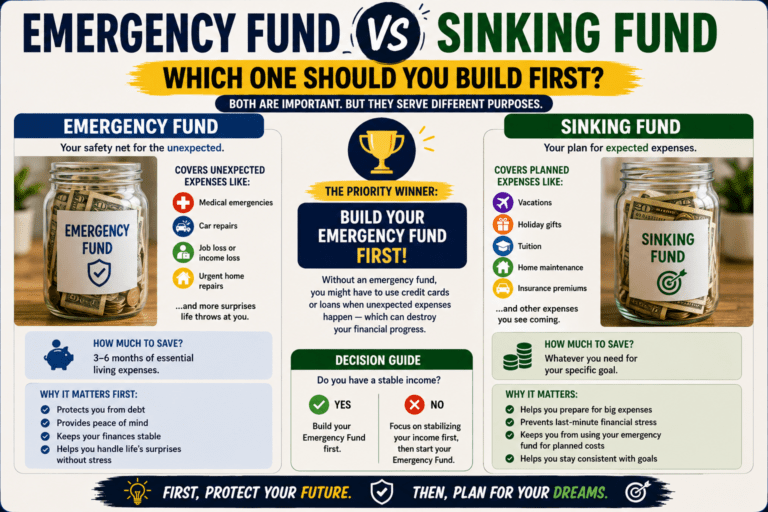
Emergency Expense vs Sinking-Fund Expense
A strong savings system does more than decide when to say yes or no. It also gives predictable expenses somewhere else to go.
| Expense | Emergency Fund? | Better Alternative When Predictable |
|---|---|---|
| Unexpected job loss | Yes | Emergency fund |
| Sudden essential car breakdown | Often yes | Maintenance fund for predictable costs |
| Annual car registration | Usually no | Car sinking fund |
| Unexpected urgent medical bill | Often yes | Healthcare fund for known costs |
| Routine annual checkup | Usually no | Monthly budget/health sinking fund |
| Sudden serious roof leak | Often yes | Home-maintenance fund for foreseeable upkeep |
| Holiday gifts | No | Holiday sinking fund |
| Insurance premium | Usually no | Insurance sinking fund |
| Emergency family travel | May be | Travel/family fund when foreseeable |
| Planned vacation | No | Vacation sinking fund |
The FDIC distinguishes savings for unexpected events from savings for anticipated future expenses. That distinction is the foundation of the MoneyOnliners emergency-fund-versus-sinking-fund approach.
What If the Emergency Costs More Than Your Fund?
A legitimate emergency does not become less legitimate because your savings cannot cover the entire bill. Instead, use the resources available in a sensible order.
1. Confirm the Real Cost
Get an estimate, verify the bill and check whether a cheaper safe solution exists. For repairs, a second quote may be worthwhile when time permits.
2. Check Insurance, Warranties or Other Coverage
Before draining savings, determine whether health, auto, homeowners, renters, travel or product coverage applies. For disasters, the FDIC specifically recommends reviewing insurance and notes that emergency savings can help fill immediate gaps.
3. Use the Emergency Fund for Its Intended Purpose
Do not be afraid to use emergency savings for a genuine emergency. CFPB guidance explicitly makes this point and recommends rebuilding the fund afterward.
4. Protect Essential Bills
Avoid solving one emergency in a way that immediately creates another. Consider upcoming housing, food, medicine, utilities and essential transportation needs before using every available dollar.
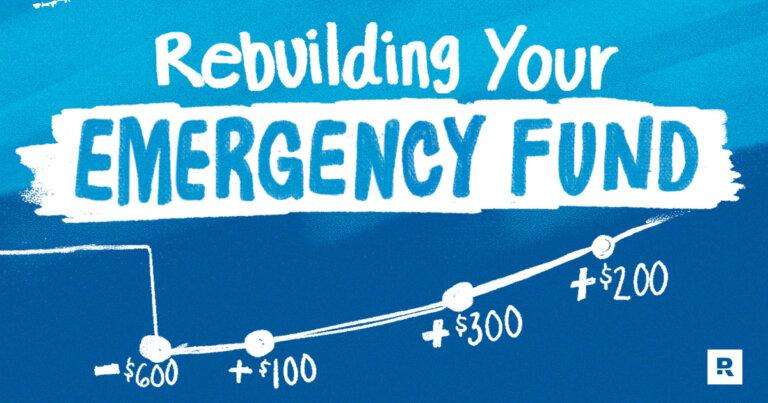
5. Rebuild After the Crisis
Once the situation stabilizes, restart contributions. If the expense revealed a predictable future cost—such as aging tires or an old appliance—create a sinking fund as well.
How to Create Your Own Emergency-Fund Rules
Writing the rules before a crisis makes decisions easier when emotions are high.
Rule 1: Define the Purpose
Write one sentence: “My emergency fund is for unplanned, necessary and urgent expenses or unexpected loss of income.” Keep that definition with your budget.
Rule 2: List Your Likely Emergencies
Think about financial shocks you have experienced before. CFPB guidance recommends considering common unexpected expenses from your own past and how much they cost.
Rule 3: Create Separate Sinking Funds
Move known annual and irregular expenses out of the emergency category. Car maintenance, insurance, school costs, gifts and planned travel can each receive their own target.
Rule 4: Decide Who Can Authorize a Withdrawal
For couples or households sharing finances, agree on when one person can use the fund immediately and when a discussion should happen first.
Rule 5: Create a Refill Plan
Every legitimate withdrawal should trigger a new savings target. Replenishment turns emergency saving into a cycle rather than a one-time project.
How Much Emergency Savings Should You Keep?
The right amount depends on your circumstances. CFPB guidance says to consider your own unexpected expenses and their historical cost. Even a small amount can provide some financial security.
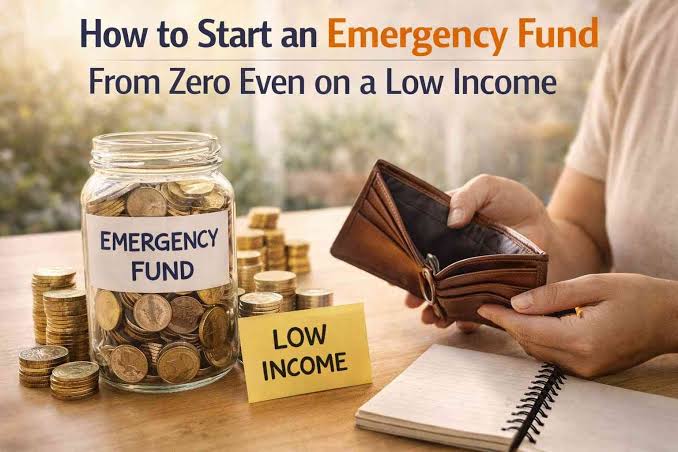
Start With a Reachable Milestone
If you have $0, targets such as $100, $250, $500 and $1,000 can turn a distant goal into manageable stages. An FDIC Money Smart participant guide notes that $500 to $1,000 can cover many unexpected expenses.
Then Think in Months of Essential Expenses
As the fund grows, calculate housing, basic food, utilities, essential transportation, insurance, healthcare and required minimum debt payments. This creates a target tied to your actual life.
Build More When Your Risk Is Higher
Irregular income, a single-income household, dependents, an older home or vehicle, and higher insurance deductibles can all increase the value of a larger reserve.
FDIC consumer guidance says financial experts generally recommend at least six months of living expenses in a federally insured product, while another recent FDIC article describes three to six months as a general recommendation. Treat such figures as longer-term frameworks rather than reasons to delay starting with a smaller amount.
Incoming Link Opportunities
Recommended External Resources
Consumer Financial Protection Bureau — Emergency Fund Guide
This guide defines emergency funds, explains common unplanned expenses and recommends setting personal guidelines for when to use the money.
An Essential Guide to Building an Emergency Fund — CFPB
FDIC — Saving for the Unexpected and Your Future
This resource discusses emergency savings for major unexpected repairs or loss of income and also explains planning for shorter-term savings goals.
Saving for the Unexpected and Your Future — FDIC
FDIC — Preparing Your Finances for an Unanticipated Disaster
This guide explains how emergency savings can help with immediate disaster-related expenses and fill gaps while other resources are arranged.
Preparing Your Finances for an Unanticipated Disaster — FDIC
Frequently Asked Questions
What expenses actually count as a financial emergency?
Financial emergencies are generally unplanned, necessary and urgent.
Examples can include sudden income loss, urgent medical bills and major unexpected repairs.
The exact definition depends on your circumstances.
Create rules before you need the money.
That makes emergency-fund decisions more consistent.
Is a car repair a financial emergency?
A sudden essential repair can be.
Routine maintenance usually is not.
Consider whether the problem was reasonably predictable.
Use a vehicle sinking fund for known maintenance.
Reserve emergency savings for genuine surprises when possible.
Is losing a job a financial emergency?
Yes, unexpected loss of income is a core emergency-fund use.
Reduce discretionary spending quickly.
Use savings for essential obligations.
Pursue replacement income and any benefits for which you qualify.
Rebuild the fund after income stabilizes.
Are medical bills always emergencies?
No.
An unexpected urgent bill may qualify.
Known routine healthcare costs can often be planned.
Check insurance and verify bills where appropriate.
Do not delay necessary care simply to preserve an emergency-fund balance.
Can I use my emergency fund for rent?
Normal rent while income is stable belongs in the monthly budget.
However, rent may become a legitimate emergency-fund expense after unexpected job loss or another serious income disruption.
Focus on essential costs first.
Reduce optional spending during the crisis.
Then replenish savings when finances recover.
Is Christmas a financial emergency?
Generally, no.
Christmas occurs at a predictable time.
Set a spending limit in advance.
Save monthly in a holiday sinking fund.
A celebration should not consume money reserved for genuine financial shocks.
Should I use emergency savings for a broken phone?
It depends on need.
A phone required to earn income may be essential.
A luxury upgrade is not.
Consider repair and lower-cost replacement options first.
Then build a device-replacement sinking fund for the future.
What if I use my emergency fund for something that was not an emergency?
Correct the system rather than giving up.
Rebuild the amount you withdrew.
Identify why the purchase felt urgent.
Create a sinking fund if the expense is likely to recur.
Clearer rules can prevent the same mistake next time.
Should an insurance deductible come from an emergency fund?
It can when the underlying event is a genuine emergency.
However, the deductible amount itself is known from your policy.
Therefore, a dedicated deductible fund can be useful once your finances allow it.
Check the policy before paying costs yourself.
Replenish any emergency savings used.
How do I stop using my emergency fund for normal expenses?
Separate predictable costs from genuine emergencies.
Create sinking funds for irregular but expected bills.
Keep emergency savings separate from everyday spending.
Write down your withdrawal rules.
Review the system whenever you find yourself repeatedly using the fund.
Research Methodology
This MoneyOnliners article uses the CFPB definition of an emergency fund as cash reserved for unplanned expenses or financial emergencies. Examples and decision rules were cross-checked against CFPB and FDIC consumer guidance covering unexpected medical bills, car and home repairs, income loss, disasters and planned savings goals. The 15-versus-10 classification is a MoneyOnliners editorial framework rather than an official government list. Individual circumstances, insurance coverage, local costs and urgency can change whether a particular expense qualifies.
Final Verdict: Protect Your Emergency Fund With Clear Rules
The purpose of an emergency fund is not to pay every bill that feels stressful. It exists to help you absorb genuine financial shocks without immediately relying on debt or disrupting other long-term goals.
Start with the three-question test: Was the expense unplanned? Is it necessary? Is it urgent or damaging to delay? When all three answers are yes, using emergency savings is often reasonable.
Meanwhile, move predictable costs into sinking funds and your regular budget. Annual insurance, holidays, routine car maintenance, planned travel and known school costs deserve advance preparation rather than emergency status.
Finally, remember that using the fund for a real emergency is not a failure. That is exactly why you built it. Handle the problem, stabilize your finances and then begin replenishing the reserve for the next unexpected event.