Debt Avalanche Method: Can It Really Save You More in Interest?
Debt Avalanche Method: Can It Really Save You More in Interest?
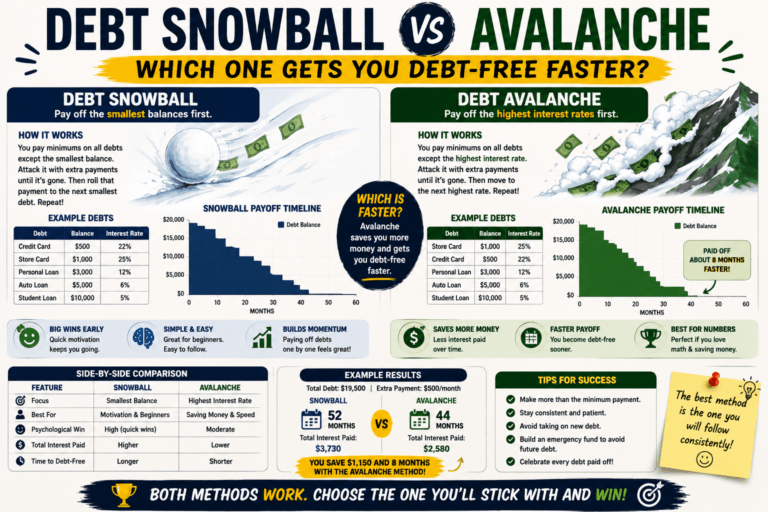
The debt avalanche method attacks your highest-interest debt first. It may not give you the quickest emotional win, but when interest rates differ, prioritizing the costliest balance can reduce the interest burden and make your repayment dollars work harder.
Yes. The debt avalanche method can save more in interest than paying debts in another order when you direct extra money toward the highest-interest debt first while maintaining required payments on the others. The Consumer Financial Protection Bureau calls this the “highest interest rate method” and says eliminating the costliest debts first can save money in the long run. However, the first target may be large, so progress can feel slower than with the debt snowball method.
What Is the Debt Avalanche Method?
The debt avalanche method is a repayment strategy that prioritizes debts according to interest rate rather than balance size. You list the debts from highest interest rate to lowest, continue required payments on all of them, and direct your affordable extra repayment money toward the debt charging the highest rate.
Once that target is eliminated, its payment is rolled into the debt with the next-highest rate. As a result, your repayment power can grow while your most expensive balances disappear in order.
The Consumer Financial Protection Bureau describes this approach as the highest interest rate method. Its stated goal is to eliminate the costliest debt first, which can save money over the long run. citeturn0search1
How the Debt Avalanche Method Works in 5 Steps
List Every Debt and Interest Rate
Collect current statements and record each balance, annual percentage rate or applicable interest rate, minimum payment and due date. Accurate rates matter because they determine the avalanche order.
Rank Debts From Highest Rate to Lowest
The balance size does not determine priority. A $4,000 credit card at 27% would normally rank ahead of a $500 balance at 12% under the avalanche method.
Maintain Required Payments on the Other Debts
The strategy focuses your extra repayment money. It does not mean ignoring the required payments on lower-rate accounts.
Send Every Affordable Extra Dollar to the Highest-Rate Target
After essential expenses and required payments are covered, direct your planned extra amount to the first debt in the avalanche.
Roll the Finished Payment Into the Next Debt
When the highest-rate debt reaches zero, redirect the money you were paying toward it to the debt with the next-highest rate. Continue until the debts in your plan are eliminated.
A Simple Debt Avalanche Example
Consider four hypothetical debts. The figures are simplified for education and do not represent a specific borrower's payoff schedule.
| Avalanche Order | Debt | Balance | Interest Rate | Minimum Payment |
|---|---|---|---|---|
| 1 | Credit Card A | $3,800 | 27% | $120 |
| 2 | Store Card | $700 | 22% | $35 |
| 3 | Credit Card B | $1,500 | 17% | $55 |
| 4 | Personal Loan | $4,600 | 9% | $145 |
Start With the 27% Credit Card
Suppose the borrower can afford $150 beyond all required payments. Credit Card A receives its $120 required payment plus the $150 extra, creating a planned $270 payment.
Meanwhile, the borrower maintains the required payments on the remaining accounts. Because real credit-card interest can depend on daily balances, compounding, transactions and payment timing, the exact payoff date requires the account's actual terms.
Then Attack the 22% Store Card
After Credit Card A is eliminated, the money previously committed to it is rolled into the next-highest-rate debt. Therefore, the amount available for the store card increases substantially.
Continue Down the Interest-Rate List
After the store card is gone, the 17% balance becomes the target. Finally, the 9% personal loan receives the full rolled-forward payment.
High-rate debt is expensive to carry. By directing extra principal toward the highest rate first, the avalanche reduces the balances generating the costliest interest before lower-rate balances. The CFPB identifies this long-run money-saving advantage while noting that progress may feel slow when the first target is large. citeturn0search1turn0search24

Can the Debt Avalanche Really Save You More in Interest?
In the standard comparison, yes. If the same debts, payments and repayment capacity are used, prioritizing the highest interest rate attacks the costliest borrowing first. CFPB guidance specifically says this method can save money in the long run. citeturn0search1
However, “avalanche saves money” should not be interpreted as a guarantee of a particular dollar amount. Actual savings depend on your balances, rates, payment timing, fees, changing rates, new purchases and how lenders apply payments.
Why Interest Rate Matters
A higher rate means a balance can generate more interest relative to an otherwise equal lower-rate balance. Consequently, reducing high-rate principal sooner generally reduces exposure to the most expensive borrowing.
The FTC also emphasizes that high credit-card interest rates increase the cost of purchases when balances are carried and can make repayment take longer. citeturn0search4
A Simplified Cost Illustration
Imagine two $1,000 balances. One charges 25% annually and the other 10%. Ignoring compounding and other account details purely for illustration, 25% of $1,000 is $250 while 10% is $100. Therefore, an extra dollar reducing the 25% balance is attacking the more expensive rate.
Real credit-card calculations are more complicated than that simplified annual illustration. Nevertheless, the principle explains why avalanche prioritizes interest rate.
What If the Highest-Rate Balance Is Huge?
This is the main behavioral challenge. You might make months of payments before an account reaches zero. Meanwhile, a $300 lower-rate balance could remain on your list even though it would be easy to eliminate.
For some borrowers, that slower visible progress is acceptable because interest savings are the priority. For others, it can weaken motivation. CFPB guidance recognizes exactly this trade-off. citeturn0search2
Debt Avalanche vs. Debt Snowball
| Feature | Debt Avalanche | Debt Snowball |
|---|---|---|
| First target | Highest interest rate | Smallest balance |
| Main goal | Eliminate costliest debt first | Create quick visible wins |
| Potential interest cost | Generally lower when compared with an alternative order using the same payment assumptions | Can be higher when expensive larger debts wait |
| Motivation | May feel slow if the first target is large | Small balances may disappear quickly |
| Ordering rule | Rate from highest to lowest | Balance from smallest to largest |
| Best fit | Borrower prioritizing interest savings | Borrower strongly motivated by account-level wins |
Neither method changes the basic need to cover required payments and avoid unnecessary new debt. The difference is where the extra payment goes.
CFPB presents both methods as legitimate debt-reduction strategies. It says highest-interest-first can save money over time, whereas snowball can produce quicker visible progress but may cost more. citeturn0search1
MoneyOnliners Decision Rule
Choose avalanche when reducing interest cost is your primary goal and you can remain motivated through a potentially long first payoff.
Choose snowball when early zero balances are likely to make the difference between staying consistent and abandoning the plan.
7 Situations Where the Debt Avalanche Can Be Especially Useful
1. Your Interest Rates Differ Significantly
If one credit card charges a much higher rate than the rest, attacking it first can be especially compelling. You are focusing extra money where borrowing is most expensive.
2. Saving Interest Motivates You
Some people are more motivated by seeing projected interest savings than by closing accounts quickly. For them, the avalanche's logic can make the plan easier to maintain.
3. You Can Tolerate a Slower First Win
Your first target might also be your largest balance. If that will not discourage you, the main behavioral disadvantage of avalanche becomes less important.
4. You Have High-Rate Credit-Card Debt
Credit-card rates can make carried balances expensive. The FTC notes that high rates increase what you ultimately pay and may extend repayment time. citeturn0search4
5. Your Smallest Debt Has a Low Rate
Paying off a tiny low-rate loan while a high-rate card continues accruing interest may not match your cost-minimization goal. Avalanche keeps the focus on rate rather than emotional satisfaction.
6. You Track Your Numbers Closely
The method rewards borrowers who know their rates, review statements and update the payoff order when variable rates or account conditions change.
7. You Want a Clear Mathematical Priority
Instead of deciding which balance feels most annoying, the method uses one straightforward ordering rule: highest rate first.

When the Debt Avalanche May Be Harder to Follow
Your Highest-Rate Debt Is Also Very Large
A large first target can take time to eliminate. Therefore, use smaller milestones—such as each $500 reduction—to make progress visible.
You Are Strongly Motivated by Closing Accounts
If eliminating small balances keeps you engaged, snowball may fit your behavior better even though avalanche can be cheaper mathematically.
You Do Not Know Your Actual Rates
Do not rank accounts using guesses. Check current statements or creditor information, especially when rates are variable or promotional periods are ending.
You Cannot Cover Required Payments
Avalanche assumes there is extra money to target after required obligations. When required payments are already unaffordable, creditor communication and broader assistance may be more urgent.
How to Make Your Debt Avalanche Work Faster
Find an Extra $25 Before Looking for $500
Small extra payments still matter. Start with a sustainable amount and increase it when expenses fall or income rises.
Ask Your Card Issuer About a Lower Rate
The FTC says there is no guarantee, but consumers can contact their credit-card company directly and ask about qualifying for a lower interest rate. You do not need to pay an outside company simply to make that request. citeturn0search0turn0search4
Redirect Windfalls
Bonuses, refunds, gifts or proceeds from selling unused belongings can create one-time reductions in the target balance. Decide how much to send toward debt before the money is absorbed by everyday spending.
Increase Income Temporarily
Overtime, freelance work or another legitimate income source can increase your extra payment. Use net earnings after expenses and applicable taxes rather than assuming gross revenue is all available.
Roll Every Finished Payment Forward
When a debt disappears, keep the money inside the repayment plan. Redirecting it to the next-highest-rate balance increases your payoff power.
Avoid New High-Interest Balances
Adding new discretionary card debt while attacking an existing card creates a moving target. Whenever possible, stabilize spending so the avalanche can actually reduce total debt.
Three Realistic Debt Avalanche Case Studies
These MoneyOnliners examples are hypothetical and are provided for education, not as promises of specific savings.
Only $50 Extra, but One Card Is Much More Expensive
A borrower has three consumer debts at 12%, 18% and 28%. After essential costs and required payments, only $50 remains each month.
Instead of dividing the $50 across all three accounts, the borrower sends it to the 28% balance. Later, an expense reduction increases the extra payment to $75.
Key lesson: avalanche does not require a large starting payment. It requires a clear target and consistency.
The Largest Balance Comes First
A household's highest-rate card is also its largest balance. The first zero therefore takes longer than it would under snowball.
To stay motivated, the household tracks every $1,000 reduction rather than waiting for the entire account to disappear. The payoff order remains based on interest rate.
Key lesson: create smaller milestones when avalanche progress feels invisible.
A Promotional Rate Changes the Order
A borrower has one card on a temporary promotional rate and another charging a substantially higher current rate. He reviews when the promotion ends instead of treating today's rate as permanent.
Before the promotional period expires, he recalculates the repayment order using the new rate and remaining balances.
Key lesson: avalanche is not a set-it-and-forget-it plan when rates can change.
A 30-Day Debt Avalanche Setup Plan
| When | Action | Purpose |
|---|---|---|
| Days 1–2 | Collect statements and verify balances, rates, minimums and due dates. | Build an accurate debt inventory. |
| Days 3–4 | Rank debts from highest rate to lowest. | Create the avalanche order. |
| Days 5–7 | Build or review your budget. | Find a sustainable extra payment. |
| Week 2 | Make required payments and direct extra money to Debt #1. | Begin the avalanche. |
| Week 3 | Find one spending cut or income increase. | Strengthen the target payment. |
| Week 4 | Update balances and check for rate changes. | Keep the ordering accurate. |
Common Debt Avalanche Mistakes
Paying Only the Target Debt
Avalanche means directing extra money to the highest-rate balance while maintaining required payments elsewhere. Missing other required payments can create fees and other problems.
Ranking Debts by Balance Instead of Rate
That changes the strategy. Smallest balance first is the snowball method; highest interest rate first is avalanche.
Ignoring Promotional Rate Expiration Dates
A temporary 0% rate can change later. Record the end date and review the payoff order before the new rate begins.
Spending the Payment After a Debt Is Gone
The rollover effect matters. Keep the finished payment committed to debt and add it to the next target.
Using Every Dollar of Cash
A small emergency can force new borrowing when no cash cushion exists. Consider an appropriate starter emergency fund alongside aggressive debt repayment.
Falling for Interest-Reduction Scams
The FTC warned again in 2026 that unexpected offers promising special access to lower credit-card rates can be scams. It advises consumers to contact their card company directly and warns against paying upfront for debt-relief services. citeturn0search6
What If You Cannot Afford Your Minimum Payments?
If your budget cannot cover required payments, choosing between avalanche and snowball may not solve the immediate problem. The FTC recommends contacting creditors early, explaining what is happening and asking about a manageable payment arrangement. citeturn0search0
For credit-card debt, the FTC also suggests asking the issuer directly about a lower rate or an affordable payment plan. Keep records and obtain agreements in writing. citeturn0search0
Reputable credit counseling can also help some borrowers review their finances. However, the FTC warns that legitimate counselors should review your situation rather than promising to fix everything instantly. citeturn0search0
FTC guidance warns that companies guaranteeing to settle all debts or obtain fast loan forgiveness are scam signs. It also warns against improper upfront fees for debt-settlement services. citeturn0search5
Incoming Link Opportunities
Recommended External Resources
Consumer Financial Protection Bureau — How to Reduce Your Debt
The CFPB explains the highest-interest-rate method and snowball method, including their major trade-offs.
How to Reduce Your Debt — CFPB
Consumer Financial Protection Bureau — Debt Reduction Worksheet
The CFPB's financial empowerment toolkit includes a worksheet comparing highest-interest-first and snowball repayment.
Your Money, Your Goals Toolkit — CFPB
Federal Trade Commission — How to Get Out of Debt
The FTC covers budgeting, contacting creditors, credit counseling, debt management plans, consolidation and debt-settlement risks.
How to Get Out of Debt — FTC Consumer Advice
Federal Trade Commission — Lower Interest Rate Scam Guidance
The FTC explains why interest rates matter and warns about companies charging for supposed special access to lower card rates.
How to Recognize Scams to Lower Your Credit Card Interest Rate — FTC
CFPB and FTC resources describe U.S. consumer-finance practices and protections. The avalanche mathematics can apply more broadly, but lender rules, credit reporting, debt collection, taxes, insolvency procedures and consumer protections differ by country.
Frequently Asked Questions About the Debt Avalanche Method
What is the debt avalanche method?
The debt avalanche method prioritizes the debt with the highest interest rate.
You continue required payments on the other debts.
Then you direct available extra money toward the highest-rate target.
After it is eliminated, its payment moves to the next-highest-rate debt.
The process repeats down the list.
Does the debt avalanche really save money?
It can save interest compared with repayment orders that leave high-rate balances outstanding longer.
The CFPB says highest-interest-first can save money in the long run.
Actual savings depend on your specific balances and rates.
Payment timing and fees also matter.
Therefore, calculate using your real account terms.
Is debt avalanche better than debt snowball?
Avalanche is generally stronger when minimizing interest is the priority.
Snowball can provide quicker visible account wins.
CFPB recognizes both approaches.
The better behavioral choice depends on what keeps you consistent.
Understand the trade-off before deciding.
What debt should I pay first with avalanche?
Normally, start with the debt carrying the highest interest rate.
Continue required payments on the others.
Direct affordable extra repayment money to that target.
When it is eliminated, move to the next-highest rate.
Special obligations may require different priority based on legal or essential-living consequences.
Can I use debt avalanche if I have little extra money?
Yes.
The extra amount can start small.
A repeatable $10 or $25 can still be assigned to the highest-rate target.
Increase it as cash flow improves.
Do not make extra payments that leave essential expenses uncovered.
Should I save an emergency fund while using avalanche?
A starter cash cushion can reduce the chance that a small emergency creates new debt.
At the same time, high-interest debt can be expensive.
The right balance depends on your income stability and financial risks.
There is no universal starter amount for everyone.
Review the trade-off as your situation changes.
What if two debts have the same interest rate?
You need a tie-breaker.
You might choose the smaller balance for a quicker win.
Alternatively, account fees or other terms may influence the decision.
Confirm the rates really are equal.
Then document your chosen order and continue consistently.
Should I include a 0% promotional card in the avalanche?
Include it in your debt inventory.
However, its current rate may place it lower in the repayment order.
Record exactly when the promotional period ends.
Review what rate will apply afterward and any relevant terms.
Recalculate your plan before the promotion expires.
Can I ask my credit-card company for a lower rate?
Yes, you can ask directly.
The FTC says there is no guarantee that the issuer will lower it.
However, you do not need to pay an outside company simply to make the request.
Ask about qualifications, fees and consequences.
Get any agreement in writing.
What if I cannot make my minimum payments?
Contact creditors as early as possible.
Explain the situation and ask about manageable options.
Review your budget and essential expenses.
Consider reputable credit counseling if necessary.
Be cautious of companies guaranteeing instant debt relief.
Research Methodology
This MoneyOnliners guide was developed using Consumer Financial Protection Bureau guidance on highest-interest-rate and snowball debt reduction, together with Federal Trade Commission guidance on credit-card interest, creditor communication, credit counseling and debt-relief risks. The examples, comparison tables, 30-day plan and case studies are MoneyOnliners editorial illustrations. They do not guarantee a specific payoff date or dollar amount of interest savings.
Final Verdict: Is the Debt Avalanche Method Worth It?
If your main goal is to minimize the cost of carrying debt, the debt avalanche method is one of the strongest repayment frameworks to consider. It gives your extra money a clear job: attack the highest interest rate first.
That priority matters because expensive balances can keep generating substantial interest while they remain outstanding. By eliminating the costliest debt first and rolling its payment into the next target, you systematically work down the interest-rate ladder.
Nevertheless, the avalanche has a real weakness. Your first target may be large, so you might wait longer for the emotional satisfaction of eliminating an entire account. If that causes you to abandon the plan, a mathematically efficient strategy will not help much.
Therefore, compare avalanche with snowball using your actual debts. Choose avalanche if interest savings motivate you. Choose snowball if quicker account-level wins are more likely to keep you consistent.
Most importantly, make the plan sustainable. Protect essential expenses, maintain required payments, avoid unnecessary new balances, build an appropriate emergency cushion and keep rolling finished payments forward. That combination—not the name of the method alone—is what turns a repayment strategy into lasting progress.