15 Ways to Pay Off Credit Card Debt Faster and Cut Interest Costs
15 Ways to Pay Off Credit Card Debt Faster and Cut Interest Costs
High-interest credit card balances can make progress feel painfully slow. These practical strategies can help you direct more money toward principal, reduce avoidable interest and build a payoff system you can actually maintain.
To pay off credit card debt faster, consistently pay more than the minimum, stop adding avoidable new balances, prioritize expensive interest rates, make extra payments as cash becomes available and ask your issuer whether a lower rate or manageable payment arrangement is available. Balance transfers or consolidation can sometimes reduce interest, but fees, promotional deadlines and long-term rates must be compared carefully.
Why Credit Card Debt Can Be So Expensive
Credit cards are useful payment tools, but carrying a balance can become expensive. The interest rate determines part of that cost, while the amount and timing of your payments affect how quickly the balance falls.
Many issuers calculate credit card interest daily using an average daily balance. Therefore, when you are already carrying interest-bearing debt, paying some of the balance sooner can reduce the amount on which future interest is calculated.
At the same time, paying only the minimum can keep a balance around much longer. Consumer guidance from both the CFPB and FTC encourages borrowers who can afford it to pay more than the minimum because doing so can reduce interest costs and shorten repayment.
15 Ways to Pay Off Credit Card Debt Faster
Pay More Than the Minimum Whenever You Can
The minimum keeps the account moving, but it is rarely designed to eliminate a large balance quickly. When you can safely pay more, the additional amount can accelerate principal reduction.
For example, if your required payment is $90 and your budget safely supports $160, directing the additional $70 toward the balance can make meaningful progress over time. However, never create an extra payment that prevents you from covering essential expenses.
Target Your Highest-Interest Credit Card First
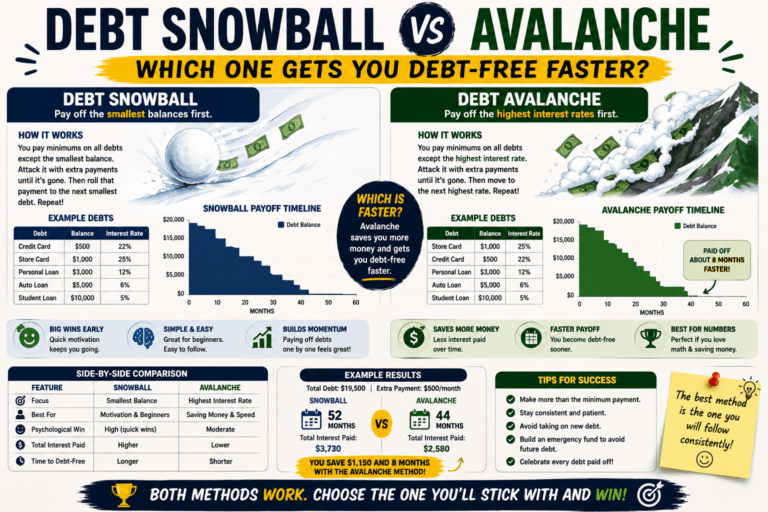
If you have several cards, consider the debt avalanche approach. Maintain required payments on the other accounts, then direct extra money toward the card with the highest interest rate.
The CFPB describes highest-interest-first as a strategy that eliminates the costliest debts first and can save money in the long run. Once that balance is gone, roll the payment to the next-highest rate.
Use Snowball If Quick Wins Keep You Consistent
Mathematical efficiency is not the only consideration. With the debt snowball, you attack the smallest balance first, regardless of rate.
Although this can cost more interest than highest-rate-first, eliminating a small card quickly can create visible momentum. If that motivation keeps you following the plan, snowball may be a practical choice.
Make Extra Payments Earlier Instead of Waiting
Because many credit card issuers calculate interest daily, earlier balance reductions can matter. If your budget already contains an extra $100 payment, sending it when the money becomes available may be more useful than holding it unnecessarily until the end of the month.
Still, protect upcoming bills and essential cash flow. Faster debt repayment should not create overdrafts or force you to borrow again.

Ask Your Credit Card Company for a Lower Interest Rate
You do not need a third-party company to ask your issuer for a lower rate. The FTC advises consumers who are struggling with credit card debt to contact the card company directly and ask whether the interest rate can be reduced.
Approval is not guaranteed. Nevertheless, a successful reduction means less interest accumulating on the remaining balance. Ask about eligibility, whether the change is temporary and whether any terms apply.
Stop Adding Avoidable Purchases to the Balance
Repayment becomes harder when new purchases replace the balance you just eliminated. Therefore, consider using debit or cash for discretionary spending while aggressively paying down a revolving card.
This does not mean every credit card must be permanently closed. Rather, separate the repayment problem from new spending so your progress becomes visible.
Find One Expense to Redirect Every Month
You do not necessarily need a dramatic lifestyle overhaul. A recurring $20, $40 or $75 reduction can become a permanent extra debt payment.
Review subscriptions, convenience purchases, delivery fees, unused memberships and other flexible expenses. Then redirect the saving automatically instead of allowing it to disappear into unrelated spending.
Send Windfalls and Extra Income to Your Target Card
Bonuses, tax refunds, gifts, overtime and side-hustle income can accelerate repayment. Before spending a windfall, decide what percentage will go toward debt.
A rule such as “50% of unexpected income goes to the target card” can preserve some flexibility while still moving the balance down faster.
Consider a Balance Transfer Carefully
A low- or 0% promotional balance transfer can temporarily reduce interest, which may allow more of each payment to reduce principal. However, it is not automatically free money.
The CFPB notes that balance transfers commonly charge a fee and promotional rates last only for a limited period. Afterward, the rate can rise. Therefore, calculate the transfer fee, promotional length, post-promotion APR and monthly payment needed to eliminate the transferred balance on time.
Compare Debt Consolidation by Total Cost, Not Just Monthly Payment
A consolidation loan can replace several card balances with one payment. If the new interest rate is meaningfully lower and fees are reasonable, that can simplify repayment and reduce interest.
However, a smaller monthly payment can result from stretching repayment over a longer period. Compare the total repayment cost, loan term, fees and whether the rate is fixed before proceeding.
Automate at Least the Required Payment
Late payments can add costs and create other consequences. Automating an affordable required payment can reduce the risk of forgetting the due date.
Then schedule your extra target payment separately. Check statements and bank balances regularly because automation should support your plan, not replace oversight.
Use a Payday-Based Payment Routine
Instead of waiting to see what remains at month-end, assign your extra debt payment shortly after payday. This makes repayment a planned use of income rather than an afterthought.
People paid twice monthly can also divide an extra payment across both paychecks. That may make a larger monthly target easier to manage.
Build a Small Emergency Cushion
An unexpected car repair, medical bill or household expense can put you straight back on a card. A modest emergency reserve can interrupt that cycle.
The right amount varies. The important idea is to avoid sending so much cash to debt that every small surprise immediately becomes new high-interest borrowing.
Ask About a Hardship or Payment Plan Before You Fall Further Behind
If you cannot maintain required payments, contact the issuer rather than waiting for the problem to escalate. CFPB guidance notes that some creditors may be willing to lower minimum payments, waive certain fees, reduce an interest rate or adjust a due date.
The FTC similarly recommends calling creditors early and asking for a payment plan you can manage. Keep records of conversations and obtain agreements in writing.
Track the Balance Every Month and Roll Payments Forward
Once a card reaches zero, do not automatically absorb its former payment into everyday spending. Redirect that amount toward your next target card.
Meanwhile, record your combined card balance monthly. Watching the total fall provides a clearer picture of progress than focusing only on whether one account has reached zero.
Example: How an Extra Payment Changes the Strategy
Consider a hypothetical borrower with three cards. This example illustrates the planning process rather than promising a particular payoff date.
| Card | Balance | APR | Required Payment | Avalanche Priority |
|---|---|---|---|---|
| Card A | $1,200 | 18% | $45 | 2 |
| Card B | $3,800 | 27% | $125 | 1 |
| Card C | $700 | 12% | $30 | 3 |
The required payments total $200. After reviewing the household budget, the borrower finds another $175 that can be committed consistently.
Using avalanche, the extra $175 goes to Card B because its 27% rate is highest. After Card B reaches zero, its former payment plus the extra amount can move to Card A.
Using snowball, Card C would receive the extra money first because its $700 balance is smallest. That could create a faster first payoff, although Card B's expensive rate would remain outstanding longer.
Do not compare payoff strategies using different payment amounts. First establish what you can consistently afford. Then compare how that same money performs under different repayment orders.
Which Actions Directly Help Cut Interest Costs?
| Action | Potential Effect | Important Caution |
|---|---|---|
| Pay more than minimum | Reduces balance faster and can reduce interest | Keep payment affordable |
| Pay high-APR card first | Targets costliest debt | May take longer to see first zero balance |
| Pay earlier | Can reduce balance exposed to daily interest | Protect cash needed for bills |
| Request lower APR | Can reduce future interest if approved | No guarantee issuer will agree |
| 0% balance transfer | Can create temporary low-interest window | Transfer fee and expiration matter |
| Consolidation | May lower rate and simplify payments | Compare total cost and term |
Three Realistic Credit Card Debt Case Studies
The following MoneyOnliners cases are hypothetical educational examples. They show how different financial circumstances can require different strategies.
Maria Prioritizes the Most Expensive Card
Maria has three cards at 14%, 20% and 29%. Her budget provides $150 beyond required payments.
Because the rate difference is large, she chooses avalanche and sends the full $150 extra to the 29% card. She also calls the issuer and asks whether a lower APR is available.
Key lesson: when one card is dramatically more expensive, rate reduction and highest-interest-first can work together.
James Uses Snowball to Reduce the Number of Bills
James has five credit cards and feels overwhelmed. Two balances are below $400, while the others are much larger.
He chooses snowball, clears the two smallest cards first and then redirects those freed payments to the remaining balances. Although avalanche might save more interest, fewer active balances help him stay organized.
Key lesson: a strategy you consistently execute can be more useful than one you repeatedly abandon.
Leah Uses a Balance Transfer With a Deadline
Leah qualifies for a promotional balance-transfer offer. Before accepting it, she calculates the transfer fee and determines how much she must pay monthly to clear the transferred amount before the promotional rate expires.
She stops using the transfer card for new discretionary purchases and schedules the required monthly payoff amount.
Key lesson: a promotional rate becomes useful only when paired with a realistic payoff plan and full understanding of the terms.

10 Credit Card Payoff Mistakes to Avoid
1. Paying Only the Minimum When You Can Afford More
Minimum payments matter, but additional principal reduction can substantially improve the payoff process.
2. Missing Due Dates
Late payments can create fees and other consequences. Build reminders or automation into the plan.
3. Continuing to Add New Balances
New purchases can replace the debt you just eliminated and make progress difficult to see.
4. Ignoring APR Differences
Know which card is most expensive even if you ultimately choose snowball.
5. Moving Debt Without Calculating Transfer Fees
A balance transfer can reduce interest, but fees and the promotional deadline belong in the calculation.
6. Choosing Consolidation Only for a Smaller Monthly Payment
A longer term can make the monthly bill smaller while extending the debt. Compare total cost.
7. Using Every Dollar of Savings for Debt
Leaving yourself no emergency flexibility can send the next unexpected expense back to a credit card.
8. Paying a Company to Ask for a Lower APR
The FTC says consumers can contact their card issuer directly and ask for a lower rate themselves.
9. Trusting Guaranteed Debt-Relief Promises
The FTC warns that companies guaranteeing fast debt relief or demanding upfront fees can be scams.
10. Giving Up After One Expensive Month
A temporary setback does not erase previous progress. Adjust the payment if necessary and resume the plan.
Be cautious with unexpected calls or messages promising to slash your credit card interest rate. The FTC warned again in 2026 that scammers may claim special access to lower rates, demand upfront payment or pressure people to share personal information. Contact your card issuer directly instead.
A 30-Day Credit Card Debt Action Plan
| When | Action | Purpose |
|---|---|---|
| Days 1–3 | List every card, balance, APR, minimum and due date. | Build an accurate debt inventory. |
| Days 4–7 | Review income and spending. | Find a sustainable extra payment. |
| Days 8–10 | Choose avalanche, snowball or a deliberate hybrid. | Identify the first target. |
| Days 11–14 | Call high-rate issuers and ask about available rate or hardship options. | Explore ways to reduce cost. |
| Days 15–18 | Automate required payments and schedule the extra payment. | Build consistency. |
| Days 19–23 | Cut or redirect one recurring expense. | Increase payoff capacity. |
| Days 24–30 | Make the first targeted payment and record the new balance. | Turn the strategy into a monthly routine. |
Incoming Link Opportunities
Recommended External Resources
Consumer Financial Protection Bureau — Credit Card Interest
The CFPB explains average daily balance calculations, grace periods and how payments can affect interest.
How Credit Card Interest Is Calculated — CFPB
Consumer Financial Protection Bureau — Debt Reduction
This resource compares highest-interest-first with the debt snowball method.
How to Reduce Your Debt — CFPB
Consumer Financial Protection Bureau — Consolidating Credit Card Debt
CFPB explains balance-transfer promotions, transfer fees and other consolidation considerations.
What to Know About Consolidating Credit Card Debt — CFPB
Federal Trade Commission — Getting Out of Debt
The FTC covers budgeting, creditor negotiation, credit counseling, debt management and debt-settlement risks.
How to Get Out of Debt — FTC Consumer Advice
Federal Trade Commission — Interest-Rate Reduction Scams
The FTC advises consumers to reject unexpected offers promising special access to lower credit card rates.
Avoid Credit Card Interest-Rate Scams — FTC
The CFPB and FTC resources are U.S.-focused. Credit card contracts, consumer protections, debt collection and credit reporting rules vary by country. Readers outside the United States should verify local rules and lender terms.
Frequently Asked Questions
What is the fastest way to pay off credit card debt?
Start by knowing every balance and APR.
Then determine how much you can consistently pay above required payments.
Highest-interest-first generally minimizes interest cost.
Snowball may help if early wins improve consistency.
The fastest sustainable approach is one you can continue without repeatedly creating new debt.
Does paying more than the minimum reduce interest?
Generally, yes.
A larger payment reduces the outstanding balance faster.
Many issuers calculate interest daily.
Therefore, a smaller interest-bearing balance can reduce future interest charges.
Your actual savings depend on your APR, balance, timing and card terms.
Is it better to pay credit card debt early in the month?
Timing can matter when interest accrues daily.
Paying part of an interest-bearing balance sooner can reduce the balance exposed to future daily interest.
However, do not jeopardize money needed for essential bills.
Check how your issuer calculates interest.
Consistency remains more important than chasing a complicated timing trick.
Should I pay the smallest balance or highest APR first?
Highest APR first is the avalanche method.
It generally minimizes interest cost.
Smallest balance first is the snowball method.
It can provide quicker visible wins.
Choose based on your financial priorities and ability to stay consistent.
Can I ask my credit card company to lower my APR?
Yes, you can ask.
The issuer does not have to approve the request.
Contact the company directly using trusted contact information.
Ask whether a lower rate is available and whether it is temporary.
You do not need to pay a third party simply to make this request.
Is a 0% balance transfer a good way to pay off debt?
It can be useful in the right circumstances.
However, many offers charge a transfer fee.
The promotional rate also expires.
Calculate the monthly amount needed to clear the balance before that deadline.
Compare the full terms before transferring debt.
Should I use savings to pay off my credit card?
The answer depends on your circumstances.
High-interest debt can be expensive.
However, draining all available cash can leave you vulnerable to an emergency.
Consider your income stability and near-term expenses.
A balanced approach may include both repayment and a basic emergency cushion.
What if I cannot make my minimum payment?
Contact the issuer as early as possible.
Explain the situation and ask about available payment or hardship options.
Review your budget immediately.
Reputable credit counseling may also help.
Avoid companies promising guaranteed instant debt elimination.
Will debt consolidation always save money?
No.
A lower rate can reduce interest, but fees and loan length matter.
A lower monthly payment may simply reflect a longer repayment period.
Compare the total amount repaid.
Also check whether the rate can change.
Should I close a credit card after paying it off?
Paying off a card and closing it are separate decisions.
Closing an account can affect available credit and other aspects of your credit profile.
On the other hand, keeping a card open may be unhelpful if it repeatedly leads to unaffordable spending.
Review fees, spending habits and your broader credit situation.
Do not assume every paid-off account must automatically be closed.
Research Methodology
This MoneyOnliners guide was developed using Consumer Financial Protection Bureau guidance on credit card interest calculations, debt-reduction strategies, minimum payments, balance transfers and consolidation, together with Federal Trade Commission guidance on paying down credit card debt, negotiating with creditors and avoiding debt-relief scams. Examples, case studies, action plans and decision frameworks are MoneyOnliners editorial illustrations and do not guarantee a particular payoff date or amount of interest savings.
Final Thoughts
Paying off credit card debt faster is rarely about discovering one secret trick. Instead, progress comes from combining several sensible actions: paying more than the minimum, reducing the interest burden, avoiding new balances and consistently directing available money toward a clear target.
Start with your numbers. List every balance, APR, required payment and due date. Next, choose whether highest-interest-first, snowball or a deliberate hybrid fits your situation.
Then look for ways to improve the economics of the plan. Ask your issuer about a lower rate, evaluate balance transfers carefully and compare consolidation by total cost rather than advertising claims.
Most importantly, make the payment sustainable. An extra $100 you can repeat every month is more useful than an extra $500 payment that leaves you short of cash and forces you to borrow again.
As each card reaches zero, roll its payment forward. Over time, that growing repayment power can turn a collection of high-interest balances into a clear path toward becoming debt-free.