Stocks vs ETFs: Which Is Better for Beginner Investors?
Stocks vs ETFs: Which Is Better for Beginner Investors?
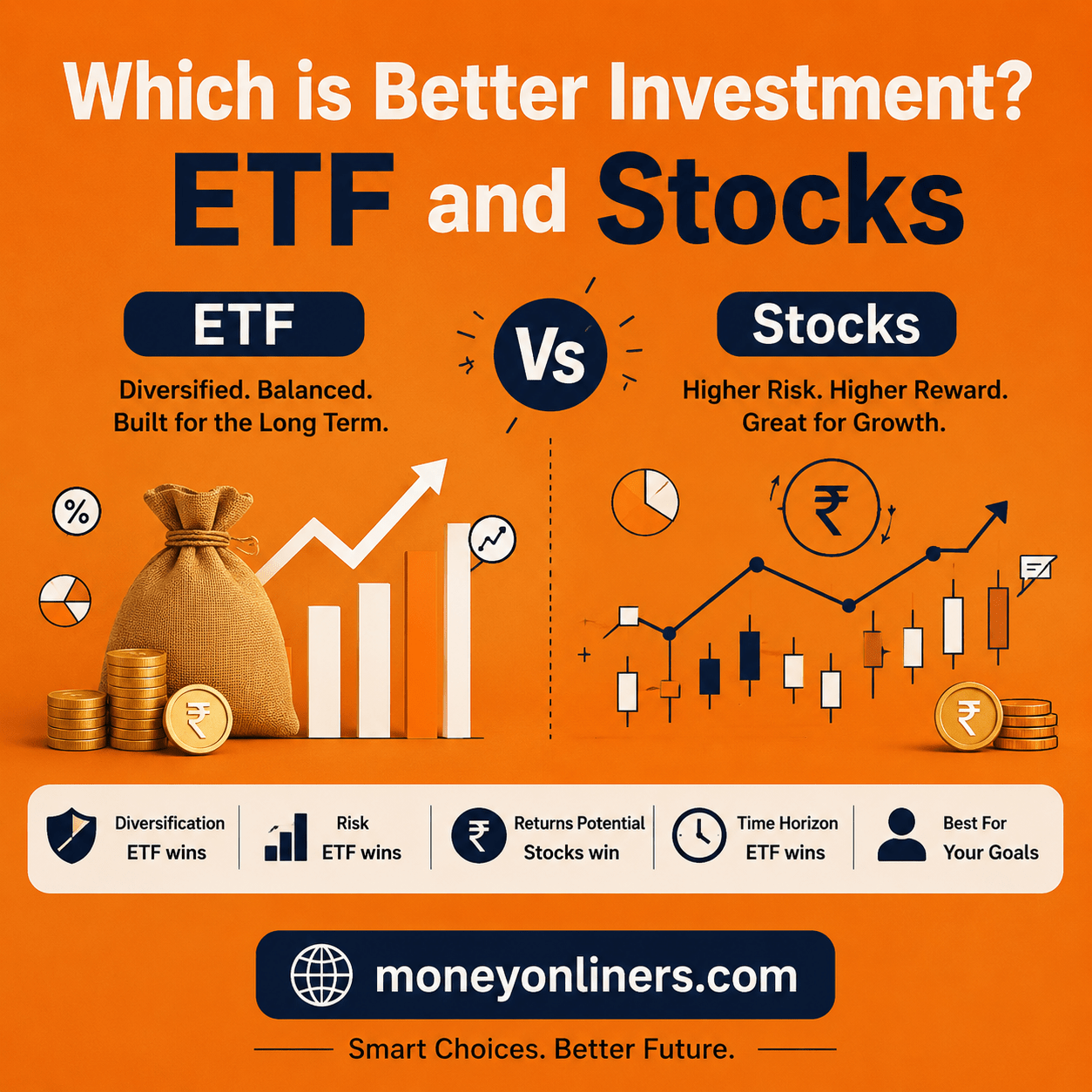
Buying individual stocks gives you direct ownership exposure to specific companies. ETFs can give you exposure to many investments through a single fund. Both can play a role in long-term investing, but they differ significantly in diversification, research requirements, concentration risk, fees and simplicity.
For many beginner investors, a broadly diversified ETF can be simpler than selecting multiple individual stocks because one fund may provide exposure to many companies at once. Individual stocks provide more direct control and can outperform or underperform dramatically depending on the company. ETFs still carry investment risk, may charge ongoing expenses and are not automatically diversified if they focus on one sector, theme or narrow group of securities. The better choice depends on your goals, time horizon, risk tolerance, knowledge and investment strategy.
Stocks vs ETFs: What Is the Basic Difference?
A stock generally represents an ownership interest in one company.
If you buy shares of a company, your investment results become directly connected to that company's performance, valuation and future prospects.
An exchange-traded fund, or ETF, works differently.
An ETF pools money from investors and holds a portfolio that may contain stocks, bonds or other assets.
Each ETF share represents an interest in that portfolio.
Therefore, buying one ETF can potentially provide exposure to many securities at once.
Stocks vs ETFs at a Glance
| Feature | Individual Stocks | ETFs |
|---|---|---|
| What you own | Shares of a specific company | Shares of a fund containing a portfolio |
| Diversification | Requires buying multiple companies | Many ETFs provide multiple holdings |
| Company-specific risk | Higher when concentrated | Often spread across several holdings |
| Research required | Potentially significant company research | Fund, holdings, strategy and fee research |
| Control | You choose each company | Fund strategy determines underlying holdings |
| Ongoing fund expense | No ETF expense ratio | Usually has operating expenses |
| Trading | Trades on exchanges | Trades on exchanges |
| Potential loss | Yes | Yes |
| Beginner simplicity | Can require more research | Broad ETFs can simplify diversification |
What Is an Individual Stock?
A stock represents an ownership interest in a company.
If you buy shares in one company, you participate in that company's future financial performance through changes in the share price and, where applicable, dividends.
However, individual-company investing creates concentration risk.
A company can experience declining sales, increased competition, management problems, lawsuits, regulatory changes or other difficulties.
If a large portion of your portfolio is invested in that company, those problems can significantly affect your wealth.
If you invest $1,000 entirely in one company, your $1,000 is highly dependent on what happens to that single business.
What Is an ETF?
An ETF is a pooled investment product whose shares generally trade on an exchange.
Depending on its investment objective, an ETF may own dozens, hundreds or even thousands of securities.
Some ETFs track broad stock-market indexes.
Others focus on bonds, specific industries, countries, investment styles or themes.
Not Every ETF Is Broadly Diversified
The word ETF does not automatically mean diversified.
A narrow technology ETF, for example, may still be heavily exposed to one industry.
Some exchange-traded products can be even more concentrated.
Always check what an ETF actually owns. The ticker symbol or fund name alone does not tell you whether the fund is broadly diversified.

1. Diversification: ETFs Often Make It Easier
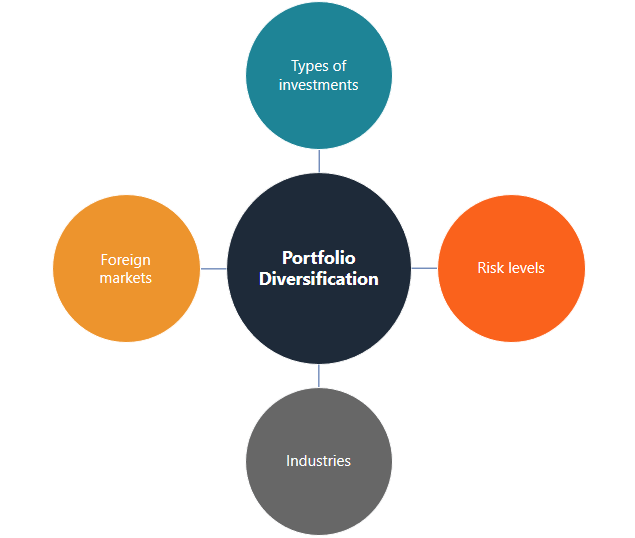
Diversification means spreading investment exposure across multiple holdings rather than depending heavily on one asset.
If you own only one stock, your investment is not diversified across companies.
You could manually build a portfolio by purchasing shares in many businesses.
However, that requires deciding which companies to own and how much to allocate to each one.
A broadly diversified ETF can make this process simpler because the fund may already hold many companies.
Example
| Investment | Possible Exposure |
|---|---|
| One individual stock | One company |
| Five individual stocks | Five companies |
| Broad-market ETF | Potentially hundreds or thousands of securities |
| Narrow sector ETF | Multiple holdings, but concentrated in one industry |
Diversification can reduce dependence on one company, but it cannot eliminate market risk or guarantee against losses.
2. Risk: Stocks Can Create More Company-Specific Exposure
All investing involves risk.
However, the type and concentration of risk can differ.
Individual-Stock Risk
When you own one company, company-specific events can directly affect a larger percentage of your investment.
A disappointing earnings report can hurt the share price.
A competitor may gain market share.
A product can fail.
Management may make poor decisions.
ETF Risk
A diversified ETF spreads company-specific risk across multiple holdings.
However, the entire fund can still decline when the broader market falls.
A narrow ETF can also be highly volatile if its holdings are concentrated in one industry or theme.
3. Research: Individual Stocks Usually Require More Company Analysis
Buying a company because you recognize its brand is not the same as understanding the investment.
Individual-stock research may involve reviewing:
- Revenue growth
- Profitability
- Debt
- Cash flow
- Competition
- Management
- Industry conditions
- Valuation
- Regulatory risks
- Company financial statements
ETF research is different.
You still need to understand what the fund owns, its objective, diversification, fees and risks.
However, you usually do not need to individually select every underlying company.

4. Control: Stocks Give You More Direct Choice
Individual stocks provide direct control over which companies enter your portfolio.
You decide whether to own Company A, Company B or neither.
You also decide how much of each company to hold.
An ETF gives the fund's strategy more control over the underlying portfolio.
If a broad index ETF owns 500 companies, you generally receive the mix provided by the fund.
That Can Be an Advantage or Disadvantage
A beginner who does not want to select individual companies may value the simplicity.
Someone who wants a highly customized portfolio may prefer more direct control.
5. Fees: Stocks and ETFs Have Different Cost Structures
Investment costs deserve attention because they reduce the money available to compound.
Individual Stock Costs
Depending on the broker and country, costs might include:
- Trading commissions
- Foreign-exchange charges
- Account fees
- Bid-ask spreads
- Taxes or transaction costs where applicable
ETF Costs
An ETF may include the same brokerage-related costs plus ongoing fund expenses.
Those operating expenses are usually expressed through an expense ratio or similar disclosure.
ETF investors may also encounter bid-ask spreads.
Before buying either a stock or ETF, understand the complete cost of buying, owning and eventually selling the investment.
6. Minimum Investment: Both Can Be Accessible
Historically, building a diversified stock portfolio could require significant capital because investors needed to buy shares of many different companies.
Modern brokerage platforms may offer fractional shares in some markets.
ETFs can also often be purchased in relatively small amounts.
Therefore, minimum investment alone may not determine which option is better.
Platform rules differ significantly by broker and country.
7. Trading: Stocks and ETFs Both Trade During Market Hours
Individual stocks generally trade on exchanges during market hours.
ETF shares also generally trade on exchanges throughout the trading day.
That means ETF prices can move throughout the day just like stock prices.
ETF market prices may also differ slightly from the value of the underlying portfolio.
Frequent Trading Is Not Required
The ability to trade throughout the day does not mean long-term investors need to constantly buy and sell.
Frequent reaction to short-term price movements can pull an investor away from a long-term plan.

8. Dividend Income: Both Can Potentially Pay Dividends
Some companies distribute part of their profits to shareholders through dividends.
ETFs may also distribute income generated by the securities they hold.
However, dividends are not guaranteed.
Companies can reduce or eliminate dividends.
Fund distributions can also change.
Do not select an investment solely because its dividend yield looks high. Yield, sustainability, underlying risks and total return all matter.
9. Simplicity: Broad ETFs Can Reduce Portfolio Decisions
Imagine you want exposure to hundreds of companies.
With individual stocks, you would need to choose many businesses and decide how much to allocate to each one.
You would then need to monitor those holdings and periodically decide whether the portfolio remains balanced.
A broad ETF can bundle that exposure into one investment.
That does not make the ETF automatically superior.
It simply makes diversification operationally easier.
10. Potential Returns: Neither Option Guarantees Better Performance
A successful individual stock can dramatically outperform a broad ETF.
A poorly performing stock can also lose far more than a diversified portfolio.
An ETF's return depends on what it owns, its strategy, expenses and market conditions.
Therefore, there is no universal rule that stocks always outperform ETFs or ETFs always outperform stocks.
More Concentration Means More Dependence on Specific Outcomes
Owning a small number of stocks can create bigger differences between your return and the broader market.
That difference can work in either direction.
Stocks vs ETFs: Detailed Beginner Comparison
| Category | Stocks | ETFs | Beginner Consideration |
|---|---|---|---|
| Diversification | Must build manually | Can be built into one fund | Broad ETFs may simplify diversification |
| Company control | High | Lower | Stock investors choose each company |
| Research burden | Can be high | Still required, but different | Understand the fund rather than every company |
| Company-specific risk | Can be high | Often lower in broad funds | Concentration matters |
| Market risk | Yes | Yes | Neither is risk-free |
| Ongoing fund costs | No fund expense ratio | Usually yes | Compare expense ratios |
| Trading costs | Possible | Possible | Depends on broker and market |
| Dividends | Possible | Possible | Not guaranteed |
| Customization | High | Depends on fund selection | Stocks offer more direct control |
| Simplicity | Can become complex | Can be simpler | Broad funds may reduce portfolio decisions |
Which Is Better for a Beginner: Stocks or ETFs?
For a beginner whose main priority is obtaining diversified long-term exposure without researching many individual companies, a broadly diversified ETF may be easier to understand and maintain.
However, this does not mean every ETF is suitable for beginners.
A leveraged, inverse, single-stock, narrow-sector or highly specialized product can have very different risks from a conventional broad-market ETF.
Individual stocks can make sense for investors who understand company analysis, accept concentration risk and want direct control over specific businesses.
Do you want to select individual companies, or do you mainly want diversified exposure to a broader market?
Example: $1,000 in One Stock vs a Broad ETF
Scenario A — One Company
A fictional beginner invests the entire $1,000 in one company.
If that company performs exceptionally well, the investment could outperform a broad market.
However, company-specific problems can also severely hurt the portfolio.
Scenario B — Broad ETF
Another fictional beginner puts $1,000 into a broad ETF containing hundreds of companies.
One company performing badly may have a smaller effect because many other companies remain in the portfolio.
However, if the overall market falls, the ETF can still decline significantly.
Key lesson: Diversification reduces dependence on one company but does not remove market losses.
Can You Own Both Stocks and ETFs?
Yes.
A portfolio does not have to be exclusively stocks or ETFs.
Some investors use a diversified fund as the core of their portfolio and allocate a smaller amount to individual companies they want to research and own directly.
Others choose only diversified funds.
Some prefer direct-stock portfolios.
The right structure depends on goals, knowledge, risk tolerance and investment philosophy.
MoneyOnliners is not recommending a specific portfolio allocation. Asset allocation should reflect your circumstances, time horizon and ability to accept losses.

Broad ETFs vs Sector ETFs
One of the biggest beginner mistakes is assuming every ETF offers the same level of diversification.
| ETF Type | Typical Focus | Potential Diversification |
|---|---|---|
| Broad-market ETF | Large portion of a market | Potentially high across companies |
| Sector ETF | One industry | Diversified across companies but concentrated by sector |
| Country ETF | One national market | Concentrated geographically |
| Thematic ETF | One investment theme | Can be relatively concentrated |
| Bond ETF | Portfolio of bonds | Depends on bond types and issuers |
Read the Holdings
Do not stop at the ETF name.
Look at the underlying holdings.
Check how much of the fund is concentrated in its largest positions.
Review its sector and geographic exposure.
Active ETFs vs Index ETFs
ETFs can follow different management strategies.
Index ETF
An index ETF generally seeks to track a specified index or benchmark.
Actively Managed ETF
An actively managed ETF uses investment decisions made according to the fund's stated strategy rather than simply attempting to track an index.
Neither structure guarantees better returns.
Compare strategy, risks and costs.
What Is an Expense Ratio?
An expense ratio represents annual fund operating expenses relative to assets.
These expenses reduce the fund's returns.
Small percentage differences may appear insignificant in one year but can become more meaningful over long periods.
| What to Compare | Why It Matters |
|---|---|
| Expense ratio | Ongoing cost of the fund |
| Broker commission | Possible cost of trades |
| Bid-ask spread | Difference between available buy and sell prices |
| Currency conversion | Can matter for international investors |
| Account fee | May apply regardless of investment |
10 Questions to Ask Before Buying an ETF
- What does the ETF actually own?
- What index or strategy does it follow?
- How diversified are the holdings?
- Is the ETF concentrated in one sector or country?
- What is the expense ratio?
- What other trading or account costs apply?
- How volatile has the underlying strategy been?
- Does it match my investment time horizon?
- Do I understand why I am buying it?
- Would I still want it if it stopped being popular on social media?
10 Questions to Ask Before Buying an Individual Stock
- What does the company actually do?
- How does it make money?
- Is the company profitable?
- How much debt does it carry?
- What could hurt future growth?
- Who are its major competitors?
- What valuation am I paying?
- How much of my portfolio would depend on this company?
- What would make me sell?
- Am I buying because of research or excitement?
Stocks vs ETFs: Which May Fit Different Beginner Goals?
You Want Simplicity
A broad ETF may make diversification easier through one investment.
You Want Company-Level Control
Individual stocks provide direct choice over each company you own.
You Do Not Want to Research Many Companies
A diversified ETF may reduce the number of individual-company decisions.
You Enjoy Company Research
Individual-stock investing may fit your interests, provided you understand the additional concentration risk.
You Want Broad Market Exposure
A broad-market ETF may provide a convenient structure.
You Want a Specific Company
Individual shares provide direct exposure to that business.
7 Stocks vs ETFs Mistakes Beginners Should Avoid
1. Assuming Every ETF Is Diversified
Some ETFs are narrowly concentrated.
2. Buying a Stock Only Because You Like the Brand
A good product does not automatically mean the stock is attractively priced or suitable for your portfolio.
3. Ignoring ETF Fees
Understand recurring fund expenses and trading costs.
4. Putting Most of Your Portfolio Into One Stock
Concentration increases dependence on one company's outcome.
5. Chasing Recent Performance
A stock or ETF that recently increased rapidly can still decline.
6. Investing Emergency Money
Long-term investments can fall at the exact moment you need cash.
7. Believing Either Stocks or ETFs Guarantee Wealth
Neither structure guarantees positive returns.
Stocks vs ETFs Beginner Checklist
- I know my investment goal.
- I know my time horizon.
- I understand that I can lose money.
- I have reviewed my emergency savings.
- I understand the difference between a stock and an ETF.
- I know what the ETF actually owns before buying it.
- I understand that not every ETF is diversified.
- I understand company-specific risk before buying individual stocks.
- I know the fees and trading costs.
- I am not investing only because of recent performance.
- I have considered diversification.
- I am using an appropriately regulated platform.
- I can explain why each investment belongs in my portfolio.
Continue Learning on MoneyOnliners
Recommended External Resources
Investor.gov — Exchange-Traded Funds
Exchange-Traded Funds (ETFs) — Investor.gov
Investor.gov — Stocks
Investor.gov — Asset Allocation and Diversification
Asset Allocation and Diversification — Investor.gov
Investor.gov — Understanding Fees
Understanding Fees — Investor.gov
This article provides general educational information and is not individualized investment, financial, tax or legal advice. Stocks and ETFs can lose value, including loss of principal. Diversification does not guarantee a profit or protect against all losses. Consider your financial circumstances, goals, time horizon, risk tolerance, costs and applicable tax rules before investing.
Frequently Asked Questions
Are stocks or ETFs better for beginners?
Broadly diversified ETFs may be simpler for beginners who want exposure to many companies without selecting each one individually.
However, the best choice depends on the investor's goals, knowledge and risk tolerance.
Are ETFs safer than stocks?
Not automatically.
A diversified ETF can reduce company-specific concentration risk, but it can still lose substantial value when the market or its underlying holdings decline.
Can ETFs lose all their value?
ETFs are not guaranteed investments.
The amount of potential loss depends on what the fund owns and how it is structured.
Can individual stocks make more money than ETFs?
A particular stock can outperform a broad ETF.
It can also significantly underperform it.
Higher concentration creates a wider range of possible outcomes.
Do ETFs pay dividends?
Some ETFs distribute income received from their underlying holdings.
The amount and frequency vary and are not guaranteed.
Do stocks pay dividends?
Some companies pay dividends.
Others do not.
Companies can also reduce or suspend dividends.
What is a broad-market ETF?
A broad-market ETF seeks exposure to a wide section of a particular market rather than focusing only on a narrow industry or theme.
What is a sector ETF?
A sector ETF focuses on companies operating in a particular industry or economic sector.
It may contain many stocks but still be concentrated because those businesses face similar economic forces.
Are all ETFs index funds?
No.
Some ETFs track indexes while others are actively managed or follow different investment strategies.
What is an ETF expense ratio?
It represents operating expenses charged by the fund relative to its assets.
Those expenses reduce investment returns.
Do individual stocks have expense ratios?
Individual stocks do not have ETF-style fund expense ratios.
However, brokerage fees, spreads, currency conversion and other costs may still apply.
How many stocks do I need to be diversified?
There is no universal number that guarantees adequate diversification.
Diversification depends on the number of holdings as well as sectors, company sizes, geographic exposure and other characteristics.
Can I invest in both stocks and ETFs?
Yes.
Some investors combine diversified funds with selected individual companies.
Others use only one approach.
Should I buy ETFs every month?
Regular investing can be part of a long-term strategy, but the amount and frequency should fit your financial circumstances.
Investment returns are not guaranteed regardless of contribution schedule.
What is the biggest difference between stocks and ETFs?
An individual stock usually represents ownership in one company, whereas an ETF typically gives you an interest in a portfolio of underlying investments.
What should beginners check before buying an ETF?
Review its objective, underlying holdings, diversification, fees, risks, trading characteristics and whether it fits your overall investment plan.
What should beginners check before buying a stock?
Understand the business, financial position, competitive environment, risks, valuation and how much of your portfolio would depend on that company.
Are ETFs guaranteed to make money long term?
No.
Neither ETFs nor individual stocks guarantee positive long-term returns.
Research Methodology
This MoneyOnliners comparison was developed using investor-education guidance from Investor.gov, the U.S. Securities and Exchange Commission's investor-education resource.
The analysis focuses on the structural differences between individual stocks and exchange-traded funds, including ownership, diversification, company-specific risk, fund expenses and trading characteristics.
Investor.gov explains that ETFs pool investor money into portfolios that may contain stocks, bonds and other assets, while individual stocks provide ownership exposure to specific companies.
The guide also reflects Investor.gov guidance that diversification can help spread risk but cannot guarantee against investment losses.
Fees are included as a major comparison factor because even relatively small recurring investment costs can materially affect long-term portfolio results.
The article does not predict which specific stock, ETF or investment strategy will outperform in the future.
Final Thoughts: Stocks vs ETFs Is Really About How You Want to Invest
Stocks and ETFs are not automatically competitors.
They are different tools.
Individual Stocks Offer Direct Control
You choose the companies.
You decide how much to allocate to each one.
That control comes with greater responsibility for research and concentration risk.
Broad ETFs Can Make Diversification Easier
One fund may provide exposure to many companies.
That can simplify portfolio construction for beginners.
However, you still need to understand the fund's holdings, strategy and fees.
Neither Option Removes Risk
Stocks can fall.
ETFs can fall.
Diversification can reduce dependence on individual holdings, but it cannot guarantee positive returns.
Start With Your Investment Plan
Know your goal.
Know your time horizon.
Understand how much risk you can tolerate.
Then choose investments that fit that plan rather than choosing a product simply because it is currently popular.
For many people comparing stocks vs ETFs, the most useful question is not simply “Which one makes more money?”
A better question is: “Which structure gives me the diversification, control, cost and level of complexity that best fits the long-term investing system I can actually understand and maintain?”