How Much Money Do You Really Need to Start Investing?
How Much Money Do You Really Need to Start Investing?
You may have heard that investing is only for people who already have thousands of dollars. That is no longer always true. Depending on the investment platform and products available to you, it may be possible to begin with a relatively small amount. The more important questions are whether your financial foundation is ready, what fees apply, what you are investing in and whether you can keep contributing over time.
You do not necessarily need $1,000, $5,000 or $10,000 to start investing. Depending on your brokerage and available products, you may be able to begin with $10, $25, $50 or $100, particularly where fractional shares or low-minimum funds are available. However, the better starting amount is not simply the smallest amount your platform accepts. It is an amount you can invest without compromising essential bills, emergency savings or other important financial priorities.
There Is No Universal Minimum Amount to Start Investing
The amount required to begin depends on what you want to buy.
Some investments have minimum purchase requirements.
Others can be purchased one share at a time.
Some brokers support fractional shares.
That means an investor may be able to buy less than one full share of a stock or other eligible investment.
For example, if one share costs $500 but your brokerage allows fractional investing, you may be able to invest $25 rather than purchasing the whole share.
However, availability varies by provider and investment.
How Different Starting Amounts Could Work
| Starting Amount | Can It Be Enough to Begin? | Main Consideration |
|---|---|---|
| $10 | Possibly | Requires a suitable low-minimum or fractional-share platform |
| $25 | Possibly | Useful for establishing the habit |
| $50 | Often possible | Can support a small recurring contribution |
| $100 | Often possible | Provides more investment flexibility |
| $500 | Often enough for many beginner options | Still check diversification and fees |
| $1,000 | Can provide broader flexibility | Does not automatically make the investment better |
| $5,000+ | Provides greater allocation flexibility | Still requires a sensible strategy |
These amounts are examples, not recommendations or guarantees that every platform accepts them. Minimum investments, trading rules and fractional-share availability vary by broker, product and country.
What Matters More Than Your Starting Amount?
Your financial readiness matters more than whether your first investment is $50 or $5,000.
Before investing, consider:
- Whether essential bills are covered.
- Whether you have appropriate emergency savings.
- Whether you carry expensive high-interest debt.
- What your investment goal is.
- When you expect to need the money.
- How much investment risk you can tolerate.
- What fees the account and investment charge.
1. Make Sure Your Essential Bills Are Covered First
Investing is a long-term financial activity.
It should not require sacrificing rent, groceries, utilities, healthcare or other essential obligations.
If putting $200 into investments means using a credit card to buy food later in the month, your investment amount may be too aggressive.
Invest From Available Long-Term Money
The strongest starting amount is money that can remain invested without creating immediate financial pressure.
Do not measure investing progress only by how much you put into the market. Measure whether your overall financial system remains stable too.
2. Keep Emergency Money Separate From Investment Money
Emergency savings has a different job from an investment portfolio.
Emergency money is designed to help when unexpected essential expenses occur.
Investments can decline in value.
Therefore, money needed soon should not automatically depend on market performance.
Why This Matters
Imagine investing your entire cash reserve.
Several months later, the market declines 20% and your vehicle requires an urgent major repair.
You may have to sell investments after they have fallen.
A separate cash reserve can reduce that pressure.
The appropriate emergency-fund amount depends on income stability, essential expenses, dependents, insurance and other financial risks. There is no universal number that fits every household.

3. High-Interest Debt Can Change the Answer
Before asking how much you should invest, look at expensive debt.
If a credit card charges a very high interest rate, reducing that balance may provide a strong financial benefit.
Investment returns are uncertain.
Interest charged on outstanding debt is much more predictable.
This Does Not Mean Nobody With Debt Should Invest
The right balance depends on the type of debt, interest rate, employer retirement benefits where available, emergency savings and other priorities.
However, expensive debt should not be ignored simply because investing feels more exciting.
4. Your Investment Goal Determines How Much Makes Sense
Why are you investing?
That question should come before choosing a contribution.
Possible goals include:
Retirement
A long-term goal that may benefit from regular contributions over decades.
Long-Term Wealth
Investing may support broader financial independence goals.
Education
The appropriate account and strategy depend on country and timeline.
Future Major Goal
Longer-term goals may allow more investment flexibility than money needed soon.
Give the Goal a Number
Once you know the purpose, estimate the amount you are working toward and how much time you have.
That can help you determine whether $25 per month is enough for the current stage or whether the contribution needs to increase gradually.
5. Fractional Shares Can Lower the Entry Barrier
A fractional share represents less than one whole share of a stock or another eligible security.
Suppose a stock trades at $1,000 per share.
Without fractional shares, you might need approximately $1,000 to purchase one full share.
If a platform allows dollar-based fractional investing, you may be able to invest $50 instead.
Fractional Shares Do Not Eliminate Investment Risk
Owning a smaller piece of a stock changes the amount invested.
It does not make the company safer.
If the stock falls 30%, the fractional investment can also fall by approximately that percentage before other factors.
Fractional shares solve an affordability problem. They do not solve diversification, valuation or investment-risk problems.

6. Starting With $10: Does It Make Sense?
If your platform allows a $10 investment, starting that small can still have value.
It can help you learn how deposits, purchases, market changes and account statements work.
However, $10 alone is unlikely to create significant wealth quickly.
The Habit May Matter More Than the First Amount
Suppose you invest $10 once and never contribute again.
That is very different from starting at $10 and gradually increasing the amount as your finances improve.
Example: Starting Tiny to Learn
A fictional beginner opens an investment account after researching the provider and investment.
She begins with $10.
The purpose is not to become wealthy from that $10.
She wants to understand how the platform works before committing more money.
Several months later, she begins investing $50 per month.
Key lesson: A very small first investment can be useful when it is the beginning of a larger long-term system.
7. Starting With $50 or $100
For many beginners using platforms with low minimums, $50 or $100 can provide a practical starting point.
It may allow investment into eligible fractional shares, ETFs or funds depending on the brokerage.
More importantly, the amount can become a repeatable monthly contribution.
Consistency Changes the Picture
| Monthly Contribution | 1 Year of Contributions | 5 Years of Contributions | 10 Years of Contributions |
|---|---|---|---|
| $25 | $300 | $1,500 | $3,000 |
| $50 | $600 | $3,000 | $6,000 |
| $100 | $1,200 | $6,000 | $12,000 |
| $250 | $3,000 | $15,000 | $30,000 |
| $500 | $6,000 | $30,000 | $60,000 |
These figures show contributions only. They do not include investment gains, losses, fees, taxes or inflation and therefore are not predictions of future portfolio value.
8. Starting With $500 or $1,000
A larger starting amount can provide more flexibility.
You may be able to spread money across several investments or purchase whole shares where fractional shares are unavailable.
However, having $1,000 does not mean you should immediately invest the entire amount.
Ask Where the Money Came From
Is it truly long-term money?
Or is part of it needed for insurance, school costs, car maintenance or another expense next month?
Your bank balance does not tell you automatically how much money is available to invest.
9. Do Not Wait for $10,000 Just Because Investing Feels Serious
Waiting can make sense if your finances are not ready.
However, waiting solely because you believe investing requires a large account may create unnecessary delay.
Many investment platforms and funds have become accessible at lower amounts.
The exact minimum still depends on the specific provider and investment.
Starting Small Can Build Experience
A smaller portfolio allows you to learn how you react to market fluctuations.
For example, reading about a 15% decline is different from watching your own investment balance fall.
That experience can help you better understand your actual risk tolerance.
10. Fees Matter Even More When Your Account Is Small
Suppose an investment service charges a fixed $5 monthly subscription.
On a $100 investment account, $60 per year would represent a very large percentage of the starting balance.
On a much larger portfolio, the same dollar fee represents a smaller percentage.
Therefore, beginners with smaller balances should pay particular attention to fixed charges.
Check Every Relevant Cost
- Account maintenance fees
- Trading commissions
- Fund expense ratios
- Advisory fees
- Subscription fees
- Currency-conversion costs
- Bid-ask spreads
- Withdrawal or transfer charges
If you are starting with a small amount, calculate each fixed fee as a percentage of your investment. A small dollar fee can represent a surprisingly large percentage.

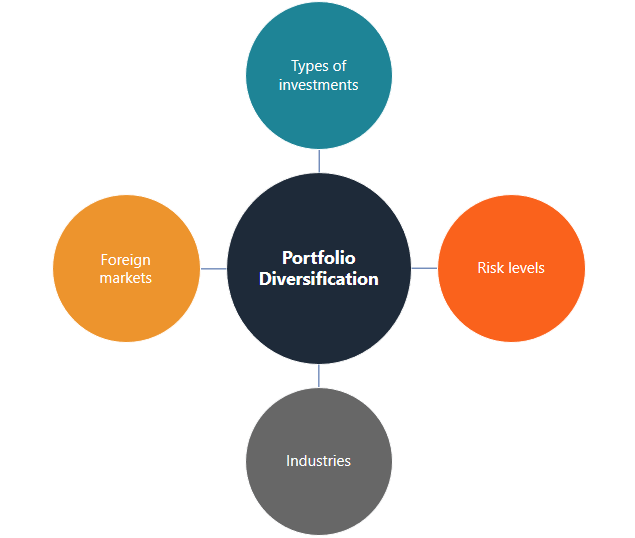
11. Diversification Matters More Than Simply Starting With More Money
A $5,000 portfolio invested entirely in one speculative company can be less diversified than a much smaller amount invested through an appropriately broad fund.
Therefore, portfolio size and portfolio quality are different questions.
What Diversification Means
Diversification involves spreading investment exposure among different holdings so your result does not depend unnecessarily on one investment.
However, diversification cannot prevent every loss.
A broad market decline can still reduce the value of a diversified portfolio.
Not every ETF or fund is broadly diversified. Some focus narrowly on a particular sector, country, theme or small number of securities.
How Much Should You Invest Every Month?
There is no universal percentage.
You may hear rules suggesting 10%, 15% or 20% of income.
Those can be planning references, but they are not automatically suitable for every household.
Your contribution needs to work alongside essential bills, emergency savings, debt and other financial priorities.
A Better Starting Question
Ask:
- How much remains after essential bills?
- Do I have an appropriate emergency cushion?
- Do I have high-cost debt requiring attention?
- What other savings goals are important?
- Can I maintain this investment contribution during an average month?
Starting Amount vs Monthly Contribution
| Investor | Starting Amount | Monthly Contribution | Main Lesson |
|---|---|---|---|
| Investor A | $1,000 | $0 afterward | Strong start but no recurring system |
| Investor B | $100 | $100 monthly | Smaller start with ongoing contributions |
| Investor C | $25 | $25 monthly | Very small but repeatable habit |
| Investor D | $500 | $250 monthly | Larger initial and recurring contributions |
These examples do not predict which investor will earn more because actual results depend on investments, market returns, fees, taxes and time.
They simply demonstrate that the first deposit is only one part of an investing plan.
Real-Life Example: Waiting for the “Perfect” Starting Amount
Michael Thinks He Needs $10,000
Michael wants to invest but assumes serious investors begin with at least $10,000.
He keeps postponing the decision.
Later, he learns that his brokerage supports lower-dollar recurring investments.
After making sure his emergency savings and bills are covered, he begins with $100.
He then adds $75 each month.
As his income grows, he reviews and gradually increases the contribution.
Key lesson: Starting with a sustainable amount can be more useful than waiting indefinitely for an arbitrary large number.
Case Study: Starting Too Aggressively
A $2,000 Investment Leaves Too Little Cash
A fictional beginner has $2,500 in total cash savings.
Excited about investing, he puts $2,000 into the market immediately.
Two weeks later, a necessary vehicle repair costs $1,100.
Only $500 remains in cash.
He is forced to use a credit card and later considers selling investments to cover the balance.
The problem was not that investing is bad.
The problem was investing too much of the money that still had a near-term emergency purpose.
Key lesson: The maximum amount you can transfer into an investment account is not automatically the amount you should invest.

Should You Invest $10, $100 or $1,000?
$10 May Make Sense If...
Your platform supports it and your goal is to begin learning with a very small amount.
$50 May Make Sense If...
You want a manageable recurring contribution that fits your current budget.
$100 May Make Sense If...
It is affordable after essential expenses and can become a repeatable monthly investment.
$500 May Make Sense If...
You have sufficient financial reserves and want more flexibility in your initial allocation.
$1,000 May Make Sense If...
It is genuinely long-term money and does not weaken emergency savings or upcoming obligations.
$0 May Be the Right Amount Today If...
Essential bills, financial emergencies or extremely expensive debt currently need your available money more urgently.
What Should You Invest Your First $100 In?
There is no single investment that is correct for every beginner.
Before choosing, determine your goal, time horizon and risk tolerance.
Then research the available investment types.
For beginners seeking diversification, broad funds are often worth understanding.
Individual stocks provide more direct company exposure but also create company-specific risk.
MoneyOnliners does not recommend putting your first $100 into a particular security simply because you are a beginner. The appropriate investment depends on your financial circumstances and investment plan.
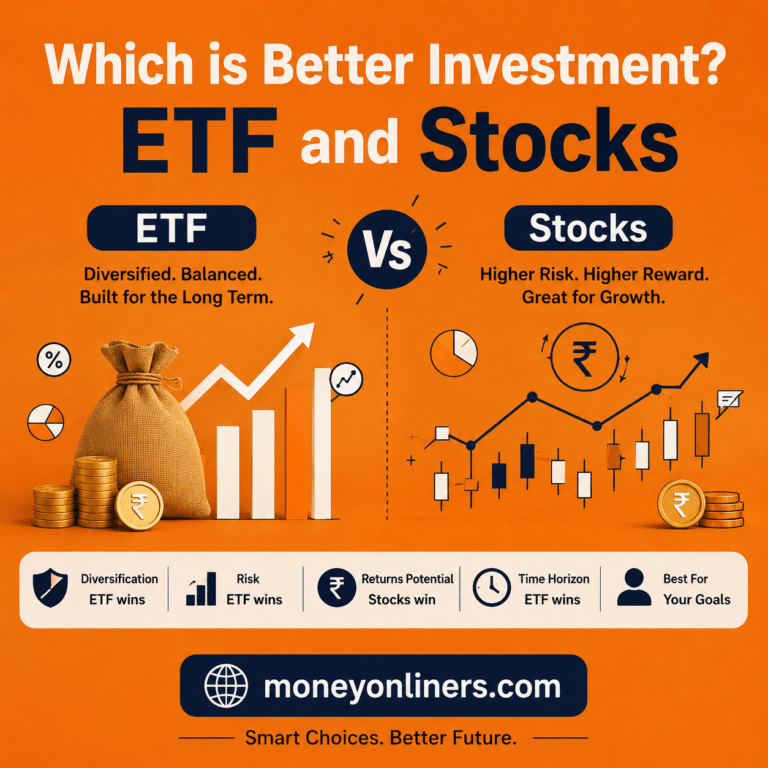
What About ETFs and Index Funds?
Broad ETFs and index funds can provide exposure to many securities through one investment.
However, the labels themselves do not guarantee diversification or low risk.
Some ETFs and indexes are narrowly focused.
Review the fund's holdings, objective, expense ratio and risks.
How to Start Investing With a Small Amount
| Step | What to Do |
|---|---|
| 1 | Review essential bills and cash flow |
| 2 | Protect appropriate emergency savings |
| 3 | Review expensive debt |
| 4 | Choose a long-term investment goal |
| 5 | Determine your time horizon |
| 6 | Choose an appropriately regulated provider |
| 7 | Check minimum investments and fractional-share rules |
| 8 | Understand all fees |
| 9 | Research the investment |
| 10 | Start with an affordable amount |
| 11 | Consider recurring contributions |
| 12 | Review periodically rather than constantly reacting |
7 Mistakes to Avoid When Starting With a Small Amount
1. Thinking Small Means Risk-Free
You can still lose part or all of a small investment depending on what you buy.
2. Ignoring Fixed Fees
A small monthly fee can represent a large percentage of a tiny account.
3. Buying One Speculative Stock
A small account does not eliminate concentration risk.
4. Investing Emergency Cash
Near-term financial protection still matters.
5. Chasing Fast Returns
Starting with less money does not require taking extreme risk to “catch up.”
6. Using an Unverified Investment Platform
Check whether the provider is appropriately regulated and understand the protections available.
7. Assuming You Need to Trade Frequently
Small accounts do not need constant buying and selling to be legitimate investment accounts.
Investment Scam Warning for Small Beginners
Beginners who feel they do not have enough money can be particularly vulnerable to offers promising that a small investment will quickly become a fortune.
Be Cautious of Claims Such As:
- “Turn $100 into $10,000 quickly.”
- “Guaranteed daily returns.”
- “No risk.”
- “Secret investment system.”
- “Only a few spots remaining.”
- “Send money now before the opportunity closes.”
- “You must pay another fee before withdrawing your profits.”
Real investing involves risk. Guaranteed high-return claims combined with little or no risk deserve serious caution.
Beginner Readiness Checklist
- I can cover my essential bills.
- I have considered my emergency savings needs.
- I reviewed high-interest debt.
- I know why I am investing.
- I know approximately when I will need the money.
- I understand that investments can lose value.
- I checked the investment provider's regulatory status.
- I understand the fees.
- I understand what I am buying.
- I have considered diversification.
- I can leave the money invested without needing it for immediate expenses.
- I am not expecting guaranteed or rapid wealth.
- I have an affordable recurring contribution in mind where appropriate.
Continue Learning on MoneyOnliners
Recommended External Resources
Investor.gov — Understand What It Means to Invest
Understand What It Means to Invest — Investor.gov
Investor.gov — Fractional Share Investing
Fractional Share Investing — Investor.gov
Investor.gov — Understanding Fees
Understanding Fees — Investor.gov
Investor.gov — Investment Products
Investment Products — Investor.gov
Investor.gov — Five Questions to Ask Before You Invest
Five Questions to Ask Before You Invest — Investor.gov
This article provides general educational information and is not individualized investment, financial, tax or legal advice. Investments can lose value, including loss of principal. No amount invested is guaranteed to grow. Investment minimums, fractional-share availability, account fees, taxation and investor protections differ by platform and country. Research any investment and provider before committing money.
Frequently Asked Questions
How much money do you need to start investing?
There is no universal minimum.
Depending on your broker and investment, you may be able to begin with a relatively small amount.
Fractional-share platforms can sometimes allow dollar-based investments below the price of one whole share.
Can I start investing with $10?
Possibly.
Some platforms allow small dollar investments or fractional shares.
Check minimums and fees before investing.
Can I start investing with $50?
Yes, where your brokerage and investment support that amount.
A $50 contribution can also become the beginning of a recurring monthly investing habit.
Is $100 enough to start investing?
For many modern investment platforms, $100 may be enough to access certain investments.
However, account rules vary.
Is $500 enough to start investing?
It can be enough for many investment options.
The larger question is whether the $500 is truly available for long-term investment.
Is $1,000 enough to start investing?
Yes, in many situations.
However, $1,000 does not automatically create diversification or guarantee returns.
Should I wait until I have $10,000 to invest?
Not simply because $10,000 feels like a more serious number.
If your financial foundation is ready and lower-dollar investing is available, you may be able to start earlier.
Should I build an emergency fund before investing?
Emergency money serves a different purpose from investment money.
An appropriate accessible reserve can reduce the chance that you need to sell investments during a market decline.
Should I pay off debt before investing?
The answer depends on the debt's interest rate, emergency savings, employer benefits, investment opportunities and your broader financial situation.
High-cost debt deserves particular attention.
Are fractional shares good for beginners?
They can make higher-priced securities accessible with smaller dollar amounts.
However, fractional ownership does not reduce the underlying investment's percentage risk.
Can I lose money if I only invest $10?
Yes.
The dollar amount is smaller, but investment risk still exists.
Should beginners invest every month?
Regular contributions can be a useful long-term approach when they fit your budget.
There is no requirement to invest the same amount every month regardless of changing financial circumstances.
What percentage of my income should I invest?
There is no universal percentage appropriate for everyone.
Your contribution should fit alongside essential expenses, savings, debt and other priorities.
Should I invest all my extra cash?
Not automatically.
Some extra cash may still be needed for emergencies, sinking funds or upcoming expenses.
Do I need enough money to buy a full stock share?
Not always.
Some brokers support fractional shares, which allow eligible securities to be purchased in amounts smaller than one whole share.
Are fractional shares available everywhere?
No.
Availability, order types, transfer rules and eligible securities differ between brokerage firms.
What should my first investment be?
There is no universal first investment.
Choose based on your goals, time horizon, risk tolerance, diversification needs and understanding of the product.
Are ETFs good for small investors?
Some ETFs can provide diversified exposure and may be accessible with smaller amounts, particularly where fractional ETF shares are available.
However, not every ETF is broadly diversified or low risk.
Do investment fees matter if I only have $100?
Yes.
Fixed account or subscription fees can represent a particularly large percentage of a small balance.
Can investing a small amount make me wealthy?
A small starting amount alone is unlikely to create rapid wealth.
Long-term outcomes depend on contribution amounts, time, market performance, fees, taxes and other factors.
Is it better to start small or wait?
If your finances are ready, starting with a sustainable amount can help build experience and consistency.
However, waiting may be sensible when essential expenses, emergency savings or high-cost debt require the money first.
Research Methodology
This MoneyOnliners guide was developed using investor-education material from Investor.gov, the U.S. Securities and Exchange Commission's investor-education resource.
Investor.gov explains that investment products involve risk and that investors may lose principal, which is why this guide separates emergency savings and near-term cash from long-term investment money.
The guide incorporates Investor.gov's explanation of fractional shares, which can allow eligible investors to own less than one full share and may lower the dollar amount needed to access certain securities.
It also incorporates current Investor.gov guidance on investment fees because account charges, fund expenses, advisory costs and other fees can significantly affect long-term results.
The article does not recommend a universal starting amount because platform minimums, investment products, household finances and financial priorities vary considerably.
All dollar amounts and examples are educational illustrations rather than personalized investment recommendations or guaranteed outcomes.
Final Thoughts: You May Need Less Money to Start Than You Think
Investing does not necessarily begin at $1,000, $5,000 or $10,000.
Modern platforms can make certain investments available with much smaller amounts.
But the Minimum Is Not the Most Important Number
The smallest investment your broker accepts tells you what you can invest.
It does not tell you what you should invest.
Protect Your Financial Foundation First
Cover essential bills.
Consider appropriate emergency savings.
Review expensive debt.
Start With an Amount You Can Leave Invested
Whether that is $10, $50, $100 or more, the contribution should fit your actual financial situation.
Watch Fees and Diversification
A small account can be harmed disproportionately by high fixed fees.
Likewise, putting everything into one investment can create unnecessary concentration risk.
Build the Habit Over Time
The first contribution matters less than the long-term system that follows it.
Ultimately, when asking how much money do you need to start investing, the answer may be less than you expect.
Start with an amount your financial foundation can safely support, understand what you are buying, keep costs under control and focus on building a repeatable long-term investment habit rather than waiting for a perfect number.