21 Tricks to Stop Impulse Buying and Keep More of Your Money
21 Tricks to Stop Impulse Buying and Keep More of Your Money
Impulse purchases can feel small in the moment but expensive when they repeat. These practical strategies help you slow the decision, understand your triggers and protect more of your money without banning every enjoyable purchase.
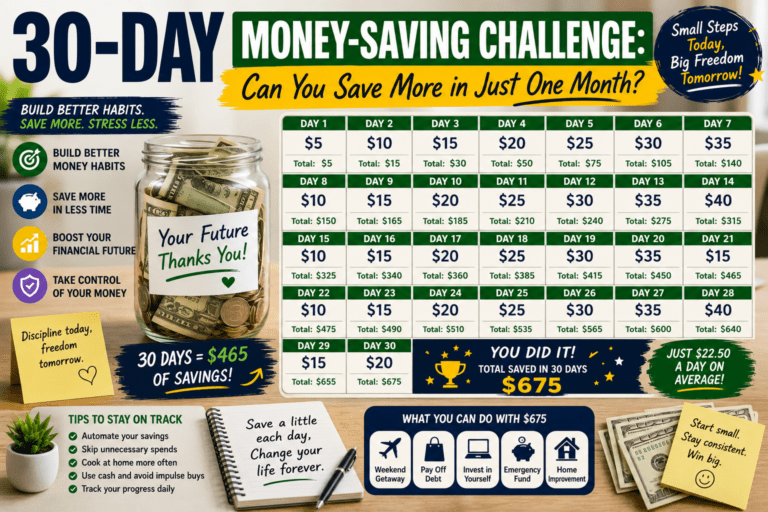
To stop impulse buying, create a pause between wanting and paying. Use a 24-hour rule, remove saved cards, unsubscribe from sales messages, shop from a list and track the situations that trigger unnecessary purchases. In addition, give yourself a realistic personal-spending allowance so the plan does not feel like permanent deprivation. Finally, when you skip a purchase, move some of that money to savings so the benefit becomes visible.
What Is Impulse Buying?
Impulse buying happens when you purchase something with little or no prior planning. The item may be inexpensive or costly. What matters is that the decision happens quickly, often because of emotion, convenience, marketing or a sense of urgency.
Not every unplanned purchase is a financial problem. Buying an umbrella during unexpected rain may be sensible. Likewise, replacing a necessary item that suddenly breaks can be reasonable. The problem begins when repeated unplanned purchases regularly compete with bills, savings, debt payments or other priorities.
Why Small Purchases Can Be Hard to Notice
A $5 or $10 purchase rarely feels serious on its own. However, several similar purchases each week can become a meaningful monthly total. Therefore, it helps to look at patterns rather than judging each transaction in isolation.
Impulse Buying Is Often About More Than the Product
People may shop because they are bored, stressed, excited, tired or looking for a quick reward. In other cases, the trigger is external: a flash sale, influencer post, limited-time countdown or personalized notification.
Once you identify the trigger, you can create a rule that interrupts the pattern. That is more useful than relying on willpower every single time.

Why Do We Buy Things on Impulse?
Understanding the cause makes the solution more precise. If your trigger is boredom, deleting one shopping app may help. If the trigger is social pressure, a spending limit may work better. Meanwhile, if you shop after stressful workdays, you may need a different reward routine.
Emotional Triggers
Stress, sadness, celebration and frustration can all influence spending. A purchase can provide a brief sense of relief or excitement. However, the feeling often fades faster than the financial effect.
Marketing and Artificial Urgency
Countdown timers, “only two left” notices and limited-time discounts encourage quick decisions. Sometimes the offer is genuine. Even so, urgency can make it harder to compare the item with your budget or existing possessions.
Convenience and One-Click Payments
Saved cards, digital wallets and one-click checkout remove friction. That convenience is useful for planned purchases. On the other hand, it also reduces the time available to reconsider an impulse.
Social Influence
Friends, coworkers, creators and online communities can normalize frequent purchases. As a result, something can begin to feel necessary simply because other people appear to have it.
Do not ask only, “Can I afford this today?” Also ask, “Was this planned, what goal does it compete with, and will I still value it next week?”
21 Tricks to Stop Impulse Buying and Keep More of Your Money
Use these strategies selectively. Start with the triggers that cause the most unnecessary spending, then add stronger controls only where you need them.
Build Friction Before You Buy
First, make impulsive purchases slightly harder to complete. A short delay can create enough space for a better decision.
Use a 24-Hour Rule for Small Wants
When a purchase is not urgent, wait one full day before paying. The pause gives excitement time to fade. As a result, you can decide whether the item still feels useful after the first impulse passes.
Wait Seven Days for Bigger Purchases
For more expensive wants, use a longer cooling-off period. Write the item down, compare alternatives and revisit it after a week. If it still solves a real need, you can decide more calmly.
Keep a Shopping Wish List
Instead of buying immediately, save the item to a wish list. Review the list once a week or once a month. Many purchases lose their urgency when they are no longer one click away.
Remove Saved Card Details
Delete stored payment cards from shopping sites and apps. The extra step of finding and entering your card can create just enough friction to interrupt an impulse purchase.
Unsubscribe From Retail Emails
Sales messages are designed to bring you back into stores and websites. Unsubscribe from retailers that repeatedly trigger unplanned spending. You can still search for a product when you genuinely need one.
Turn Off Shopping Notifications
Flash-sale alerts and app notifications can create artificial urgency. Turn them off unless they support a purchase you already planned. Fewer prompts mean fewer moments where you have to resist temptation.
Delete Shopping Apps You Overuse
If one app regularly leads to unnecessary purchases, remove it from your phone. You can still access the store through a browser when you have a planned need.
Shop With a Written List
Before entering a store, write down what you came to buy. Use the list as a boundary. If an unplanned item catches your attention, add it to your wish list rather than your basket.
Set a Personal Spending Allowance
Give yourself a realistic amount for guilt-free personal spending. A defined allowance can reduce the feeling that every enjoyable purchase is forbidden, while still protecting larger financial goals.
Use Cash for One Problem Category
If digital spending feels invisible, try cash for a category such as clothing, snacks or entertainment. Once the amount is gone, stop or wait until the next planned period.
Ask What Problem the Purchase Solves
Before buying, ask: What specific problem will this solve? If the answer is vague—such as boredom, stress or wanting a quick reward—the purchase may not provide lasting value.
Calculate the Cost in Work Time
Convert the price into the amount of work needed to earn it after taxes or other deductions. This does not mean every purchase is bad. However, it can make the tradeoff more concrete.
Avoid Browsing Stores for Entertainment
Shopping without a need creates more opportunities to want things. Replace casual browsing with another activity such as walking, sports, reading, gaming, calling a friend or visiting a free local event.
Identify Your Emotional Triggers
Notice whether impulse buying happens when you are bored, stressed, lonely, tired or celebrating. Once you know the trigger, prepare another response that does not require spending.
Leave Items in the Cart
When shopping online, place nonessential items in the cart but do not check out. Return later after the initial excitement has passed. Often, the desire becomes weaker.
Compare the Purchase With a Savings Goal
Put the item next to something you are already saving for. A $40 impulse purchase may represent part of an emergency fund, school expense, trip or other goal. The comparison makes the opportunity cost visible.
Use a No-Buy Category for 30 Days
Choose one category where you already own enough, such as clothing, cosmetics, gadgets or home décor. Avoid new purchases there for one month unless something genuinely essential is needed.
Create a One-In, One-Out Rule
For categories that tend to accumulate, require one existing item to leave before another enters. This can slow clutter and make you think more carefully about whether the new item adds real value.
Avoid Shopping When Hungry, Tired or Upset
Decision-making can become weaker when you are physically or emotionally drained. When possible, delay nonessential shopping until you feel calmer and more focused.
Track Every Impulse Purchase for One Month
Record the item, price, trigger and whether you still valued the purchase a week later. Patterns become easier to see when they are written down.
Transfer the Money You Did Not Spend
When you successfully skip an impulse purchase, move some or all of that amount to savings when practical. This turns restraint into visible progress instead of letting the money disappear elsewhere.
A Practical Impulse-Buying Trigger Map
Tracking what happens before a purchase can help you choose the right response. For example, the solution for emotional shopping may be different from the solution for online flash sales.
| Trigger | Typical Thought | Better Response |
|---|---|---|
| Boredom | “I will just browse.” | Switch to a free activity before opening the store. |
| Stress | “I deserve something.” | Use another reward or wait until the next day. |
| Sale urgency | “I will miss the deal.” | Check whether the item was already on your list. |
| Social pressure | “Everyone has this.” | Compare the item with your own goals and needs. |
| Convenience | “It is only one click.” | Remove saved payment details. |
| Payday confidence | “I have money now.” | Reserve bills and savings before flexible spending. |
Track the Trigger, Not Just the Price
If you write down only what you bought, you may miss the cause. Add one short note about what you were feeling or doing before the purchase. After a month, patterns often become easier to recognize.

How Much Can Impulse Spending Cost Over Time?
Small purchases become more meaningful when you annualize them. The figures below are simple examples rather than estimates of what any reader spends.
| Impulse Spending Pattern | Monthly Total | 12-Month Total |
|---|---|---|
| $5 twice a week | About $43 | About $520 |
| $10 twice a week | About $87 | About $1,040 |
| $25 once a week | About $108 | About $1,300 |
| $50 twice a month | $100 | $1,200 |
The Goal Is Not to Save Every Dollar
Some spontaneous spending may be worth keeping. Instead, use the numbers to identify the purchases you regret, forget or barely value. Reducing those gives you room for spending that matters more.
Redirect Part of the Savings
If you cut $40 of unnecessary purchases this month, move some of that amount toward a savings goal. Otherwise, the money may quietly disappear into another flexible category.
Today-to-Today Examples and Mini Case Studies
These hypothetical examples show how different triggers can require different solutions.
Payday Shopping Becomes the Trigger
A young professional notices that most unplanned purchases happen during the first weekend after payday. Therefore, she transfers savings and reserves essential bills before deciding what is available for personal spending.
Key lesson: changing the order of money decisions can reduce payday overspending.
Shopping Apps Create Constant Temptation
A student repeatedly opens fashion apps while commuting. He deletes two of the apps and keeps a wish list in his notes instead. As a result, fewer items move directly from browsing to checkout.
Key lesson: remove the trigger when possible.
Stressful Workdays Lead to Online Purchases
A freelancer notices that shopping follows difficult client days. She replaces the habit with an evening walk and a 24-hour rule for all nonessential purchases.
Key lesson: emotional triggers need an alternative response, not only a stricter budget.

Children's Requests Create Unplanned Spending
A parent creates a small family fun-money category and a wish list for larger requests. Some items are purchased later, while others are forgotten.
Key lesson: a planned allowance can reduce conflict without creating unlimited spending.
Late-Night Browsing Becomes Expensive
A remote worker often shops from bed when tired. He removes saved card details and stops browsing retail sites after a chosen evening time.
Key lesson: changing the environment can be easier than relying on willpower.
Separate Personal Allowances Reduce Friction
A couple agrees on shared bills and savings, then gives each partner a personal spending allowance. Because the boundaries are clear, small individual purchases create fewer arguments.
Key lesson: structure can protect both money and autonomy.
What to Do After an Impulse Purchase
One unplanned purchase does not destroy your financial plan. Instead, treat it as information. Ask what triggered the decision and what rule could help next time.
Return It If the Store Policy Allows and You Truly Do Not Want It
If the item is unused and returnable, a legitimate return may be appropriate. Follow the retailer's policy and avoid creating unnecessary waste.
Do Not Punish Yourself With Extreme Cuts
Skipping food or essential transport to “make up” for an impulse purchase can create a worse problem. Adjust flexible spending instead and continue with the plan.
Record the Trigger
Was the purchase driven by stress, a sale, social influence or boredom? Write it down. That note can help you prevent a repeat.
Restart Immediately
Do not wait until next month. Use your spending rules on the very next purchase. Consistency is built through recovery as well as success.
Build a Personal Anti-Impulse Buying System
Stopping impulse buying becomes easier when several small rules work together. Instead of relying on one trick, combine a delay, a spending boundary and a review habit.
Step 1: Choose Your Main Trigger
First, identify the situation that causes the most unplanned spending. For example, that may be payday, late-night browsing, social media, stressful workdays or visiting a shopping center without a list.
Step 2: Add One Friction Rule
Next, choose a rule that slows the purchase. You might remove saved cards, use a 24-hour delay or leave the item in your cart. As a result, the decision gets a second review before money leaves your account.
Step 3: Create a Safe Spending Amount
Then, decide how much personal spending fits your budget. A small allowance can reduce the feeling that every enjoyable purchase is forbidden. At the same time, the limit protects savings and bills.
Step 4: Review the Pattern Weekly
Finally, look back at any impulse purchases and ask what triggered them. Keep the rules that helped, and change the ones that were too difficult or ineffective. Over time, the system should become simpler, not more complicated.
A 30-Day Impulse-Buying Reset
Week 1: Track the Triggers
Record every unplanned purchase, including the situation and emotion behind it. Do not try to fix everything yet.
Week 2: Remove the Easy Triggers
Unsubscribe from retail messages, delete problem shopping apps and remove saved cards. In addition, create a wish list for things you still want.
Week 3: Add Spending Rules
Use the 24-hour rule, a personal spending allowance and a no-buy category. Then check which rule changes your behavior most.
Week 4: Move the Money
Estimate how much unnecessary spending you avoided. Transfer part of that amount to savings and keep the habits that worked.
Incoming Link Opportunities
These Saving Money and related MoneyOnliners posts can link to this guide whenever readers need help controlling unplanned spending.
Cross-Cluster Incoming Links
Recommended External Resources
Consumer.gov — Making a Budget
Consumer.gov provides a simple framework for comparing income and expenses and using actual spending to improve the next month's plan.
Consumer Financial Protection Bureau — Track Your Spending
CFPB consumer education encourages people to track spending long enough to notice surprises, recurring expenses and patterns that may be worth changing.
CFPB — Managing Spending to Achieve Your Goals
CFPB has also explored how real-time spending feedback can help consumers understand what remains available before another purchase.
MyMoney.gov — Managing Spending
MyMoney.gov offers U.S. consumer education on tracking spending, preparing for special occasions and reducing impulse purchases.
Several external resources above are U.S.-based. The behavior-change principles are broadly adaptable, but banking systems, consumer protections and payment habits differ by country.
Frequently Asked Questions
Common Questions About Impulse Buying
How do I stop impulse buying?
First, create a delay before nonessential purchases.
Next, remove shopping triggers such as saved cards and sale alerts.
Then use a list and personal spending allowance.
In addition, track the emotions or situations that lead to purchases.
Finally, review what worked each week.
Why do I impulse buy even when I know I should save?
Knowledge does not remove emotional or environmental triggers.
For example, stress, boredom, convenience and promotions can influence decisions.
Therefore, practical barriers may work better than relying on willpower alone.
Use a waiting rule and reduce exposure to shopping prompts.
Meanwhile, keep a realistic allowance for planned enjoyment.
Is impulse buying always bad?
No. However, context matters.
For example, an unplanned purchase can still be reasonable.
However, repeated purchases become a problem when they interfere with important goals.
The pattern matters more than a single transaction.
Therefore, review frequency, cost and regret rather than labeling every spontaneous purchase as a failure.
Does the 24-hour rule really help?
Yes. In fact, it can help by creating time between desire and payment.
For example, for small wants, one day may be enough.
By contrast, for larger purchases, a longer waiting period can be more useful.
However, the rule only works if you actually honor the delay.
Combine it with a wish list and spending limit for stronger control.
How can I stop impulse buying online?
First, remove saved payment details.
Next, turn off retail notifications.
Then, delete shopping apps that trigger browsing.
In addition, use a wish list instead of immediate checkout.
Finally, avoid browsing when you are tired, stressed or bored.
How can I stop buying things when I am stressed?
First, identify that stress is the trigger.
Next, prepare a different reward or coping activity.
Walking, exercise, reading or talking with someone may help, depending on your preferences.
Use a waiting rule before any nonessential purchase.
If shopping is causing serious distress or financial harm, consider appropriate professional support.
Should I use cash to stop impulse spending?
For example, cash can help some people because the remaining amount is visible.
However, it is not necessary for every category.
However, a digital spending limit can work too.
Use the method that makes your boundary easiest to see.
Most importantly, avoid switching to a card after the category limit is gone.
What should I do with the money I do not spend?
First, give the money a purpose.
For example, move it toward an emergency fund, sinking fund or another savings goal.
As a result, that transfer makes progress visible.
Otherwise, the money may disappear into another flexible category.
Review the total at month-end.
Research Methodology
This guide organizes impulse-buying strategies around four stages: identifying triggers, adding friction before checkout, creating realistic spending boundaries and redirecting avoided purchases toward savings. Core financial-education principles were aligned with public consumer guidance from Consumer.gov, the Consumer Financial Protection Bureau and MyMoney.gov. Numerical examples are illustrative calculations, and all case studies are hypothetical.
Final Thoughts: Slow the Purchase Down and Keep More of Your Money
Impulse buying becomes easier to control when you stop treating every purchase as a test of willpower. Instead, change the environment around the decision.
First, remove easy triggers. Next, create waiting rules and a realistic spending allowance. Then track the purchases you regret and the situations that caused them. Finally, transfer part of the money you avoid spending toward a goal that matters more.
Learning how to stop impulse buying does not mean never buying something fun again. It means giving yourself enough time and structure to choose purchases intentionally—and keep more of your money for the future.
Continue the Saving Money Series
Strengthen the habits behind your savings with these related MoneyOnliners guides.
How to Save Money Save $1,000 Faster Automate Your Savings