15 Budgeting Mistakes That Quietly Drain Your Money Every Month
15 Budgeting Mistakes That Quietly Drain Your Money Every Month
A budget can look perfectly organized and still fail in real life. These common mistakes reveal where money leaks happen—and how to build a plan that works with your actual income, bills, habits and goals.
The most damaging budgeting mistakes usually come from unrealistic numbers, forgotten expenses, weak tracking and failing to adjust when life changes. A budget can quietly leak money when you underestimate groceries, ignore annual bills, treat savings as whatever is left over, forget small subscriptions, overspend after payday or use credit to cover categories that have already run out. A stronger budget starts with your real spending, includes irregular costs, protects essentials and savings, tracks bills by due date and gets reviewed regularly.
Why Budgeting Mistakes Can Drain Money Without Looking Serious
Most budgets do not collapse because of one dramatic purchase. More often, the damage happens through repeated gaps between the plan and real life. A few forgotten subscriptions, an unrealistic grocery number, several unplanned convenience purchases and one annual bill can quietly consume money that was supposed to support savings or debt repayment.
That is why a useful budget must begin with evidence. Consumer.gov recommends listing bills and expenses, recording income, comparing the two and then tracking what you actually spend throughout the month. The CFPB similarly recommends logging spending so the budget reflects a realistic picture rather than an idealized version of your finances.
A second problem is timing. You may earn enough during the month overall but still run short before a major bill is due. The CFPB's bill-calendar guidance emphasizes tracking both amounts and due dates so you can see when money needs to remain available.
A Budget Is a Working System, Not a One-Time Document
Creating a spreadsheet on the first day of the month is only the beginning. A working budget needs feedback. When the actual numbers differ from the plan, that difference tells you something useful.
Perhaps food costs are higher than expected. Maybe transportation increased because work changed. Alternatively, a category may be too broad to show where overspending is occurring. Instead of calling the budget a failure, use the information to improve the next version.
Do not make your budget look successful by using numbers that are impossible to live on. A realistic budget that reveals a problem is more useful than a perfect-looking budget that hides one.

15 Budgeting Mistakes That Quietly Drain Your Money Every Month
Start With the Numbers: Mistakes That Make the Budget Unrealistic
The first group of problems happens before the month is fully underway. If the starting numbers are wrong, even disciplined spending can produce disappointing results.
Building a Budget Around What You Think You Should Spend
It is tempting to create an ideal budget immediately. You may decide groceries “should” cost $300 even though recent statements show $520. The lower number makes the plan look better, but it does not automatically change shopping habits or food prices.
The CFPB recommends creating an “as-is” budget that reflects current spending before deciding what to change. Review several months when possible, especially for categories that vary.
Forgetting Irregular and Annual Expenses
Insurance renewals, school supplies, vehicle maintenance, gifts, medical costs, memberships and travel may not appear every month. However, they are still part of your financial life.
When these costs are omitted, they feel like emergencies even when many were predictable months earlier. CFPB guidance recommends looking back over several months so less-frequent expenses are not missed.
Using Gross Income Instead of Spendable Income
A salary figure, business revenue or freelance invoice can look larger than the money actually available. Taxes, payroll deductions, business expenses and other obligations may reduce what can support household spending.
Small-business owners face an additional risk when they treat sales revenue as personal income before protecting inventory, taxes and operating costs.
Making Every Month Exactly the Same
Real life changes. Utility bills vary, birthdays happen, school terms begin, holidays arrive and work schedules shift. A rigid copy-and-paste budget can miss these differences.
Even predictable income households should customize each month's plan. Meanwhile, people with irregular pay need even more flexibility.
Watch the Calendar: Mistakes That Create Cash-Flow Pressure
A budget can balance mathematically while still leaving you without enough cash on the day a bill is due. The next mistakes are about timing and visibility.
Ignoring Bill Due Dates
Suppose you earn $3,000 and spend $2,700 during a month. That appears comfortable. Yet if $1,800 of bills arrive before your second paycheck, the first half of the month can still become difficult.
A bill calendar helps connect the monthly plan to actual due dates. This can also reveal whether a provider might allow a more convenient payment date.
Spending Too Freely Right After Payday
A fresh paycheck can make the account balance feel larger than it really is. However, part of that money already belongs to rent, utilities, food, debt payments and future expenses.
If optional purchases happen first, the end of the pay period becomes unnecessarily tight.
Not Leaving Room for Miscellaneous Expenses
No month follows the spreadsheet perfectly. A small school request, household replacement, parking fee or forgotten obligation can appear unexpectedly.
The CFPB specifically suggests including a miscellaneous category when assessing spending because out-of-the-ordinary costs are part of normal financial life.

Control Daily Spending: Mistakes That Create Small but Repeated Leaks
Once the monthly plan is realistic and bills are scheduled, everyday spending becomes the next major test.
Not Tracking Small Purchases
Breakfasts, delivery fees, snacks, app purchases, rides and convenience spending can look insignificant one transaction at a time. Together, they can become a meaningful monthly category.
CFPB guidance recommends tracking spending for at least a short period and looking for expenses that surprise you. The point is not to shame every small purchase; it is to understand the total.
Keeping Subscriptions You Barely Use
Streaming services, software, cloud storage, memberships and app subscriptions can continue quietly because each charge is relatively small. Multiple forgotten charges can become expensive over a year.
A subscription is not automatically wasteful. The mistake is paying repeatedly for something that no longer provides enough value.
Treating Wants as Fixed Expenses
Some lifestyle costs become psychologically “mandatory” simply because they happen every month. Premium entertainment, frequent dining out or upgraded services may feel fixed even when they are adjustable.
Separating genuine obligations from flexible preferences gives the budget more room when priorities change.
Using Credit to Hide Overspending
A category may technically stay within budget only because part of the purchase moved onto a credit card balance. The spending still happened; payment was merely delayed.
If balances are not paid as planned, interest and minimum payments can make future budgets tighter.
Protect the Future: Mistakes That Steal From Savings and Goals
A budget should not only survive today. It should also prepare for predictable future costs and financial shocks.
Saving Only Whatever Is Left at Month-End
When saving has no planned amount, other spending often expands to use the available money. Consumer.gov notes that savings can be included as one of the expenses in a monthly budget.
The appropriate amount depends on your income and obligations. Even a small planned contribution can make the goal visible.
Using Emergency Savings for Predictable Expenses
Car registration, annual school costs or holiday gifts may be expensive, but they are not necessarily emergencies if you know they are coming.
Repeatedly using the emergency fund for predictable costs prevents it from being available for genuine financial shocks.
Cutting Every Enjoyable Expense
An extremely restrictive budget may work briefly and then trigger frustration or rebound spending. Sustainable plans usually leave some room for personal priorities when finances allow.
The goal is not to remove every coffee, hobby, meal out or family activity. Instead, decide how much those things can reasonably receive after essential obligations are protected.
Never Reviewing or Updating the Budget
Income changes. Prices change. Families change. Goals change. A budget built six months ago may no longer reflect today's financial reality.
Consumer.gov recommends comparing actual spending with the plan at the end of the month and using what you learn to plan the next month.
Small Money Leaks vs Bigger Budget Problems
Not every financial problem can be fixed by cancelling subscriptions or skipping takeaway meals. It is important to distinguish small spending leaks from structural problems.
| Problem | Example | Likely Response |
|---|---|---|
| Small repeated leak | Unused subscriptions | Cancel or downgrade |
| Impulse spending | Unplanned online purchases | Spending rules, waiting period, envelope/category limit |
| Timing problem | Bills due before paycheck | Bill calendar, buffer, possible due-date changes |
| Underestimated category | Groceries always exceed plan | Review actual transactions and reset target |
| Irregular expense | Annual insurance | Sinking fund |
| Structural shortfall | Essentials consistently exceed income | Expense restructuring, income growth, assistance or other larger changes |
Do Not Confuse an Income Problem With a Discipline Problem
If housing, food, utilities, transport and required payments already consume all available income, the solution cannot simply be “try harder.” A realistic budget should reveal the shortfall clearly.
That information can guide the next step: negotiate bills, seek legitimate assistance, change housing or transport where feasible, address debt, increase income or combine several approaches.
Likewise, Do Not Ignore Genuine Spending Problems
On the other hand, a higher income will not automatically fix uncontrolled spending. If every raise immediately becomes a more expensive lifestyle, financial pressure can continue at a higher income level.
A 30-Day Budget Reset to Fix the Mistakes
Week 1: Find the Truth
Collect recent bank statements, card statements, receipts, bills and income records. Track current spending without trying to make it look better.
Identify subscriptions, forgotten charges and categories that consistently cost more than expected.
Week 2: Rebuild the Plan
Set realistic category amounts using actual data. Add irregular expenses, a miscellaneous buffer and planned savings where possible.
Next, place bills on a calendar so the plan reflects due dates as well as monthly totals.
Week 3: Add Spending Controls
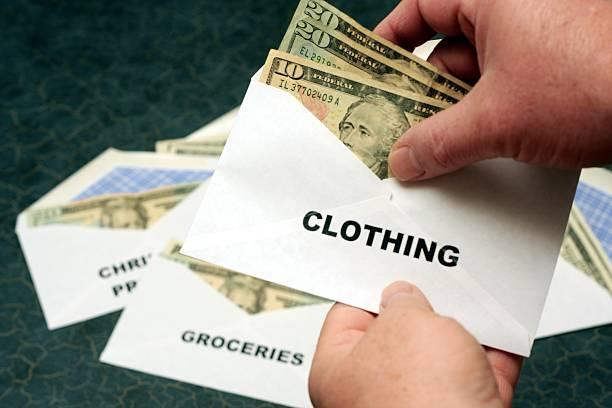
Choose one or two categories that need stronger boundaries. You might use cash envelopes, a digital category limit, a 24-hour waiting rule or a weekly spending cap.
Avoid changing ten habits simultaneously. A smaller number of clear rules is easier to maintain.
Week 4: Review the Evidence
Compare the plan with what actually happened. Which categories were accurate? Which ones failed? Did a timing problem appear? Were there purchases you had forgotten to plan?
Then improve next month's budget. The reset succeeds when the second budget is more realistic than the first—not when every number is perfect.

Real-Life Style Examples and Mini Case Studies
These are hypothetical educational scenarios showing how common budgeting mistakes can appear in different households and places.
The Small Purchases Were Not Small Together
A worker regularly buys lunch, snacks and several short rides during the workweek. None feels expensive individually, so the budget includes only a vague “daily spending” number.
After tracking for a month, he separates lunch, transport and personal spending. The new categories reveal which purchases matter most to him and which can be reduced.
Key lesson: Track repeated small expenses before deciding what to cut.
Predictable Expenses Kept Becoming Emergencies
A household budget works during ordinary months but repeatedly breaks when school-related costs arrive.
The family estimates annual education extras and begins a small monthly sinking fund.
Key lesson: A non-monthly expense is not automatically an unexpected expense.
Subscriptions Were Hiding in Several Accounts
A professional pays for streaming, software, cloud storage and fitness services across two cards and a digital wallet. Because the charges are scattered, the total is easy to miss.
A recurring-payment audit reveals several services that are rarely used.
Key lesson: Review recurring charges across every payment method.

Sales Revenue Looked Like Household Income
A retailer takes personal spending money directly from daily sales. Later, the business lacks enough cash to replace stock.
She separates operating money from personal transfers and builds the household budget only from the amount truly available personally.
Key lesson: Business revenue and household income are not the same thing.
The Budget Was Too Restrictive to Last
A couple removes nearly every entertainment category while trying to save aggressively. After several weeks, both begin making unplanned purchases and stop checking the budget.
They restore a smaller planned fun-money category and reduce the savings target slightly.
Key lesson: A sustainable plan can outperform a perfect plan that nobody follows.
A Strong Month Became the New Normal
A freelancer earns unusually high income for two months and increases several recurring expenses. When client work slows, the commitments remain.
He rebuilds fixed costs around a conservative baseline and sends part of future strong-month income to a buffer.
Key lesson: Temporary income should not automatically create permanent expenses.
Budgeting Mistakes to Watch When Income Is Low or Irregular
Do Not Set Impossible Category Limits
When money is tight, it can be tempting to force every category downward until the spreadsheet balances. However, food, medicine, work transport and other essentials have real minimum costs.
If essentials exceed income, acknowledge the gap. Then consider which costs can realistically change and whether additional income or assistance needs to become part of the plan.
Do Not Budget Irregular Income as Though Every Month Is Strong
Freelancers, contractors, commission workers and seasonal earners should avoid building fixed commitments around their best month. A conservative baseline and an income buffer can create more stability.
Do Not Spend Expected Income Before It Arrives
An invoice, potential commission or promised shift is not the same as cash already available. Track expected income separately and fund spending categories after money actually arrives.
Why Avoiding Budgeting Mistakes Matters
It Makes Your Numbers More Honest
Avoiding common budgeting mistakes begins with realistic numbers.
Actual spending provides a stronger starting point than wishful estimates.
Meanwhile, irregular costs become visible before they arrive.
A miscellaneous category can also acknowledge that normal months contain surprises.
As a result, the plan becomes easier to trust.
It Protects Your Cash Flow
Many budgeting mistakes are really timing problems.
A monthly total may hide the fact that bills arrive before income.
For that reason, due dates deserve a place in the budgeting system.
Payday spending also becomes safer when future obligations are reserved first.
Consequently, fewer bills should feel like unexpected interruptions.
It Reduces Everyday Money Leaks
Other budgeting mistakes appear through repeated small purchases.
Tracking reveals what those transactions cost together.
In addition, recurring-payment reviews can expose subscriptions that no longer provide enough value.
Clear category limits make tradeoffs easier to see.
Therefore, spending decisions can become more intentional without eliminating every enjoyable purchase.
It Helps Your Budget Improve Over Time
Finally, avoiding budgeting mistakes requires regular review.
No first budget will predict every expense perfectly.
Instead, each month produces information that can improve the next plan.
Changes in income, prices and family needs can then be incorporated.
Ultimately, a budget becomes stronger because it evolves with your real financial life.
Incoming Link Opportunities
These updated Budgeting cluster posts should link contextually to this guide when discussing failed budgets, unrealistic categories, overspending, forgotten expenses or ways to improve a money plan.
budgeting mistakes, common budgeting mistakes, budget mistakes to avoid, why budgets fail, mistakes that ruin a budget, and fix your budget.
High-Priority Incoming Links
7 Simple Steps to Create a Budget That Actually Works should link here after explaining how to build the initial plan.
Monthly Budget Tricks should link here when discussing why a seemingly good budget can still fail.
Cash Envelope Budgeting should link here when readers need to understand mistakes that can defeat category limits.
Track Your Expenses should link here when transaction tracking reveals recurring financial leaks.
Cross-Cluster Incoming Links
Recommended External Resources
Consumer.gov — Making a Budget
Making a Budget provides a straightforward framework for listing expenses, recording income, comparing the two and reviewing actual spending each month.
Consumer.gov — Budget Worksheet
Budget Worksheet includes common expense categories, savings deposits, debt payments and other monthly costs that are easy to overlook.
CFPB — Budgeting: How to Create a Budget and Stick With It
Budgeting: How to Create a Budget and Stick With It explains income tracking, spending tracking, bill calendars and the importance of building a realistic working budget.
CFPB — Track Your Spending
Track Your Spending With This Easy Tool recommends tracking purchases long enough to identify surprises, unnecessary expenses and unused subscriptions.
CFPB — Bill Calendar
Bill Calendar: Know What You Owe and When It's Due shows how bill amounts and due dates can be organized to reveal cash-flow timing problems.
CFPB — Assess Your Spending
Assess Your Spending recommends looking back over several months, including miscellaneous and less-frequent expenses, and comparing the budget with actual account activity.
CFPB — Consumer Insights on Managing Spending
Consumer Insights on Managing Spending discusses the challenge of using budgets in real-time spending decisions and research into spending feedback tools.
MyMoney.gov — Consumer Tips on Managing Spending
Consumer Tips on Managing Spending Worksheet is designed to support spending tracking, impulse-purchase control and planning for special occasions.
Several external resources above are U.S.-based. The core budgeting principles are broadly adaptable, but taxes, benefits, credit systems, banking rules and consumer protections differ by country. Use official local sources for country-specific decisions.
Frequently Asked Questions
What are the most common budgeting mistakes?
Common mistakes include using unrealistic numbers and forgetting irregular expenses.
Many people also fail to track small purchases.
Others ignore bill timing or save only what remains at month-end.
Credit can also hide overspending when purchases are not recorded immediately.
Finally, a budget can become outdated when it is never reviewed.
Why does my budget fail every month?
Compare the plan with actual transactions first.
A category may be unrealistic, or an expense may be missing.
In other cases, bill timing creates the problem even when monthly income is sufficient.
Your income may also be too low for the current fixed-cost structure.
Use the gap between planned and actual spending to identify the real cause.
How often should I review my budget?
A brief weekly review can help catch problems early.
Then complete a deeper review at the end of each month.
Compare planned amounts with actual spending.
Adjust categories for the next month.
Review immediately when income or major household costs change significantly.
Should savings be included in a budget?
Yes, savings can be treated as a planned category.
The amount should fit your real income and essential obligations.
A small consistent target may be more sustainable than an unrealistic one.
Different savings goals can also use separate sinking funds.
Review the target when your finances change.
What expenses do people commonly forget to budget for?
Annual insurance, vehicle maintenance and medical costs are common examples.
School expenses, gifts, holidays and travel can also be overlooked.
Subscriptions may disappear into different cards or accounts.
Family support and seasonal costs can be missed as well.
Looking back over several months helps reveal these expenses.
Is overspending always caused by poor discipline?
No.
Sometimes a category is simply underfunded or prices have changed.
In other situations, essential expenses exceed available income.
However, repeated discretionary overspending can also be a behavioral issue.
Accurate tracking helps distinguish between these different problems.
How can I stop using credit cards to cover budget gaps?
First, identify why the gap occurs.
Track credit-card purchases in the relevant spending category immediately.
Add predictable irregular expenses to sinking funds.
Build a small buffer where possible.
If essentials still exceed income, the solution may require larger expense or income changes.
Can a budget be too strict?
Yes.
A budget that removes every flexible expense may be difficult to maintain.
When finances allow, include a reasonable amount for personal priorities.
The exact amount depends on your obligations and goals.
Sustainability matters because the budget needs to work beyond a few weeks.
Research Methodology
This guide evaluates budgeting mistakes across five areas: inaccurate starting numbers, forgotten expenses, cash-flow timing, everyday spending behavior and failure to prepare for future costs.
Core budgeting principles were cross-checked against Consumer.gov and Consumer Financial Protection Bureau guidance on realistic budgets, expense tracking, bill calendars, less-frequent expenses and monthly budget reviews. The case studies are hypothetical educational illustrations and do not promise specific financial outcomes.
Final Thoughts
The most expensive budgeting mistakes are often the ones that repeat quietly. An underestimated category, a forgotten annual bill, several unused subscriptions or spending too freely after payday may not look dramatic, but the combined effect can keep savings and financial goals permanently out of reach.
Start with real numbers. Track what you spend. Put bills on a calendar. Prepare for non-monthly expenses. Give savings a planned place when possible, and review the budget often enough to learn from it.
Most importantly, use the budget as information rather than punishment. When the plan does not work, find out why. A budget that becomes more accurate every month is doing its job.
Continue Your Budgeting Plan
Use the next MoneyOnliners guides to strengthen your budget and understand where your money actually goes.
Track Your Expenses Budget vs Spending Plan Cash Envelope Budgeting