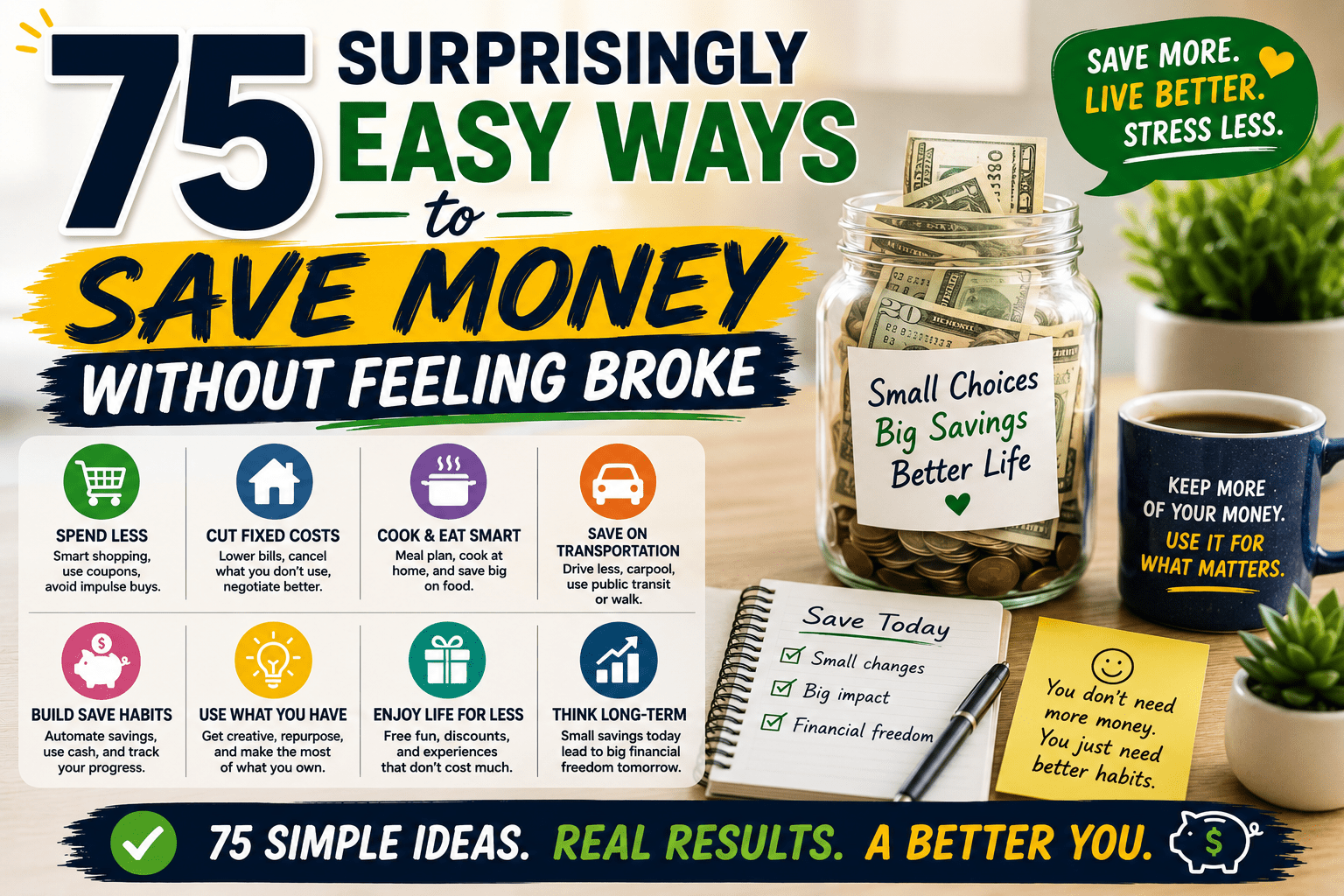
75 Surprisingly Easy Ways to Save Money Without Feeling Broke
75 Surprisingly Easy Ways to Save Money Without Feeling Broke
Saving more does not have to mean removing every enjoyable part of life. These practical ideas focus on waste, habits, recurring costs and smarter everyday choices.
The easiest ways to save money usually begin with small repeatable changes. Track spending, automate a manageable amount, reduce unused recurring charges, plan food before shopping and slow down impulse purchases. You do not need all 75 ideas. Choose five that fit your life, keep them for a month and direct the money you save toward a specific goal.
How to Save Money Without Making Life Miserable
Saving money is often presented as a list of things you should stop enjoying. However, sustainable saving works better when you remove spending you value less while protecting the parts of life you value more.
Start with accurate information. A budget can show where money goes and where spending may be reduced. In addition, consistent saving—even in small amounts—can build useful financial resilience over time.
Do Not Try All 75 Ideas at Once
Choose a small group of changes. For example, cancel one unused subscription, pack lunch twice a week, use a grocery list, set a 24-hour buying rule and automate a small transfer. Once those habits feel normal, add another.
Protect Enjoyment on Purpose
A savings plan needs room for ordinary life. Therefore, keep a realistic amount for hobbies, social activities or treats that matter to you.

75 Surprisingly Easy Ways to Save Money
Use this list as a menu, not a punishment. Some changes save a little, while others reduce recurring costs for months. Most importantly, choose strategies that fit your household, income and priorities.
Automate a Small Savings Transfer
Move a realistic amount to savings shortly after payday. Start small enough that the transfer does not create a cash shortage. Because the process happens automatically, saving no longer depends entirely on memory or motivation.
Save Before You Start Optional Spending
Treat savings as an early priority instead of waiting to see what remains at month-end. Even a modest amount can create momentum. Then use the rest of your plan for bills, food, transport and flexible spending.
Use a Separate Savings Account
Keeping savings away from everyday spending can reduce accidental withdrawals. Give the account a clear purpose, such as emergency fund, travel or school costs. A visible goal can also make progress feel more meaningful.
Create One Specific Savings Goal
A vague goal such as “save more” is difficult to measure. Instead, choose an amount, purpose and target date. For example, aim to save $600 for an emergency buffer over twelve months.
Track Your Spending for 30 Days
Before making aggressive cuts, learn where your money actually goes. Record cash, cards, bank payments and digital wallets. Once you see the totals, you can target changes that matter instead of cutting everything.
Review Your Bank Statements Weekly
A short weekly review can reveal forgotten subscriptions, duplicate charges and spending patterns. More importantly, it gives you time to adjust before the month is over.
Use a 24-Hour Rule for Nonessential Purchases
When you want something that is not urgent, wait a day before buying it. The pause separates genuine value from momentary excitement. For larger purchases, extend the waiting period.
Shop With a Written List
A list gives your shopping trip a purpose. It can reduce wandering, forgotten essentials and extra purchases. Before leaving home, check what you already have.
Plan Meals Around Food You Already Own
Look through your refrigerator, freezer and cupboards before planning the week. Build several meals around ingredients already available. This reduces waste while lowering the next grocery bill.
Cook an Extra Portion
When practical, cook enough for another meal. Leftovers can become tomorrow's lunch or a quick dinner. As a result, busy days are less likely to turn into expensive takeaway days.
Carry Water From Home
Buying drinks repeatedly can become an unnoticed expense. A reusable bottle can reduce those purchases while keeping water available during work, school or travel.
Pack Lunch More Often
You do not need to stop buying lunch forever. Start with two or three packed lunches each week. The goal is to reduce frequency without making your routine feel punishing.
Create a Takeaway Budget
Instead of banning delivery or restaurants, choose an amount you can enjoy intentionally. Once that amount is used, switch to meals at home until the next period.
Compare Unit Prices
The largest package is not always the best deal. Compare the price per kilogram, litre, ounce or unit when stores provide it. However, avoid bulk purchases that may spoil before you use them.
Buy Store Brands When Quality Is Comparable
Generic or store-brand staples can cost less than famous brands. Test them on low-risk items first. If the quality works for your household, keep the cheaper option.
Reduce Food Waste
Track which foods regularly end up in the bin. Then buy smaller quantities, freeze extras or plan those ingredients earlier in the week. Saving food is also saving the money used to buy it.
Freeze Food Before It Spoils
Bread, cooked meals and many ingredients can often be frozen safely when handled properly. Use labels and dates so the freezer becomes a useful food reserve rather than forgotten storage.
Use a Grocery Spending Limit
Choose a realistic weekly or monthly grocery amount based on actual past spending. Check the running total while shopping. If prices rise, adjust the plan rather than pretending the old number still works.
Avoid Shopping Hungry
Hunger can make convenience food and impulse purchases more tempting. Eat first or carry a planned snack when possible. It is a simple behavioral guardrail.
Plan One Low-Cost Meal Night
Create a regular meal built around affordable staples your household genuinely likes. Depending on local foods, that might include beans, lentils, rice, eggs, potatoes or seasonal vegetables.
Cancel One Unused Subscription
Look for a service you rarely use. Canceling one recurring charge can create savings every month without changing daily life much.
Rotate Streaming Services
If several entertainment subscriptions overlap, consider keeping only the services you are actively using. You can switch later rather than paying for everything continuously.
Review Phone and Internet Plans
Check whether you are paying for data, speed or features you rarely use. Compare available plans and ask your provider whether a lower-cost option fits your needs.
Turn Off Unnecessary Auto-Renewals
Auto-renewal is convenient, but it can also keep forgotten services alive. Review annual software, memberships, storage and entertainment plans before renewal dates.
Use Free Library Resources
Libraries may provide books, ebooks, internet access, study spaces, newspapers or digital resources. Available services differ by location, so check what your local library offers.
Borrow Rarely Used Items
Some tools, equipment, books or event items are needed only once. When appropriate, borrow from someone you trust instead of buying something that will sit unused.
Repair Before Replacing
A minor repair can sometimes extend the life of clothing, furniture, appliances or electronics. First compare repair cost, safety and expected remaining life.
Maintain Appliances and Equipment
Cleaning filters, following maintenance schedules and using products correctly may help them last longer. Preventive care can be cheaper than avoidable replacement.
Use What You Own First
Before buying another notebook, cleaning product, shirt or gadget, check your home. A short “use first” period can reduce duplicate purchases.
Create a No-Buy Category
Choose one category where you already have enough. For a month, avoid buying more unless something essential runs out. Clothing, décor or hobby supplies are common examples.
Unsubscribe From Retail Marketing Emails
Constant promotions can create artificial urgency. Unsubscribe from retailers that tempt you to buy things you were not already planning to purchase.
Remove Saved Card Details From Shopping Sites
Adding a little friction can help interrupt impulse purchases. If you must find your card and enter the details manually, you gain another moment to reconsider.
Delete Shopping Apps You Overuse
If a particular app encourages frequent browsing and impulse buying, remove it from your phone. You can still shop when needed through a browser.
Set a Personal Spending Allowance
Give yourself a realistic amount for guilt-free personal spending. Clear permission can make a savings plan easier to maintain than trying to eliminate every enjoyable purchase.
Use Cash for One Problem Category
If digital spending feels invisible, try cash for a category such as entertainment or eating out. The remaining amount becomes immediately visible.
Set Weekly Spending Checkpoints
Monthly limits can feel distant. Divide flexible spending into weekly amounts so you can correct course sooner.
Use a Wish List Instead of Buying Immediately
Save nonessential items to a list. Review it after a week or month. Many wants lose their urgency with time.
Compare Prices on Planned Purchases
For meaningful purchases, compare reputable sellers before paying. However, do not spend hours chasing tiny differences that cost more in time than they save.
Check the Total Cost, Not Just the Sticker Price
Delivery, installation, financing, maintenance and subscription fees can change the real cost. Compare the full amount you expect to pay.
Buy Quality When It Lowers Long-Term Cost
The cheapest item is not always the most economical. For frequently used products, durability and repairability may justify paying more upfront.
Use Secondhand Markets Carefully
Furniture, books, sports gear, clothing and some household goods can offer strong value secondhand. Inspect condition and safety before buying.
Sell Items You No Longer Use
Unused electronics, furniture, clothing or equipment may have resale value. Put suitable proceeds toward a savings goal rather than immediately replacing the items.
Create a Clothing Waiting List
When you notice a wardrobe gap, write it down. After several weeks, buy only items that still solve a genuine need.
Build a Small Capsule Wardrobe
A smaller collection of compatible clothes can reduce duplicate purchases. Focus on items you actually wear rather than chasing every trend.
Care for Clothes Properly
Follow care labels, treat stains promptly and repair simple damage. Extending garment life can reduce replacement frequency.
Plan Transport Before Leaving
Combine errands when practical and safe. Fewer unnecessary trips can reduce fuel, fares, parking and time.
Walk or Cycle When Practical and Safe
For suitable short journeys, walking or cycling may reduce transport costs. Local infrastructure, weather, safety and physical ability should guide the decision.
Use Public Transport When It Is Better Value
Compare the real cost of driving with fares, fuel, parking and maintenance. In some cities public transport wins; elsewhere it may not.
Carpool When It Makes Sense
Sharing selected journeys with coworkers, friends or family can reduce individual transport costs. Agree clearly on timing and cost-sharing.
Keep Tires Properly Maintained
Follow the vehicle manufacturer's guidance for tire pressure and maintenance. Good maintenance supports safety and may help avoid unnecessary operating costs.
Avoid Unnecessary Idling and Extra Trips
Plan routes and errands so the vehicle is not used repeatedly for avoidable short trips. Small efficiencies can add up for frequent drivers.
Shop Around for Insurance at Renewal
Coverage and pricing can change. Compare equivalent policies, deductibles, exclusions and service quality rather than looking only at the cheapest premium.
Review Bank Fees
Check statements for maintenance, ATM, transfer, overdraft or other fees. Ask whether your institution offers an account better suited to how you actually bank.
Use In-Network or Fee-Free ATMs Where Available
Repeated withdrawal fees can quietly drain money. Learn which machines or withdrawal methods your account treats more favorably.
Pay Bills on Time
Late fees are an avoidable cost when sufficient funds are available. Use reminders or carefully timed automatic payments, while keeping enough money in the account.
Create Sinking Funds for Predictable Costs
Car repairs, school expenses, gifts and annual fees are not emergencies when you know they are coming. Save a small amount regularly so these costs do not disrupt the month.
Build an Emergency Fund Gradually
Unexpected costs can otherwise push you toward expensive borrowing. Start with an achievable target, contribute consistently and increase it as your finances improve.
Save Part of Windfalls
When you receive a bonus, gift, refund or unusually strong income, decide in advance what percentage will go to savings. You can still enjoy part of it.
Use Round-Up Saving Only as a Supplement
Automatic round-ups can make saving feel effortless. However, the amounts may be small, so combine them with a deliberate savings target when possible.
Increase Savings After a Raise
When income rises, consider directing part of the increase to savings before lifestyle costs expand to absorb all of it.
Redirect Finished Payments
When a loan, installment or subscription ends, redirect some or all of that former payment to savings. Your cash flow already accommodated the amount.
Use Separate Sinking Funds for Big Goals
A travel goal should not compete invisibly with car repairs or school costs. Separate buckets make progress and tradeoffs easier to see.
Check Energy Use at Home
Look for lights, cooling, heating or equipment running when they are not needed. Focus on changes that are safe and comfortable rather than extreme deprivation.
Use Efficient Lighting When Replacement Is Due
When bulbs need replacing, compare efficient options suitable for your fixtures and local electricity prices. There is no need to discard working items simply to buy new ones.
Adjust Heating or Cooling Sensibly
Small thermostat or usage changes may reduce energy costs, depending on climate and equipment. Do not compromise health or safety to save a small amount.
Wash Full Loads When Appropriate
Running washing machines or dishwashers with sensible full loads can reduce repeated cycles. Follow appliance and fabric instructions.
Air-Dry Suitable Items
When weather, housing rules and fabric care allow, air-drying can reduce dryer use. Choose what is practical for your home.
Fix Water Leaks Promptly
A persistent leak can waste water and potentially create damage. Repairing it can protect both utility costs and the property.
Compare Household Service Providers
Internet, mobile, insurance and other services can become uncompetitive over time. Review them periodically and compare equivalent alternatives.
Use Free or Low-Cost Entertainment
Parks, community events, home game nights, libraries and free cultural activities can replace some paid outings without eliminating fun.
Plan Social Spending in Advance
Decide what you can afford before an outing, celebration or weekend. Planning helps you enjoy the event without discovering the cost afterward.
Choose Experiences That Fit the Budget
A meaningful day does not have to be expensive. Picnics, sports, home meals and local activities can create good experiences at lower cost.
Create a Gift Budget
Birthdays, weddings and holidays are predictable. Set an annual or monthly amount so generosity does not become financial stress.
Use a 30-Day Savings Challenge
Choose one realistic behavior to practice for a month, such as packing lunch or avoiding unplanned clothing purchases. Track the money saved and transfer it to your goal.
Have a Weekly Money Check-In
Spend 15 minutes reviewing balances, upcoming bills, flexible spending and savings progress. Regular attention prevents small problems from becoming expensive ones.
Which Changes Can Make the Biggest Difference?
Not every tip deserves equal attention. First, look for recurring costs you barely value. Next, improve repeated routines such as food shopping and impulse buying. Finally, review larger commitments when renewal dates allow.
Start With High-Impact, Low-Pain Savings
Unused subscriptions, avoidable fees and duplicate services are strong starting points because removing them may not reduce your quality of life. Meanwhile, meal planning and shopping rules can improve everyday spending without requiring extreme restrictions.
Today-to-Today Examples and Mini Case Studies
These examples are hypothetical and show how saving can fit different lifestyles.
Kampala — Office Worker
An office worker notices that small lunches and convenience purchases occur most workdays. Instead of eliminating them, he packs lunch three days each week and keeps two days flexible.
Key lesson: Partial change can be easier to sustain than an all-or-nothing rule.
Nairobi — Family Household
A family plans meals around food already at home, freezes suitable leftovers and shops with a list. As a result, fewer ingredients are wasted.
Key lesson: Saving can come from using purchases better, not simply buying less.
London — Young Professional
A professional values weekends with friends. Therefore, she cuts unused subscriptions and renegotiates recurring services before reducing social spending.
Key lesson: Cut low-value costs before high-value experiences.

Accra — Small Business Owner
Income changes from week to week. She uses a small baseline savings amount and adds a percentage during stronger weeks.
Key lesson: Match the savings system to the way income arrives.
Toronto — Sports Family
Sports registration and equipment repeatedly disrupt the monthly budget. The family starts a sinking fund and contributes throughout the year.
Key lesson: Predictable costs become easier when funded gradually.
How to Save on a Low or Irregular Income
Start With an Amount You Can Repeat
When money is tight, an ambitious target can create new problems. Begin with an amount that does not interfere with essential bills. Then increase it when cash flow improves.
Do Not Confuse an Income Shortfall With Bad Habits
If housing, food, transport, utilities and required payments already consume nearly all available income, cutting small treats may not solve the underlying gap. Tracking still helps because it shows the real numbers.
Save More During Stronger Periods
For irregular earners, a baseline contribution plus a percentage of stronger income can provide more flexibility than a large fixed transfer.
Turn Small Savings Into a System
Choose Five Changes
Pick five ideas that solve real spending problems. Avoid choosing tips simply because they sound disciplined.
Track the Result
Check the actual result after several weeks. If a strategy creates little benefit but makes life difficult, replace it.
Move the Money
Whenever practical, transfer part of the amount saved into the account or fund connected to your goal.
Review Once a Month
Keep what works, drop what does not and add another strategy when you are ready.
Incoming Link Opportunities
Recommended External Resources
Consumer.gov — Making a Budget: useful for identifying expenses, comparing them with income and finding areas where spending may be reduced.
Consumer Financial Protection Bureau — Automatic Savings: guidance on recurring transfers, split direct deposit and checking account timing.
Consumer Financial Protection Bureau — Emergency Fund Guide: practical guidance on small savings, cash flow, one-time opportunities and consistent contributions.
CFPB Your Money, Your Goals: tools for spending, bills, savings and money planning.
Frequently Asked Questions
What are the easiest ways to save money?
Start with recurring costs and repeated habits.
Cancel services you do not use.
Plan food before shopping.
Slow down impulse purchases.
Then automate a realistic amount.
How can I save without feeling broke?
Protect spending you genuinely enjoy.
Cut low-value costs first.
Use a personal spending allowance.
Avoid extreme rules.
Connect savings to a meaningful goal.
How much should I save each month?
There is no universal amount.
Income, essential expenses and goals matter.
Start with an amount you can repeat.
Increase it when finances allow.
Consistency is more useful than an impossible target.
Does saving small amounts matter?
Yes, especially when the habit repeats.
Small amounts can build a useful buffer.
They also establish the habit.
Increase the amount as cash flow improves.
Progress does not have to begin dramatically.
Should I automate savings?
Automation can improve consistency.
However, check balances and transfer timing.
A transfer should not create overdraft problems.
Irregular earners may need more flexibility.
Adjust the system when income changes.
What should I cut first?
Start with expenses you value least.
Unused subscriptions are one example.
Next, review repeated convenience spending.
Then examine larger recurring bills.
Do not sacrifice essential health or safety to hit a target.
Research Methodology
This guide groups savings ideas around recurring expenses, food, shopping behavior, transport, banking costs, household use, preparation and automation. Core principles were checked against Consumer.gov and Consumer Financial Protection Bureau guidance. Examples are educational and hypothetical.
Final Thoughts: Save More Without Making Life Feel Smaller
The best ways to save money are not necessarily the most dramatic. Often, the strongest changes are the ones you barely notice after they become routine.
Start by removing spending you do not value. Next, improve repeated habits around food, shopping and bills. Then automate part of the money you keep. At the same time, leave room for experiences that genuinely matter.
You do not need all 75 ideas. Five good changes that last are more valuable than 75 rules you abandon next week.