25 Good Financial Habits That Can Completely Change How You Handle Money
25 Good Financial Habits That Can Completely Change How You Handle Money
Improving your finances does not always require one dramatic decision. Small behaviors repeated consistently can change how you spend, save, manage bills, prepare for emergencies and plan for the future. These 25 good financial habits can help you build a stronger money system one practical step at a time.
Some of the best financial habits include knowing where your money goes, budgeting with real take-home income, saving automatically, building an emergency fund, using sinking funds, paying bills on time, reviewing subscriptions, avoiding unnecessary fees, waiting before impulse purchases, monitoring debt, protecting financial accounts and reviewing your financial goals regularly. You do not need to master all 25 habits at once. Starting with two or three repeatable habits can create meaningful progress over time.
Why Good Financial Habits Matter More Than Occasional Motivation
Financial motivation can be powerful, but it is often temporary.
You may feel inspired to save more at the beginning of the year, after reading a financial book or after experiencing an expensive emergency.
However, motivation usually rises and falls.
Habits are different.
A habit creates a repeated behavior that can continue even when you are not especially motivated.
For example, an automatic savings transfer does not require you to make a new saving decision every payday.
Likewise, a monthly bill review can uncover unnecessary charges before they continue for another year.
25 Good Financial Habits at a Glance
| # | Financial Habit | Main Benefit |
|---|---|---|
| 1 | Know your take-home income | Creates a realistic starting point |
| 2 | Track where money goes | Improves spending awareness |
| 3 | Use a simple budget | Gives money direction |
| 4 | Pay yourself first | Makes saving a priority |
| 5 | Automate savings | Improves consistency |
| 6 | Build emergency savings | Creates financial protection |
| 7 | Use sinking funds | Prepares for predictable expenses |
| 8 | Pay bills on time | Reduces fees and missed payments |
| 9 | Use a bill calendar | Improves cash-flow timing |
| 10 | Review subscriptions | Reduces recurring waste |
| 11 | Check bank fees | Keeps more of your money |
| 12 | Wait before impulse purchases | Improves spending decisions |
| 13 | Separate needs from wants | Clarifies priorities |
| 14 | Plan groceries before shopping | Reduces food waste |
| 15 | Review debt balances | Keeps repayment visible |
| 16 | Avoid minimum-payment complacency | Improves debt awareness |
| 17 | Protect banking accounts | Improves financial safety |
| 18 | Review financial statements | Helps spot errors and fraud |
| 19 | Save part of extra income | Accelerates goals |
| 20 | Increase savings after raises | Limits lifestyle inflation |
| 21 | Plan large purchases | Reduces rushed decisions |
| 22 | Keep financial goals visible | Improves focus |
| 23 | Learn before using financial products | Reduces costly mistakes |
| 24 | Review finances monthly | Keeps the system current |
| 25 | Improve one habit at a time | Makes progress sustainable |
25 Good Financial Habits That Can Change How You Handle Money
Know Your Real Take-Home Income
Good money management starts with knowing how much money is actually available.
Gross salary may look impressive, but taxes, insurance, retirement contributions and other deductions can reduce what reaches your bank account.
Therefore, build everyday spending plans around take-home income.
If income varies, use a conservative baseline rather than assuming every month will be strong.
Track Where Your Money Actually Goes
Many people know their largest bills but underestimate smaller spending.
Restaurants, digital subscriptions, delivery fees, small online purchases and convenience spending can quietly add up.
Review bank statements and card transactions regularly.
The goal is not to criticize every purchase.
Instead, understand which spending categories are consuming the most money.
Track first. Cut second. You can make better spending decisions after you understand the real numbers.
Use a Budget Simple Enough to Maintain
A budget does not need 50 categories.
Instead, it needs enough detail to help you make decisions.
Housing, groceries, transportation, utilities, debt, savings and personal spending may be enough for some households.
A simple budget used consistently is more valuable than an elaborate system abandoned after two weeks.

Pay Yourself First
If saving happens only after everything else is spent, there may be little left.
Paying yourself first means giving saving a planned place in the budget.
For example, you might move money to savings shortly after payday.
The amount does not need to be large.
Consistency matters more than choosing a contribution that strains your cash flow.
Automate Savings When Practical
Automation removes repeated decision-making.
A recurring transfer can move money from checking to savings automatically.
Some employers may also allow split direct deposit.
However, schedule transfers carefully so checking still has enough money for essential bills.
Build an Emergency Fund in Stages
Do not let a large emergency-fund goal prevent you from starting.
Begin with a smaller milestone.
Then continue toward one month of essential expenses and larger targets where appropriate.
The right amount depends on your expenses, income stability, dependents and other financial risks.
Treat emergency saving as a process rather than one enormous financial task.
Use Sinking Funds for Predictable Expenses
Annual insurance, school costs, car maintenance and holidays are not true surprises.
Create separate savings for expenses you reasonably expect.
For example, a $1,200 annual cost can be broken into $100 monthly contributions.
This can reduce pressure when the bill arrives.

Pay Bills on Time
Late payments can create fees and financial stress.
Set reminders, use a bill calendar or automate appropriate payments.
However, automatic payments still require monitoring.
Make sure enough money is available when the payment is scheduled.
Use a Bill Calendar
Monthly budgeting tells you how much is due.
A bill calendar tells you when it is due.
That difference matters.
Several large payments arriving before payday can create cash-flow pressure even when monthly income is sufficient overall.
Map due dates against paydays and adjust where possible.
Review Subscriptions Regularly
Subscriptions become easy to ignore because they renew automatically.
Streaming services, apps, memberships and software can continue after you stop using them.
Review recurring charges every few months.
Keep services that provide enough value and cancel those that do not.
Check What You Are Paying in Bank Fees
Monthly maintenance charges, overdraft fees and repeated ATM charges can quietly reduce your available money.
Review your bank's fee schedule.
Then decide whether your current account still fits how you actually bank.
A $10 recurring monthly fee equals $120 over 12 months.
Use a Waiting Period Before Non-Essential Purchases
Impulse purchases are often driven by urgency rather than genuine need.
Create a 24-hour, 48-hour or longer waiting rule for purchases above a chosen amount.
If you still want the item later and it fits the budget, you can make a more deliberate decision.

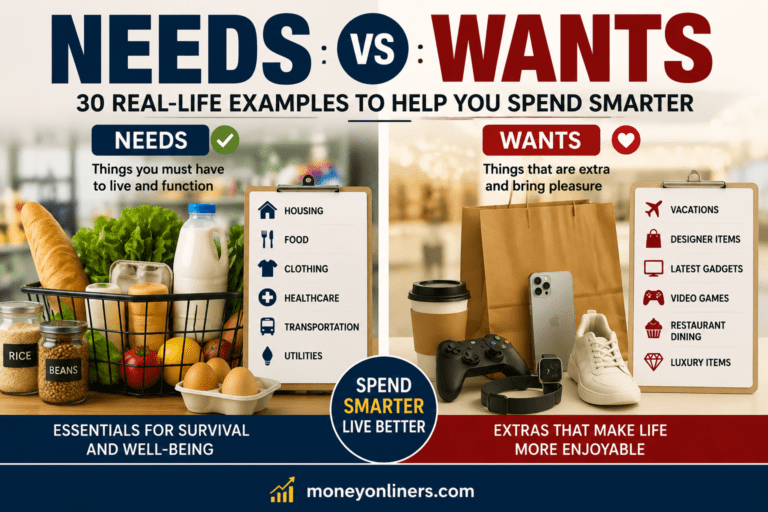
Separate Needs From Wants
Needs and wants are not always perfectly clear.
For example, food is necessary, while frequent premium restaurant meals are usually discretionary.
Internet may be essential for work, but the most expensive entertainment bundle may not be.
Knowing the difference makes it easier to reduce spending during difficult months.
Plan Groceries Before Shopping
Check the refrigerator, pantry and freezer first.
Then plan several meals and create a shopping list.
This can reduce duplicate purchases, impulse spending and food waste.
In addition, compare unit prices when practical.
Review Your Debt Balances Regularly
Debt becomes easier to ignore when payments happen automatically.
Know the balance, interest rate and minimum payment on major debts.
Then decide whether extra repayment fits alongside emergency savings and other priorities.
Keeping the numbers visible can make progress easier to measure.
Do Not Let Minimum Payments Become the Entire Debt Strategy
Minimum payments keep an account current when paid properly, but they may also extend repayment for a long time.
Review how interest affects the balance.
Where your budget allows, consider whether additional payments fit your financial priorities.
Do not drain essential cash reserves simply to make aggressive extra debt payments. Debt repayment and financial resilience need to be considered together.
Protect Your Bank and Financial Accounts
Good money habits also include protecting the money you already have.
Use strong, unique passwords and enable multi-factor authentication where available.
Avoid sharing one-time codes, PINs and passwords.
Be cautious with unexpected messages claiming your account has an urgent problem.
Review Bank and Card Statements
Do not assume every transaction is correct.
Review statements for unfamiliar charges, duplicated payments and subscriptions you forgot about.
Regular monitoring can also help you understand normal spending patterns.
Save Part of Extra Income Before Spending the Rest
Bonuses, refunds, gifts, commissions and side-hustle income can disappear quickly.
Create a rule before the money arrives.
For example, part could go toward savings, part toward debt and part toward something enjoyable.
The percentages should reflect your real financial priorities.
Increase Savings When Your Income Increases
A raise creates an opportunity to improve financial progress.
However, spending can rise just as quickly.
Before committing the entire increase to a more expensive lifestyle, consider increasing automatic savings.
You can still enjoy part of the additional income.
The goal is to prevent every raise from disappearing into permanent new expenses.
Plan Major Purchases Before They Become Urgent
Large purchases are easier to compare when you have time.
An older vehicle, appliance or laptop may need replacement eventually.
Research expected costs early and begin saving where practical.
Planning gives you more choices than waiting until something fails completely.
Keep Your Financial Goals Visible
A vague goal is easy to forget.
Write down specific targets.
For example:
- Build a $2,000 starter emergency fund.
- Save $150 per month for school expenses.
- Reduce a credit-card balance by $3,000.
- Save $5,000 toward a future home deposit.
Review progress regularly so the goals remain part of everyday financial decisions.
Understand Financial Products Before Using Them
Do not choose a bank account, loan, credit card or investment simply because the advertisement sounds attractive.
Review fees, interest rates, repayment terms, risks and access rules.
For investments, understand that returns are not guaranteed and values can fall.
If you cannot explain how a financial product makes money, what it costs and what could go wrong, learn more before committing.
Review Your Finances Once a Month
A monthly financial review can be short.
Check income, major bills, savings, debt and upcoming irregular expenses.
Then choose one or two adjustments for the next month.
Regular reviews help prevent old budgets from becoming disconnected from current reality.
Improve One Financial Habit at a Time
Trying to change everything at once can become overwhelming.
Instead, choose one habit and repeat it until it becomes easier.
Then add another.
You might start by reviewing subscriptions.
Next, automate savings.
Afterward, create a sinking fund.
Which Financial Habits Should You Start With First?
If 25 habits feel overwhelming, begin with the habits that improve financial visibility and protection.
Start Here: Know Your Numbers
- Know take-home income.
- Track spending.
- List major bills.
- Review debt.
Next: Create Protection
- Build emergency savings.
- Use sinking funds.
- Pay bills on time.
- Protect accounts.
Then: Reduce Waste
- Review subscriptions.
- Check bank fees.
- Reduce impulse purchases.
- Plan groceries.
Finally: Build Forward
- Increase savings.
- Reduce expensive debt.
- Plan large purchases.
- Review long-term goals.
Real-Life Example: Improving Three Habits Instead of Twenty-Five
Marcus Starts Small
Marcus wants to improve his finances but feels overwhelmed by everything he thinks he should change.
Instead of creating a complicated plan, he chooses three habits.
First, he reviews every recurring subscription.
Second, he creates a $40 automatic savings transfer after each payday.
Third, he checks his bank and credit-card statements every Sunday evening.
After several months, the new routine feels normal.
He then adds a vehicle sinking fund.
Key lesson: Financial progress does not require changing every habit immediately.
Case Study: Why a Raise Did Not Improve Savings
A Higher Income Disappears Into Higher Spending
A fictional worker receives a $600 monthly increase in take-home income.
Within several months, the extra money is absorbed by restaurant spending, a new subscription, upgraded electronics and a more expensive vehicle payment.
Savings barely changes.
After reviewing the situation, the worker decides that future raises will be divided deliberately.
Part will increase long-term savings.
Part will improve current lifestyle spending.
Key lesson: Higher income creates opportunity, but it does not automatically create financial progress.
Small Financial Habits Can Add Up
| Habit | Illustrative Monthly Impact | Possible Annual Impact |
|---|---|---|
| Cancel unused subscriptions | $30 | $360 |
| Reduce avoidable fees | $15 | $180 |
| Automatic savings | $100 | $1,200 |
| Reduce impulse spending | $50 | $600 |
| Redirect part of a raise | $150 | $1,800 |
These numbers are simple examples rather than guaranteed savings. Your results depend on income, spending habits and the changes you actually make.

10 Bad Money Habits Worth Replacing
1. Spending Without Checking the Budget
Replace it with a quick balance and category check before larger purchases.
2. Saving Only What's Left
Replace it with a planned savings contribution where possible.
3. Ignoring Statements
Replace it with regular account reviews.
4. Treating Every Unexpected Cost as a Credit-Card Expense
Replace it with emergency savings and sinking funds.
5. Keeping Unused Subscriptions
Replace it with recurring-charge audits.
6. Buying Immediately
Replace it with a waiting period for non-essential purchases.
7. Spending Every Raise
Replace it with deliberate allocation between saving and lifestyle improvements.
8. Avoiding Debt Balances
Replace it with regular debt reviews and a repayment strategy.
9. Ignoring Financial Security
Replace weak passwords and careless account access with stronger protection.
10. Waiting for Motivation
Replace occasional financial enthusiasm with small repeatable systems.
30-Day Financial Habit Reset
| Week | Main Focus | Actions |
|---|---|---|
| Week 1 | Know your numbers | Review income, spending and bills |
| Week 2 | Reduce leaks | Review subscriptions, fees and impulse purchases |
| Week 3 | Build protection | Start emergency savings and one sinking fund |
| Week 4 | Build the routine | Automate what works and schedule monthly reviews |
Good Financial Habits Checklist
- I know my real take-home income.
- I review where my money goes.
- I use a realistic budget.
- I give savings a planned place.
- I automate savings where practical.
- I am building emergency savings.
- I use sinking funds for predictable costs.
- I know when important bills are due.
- I review subscriptions and recurring charges.
- I understand the fees on my bank accounts.
- I use a waiting period before larger non-essential purchases.
- I distinguish needs from wants.
- I plan groceries before shopping.
- I review major debt balances.
- I protect my financial accounts.
- I check statements for unusual transactions.
- I give extra income a purpose.
- I increase savings when financially practical.
- I plan major purchases in advance.
- I keep my financial goals visible.
- I research financial products before using them.
- I review my finances regularly.
Continue Learning on MoneyOnliners
Recommended External Resources
Consumer Financial Protection Bureau — Your Money, Your Goals
Your Money, Your Goals Toolkit — CFPB
Consumer Financial Protection Bureau — Financial Well-Being
Financial Well-Being Resources — CFPB
Federal Deposit Insurance Corporation — Money Smart
Federal Trade Commission — Consumer Advice
Consumer Advice and Scam Protection — FTC
Banking products, deposit protection, taxes, credit systems and consumer protections vary by country. Adapt these financial habits to local rules, financial institutions and your own circumstances.
Frequently Asked Questions
What are good financial habits?
Good financial habits are repeatable behaviors that help you manage money more effectively.
Examples include budgeting, saving regularly, paying bills on time, reviewing spending and protecting financial accounts.
What financial habit should I start with first?
Start with financial awareness.
Know your take-home income and review where your money goes.
Once you understand the numbers, it becomes easier to choose the next habit.
How long does it take to build a good money habit?
There is no universal timeline.
Some habits become easier quickly, while others require repeated practice over a longer period.
Focus on consistency rather than reaching an arbitrary number of days.
Is budgeting the most important financial habit?
Budgeting is useful because it gives income a plan.
However, strong finances also require saving, account protection, debt management and regular financial review.
Should I automate my savings?
Automation can improve consistency.
Choose an amount your cash flow can support and schedule it when sufficient income is available.
How much should I save every month?
There is no universal amount.
The right savings level depends on income, essential expenses, debt and financial priorities.
Start with a sustainable amount and increase it when practical.
Should I save or pay off debt first?
The answer depends on debt interest rates, available savings and financial risk.
A starter emergency cushion can help reduce the need for new borrowing when unexpected expenses occur.
Afterward, you can balance additional savings with debt repayment.
What is the difference between an emergency fund and a sinking fund?
An emergency fund is for unexpected financial shocks.
A sinking fund is for expenses you know are likely to happen in the future.
How do I stop impulse spending?
Use a waiting period before non-essential purchases.
In addition, remove saved payment details from shopping sites and keep financial goals visible.
How often should I review subscriptions?
Every few months works well for many people.
Also review them whenever your budget becomes tighter or your usage changes.
Why should I review bank statements?
Statements can help identify spending patterns, unusual charges, forgotten subscriptions and potential fraud.
How do I avoid lifestyle inflation?
Decide what will happen to higher income before all of it becomes new spending.
For example, automatically increase savings after a raise while still allowing some lifestyle improvement.
Are small financial habits really important?
Yes.
A small recurring action can become significant because it repeats.
For example, saving $25 every week results in $1,300 of contributions over 52 weeks.
What is the worst financial habit?
There is no single worst habit for everyone.
However, consistently spending without understanding income, debt and obligations can make many other problems harder to identify.
Can better financial habits make me wealthy?
Good habits can improve financial stability and decision-making, but they do not guarantee wealth.
Income, expenses, opportunities, investment outcomes and life circumstances also matter.
The goal is to improve the decisions and systems you can control.
Research Methodology
This MoneyOnliners guide was developed around practical personal-finance principles involving budgeting, saving, debt management, financial security and long-term planning.
The article focuses on repeatable behaviors rather than one-time financial actions.
Specific dollar amounts, savings illustrations and examples are educational rather than guaranteed financial outcomes.
The guide also separates emergency savings from planned future expenses and emphasizes account security alongside spending and saving habits.
Because incomes, financial systems, debt levels and household responsibilities vary, readers should adapt these good financial habits to their own circumstances.
Final Thoughts: Build Better Money Systems One Habit at a Time
Improving your finances does not require changing every part of your life in one month.
Instead, choose a few actions that make your money easier to manage.
Start With Awareness
Know your income.
Understand your spending.
Review your bills and debt.
These numbers show you where improvement matters most.
Then Build Protection
Create emergency savings.
Use sinking funds for future expenses.
Protect your banking accounts and review transactions regularly.
Finally, Build for the Future
Automate savings where practical.
Use raises and extra income deliberately.
Plan large purchases before they become urgent.
Most importantly, review the system regularly and adjust it as your life changes.
Ultimately, good financial habits are powerful because they reduce the number of important money decisions you have to make from scratch.
The goal is not perfection.
The goal is to build repeatable financial behaviors that help you manage money with more clarity, resilience and long-term confidence.


One Comment