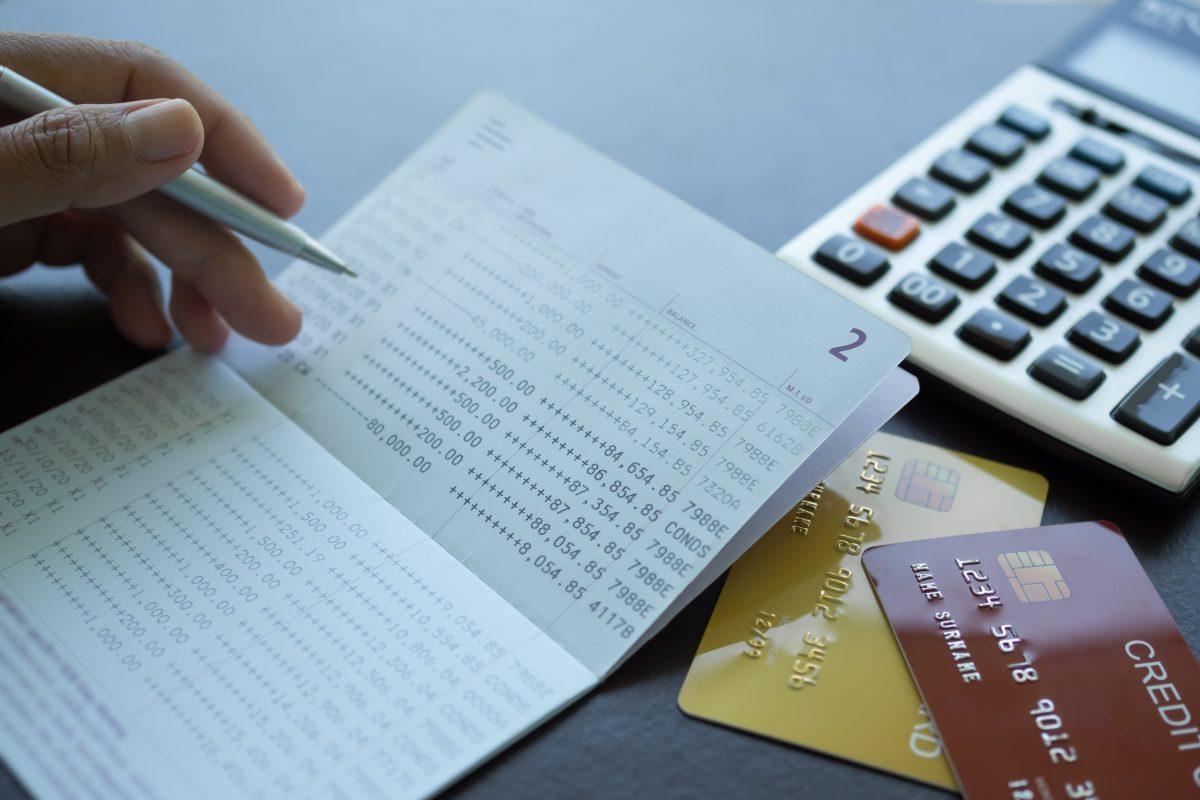
12 Banking Mistakes That Could Be Costing You Money Every Month
12 Banking Mistakes That Could Be Costing You Money Every Month
Banking should make managing money easier, yet small account mistakes can quietly create recurring costs. From monthly maintenance fees and overdrafts to poor savings choices and unnecessary ATM charges, these 12 common banking mistakes could be reducing your balance without adding much value.
Common banking mistakes costing you money include keeping the wrong account, paying avoidable monthly maintenance fees, using out-of-network ATMs, overdrawing checking, ignoring account alerts, leaving too much cash in a low-interest account, paying unnecessary transfer fees and failing to review recurring payments. In many cases, a short monthly banking review can identify costs that are relatively easy to reduce.
Why Small Banking Mistakes Can Become Expensive
A banking mistake does not have to involve losing thousands of dollars.
In fact, some of the most expensive habits are surprisingly ordinary. A $10 monthly fee, several ATM charges and a couple of overdrafts may not seem serious individually.
However, those costs repeat.
For example, a $12 monthly maintenance fee equals $144 over one year. Meanwhile, regularly using out-of-network ATMs can add still more.
The bigger issue is opportunity cost. Money spent unnecessarily on banking fees cannot be used for emergency savings, debt repayment, investing or other financial goals.
12 Banking Mistakes at a Glance
| # | Banking Mistake | Potential Cost |
|---|---|---|
| 1 | Keeping the wrong bank account | Recurring fees and inconvenience |
| 2 | Paying avoidable monthly maintenance fees | Monthly service charges |
| 3 | Ignoring minimum-balance requirements | Maintenance or account fees |
| 4 | Using out-of-network ATMs | Bank fee plus ATM-owner surcharge |
| 5 | Frequently overdrawing checking | Overdraft or related charges |
| 6 | Not using account alerts | Missed low balances and fraud |
| 7 | Leaving savings in a very low-paying account | Lost interest opportunity |
| 8 | Paying for unnecessary bank transfers | Wire or expedited-transfer fees |
| 9 | Forgetting subscriptions and recurring payments | Repeated unwanted charges |
| 10 | Ignoring your bank statements | Fees and errors remain unnoticed |
| 11 | Keeping too much money in checking | Lower potential interest |
| 12 | Staying with an expensive account out of habit | Years of unnecessary costs |
The 12 Banking Mistakes That Could Be Costing You Money
Keeping a Bank Account That Does Not Fit Your Habits
An account can be perfectly good for one customer and expensive for another.
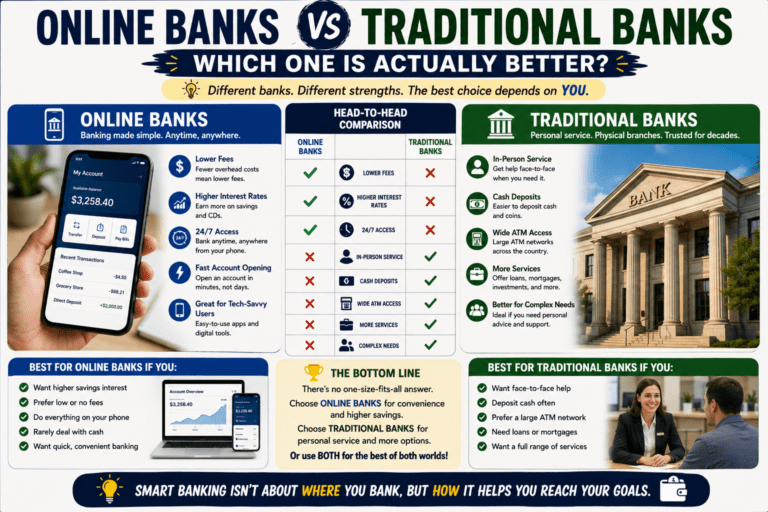
For example, someone who frequently deposits cash may struggle with an online-only bank that has inconvenient deposit options.
Likewise, a customer who rarely visits branches may be paying for an account whose main advantage is extensive in-person service.
Therefore, compare your banking habits with what the account actually provides.
Ask yourself which features you used during the last six months. If you are paying for benefits you rarely use, compare lower-cost alternatives.
Paying a Monthly Maintenance Fee You Could Avoid
Many checking and savings accounts charge recurring monthly service fees.
However, some institutions waive the charge when customers satisfy certain conditions.
Those requirements may include maintaining a specified balance or receiving qualifying direct deposits.
If you consistently miss the waiver requirement, treat the monthly charge as the real cost of the account.
A $10 monthly fee equals $120 per year. Therefore, even a modest service charge deserves attention.
Ask whether your bank offers another account that fits your normal balance and transaction habits without the recurring fee.
Ignoring Minimum-Balance Requirements
Some accounts waive fees only when your balance stays above a certain threshold.
Unfortunately, the calculation may be more complicated than it first appears.
One institution may use the daily balance. Another may use an average monthly balance.
Consequently, briefly depositing money before the end of the month may not necessarily satisfy the requirement.
Read how the minimum balance is actually calculated. If the requirement is unrealistic for you, switching accounts may be easier than constantly managing around it.

Using Out-of-Network ATMs Too Often
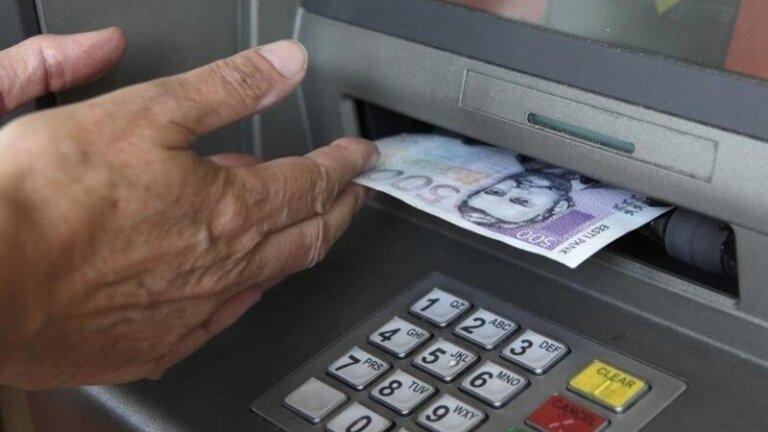
ATM fees can become surprisingly expensive because one withdrawal may involve more than one charge.
Your own bank may charge for using another institution's ATM. In addition, the ATM operator can impose a separate surcharge.
As a result, repeatedly withdrawing small amounts from convenient but out-of-network ATMs can become an expensive habit.
Use your bank's ATM locator before withdrawing cash. Alternatively, consider an account with a larger ATM network or qualifying fee reimbursements if you use cash frequently.
Frequently Overdrawing Your Checking Account
An overdraft occurs when you do not have enough money available for a transaction but the bank pays it anyway.
Depending on the institution and transaction, this can lead to additional charges.
For U.S. ATM withdrawals and one-time debit-card transactions, financial institutions generally cannot impose overdraft fees unless the customer affirmatively opted into overdraft service for those transactions.
However, different rules can apply to checks, ACH transactions and recurring electronic payments.
Therefore, understanding your bank's exact overdraft policy matters.
Track your available balance, monitor scheduled bills and use low-balance alerts. In addition, review whether your current overdraft settings still make sense.
Not Turning On Useful Account Alerts
Banking alerts are one of the simplest financial tools available.
They can notify you when your balance becomes low, a large transaction occurs or money leaves the account unexpectedly.
Without alerts, you may not notice a problem until you manually check your account or receive the monthly statement.
Therefore, choose notifications that match the way you use your money.
Consider alerts for low balances, large withdrawals, transfers and unusual purchases.
Leaving Savings in an Account Paying Very Little Interest
Safety and accessibility matter for savings. Nevertheless, the interest rate also deserves attention.
If a substantial emergency fund remains in an account paying very little while comparable insured accounts offer more competitive yields, you may be giving up interest unnecessarily.
That does not mean chasing every temporary rate increase.
Instead, periodically compare your savings account with suitable alternatives.
Compare APY together with fees, transfer access, minimum balances and applicable deposit insurance.

Paying for Expensive Transfers When a Cheaper Option Would Work
Wire transfers can be useful when speed or transaction requirements make them necessary.
However, they can also cost more than ordinary electronic transfers.
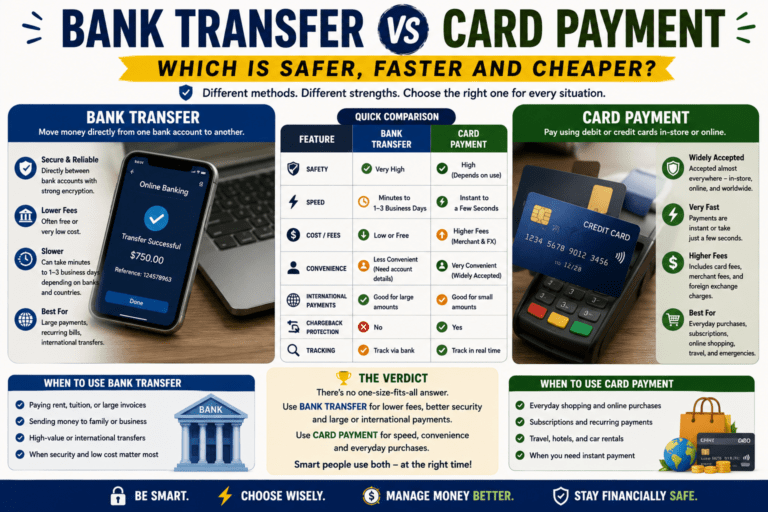
For a non-urgent payment, an ACH transfer or another bank-to-bank option may be less expensive.
International transfers require even more comparison because exchange-rate markups and intermediary fees can affect the final cost.
Compare the total amount charged and the amount the recipient actually receives, especially for international payments.
Forgetting Subscriptions and Automatic Payments
Automatic payments are convenient until they become invisible.
You may continue paying for streaming services, apps, memberships, software or subscriptions you rarely use.
Furthermore, forgotten automatic charges can reduce your balance immediately before more important payments arrive.
As a result, subscriptions can indirectly contribute to overdrafts or low-balance problems.
Review recurring transactions at least every few months. Cancel services that no longer provide enough value.
Ignoring Your Bank Statements
Statements are more than financial records.
They can reveal recurring fees, duplicate transactions, unwanted subscriptions and other costs you may not notice during everyday banking.
Moreover, reviewing statements can help identify transactions you do not recognize.
Therefore, do not assume everything is correct simply because your account still has money in it.
Keeping More Cash in Checking Than You Need
Checking accounts are designed primarily for transactions.
Although some checking accounts pay interest, many do not offer yields as competitive as suitable savings products.
Consequently, leaving a large amount of long-term savings in checking can create an opportunity cost.
A practical approach is to keep enough in checking for bills, spending and a reasonable buffer while moving appropriate savings into a separate account.
Do not move so much that you create overdraft risk. The goal is organization, not maximizing every last dollar of interest.
Staying With an Expensive Bank Account Out of Habit
Changing banks can feel inconvenient.
You may need to update direct deposits, automatic bills and saved payment information.
However, inconvenience alone is not a good reason to continue paying unnecessary fees for years.
If your banking habits have changed, compare your account with realistic alternatives.
Real-Life Example: The $15 Monthly Fee That Went Unnoticed
Michael Reviews His Checking Account
Michael opened his checking account several years ago.
At the time, the monthly fee was waived because his employer deposited his paycheck directly into the account.
Later, Michael changed jobs and moved his payroll to a different bank.
However, he kept the old account open.
The $15 monthly fee returned, but Michael rarely looked at the statement.
After nine months, he finally notices the recurring charge.
At $15 per month, the account has already cost him $135.
Michael moves the remaining automatic payment, closes the unnecessary account and eliminates the recurring cost.
Key lesson: Banking arrangements should be reviewed whenever your income or financial habits change.
Case Study: Convenience Was Costing More Than Expected
Emma Uses the ATM Near Work
Emma's bank has a fee-free ATM several blocks from her office.
Nevertheless, she usually uses another ATM inside a nearby convenience store because it is faster.
Each withdrawal creates fees from both her bank and the ATM operator.
Emma does this several times each month.
When she reviews three months of transactions, she realizes that the convenience has created a recurring expense.
She changes her routine and begins withdrawing cash less frequently from an in-network machine.
Key lesson: Convenience has a price. Calculate that price before deciding whether it is worth paying repeatedly.
How Much Can Small Banking Mistakes Cost?
| Illustrative Mistake | Example Monthly Cost | Example Annual Cost |
|---|---|---|
| Monthly maintenance fee | $12 | $144 |
| Two $4 ATM costs | $8 | $96 |
| Unused subscription | $15 | $180 |
| One occasional $10 service charge | $10 | $120 if repeated monthly |
| Illustrative total | $45 | $540 |
These numbers are simple educational examples and do not represent universal bank fees. Actual charges depend on your account, institution and banking behavior.
How to Audit Your Banking Costs in 15 Minutes
Minutes 1–7
- Open the last three bank statements.
- Look for maintenance fees.
- Identify ATM charges.
- Search for overdraft or NSF costs.
- Review recurring subscriptions.
Minutes 8–15
- Add all avoidable costs.
- Calculate the annual amount.
- Review fee-waiver conditions.
- Compare your savings APY.
- Check one alternative bank account.
Banking Cost Audit Worksheet
| Cost | Monthly Amount | Annual Amount | Action |
|---|---|---|---|
| Maintenance fees | _____ | _____ | _____ |
| ATM fees | _____ | _____ | _____ |
| Overdraft / NSF | _____ | _____ | _____ |
| Transfers | _____ | _____ | _____ |
| Subscriptions | _____ | _____ | _____ |
| Other account charges | _____ | _____ | _____ |
| Total | _____ | _____ | _____ |

Which Banking Mistakes Matter Most for Different People?
| Person | Most Important Mistakes to Watch |
|---|---|
| First-time bank customer | Monthly fees, minimum balances and ATM charges |
| Person living paycheck to paycheck | Overdrafts, automatic payments and low-balance alerts |
| Frequent cash user | ATM network and cash-deposit fees |
| Emergency-fund saver | Low savings APY and unnecessary monthly fees |
| Freelancer | Irregular cash flow, transfer fees and bill timing |
| Frequent traveler | ATM fees, foreign transaction costs and currency conversion |
| Online-only banking customer | Transfer access, cash deposits and digital account monitoring |
7 Signs Your Bank Account May No Longer Be a Good Fit
1. You Pay a Monthly Maintenance Fee Almost Every Month
If you rarely meet the waiver requirement, the fee is effectively part of the account's normal price.
2. You Regularly Use Out-of-Network ATMs
Your bank's ATM network may not fit where you live or work.
3. The Minimum Balance Is Difficult to Maintain
A lower-requirement account may better match your cash flow.
4. Your Savings Earn Very Little
Compare your current rate with other suitable insured savings options.
5. Transfers Are Expensive or Slow
This matters particularly if you frequently move money between institutions.
6. You Rarely Use the Features You Are Paying For
Branch benefits and premium services have little value if you never use them.
7. You Have Not Compared Accounts for Years
Bank products change. Therefore, occasionally review whether your current account remains competitive.
12-Step Banking Mistake Prevention Checklist
- I know my monthly maintenance fee.
- I know how to qualify for any fee waiver.
- I understand the minimum-balance requirement.
- I know where my in-network ATMs are.
- I understand my overdraft settings.
- I use low-balance and transaction alerts.
- I review my savings APY periodically.
- I compare transfer costs before paying for a wire.
- I review subscriptions and recurring payments.
- I read my statements regularly.
- I keep checking and savings organized by purpose.
- I compare my account with alternatives periodically.

Continue Learning on MoneyOnliners
Recommended External Resources
Consumer Financial Protection Bureau — Bank Accounts
Bank Accounts and Services — CFPB
Consumer Financial Protection Bureau — Monthly Maintenance Fees
Monthly Maintenance Fees — CFPB
Consumer Financial Protection Bureau — Overdraft Options
Know Your Overdraft Options — CFPB
Consumer Financial Protection Bureau — ATM Fees
Out-of-Network ATM Fees — CFPB
FDIC — Overdraft and Account Fees
Overdraft and Account Fees — FDIC
Banking fees, overdraft rules and consumer protections vary by country and financial institution. U.S. CFPB and FDIC guidance in this article applies primarily to U.S. consumers. Readers elsewhere should verify current account terms and local rules with their financial institution and national regulator.
Frequently Asked Questions
What are the most common banking mistakes costing people money?
Common mistakes include paying unnecessary monthly fees, using out-of-network ATMs, overdrawing checking and ignoring savings interest rates.
In addition, forgotten subscriptions and expensive transfer methods can create recurring costs.
Therefore, periodically reviewing your banking activity can help identify which mistakes actually affect you.
How can I stop paying monthly bank fees?
First, check your account's waiver requirements.
For example, qualifying direct deposits or maintaining a particular balance may remove the monthly fee.
However, if the requirements do not fit your finances, compare accounts with lower or no monthly maintenance charges.
Why do ATM fees cost so much?
One withdrawal can potentially trigger two charges.
Your bank may charge for using another institution's ATM, while the ATM owner may also impose a surcharge.
Consequently, repeated out-of-network withdrawals can become expensive over time.
How can I avoid overdraft fees?
Track your available balance, turn on low-balance alerts and know when recurring payments are scheduled.
In addition, review your institution's overdraft options and whether linked-account transfers are available.
For U.S. ATM and one-time debit-card transactions, banks generally cannot impose overdraft fees unless you have affirmatively opted into the covered overdraft service.
Should I keep all my money in checking?
Usually, checking is best suited to everyday spending, bills and a practical cash buffer.
Money intended for emergencies or short-term savings may be better organized separately in an appropriate savings account.
However, keep enough in checking to avoid creating unnecessary overdraft risk.
Does savings APY really make a difference?
It can, especially as your balance grows.
A small rate difference may have little impact on a small balance. However, the difference can become more meaningful when you maintain larger savings over time.
Therefore, compare the actual dollar difference rather than focusing only on the percentage.
Is a no-fee bank account always better?
No. Fees are only one part of the account.
A no-fee account can still have poor ATM access, inconvenient deposits or limited customer service.
Instead, compare the complete account based on how you actually bank.
How often should I compare bank accounts?
There is no fixed schedule.
However, reviewing your account after major financial changes is useful. Examples include changing jobs, moving, building a larger savings balance or changing how frequently you use cash.
An annual comparison can also help you see whether your account remains competitive.
Can my bank change its fees?
Yes, account terms and fees can change subject to applicable rules and notice requirements.
Therefore, read important notices sent by your financial institution rather than assuming the account will always work exactly as it did when you opened it.
Should I close old bank accounts?
An unused account may still have fees or automatic transactions attached to it.
If an account no longer serves a purpose, consider closing it properly after moving deposits, bills and remaining funds.
However, confirm that all outstanding transactions have cleared first.
Are bank alerts really useful?
Yes. Alerts can help you notice low balances, large purchases and other account activity sooner.
As a result, they can support both fee prevention and fraud monitoring.
Nevertheless, alerts should complement rather than replace regular statement reviews.
What is the easiest banking mistake to fix?
That depends on your account.
For some people, switching to in-network ATMs can eliminate recurring fees immediately.
For others, changing to electronic statements, activating fee waivers or cancelling an unused subscription may produce quick savings.
Research Methodology
This MoneyOnliners guide was developed using authoritative consumer-banking resources from the Consumer Financial Protection Bureau and Federal Deposit Insurance Corporation.
The article focuses on everyday banking behaviors that can create recurring costs, including maintenance fees, ATM usage, overdrafts, transfer choices and account-selection mistakes.
Importantly, the guide does not assume that every financial institution charges the same fees or follows identical account policies.
Examples and annual cost calculations are editorial illustrations rather than universal banking prices.
Therefore, readers should verify current fees, waiver requirements, overdraft options, APYs and account terms directly with their financial institution.
Final Thoughts: Stop Letting Small Banking Mistakes Drain Your Money
Most costly banking mistakes are not complicated.
They often begin with a fee you stopped noticing, an ATM you use out of convenience or an old account you never reconsidered.
Fortunately, many of these costs can be reduced without completely changing the way you manage money.
Start With the Costs That Repeat
First, identify recurring monthly fees.
Next, review ATM charges, overdrafts, subscription payments and transfer costs.
Because these expenses repeat, fixing even one can improve your finances month after month.
Make Your Bank Account Fit Your Real Life
Your account should match the way you receive income, pay bills, withdraw cash and save money.
If the minimum balance is unrealistic or the ATM network is inconvenient, the account may simply be a poor fit.
Therefore, compare alternatives based on your actual habits rather than loyalty or advertising.
Review Your Banking System Regularly
Financial habits change over time.
A checking account that worked well when you opened it may become unnecessarily expensive after a job change, move or increase in savings.
Ultimately, avoiding banking mistakes costing you money is not about obsessing over every dollar.
Instead, remove recurring costs that provide little value and build a banking system that makes managing, saving and protecting your money easier.

5 Comments