15 Banking Basics Everyone Should Know Before Opening an Account
15 Banking Basics Everyone Should Know Before Opening an Account
Checking, savings, fees, overdrafts, interest, deposit insurance and mobile banking can sound complicated. These 15 essentials can help you compare accounts with more confidence.
Before opening a bank account, compare the account type, monthly fee, minimum-balance rules, ATM costs, overdraft policy, interest or APY, opening-deposit requirements, digital features and deposit-insurance status. Most importantly, choose an account that matches how you actually receive, spend and save money—not simply the account with the strongest advertisement.
Why Banking Basics Matter
A bank account can make everyday money management easier. It can provide a place to receive income, pay bills, make purchases, withdraw cash and build savings. However, two accounts that look similar can have very different fees, requirements and features.
For example, an account advertised without a monthly maintenance fee may still have charges for particular services. Meanwhile, another account may waive a recurring fee when you meet certain requirements.
Therefore, the goal is not simply to get a bank account. Instead, understand what you are opening, what it costs and how your money will move through it.
15 Banking Basics at a Glance
| # | Banking Basic | Why It Matters |
|---|---|---|
| 1 | Checking vs savings | Different accounts serve different jobs |
| 2 | Deposit insurance | Know whether eligible deposits are protected |
| 3 | Monthly fees | Small recurring costs can add up |
| 4 | Minimum balances | Some accounts tie fees or benefits to balances |
| 5 | Opening deposits | Some accounts require initial funding |
| 6 | APY and interest | Important when comparing interest-bearing accounts |
| 7 | Overdrafts | Transactions beyond available funds can create problems |
| 8 | ATM network | Out-of-network access may cost more |
| 9 | Debit cards | Purchases generally draw from your deposit account |
| 10 | Available vs current balance | Not every deposited dollar is necessarily ready to spend |
| 11 | Direct deposit | Can simplify receiving income |
| 12 | Automatic payments | Convenient but require balance management |
| 13 | Online/mobile banking | Features and security options differ |
| 14 | Joint accounts | Shared ownership deserves careful consideration |
| 15 | Terms and security | Disclosures explain important account rules |
The 15 Banking Basics You Should Understand
Know the Difference Between Checking and Savings
Checking accounts are generally designed for everyday transactions such as debit-card purchases, bill payments, transfers and withdrawals. Savings accounts are generally intended to hold money for future needs.
Separating the two jobs can make budgeting easier. For instance, checking can handle monthly cash flow while savings holds your emergency fund or other goals.
Do not assume one account needs to do everything. Give everyday spending and savings separate purposes when that structure helps you manage money.
Understand Deposit Insurance
For U.S. readers, eligible deposits at an FDIC-insured bank receive automatic FDIC insurance. The standard amount is $250,000 per depositor, per insured bank, for each ownership category.
Checking accounts and savings accounts are among the deposit products the FDIC insures. However, investments such as stocks, bonds and mutual funds are not FDIC-insured simply because they may be offered through a banking relationship.
Verify the institution and the product rather than assuming every financial service that looks like banking carries the same protection.
Check the Monthly Maintenance Fee
Some accounts charge a recurring maintenance or service fee. Others may waive a fee when you satisfy stated conditions.
Even a small recurring charge matters. A $10 monthly fee, for example, equals $120 over one year.
Consequently, compare the likely annual cost of the account—not just the headline offer.
Know the Minimum-Balance Rules
A minimum balance can affect fees, interest or other account benefits. Moreover, institutions can calculate balance requirements in different ways.
If maintaining the required amount would regularly strain your budget, a lower-requirement account may be more practical.

Ask About the Minimum Opening Deposit
An opening deposit is the money used to fund a new account. Some products require a particular amount, while others have little or no opening requirement.
Importantly, an opening deposit is not necessarily the same as a balance you must maintain after opening the account.
Understand Interest Rates and APY
Some checking and savings accounts pay interest. APY, or annual percentage yield, is designed to help consumers compare the annual return on deposit accounts while accounting for compounding under stated assumptions.
A higher APY can be attractive. Nevertheless, rate alone should not determine your choice. Fees, access and qualification requirements can change the overall value.
Learn How Overdrafts Work
An overdraft can occur when you do not have enough available money for a transaction but the financial institution pays the transaction anyway. Depending on the account and circumstances, costs can apply.
Before opening an account, ask what happens when funds are insufficient. Also compare available alerts, linked-account options and other tools that may help you avoid spending beyond your balance.
Check the ATM Network and Fees
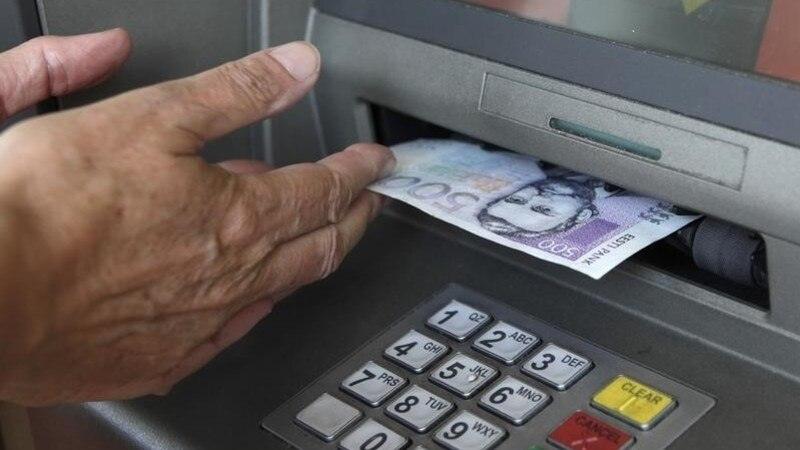
A financial institution may provide fee-free withdrawals through its own ATM network while charging for certain out-of-network transactions. In addition, an ATM operator may impose its own charge.
If you use cash regularly, ATM convenience deserves a prominent place in your comparison.
A Debit Card Is Not the Same as a Credit Card
A debit-card purchase generally draws money from your bank account. A credit card, by contrast, generally involves borrowing against a credit line that must later be repaid.
Therefore, frequent debit-card spending can quickly reduce money needed for bills and scheduled payments.
Your Current Balance and Available Balance May Differ
A recent deposit may appear in your account before all funds are available to use. Likewise, pending transactions can affect how much money is genuinely safe to spend.
For that reason, monitor pending purchases and upcoming automatic payments instead of relying on a single balance figure.
Direct Deposit Can Simplify Receiving Income
Direct deposit allows an employer or another payer to send funds electronically to your account. As a result, you may not need to deposit a paper check.
Some institutions also connect particular account benefits or fee waivers to qualifying deposits. Therefore, confirm the exact requirements before relying on that feature.
Automatic Payments Are Convenient—but Need Monitoring
Automatic bill payments can reduce missed due dates. However, they can create problems when a withdrawal reaches an account with insufficient available funds.
Keep a list of recurring payments and expected dates. Furthermore, review subscriptions periodically so forgotten services do not continue reducing your balance.
Compare Online and Mobile Banking Features
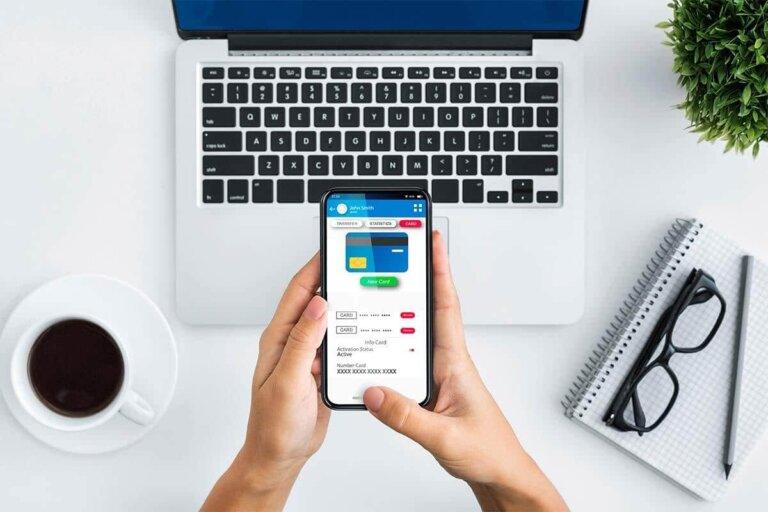
Mobile deposits, transaction alerts, transfers, card controls and bill-pay tools can make banking easier. Nevertheless, features differ between institutions.
Security matters as well. Use a strong unique password and enable stronger authentication options when offered.
Understand What a Joint Account Means
A joint account has multiple owners under the institution's agreement. That structure can simplify shared expenses, but ownership and access deserve careful consideration.
Before adding another person, ask the institution to explain what each owner can do. In addition, understand how applicable local rules may affect the account.
Read the Account Agreement and Protect Your Account
The account agreement and fee schedule contain details that advertising may not emphasize. Review service fees, ATM costs, overdraft terms, deposit availability and other important conditions.
After opening the account, monitor transactions regularly. If you notice unfamiliar activity, contact the institution promptly and follow its dispute procedures.
What Actually Happens When You Open a Bank Account?
Opening an account is more than receiving a debit card. The financial institution generally collects information needed to identify you, creates the account under a particular ownership structure and provides disclosures explaining fees, access and other terms.
Next, you fund the account if an opening deposit is required. Depending on the account, you may also set up online access, a debit card, direct deposit, account alerts or automatic payments.
However, opening the account is only the beginning. Good banking habits include reviewing transactions, keeping contact information current, understanding how deposits become available and knowing how to reach the institution when something goes wrong.

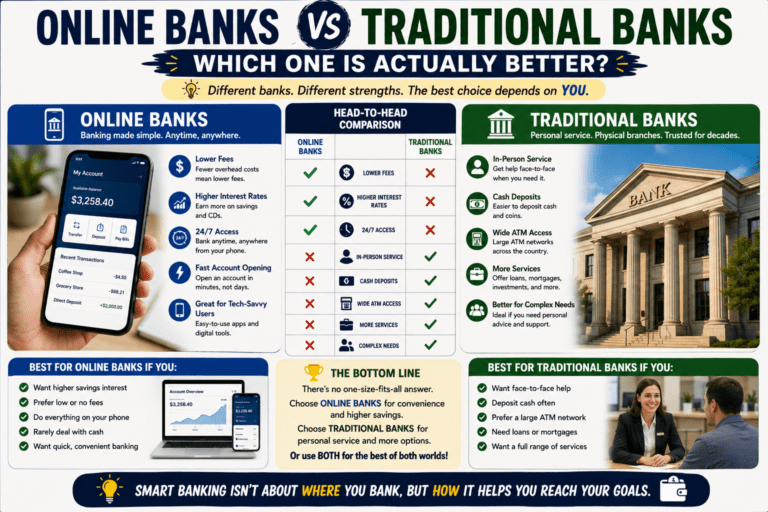
Traditional Bank, Credit Union or Online Bank?
Different institutions can provide similar basic services, but the experience may differ. A traditional bank may appeal to someone who values branches and face-to-face service. An online bank may emphasize digital access and lower operating costs. Meanwhile, a credit union is a member-owned cooperative and may have membership eligibility requirements.
No model is automatically best. Instead, compare the specific institution, account terms, insurance status, support options and features that matter to you.
| Option | Potential Strength | What to Check |
|---|---|---|
| Traditional bank | Branches, ATMs and broad service availability | Monthly fees, minimums and local convenience |
| Online bank | Digital-first access and potentially competitive deposit products | Cash deposits, customer support and ATM arrangements |
| Credit union | Member-focused structure and potentially competitive services | Eligibility, branch network and applicable share insurance |
Bank Branches Still Matter for Some Customers
Mobile banking has reduced the need to visit a branch for routine transactions. Nevertheless, physical locations can still matter if you regularly deposit cash, need cashier's checks, prefer in-person help or want access to other branch services.
Before choosing an account, think about your normal month. Someone who rarely handles cash may be comfortable with a digital-first institution. Conversely, a cash-heavy household or small business may place much more value on convenient branches and deposit options.
A bank with an excellent app may still be inconvenient if depositing cash requires a long trip. Similarly, a nearby branch may not justify higher recurring costs if you never visit it. Match the banking channel to your actual behavior.
How to Read a Bank Fee Schedule Without Getting Overwhelmed
A fee schedule can look technical, but you do not need to memorize every line. Start with the charges most likely to affect your normal behavior.
Fees to Check First
- Monthly maintenance or service fee
- Out-of-network ATM charges
- Overdraft-related charges
- Returned-item or insufficient-funds policies
- Wire-transfer charges
- Paper statement or special-service fees
Requirements to Check
- Minimum opening deposit
- Minimum or average balance
- Qualifying direct deposit
- Transaction requirements
- Interest qualification rules
- Conditions for promotional bonuses
After identifying the relevant charges, estimate what the account could cost you over a normal year. This approach turns a long disclosure into a practical comparison.
Real-Life Example: A $12 Monthly Fee vs a No-Fee Account
Elena Calculates the Annual Difference
Elena is comparing two accounts. The first costs $12 per month unless she maintains a balance she cannot reliably keep. The second has no monthly maintenance fee but has fewer nearby branches.
Because Elena rarely visits a branch, she calculates that the first account could cost her $144 per year if she repeatedly misses the waiver requirement.
She then compares ATM access, deposit options and customer support before deciding. The calculation does not automatically make the second account better, but it exposes the real cost of the first.
Key lesson: Convert recurring bank fees into annual dollars before deciding whether the account's benefits justify them.
APY Example: Why Rate and Balance Both Matter
Suppose one savings account offers a higher APY than another. The higher rate sounds attractive, but the dollar difference depends on how much money you keep in the account and how long it stays there.
For a modest balance, a small rate difference may produce only a limited difference in annual interest. Therefore, sacrificing convenient access or paying a recurring fee simply to chase a slightly higher APY may not improve your overall position.
On the other hand, rate differences can become more meaningful as balances grow. That is why APY belongs in the comparison—but should not be the only factor.
Banking Basics for Your First Paycheck
Your first regular paycheck is a useful time to build a simple banking system. Rather than allowing every dollar to mix together, decide how income will move before it arrives.
For example, income can enter checking through direct deposit. Then an automatic transfer can move a planned amount to savings shortly after payday. Bills remain in checking, while the savings transfer creates separation before discretionary spending begins.
This system does not require a complicated collection of accounts. In fact, a simple checking-and-savings setup can be enough for many beginners.
Banking Basics for an Emergency Fund
An emergency fund needs safety and accessibility more than excitement. Therefore, many people use an insured savings deposit account for emergency cash rather than exposing essential reserves to unnecessary market risk.
At the same time, accessibility should not mean the money is so easy to spend that every non-emergency purchase drains it. Separating emergency savings from everyday checking can create useful friction.
Before choosing where to keep emergency savings, compare insurance, withdrawal access, fees, transfer timing and any conditions attached to the account.

Banking Basics for Couples and Families
Couples do not have to manage money in exactly the same way. Some use joint accounts for most household spending. Others keep individual accounts and use one joint account for shared expenses.
The important issue is clarity. Both people should understand which bills come from which account, how much each person contributes and what access each owner has.
Moreover, joint ownership can affect deposit-insurance calculations and legal access. Therefore, understand the ownership structure rather than treating “joint” as merely a budgeting label.
Banking Basics for Freelancers and Side Hustlers
Irregular income creates a different banking challenge. A freelancer may receive several smaller payments rather than one predictable paycheck. Consequently, cash-flow tracking becomes especially important.
Keeping business-related income and expenses organized can make recordkeeping easier. Depending on the business structure and local requirements, a separate business account may also be appropriate.
At minimum, avoid assuming that every incoming payment is immediately available for personal spending. Taxes, business expenses, refunds and irregular future income can all affect how much is genuinely available.
Online Banking Security: 8 Habits Worth Building
Protect Access
- Use a unique password for banking
- Enable multi-factor authentication when available
- Keep your phone and computer updated
- Avoid sharing verification codes
Monitor Activity
- Turn on useful transaction alerts
- Review statements and recent activity
- Be cautious with links in unexpected messages
- Contact the institution through trusted channels when unsure
Scammers can imitate bank messages and create urgency. Therefore, an unexpected text telling you to “verify” your account deserves caution. Instead of following an unfamiliar link, open the official app or use contact information you already trust.
Case Study: The Bank Text Message That Wasn't From the Bank
Jordan Receives an Urgent Fraud Alert
Jordan receives a text claiming that a suspicious purchase has been detected. The message contains a link and warns that the account will be locked unless Jordan acts immediately.
Instead of tapping the link, Jordan opens the bank's official app independently and checks recent activity. Nothing unusual appears. Jordan then contacts the institution through its official support channel.
Key lesson: Urgency is not proof that a message is genuine. When in doubt, reach the institution through a channel you independently know is legitimate.
What Deposit Insurance Does—and Does Not—Mean
Deposit insurance is an important protection, but it is often misunderstood. In the United States, the FDIC insures eligible deposit products at FDIC-insured banks. Coverage is automatic when the requirements are met; depositors do not separately purchase it.
However, the $250,000 standard insurance amount is applied per depositor, per insured bank, for each ownership category. Simply opening both checking and savings accounts in the same ownership category at the same bank does not create two separate $250,000 limits.
In addition, stocks, bonds, mutual funds, annuities and crypto assets are not FDIC-insured deposit products. That distinction matters when a financial institution offers both banking and investment services.
Bank Account Red Flags to Notice Before Opening
- The fee waiver depends on a balance you are unlikely to maintain.
- The advertised APY applies only under narrow conditions you do not understand.
- ATM or cash-deposit access is inconvenient for your lifestyle.
- You cannot clearly identify the institution holding your deposits.
- Customer support is difficult to reach before you even become a customer.
- Promotional language is clear, but the long-term account terms are difficult to find.
- You feel pressured to open immediately without reading disclosures.
A 10-Minute Bank Account Comparison Routine
You do not need hours of research for every basic account. Instead, use a focused routine.
Minutes 1–2: Identify the account's purpose: daily spending, savings or both.
Minutes 3–4: Review monthly fees, waiver rules and minimum balances.
Minutes 5–6: Check ATM access, cash deposits, mobile features and customer support.
Minutes 7–8: Compare APY, overdraft rules and funds-availability information relevant to your use.
Minutes 9–10: Verify deposit insurance and scan the full fee schedule before applying.
Finally, compare at least two realistic alternatives. Even a quick side-by-side comparison can reveal an account that better matches your habits.
Checking vs Savings: Which Account Do You Need?
| Feature | Checking | Savings |
|---|---|---|
| Main purpose | Everyday transactions | Holding money for future needs |
| Debit-card access | Common | Depends on institution |
| Bill payments | Common | May be less suitable |
| Interest | Sometimes | Common on many products |
| Typical role | Income, bills and spending | Emergency funds and savings goals |
Many people benefit from having both. Checking handles money that needs to move, while savings creates separation for money intended for future needs.
Real-Life Example: The “Free” Account That Costs Money
Marcus Compares Two Checking Accounts
Account A advertises free checking. However, its ATM network is inconvenient for Marcus, which could make his normal cash withdrawals more expensive.
Account B has a monthly fee that Marcus can waive through a requirement he already meets. It also offers convenient ATM access.
Key lesson: The word “free” does not tell you the complete cost of using an account. Compare the product with your actual banking habits.
Case Study: Why Available Balance Matters
Nina Deposits Money and Immediately Schedules Bills
Nina sees a deposit reflected in her account and assumes every dollar is ready to spend. Consequently, she schedules several payments.
However, part of the deposit is not yet available under the institution's funds-availability policy. Her usable balance is therefore lower than expected.
Key lesson: A deposit appearing in an account does not necessarily mean the entire amount is immediately available.

Bank Account Comparison Checklist
| Question | Account A | Account B |
|---|---|---|
| Monthly maintenance fee? | _____ | _____ |
| How can the fee be waived? | _____ | _____ |
| Minimum opening deposit? | _____ | _____ |
| Minimum balance? | _____ | _____ |
| APY or interest? | _____ | _____ |
| Overdraft policy? | _____ | _____ |
| ATM costs? | _____ | _____ |
| Cash-deposit options? | _____ | _____ |
| Mobile-deposit option? | _____ | _____ |
| Low-balance alerts? | _____ | _____ |
| Deposit insurance? | _____ | _____ |
7 Mistakes to Avoid When Opening an Account
Choosing Only for a Sign-Up Bonus
A temporary bonus should not outweigh years of inconvenient account rules or recurring fees.
Ignoring the Fee Schedule
Look beyond the monthly maintenance charge. Depending on your habits, other service costs may matter too.
Assuming Every ATM Is Free
Check the institution's network and its policy for out-of-network use.
Using Services You Do Not Understand
Understand overdraft arrangements and optional account services before agreeing to them.
Keeping No Checking Buffer
A modest cushion can help with timing differences between deposits and bills when your budget allows one.
Using Savings for Everyday Spending
Constantly moving money back into checking can undermine your savings goals.
Failing to Monitor Transactions
Review account activity regularly and use alerts when they are helpful.
Banking terminology, deposit-insurance systems and consumer protections vary by country. FDIC information in this guide applies to eligible deposits at U.S. FDIC-insured banks. Readers elsewhere should verify coverage and account rules with their local regulator or deposit-insurance authority.
Continue Learning on MoneyOnliners

Before You Apply: Final Banking Basics Checklist
- I know whether I need checking, savings or both.
- I know the monthly fee and exactly how any waiver works.
- I checked the minimum opening and ongoing balance requirements.
- I understand ATM access and likely cash-withdrawal costs.
- I reviewed the overdraft and insufficient-funds policies.
- I know how and when deposits generally become available.
- I compared APY together with fees and requirements.
- I checked the institution's mobile and customer-support options.
- I verified applicable deposit insurance.
- I read the fee schedule and important account disclosures.
Recommended External Resources
FDIC — Understanding Deposit Insurance
Understanding Deposit Insurance — FDIC
FDIC — Deposit Insurance FAQs
FDIC — Insured Deposit Products
Are My Deposit Accounts Insured? — FDIC
Consumer Financial Protection Bureau — Bank Accounts
Frequently Asked Questions
What should I know before opening my first bank account?
Start with the account's purpose. Next, compare fees and balance requirements. Check ATM access and overdraft policies. Understand deposit availability. Finally, verify applicable deposit insurance and read the account agreement.
Is checking or savings better?
They serve different purposes. Checking is generally designed for everyday transactions, whereas savings is intended for money you want to set aside. Many people use both.
Can a bank account really be free?
Some accounts have no monthly maintenance fee. Nevertheless, other charges may apply. Therefore, read the complete fee schedule rather than relying only on the word “free.”
What is an overdraft?
An overdraft can occur when a transaction exceeds available funds and the institution pays it anyway. Policies and possible costs vary, so understand the account's terms.
What is APY?
APY means annual percentage yield. It is designed to help compare potential annual earnings on interest-bearing deposit accounts and accounts for compounding under stated assumptions.
Is money in a bank account always insured?
No. Coverage depends on the institution, product and applicable rules. For U.S. readers, eligible deposits at FDIC-insured banks can receive FDIC protection, while many investment products are not FDIC-insured.
Do I need a minimum amount to open an account?
It depends on the product. Some accounts require an opening deposit, while others may have little or no opening requirement. A separate ongoing balance requirement can also apply.
Are online banks safe?
Online access alone does not determine safety. Verify the institution, applicable deposit insurance, security features and account terms before depositing money.
Should I use overdraft coverage?
That depends on your circumstances and the specific terms. First understand possible costs and compare available alternatives, including balance alerts or linked-account arrangements.
What documents do I need to open a bank account?
Requirements vary by institution and country. Check the bank's official account-opening requirements before applying so you know what identification and information are accepted.
Research Methodology
This MoneyOnliners guide was developed using authoritative consumer-banking and deposit-insurance information, including FDIC materials about insured deposit products, ownership categories and coverage limits. Examples and case studies are MoneyOnliners editorial illustrations. Banking laws, insurance rules, fees and account terms can change, so readers should verify current terms directly with the financial institution and relevant regulator.
Final Thoughts
Opening a bank account should make managing money simpler. However, the right account depends on how you earn, spend, withdraw and save.
Before applying, compare fees, minimums, ATM access, overdraft rules, deposit availability, interest, digital features and deposit protection. Then read the account agreement instead of relying only on the headline offer.
Most importantly, choose an account you can use comfortably and predictably. Understanding these banking basics can help you avoid unnecessary costs, reduce surprises and build a stronger foundation for everyday money management.

One Comment