11 Budgeting Tricks for Irregular Income (Even When Pay Changes Every Month)
11 Budgeting Tricks for Irregular Income (Even When Pay Changes Every Month)
A practical system for freelancers, commission workers, contractors, small-business owners, seasonal workers and anyone whose income changes from one month to the next.
To budget with irregular income, stop treating your best month as normal. Track several months of net income, establish a conservative baseline, protect essential expenses first and manage cash week by week as well as month by month. During stronger months, build an income buffer, prepare for taxes and irregular expenses, and save part of the surplus for weaker months. During leaner months, reduce flexible categories without abandoning the entire plan. The goal is not to predict income perfectly; it is to build a system that remains useful when income changes.
Why Traditional Monthly Budgets Can Fail When Income Changes
A normal budget often starts with a predictable paycheck. Irregular-income households face a different problem: both the amount and timing of income may change. A freelancer may earn well in one month and much less in the next. A commission worker may have a strong quarter followed by a slow period. Seasonal workers can face entire months with reduced earnings.
For that reason, the budget needs two layers. The first is a monthly spending plan. The second is a cash-flow plan showing when money is expected to arrive and when expenses must be paid. The Consumer Financial Protection Bureau describes cash-flow budgeting as especially useful for irregular, seasonal and one-time income because it helps spread available money across weeks or months when less income arrives.
Consumer.gov also suggests that people who are not paid monthly can use previous income to estimate a monthly amount. However, an average should be treated carefully when earnings vary widely. A conservative baseline can be safer for fixed commitments than an unusually strong average.
Build fixed commitments around income you can reasonably depend on. Treat stronger earnings as an opportunity to strengthen future months rather than immediately expanding recurring expenses.
Irregular Income Is Not the Same as Random Spending
Variable pay makes planning harder, but it does not make budgeting pointless. In fact, tracking becomes more important because you need to understand both income volatility and spending patterns.
A budget can reveal whether a shortfall comes from a genuinely weak month, a timing mismatch, unusually high expenses or lifestyle costs that grew during stronger months.

Build Your Irregular-Income Budget Baseline First
Step 1: Collect Several Months of Net Income
Use money actually available to the household after relevant business costs and required deductions. Review six to twelve months when possible because one or two months may give a distorted picture.
Step 2: Separate Income by Type
Label income as regular, irregular, seasonal or one-time. A recurring retainer is different from an occasional bonus. Likewise, a tax refund should not automatically support a new monthly subscription.
Step 3: Calculate More Than One Income Number
Know your average month, your lower-income months and your strongest months. Then choose a conservative planning baseline for essential commitments.
| Month | Net Income | What It Tells You |
|---|---|---|
| January | $2,100 | Strong month |
| February | $1,450 | Lower month |
| March | $1,800 | Mid-range |
| April | $1,300 | Lean month |
| May | $2,250 | Strong month |
| June | $1,600 | Typical lower-middle month |
In this example, the six-month average is about $1,750. Yet building fixed expenses around $1,750 could still create pressure in a $1,300 month. A household might instead protect essentials around a lower baseline and use stronger months to build a buffer.
Step 4: Calculate Essential Baseline Expenses
List housing, basic food, utilities, necessary transport, insurance, minimum debt payments and other obligations that cannot easily be paused.
Step 5: Add Flexible and Future Categories
Next, include discretionary spending, emergency savings, sinking funds and other goals. These categories can expand or contract depending on the month.
11 Budgeting Tricks for Irregular Income
Build the Budget Around Stability
The first group of tricks protects your basic monthly plan from income swings.
Use a Conservative Baseline Instead of Your Best Month
A strong month can create false confidence. If you earn $3,000 in April but only $1,600 in May, recurring commitments based on $3,000 will become difficult quickly.
Choose a baseline that reflects what you can reasonably expect during weaker periods. When earnings exceed it, decide deliberately where the surplus goes.
Create an Essential-Expenses Number
Add the minimum cost of keeping your household functioning. This number becomes your first target whenever income arrives.
It also tells you whether a lean month can cover the basics or whether you need to draw from an income buffer.
Budget Money You Have, Not Invoices You Sent
An unpaid invoice is not available cash. Track expected income separately from received income so a delayed client payment does not accidentally fund today's spending.
This distinction is especially important for freelancers, contractors and small businesses with long payment cycles.
Control the Timing of Money
Once the baseline is clear, focus on when income arrives and when bills leave your account.
Use a Weekly Cash-Flow Calendar
Write expected income and bill dates week by week. A monthly budget may show enough income overall while hiding a difficult week before a client payment arrives.
The CFPB recommends cash-flow budgeting to track the timing of income and expenses. That approach can reveal when due dates or spending need adjustment.
Pay Yourself a Steadier Household Amount
If you are self-employed and have enough buffer, consider transferring a planned household amount from a separate business or income account on a regular schedule.
The amount must be sustainable. Do not create a “salary” that drains business cash needed for taxes, inventory or operating costs.
Build an Income Buffer
An income buffer is money reserved specifically to smooth weak months. It is related to, but not identical to, an emergency fund.
For example, if baseline household costs are $1,500, building one month of baseline expenses creates more room when work slows. You can increase the buffer gradually rather than trying to fund it immediately.

Make Strong Months Work for Future Months
Variable income becomes easier to manage when surplus money has a job before lifestyle spending expands.
Create a Rule for Above-Baseline Income
Suppose your baseline is $1,600 and you receive $2,400. Instead of treating the extra $800 as fully spendable, divide it among priorities.
A sample rule might send part to the income buffer, part to taxes or sinking funds, part to debt or long-term savings, and a smaller portion to flexible spending. Your percentages should reflect your situation.
Use Sinking Funds for Predictable Irregular Costs
Vehicle repairs, school expenses, annual insurance, equipment replacement and professional fees may not happen monthly, but many are predictable.
Small contributions during stronger months can stop these costs from colliding with a weak-income month.
Set Flexible Savings Targets
A fixed savings target can become discouraging when income varies sharply. Consider a minimum contribution for lean months and a higher percentage during strong months.
This keeps the saving habit alive without pretending every month has the same capacity.
Prepare for Lean Months Before They Arrive
The final tricks help you respond to lower income without rebuilding your entire financial life.
Create a Lean-Month Version of Your Budget
Decide in advance which expenses can shrink temporarily. Entertainment, dining out, optional shopping and extra goal contributions may be reduced while essentials remain protected.
Having this version ready removes some of the stress from deciding what to cut when income suddenly falls.
Review Income Patterns Every Three to Six Months
Your baseline should not stay frozen forever. A freelancer may gain stable clients. A seasonal worker may enter a different cycle. A commission worker's average may rise or fall.
Update the baseline, buffer target and flexible categories as new information becomes available.
Why a Cash-Flow Calendar Can Be More Useful Than a Monthly Total
Cash flow is about timing. The CFPB explains that a cash-flow budget breaks the month down week by week so you can see whether money is available when expenses actually occur.
Imagine you expect $2,500 this month and have $2,200 of expenses. On paper, you have a $300 surplus. However, if $1,600 of bills are due in the first week and most income arrives in week three, you can still run short.
| Week | Income Arriving | Expenses Due | Planning Question |
|---|---|---|---|
| Week 1 | $500 | $900 | What money was reserved from last month? |
| Week 2 | $700 | $450 | How much must remain for later bills? |
| Week 3 | $1,300 | $550 | What surplus goes to buffer/savings? |
| Week 4 | $0 | $300 | Was enough reserved in week three? |
Try Moving Due Dates Where Possible
If a particular week is repeatedly difficult, ask providers whether due dates can be changed. The CFPB notes that adjusting bill timing can sometimes improve cash flow.
Carry the Ending Balance Forward
Do not mentally reset your money every Monday. The amount left after one week becomes the starting balance for the next. This makes the calendar a continuous system rather than four separate mini-budgets.

What to Do When You Have a Strong Income Month
A strong month can improve several future months if you resist the temptation to treat every surplus dollar as permanent income.
Refill the Income Buffer First
If you used the buffer during a lean month, replenish it when earnings recover. This keeps the smoothing system working.
Set Aside Business Taxes Where Applicable
Self-employed workers may need to reserve money for taxes depending on local law. Keep tax money separate from ordinary spending and use official guidance for your jurisdiction.
Fund Upcoming Irregular Expenses
Look at the next three to twelve months. Equipment, insurance, school costs, travel, licensing or repairs may already be predictable.
Make Progress on Debt and Longer-Term Goals
After immediate stability is protected, stronger months can accelerate debt repayment or savings. Avoid making permanent lifestyle commitments solely because one month was unusually good.
What to Do During a Lean Income Month
Switch to the Lean-Month Budget
Reduce categories you already identified as flexible. This is easier than making emotional decisions in the middle of a shortfall.
Use the Income Buffer for Its Intended Purpose
If you deliberately saved money to smooth irregular income, a genuinely weak month is exactly what that buffer is for. Record the withdrawal so you know how much needs replenishing later.
Prioritize Bills by Consequence
If you cannot cover everything, understand which expenses protect housing, utilities, work, insurance and other essentials. Contact creditors or providers early rather than ignoring the problem.
Avoid Assuming Next Month Will Automatically Be Better
Hope is not a cash-flow strategy. Update expected income using actual contracts, scheduled shifts, booked work or realistic sales information.
Irregular-Income Budgeting for Freelancers and Small-Business Owners
Separate Business Revenue From Personal Income
Revenue is not the same as household income. Business expenses, taxes, inventory, contractors, software and other operating costs may need to be paid before money is available personally.
Track Accounts Receivable Separately
Maintain a list of invoices sent, due dates and payments received. Your household budget should rely on available cash, while the receivables list helps forecast future income.
Build Business and Personal Buffers
A business may need operating reserves while the household needs its own emergency and income-smoothing funds. Combining all reserves into one account can make it difficult to know what money is truly available.
Review Client Concentration
If one client provides most of your income, losing that client can create a major shock. Over time, diversifying income sources may improve financial resilience.

Real-Life Style Examples and Mini Case Studies
The following examples are hypothetical educational scenarios. They show how the same principles can work across different jobs and countries.
Client Payments Arrive at Different Times
A designer earns from several projects, but clients do not pay on the same date. Instead of budgeting from invoices, she plans household spending from received cash and keeps expected payments on a separate calendar.
During a strong month, she adds money to a buffer rather than increasing recurring subscriptions.
Key lesson: Separate expected income from spendable income.
A Great Quarter Created Expensive Habits
A salesperson has three strong commission months and upgrades several recurring lifestyle costs. When sales slow, the new commitments remain.
He resets fixed expenses around a conservative baseline and creates a percentage rule for future commissions.
Key lesson: Temporary income should not automatically create permanent expenses.
Taxes Were Being Mistaken for Available Cash
A consultant receives large client payments and sees a healthy account balance. However, part of that money is needed for business costs and taxes.
She separates tax and business reserves before transferring a household amount.
Key lesson: Gross receipts are not the same as personal spending money.

High-Season Income Must Last Longer
A worker earns significantly more during part of the year. Instead of dividing each paycheck only across current-month expenses, he estimates the full low season and reserves part of high-season income.
Key lesson: Seasonal income requires planning across months, not only within them.
Daily Sales Were Hiding Business Costs
A retailer used cash from daily sales for household purchases before restocking inventory. The business then needed personal borrowing to buy stock.
She separates sales revenue, business expenses and personal transfers.
Key lesson: Protect business working capital before calculating household income.
Multiple Small Clients Reduced One Big Risk
A contractor once depended on a single client. After losing that contract, income dropped sharply. Over time, he builds several smaller client relationships and a larger buffer.
Key lesson: Budgeting helps manage volatility, while income diversification can reduce it.
Why Learning to Budget With Irregular Income Matters
It Creates a Stable Baseline
Learning to budget with irregular income gives changing pay a more stable structure.
Essential expenses can be separated from optional spending.
At the same time, a conservative baseline reduces dependence on unusually strong months.
Future obligations become easier to see when they are written down.
As a result, variable income does not have to mean completely unpredictable finances.
It Makes Timing Visible
A system to budget with irregular income also highlights when money arrives.
Monthly totals alone can hide a difficult week.
For instance, rent may be due before a major client payment clears.
A cash-flow calendar makes that timing problem visible earlier.
Consequently, money can be reserved before it is accidentally spent elsewhere.
It Makes Strong Months More Valuable
People who budget with irregular income can use surplus months to strengthen weaker ones.
An income buffer can absorb part of a future slowdown.
Sinking funds can prepare for predictable non-monthly expenses.
Flexible savings targets can increase when earnings rise.
Meanwhile, permanent lifestyle costs do not need to grow after every strong month.
It Supports Better Long-Term Decisions
Finally, learning to budget with irregular income creates better information for future choices.
Several months of records reveal income patterns that memory can miss.
Those patterns can help you set a more realistic baseline.
As income changes, the system can be updated rather than abandoned.
Ultimately, the objective is not perfect prediction; it is greater stability despite changing pay.
Recommended External Resources
Consumer.gov — Making a Budget
Making a Budget explains the basic monthly budgeting process and provides guidance for estimating monthly income when pay does not arrive every month.
CFPB — Your Money, Your Goals Toolkit
Your Money, Your Goals Toolkit includes income trackers, bill calendars, spending tools and cash-flow budgeting resources.
CFPB — Creating a Cash Flow Budget
Creating a Cash Flow Budget focuses specifically on tracking the timing of income and expenses from week to week.
CFPB — Emergency Fund Guide
An Essential Guide to Building an Emergency Fund discusses cash-flow management, savings habits and adjusting bill timing.
CFPB — Assess Your Spending
Assess Your Spending recommends looking back across several months so less-frequent expenses are included in the budget.
Consumer.gov — Budget Worksheet
Budget Worksheet provides a straightforward income-versus-expense framework that can be adapted for variable pay.
Several external resources above are U.S.-based. The budgeting and cash-flow principles are broadly adaptable, but taxes, employment rules, benefits, banking systems and consumer protections differ by country. Use official local sources for country-specific requirements.
Frequently Asked Questions
How do I budget with irregular income?
Start by tracking several months of net income.
Identify a conservative baseline rather than relying on your best month.
Protect essential expenses first.
Use a cash-flow calendar to match income dates with bills.
Save part of stronger months for weaker periods.
Should I use my average income for the budget?
An average is useful information, but it may be too high for fixed commitments if income varies widely.
Compare the average with your lower months.
Then choose a baseline that better protects essential costs.
Review it regularly as income patterns change.
A conservative plan can reduce pressure during weak months.
How much income buffer should I keep?
There is no universal amount.
Start with a smaller target if a full month of expenses feels unreachable.
Then build gradually during stronger months.
Consider how volatile your income is and how stable your essential expenses are.
Keep emergency needs separate enough that one weak month does not consume every reserve.
Is an income buffer the same as an emergency fund?
They can overlap, but their purposes are different.
An income buffer smooths expected fluctuations in variable earnings.
An emergency fund is generally intended for unexpected financial shocks.
Some households keep them separate for clarity.
The right structure depends on your finances and account options.
What should I do with a very strong income month?
First, cover current obligations.
Next, replenish any buffer used during weaker months.
Prepare for taxes and upcoming irregular expenses where relevant.
Then consider debt, savings and other goals.
Avoid assuming one strong month will repeat forever.
How should freelancers budget for late-paying clients?
Track invoices separately from cash received.
Do not spend money simply because an invoice has been sent.
Build more cash-flow margin as your finances allow.
Keep invoice due dates visible.
Base household spending on money that is actually available.
Can the 50/30/20 rule work with irregular income?
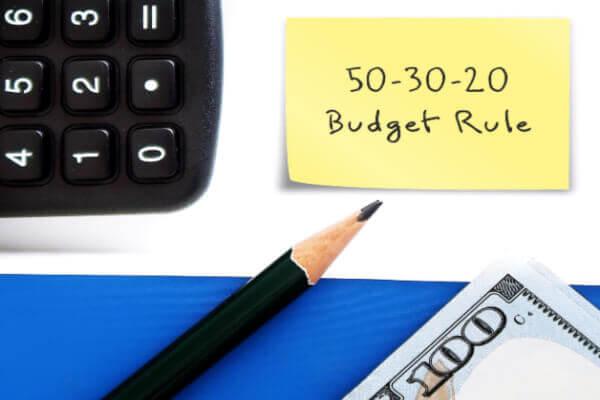
It can be used as a flexible benchmark, but fixed percentages may be difficult in low-income months.
Protect essential obligations first.
Then adjust wants and savings according to available income.
You can also apply percentages only to income above your baseline.
The method should serve your cash flow rather than force unrealistic numbers.
How often should I update an irregular-income budget?
Check cash flow whenever meaningful income arrives.
Review spending at least monthly.
Recalculate income patterns every few months.
Seasonal workers may need to review before each major season.
Update the baseline when your work or household changes significantly.
Research Methodology
This guide uses an irregular-income framework built around net income tracking, conservative baselines, cash-flow timing, income buffers, sinking funds, flexible savings and lean-month planning. Core concepts were cross-checked against Consumer.gov and Consumer Financial Protection Bureau resources covering budgeting, income tracking, cash-flow budgets, bill timing and emergency savings.
All case studies are hypothetical educational illustrations and do not promise specific financial outcomes.
Final Thoughts
You do not need perfectly predictable pay to build a useful financial system. To budget with irregular income, create a conservative baseline, protect essentials, track cash flow by date and use strong months to prepare for weaker ones.
Over time, your records will reveal patterns. Those patterns can help you improve your buffer, adjust fixed expenses, plan taxes and sinking funds, and decide how much flexibility each month can support. The goal is not to force variable income into a rigid budget. Instead, build a budget flexible enough to move with your real financial life.
Continue Your Budgeting Plan
Strengthen your variable-income system with the next MoneyOnliners guides.
Cash Envelope Budgeting Avoid Budgeting Mistakes Track Your Expenses