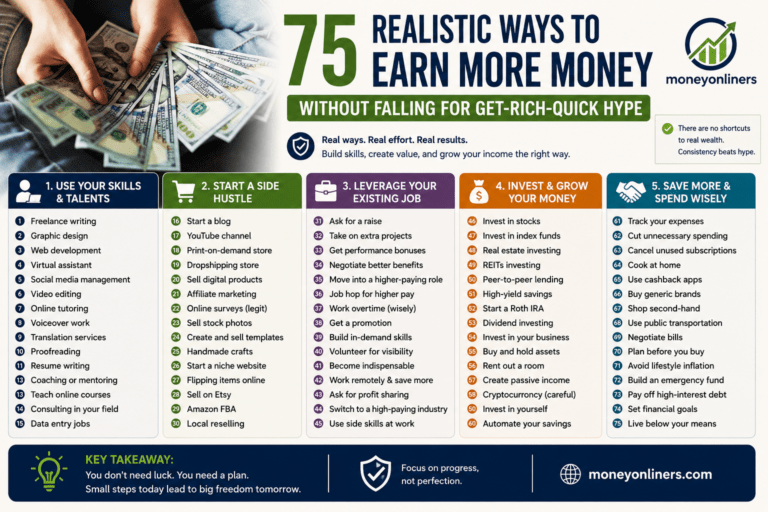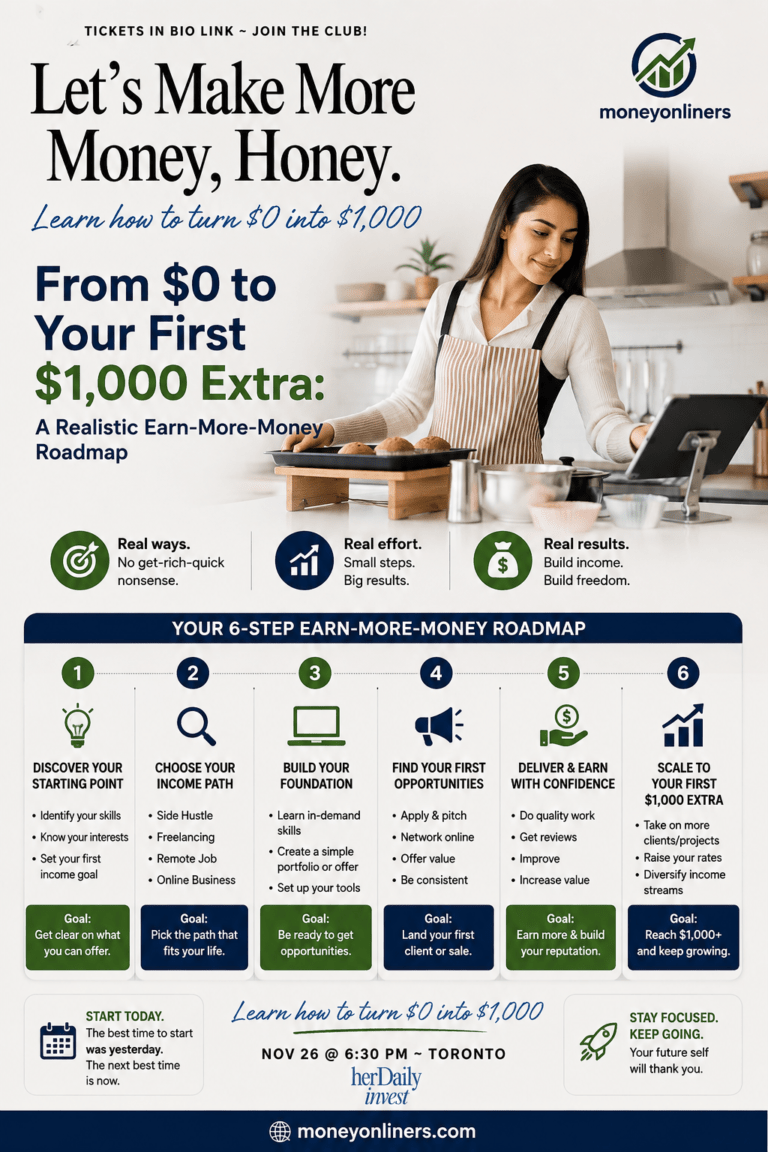
15 Income Streams You Can Build From One Skill or Job
15 Income Streams You Can Build From One Skill or Job
Building multiple income streams does not always require learning five unrelated side hustles. In many cases, one useful skill, profession or job can become the foundation for several different earning opportunities. A teacher can tutor, create courses and sell educational materials. A designer can freelance, sell templates and license creative work. The goal is not to do everything at once, but to understand how one valuable skill can create several possible income paths.
Can One Skill Really Create Multiple Income Streams?
Yes. One useful skill can potentially generate income in several different ways because the same knowledge can be packaged, delivered and sold through different formats.
For example, someone skilled in bookkeeping might earn through employment, freelance bookkeeping, consulting, tutoring, spreadsheet templates and educational content.
The skill remains the foundation. What changes is the income model.
However, building several income streams at the same time can become distracting. A stronger strategy is usually to establish one reliable stream first, then add a complementary second stream using the knowledge, audience, systems or reputation you already built.
Table of Contents
What Does Building Multiple Income Streams From One Skill Mean?
Multiple income streams simply mean receiving income through more than one economic source.
That does not necessarily mean having several completely different jobs.
Instead, you can sometimes take one capability and deliver it in several ways.
| Core Skill | Possible Income Stream 1 | Possible Income Stream 2 | Possible Income Stream 3 |
|---|---|---|---|
| Writing | Employment | Freelance writing | Editing or digital guides |
| Teaching | Salary | Tutoring | Courses or worksheets |
| Graphic Design | Design job | Freelancing | Templates |
| Accounting | Employment | Bookkeeping clients | Training or templates |
| Software Development | Salary | Freelance projects | Software products |
| Marketing | Employment | Consulting | Courses or content |
The Important Difference Between Skill and Income Stream
A skill is what you know how to do.
An income stream is the mechanism through which that ability produces money.
INCOME STREAM = HOW THAT CAPABILITY GETS PAID

How One Skill Can Produce Several Income Streams
Imagine that your core skill is video editing.
You might first use that skill in a regular job.
Later, you could edit videos for freelance clients. Once you understand common client problems, you might sell editing templates, teach beginner editing or create educational content.
Each step uses knowledge from the previous stage.
This is generally more efficient than starting unrelated income methods that require completely different skills, tools and customers.
Illustrative Example
| Stage | Income Source | What Changes? |
|---|---|---|
| 1 | Salary | An employer pays for your skill. |
| 2 | Freelance Work | Clients pay directly for projects. |
| 3 | Consulting | Clients pay for judgment and expertise. |
| 4 | Teaching | Students pay to learn the skill. |
| 5 | Digital Product | Customers buy a reusable resource. |
15 Income Streams You Can Build From One Skill or Job
1 Your Primary Job
The first income stream may already exist: your salary or wages.
Your job can provide financial stability while helping you develop professional experience, industry knowledge and skills that may later support additional income paths.
Review employer policies before using job-related expertise for outside work. Avoid conflicts of interest, confidential information and employer-owned intellectual property.
2 Freelance Projects
Turn your professional skill into a client service.
A graphic designer can create graphics for clients. A writer can write articles. A bookkeeper can support small businesses.
Freelancing can often be tested without immediately leaving employment.
3 Recurring Retainer Services
Instead of completing only one-time projects, offer a recurring service where appropriate.
Examples include monthly bookkeeping, ongoing website support, SEO assistance, content creation or social-media management.
4 Consulting
As expertise grows, clients may pay for your analysis, recommendations and judgment rather than only your execution.
Consulting works best when you genuinely understand an important problem and can support recommendations with strong professional knowledge.
5 Coaching or Mentoring
Experienced professionals may help others improve specific skills or navigate a defined professional process.
Avoid presenting yourself as qualified in regulated financial, legal, medical or other professional fields unless you hold the required credentials.
6 Online Tutoring
Teach one-to-one or small-group sessions around a skill you understand well.
Tutoring can work for academic subjects, languages, software, design, music, professional skills and other knowledge areas.
7 Group Workshops
Instead of teaching one person at a time, teach several participants in a structured workshop.
This can increase leverage because one teaching session serves multiple customers.
8 Online Courses
Package knowledge into structured lessons that students can access independently.
Creating a course does not automatically create sales. You still need a useful curriculum, credible expertise and customer demand.
9 Digital Templates
Turn repeatable work into reusable resources.
Examples include spreadsheet templates, presentation templates, checklists, design templates, project plans and operational documents.
This works particularly well when you repeatedly solve the same structured problem.
10 Digital Guides or Workbooks
Package a specific process into a written guide, workbook or practical resource.
Focus on a narrow problem rather than trying to create a massive product about everything you know.
11 Paid Newsletter or Membership
Professionals with specialized knowledge may create recurring educational content for subscribers.
However, a paid newsletter requires consistent value and an audience willing to pay for ongoing information.
12 Blogging or Educational Content
Publish useful information around your expertise through a website.
A content platform may eventually support advertising, affiliate relationships, consulting leads, products or services.
Traffic and monetization usually take time.
13 Video or YouTube Content
Teach, demonstrate or discuss your professional skill through video.
Potential monetization may eventually include advertising, sponsorships, products, services and audience-supported income.
However, audience growth is never guaranteed.
14 Licensing Your Work
Some skills create intellectual property that can potentially be licensed.
Examples may include photography, music, illustrations, designs, software components or educational materials.
Licensing rules and rights vary, so understand ownership before offering work commercially.
15 Build a Business Around the Skill
A skill can eventually become the foundation of a business with systems, products, employees or contractors.
For example, a freelance designer may eventually build a design agency. A tutor may build an education company. A software developer may create a software product.
Compare the 15 Income Streams
| Income Stream | Startup Cost | Speed to Test | Income Type | Scalability |
|---|---|---|---|---|
| Primary Job | Low | Hiring dependent | Employment | Career-based |
| Freelance Projects | Low | Medium | Active | Medium |
| Retainer Services | Low | Medium | Recurring Active | Medium |
| Consulting | Low | Medium | Active | Medium |
| Coaching/Mentoring | Low | Medium | Active | Medium |
| Tutoring | Low | Medium | Active | Medium |
| Workshops | Low–Medium | Medium | Group Active | Medium–High |
| Online Courses | Low–Medium | Slower | Product | Potentially High |
| Templates | Low | Medium | Product | Potentially High |
| Guides/Workbooks | Low | Medium | Product | Potentially High |
| Newsletter/Membership | Low | Slower | Recurring | Potentially High |
| Blog | Low–Medium | Slow | Audience/Asset | Potentially High |
| Video Content | Low–Medium | Slow | Audience/Asset | Potentially High |
| Licensing | Varies | Medium–Slow | Royalty/Licensing | Potentially High |
| Business | Low–High | Varies | Business Profit | Potentially High |
“Scalable” does not mean easy or passive. Products, content, memberships and businesses may require substantial work before they generate meaningful income.
Example: 7 Income Streams From One Teaching Skill
Imagine someone whose strongest skill is teaching mathematics.
| Income Stream | How the Same Skill Is Used |
|---|---|
| 1. Teaching Job | Teach students through an employer. |
| 2. Private Tutoring | Teach individual students directly. |
| 3. Group Classes | Teach multiple students at once. |
| 4. Exam Preparation Workshop | Teach a focused short-term program. |
| 5. Worksheets | Sell original practice materials. |
| 6. Online Course | Package lessons into a digital curriculum. |
| 7. Educational Content | Build an audience through articles or videos. |
SEVEN POSSIBLE DELIVERY MODELS
The teacher does not need seven different professions. Each stream is built around the same underlying knowledge.
Example: 7 Income Streams From One Design Skill
| Income Stream | Design Application |
|---|---|
| 1. Design Job | Work for an employer. |
| 2. Freelance Projects | Create designs for individual clients. |
| 3. Monthly Retainer | Provide ongoing creative support. |
| 4. Design Consulting | Advise on visual communication or systems. |
| 5. Templates | Sell reusable presentation or social templates. |
| 6. Courses | Teach design software or principles. |
| 7. Licensing | License original design assets where appropriate. |

How to Build Additional Income Streams From Your Current Job
Your current job may contain more transferable value than you realize.
Step 1: Identify the Skill Behind the Job
Do not focus only on your job title.
Ask what you actually do well.
| Job | Underlying Skills |
|---|---|
| Administrative Assistant | Organization, scheduling, communication, spreadsheets |
| Teacher | Teaching, curriculum development, communication |
| Accountant | Financial organization, reporting, analysis |
| Marketing Employee | Content, campaigns, research, analytics |
| Software Developer | Programming, systems, technical problem-solving |
Step 2: Separate Employer Assets From Your Skills
Your general professional skills may be transferable.
Employer customer lists, confidential data, proprietary systems, internal documents and intellectual property are different.
Never assume that because you helped create something at work you personally own it.
Step 3: Check Employer Policies
Review outside-employment, conflict-of-interest, confidentiality and intellectual-property rules where relevant.
Step 4: Choose a Different Customer
A safer outside-income model often targets customers who do not compete with your employer.
Step 5: Start Small
One small client, product or teaching offer can provide useful market feedback before you build a complicated system.
MoneyOnliners Original One-Skill Income Engine
MoneyOnliners Income Stream Multiplication Formula
The MoneyOnliners One-Skill Income Engine, Income Stream Multiplication Formula, Income Stream Expansion Score and Income Stream Ladder are original educational frameworks designed to help readers diversify income without constantly starting unrelated side hustles.
MoneyOnliners Income Stream Expansion Score
Before adding a new stream, score it from zero to two across seven factors.
| Factor | 0 Points | 1 Point | 2 Points |
|---|---|---|---|
| Skill Match | New skill required | Partial match | Uses existing skill |
| Customer Demand | Unclear | Some evidence | Clear evidence |
| Startup Cost | High | Moderate | Low |
| Time Requirement | High | Moderate | Manageable |
| Existing Assets | None | Some | Strong reuse |
| Repeatability | Weak | Moderate | Strong |
| Strategic Fit | Distracting | Neutral | Supports main skill |
0–5 Points
The stream may create more distraction than value.
6–10 Points
The idea may be worth a small test.
11–14 Points
The stream may strongly complement your current skill or income system.
This framework is educational and cannot predict profitability or income.
What Order Should You Build Income Streams?
Building everything simultaneously can slow progress.
A staged approach can reduce complexity.
Stage 1: Stabilize
Build or protect the income source that covers your essential financial responsibilities.
Stage 2: Add a Direct Service
A service can often test demand relatively quickly because customers pay directly for your skill.
Stage 3: Build Recurring Income
Stage 4: Productize Repeated Knowledge
Stage 5: Build an Audience or Asset
Stage 6: Build Systems
How to Build Multiple Income Streams Without Burning Yourself Out
Do Not Build Five Streams at Once
Every income stream creates work.
Even so-called passive streams require setup, maintenance or capital.
Reuse Your Existing Work
A process you repeatedly perform for clients may inspire a template.
Questions customers repeatedly ask may become educational content.
Track Net Income per Hour
A stream that generates revenue but consumes excessive time may not improve your financial position.
Eliminate Weak Streams
Diversification does not mean keeping every idea forever.
Stop or reduce activities that consistently produce poor results relative to the time and money they consume.
Protect Rest and Primary Responsibilities
An income strategy that damages your health, primary job or family responsibilities may not be sustainable.
10 Multiple Income Stream Mistakes to Avoid
1. Starting Too Many Streams at Once
Constantly dividing attention can prevent any single stream from becoming strong.
2. Choosing Unrelated Opportunities
Completely unrelated methods require separate skills, customers and systems.
3. Confusing Revenue With Profit
Track costs before judging whether a stream is worthwhile.
4. Ignoring Your Main Skill
A weak core skill produces weak extensions.
5. Building Products Before Understanding Customers
Create products around real problems rather than guesses.
6. Assuming Digital Products Are Passive
Products may require marketing, updates and customer support.
7. Violating Employer Policies
Outside income should not misuse employer information or create prohibited conflicts.
8. Underpricing Your Time
Small revenue can appear attractive until total working hours are calculated.
9. Refusing to Stop Weak Streams
Diversification should improve your financial position, not create permanent clutter.
10. Chasing the Number of Streams Instead of Their Quality
Two strong income streams can be more useful than ten weak ones.
Why Income Streams From One Skill Matter
1. First, income streams from one skill can make diversification more efficient.
2. You do not need to start from zero every time you add another earning method.
3. Existing expertise can shorten the learning curve.
4. Meanwhile, previous work can provide useful portfolio evidence.
5. Existing customers may reveal additional problems worth solving.
6. Repeated service work can also reveal opportunities for products.
7. Therefore, one income stream can sometimes help create the next.
8. Multiple streams may reduce dependence on one payer.
9. For example, an employee may also build a modest client or product income stream.
10. However, diversification should not create uncontrolled workload.
11. Too many simultaneous projects can reduce quality.
12. They may also reduce performance in a primary job.
13. A staged approach can therefore be more sustainable.
14. Building around one skill also strengthens specialization.
15. Strong specialization can make your work easier to position.
16. Skill-based diversification may eventually create both active and asset-based income.
17. Services can provide direct cash flow while products may provide additional leverage.
18. Content can also build an audience around the same expertise.
19. Over time, several related income mechanisms may form a stronger financial system.
20. Ultimately, building income streams from one skill matters because diversification can become more realistic when each new opportunity grows from expertise you have already developed rather than requiring you to repeatedly begin again.
Incoming Link Opportunities
How to Build Multiple Income Streams Without Burning Yourself Out
https://moneyonliners.com/build-multiple-income-streams/
20 High-Income Skills That Can Help You Earn More Without Working More Hours
https://moneyonliners.com/high-income-skills/
Side Hustle, Freelancing, Remote Job or Business: Which Income Path Fits You Best?
https://moneyonliners.com/side-hustle-vs-freelancing-vs-remote-job-vs-business/
75 Realistic Ways to Earn More Money Without Falling for Get-Rich-Quick Hype
https://moneyonliners.com/ways-to-earn-more-money/
High-Priority Incoming Links
Grow Your Income
https://moneyonliners.com/grow-your-income/
Earn More Money
https://moneyonliners.com/earn-more-money/
Freelancing
https://moneyonliners.com/freelancing/
Side Hustles
https://moneyonliners.com/side-hustles/
Topic Cluster Incoming Links
Passive Income
https://moneyonliners.com/passive-income/
Business Academy
https://moneyonliners.com/business-academy/
Jobs & Careers
https://moneyonliners.com/jobs/
Make Money Online
https://moneyonliners.com/make-money-online/
Recommended External Resources
U.S. Bureau of Labor Statistics — Occupational Outlook Handbook
Occupational Outlook Handbook — U.S. Bureau of Labor Statistics
Useful for researching occupations, skills, job duties and career requirements.
CareerOneStop
Provides career exploration, training and employment resources.
Internal Revenue Service — Gig Economy Tax Center
Provides U.S. tax information relevant to gig and freelance income.
U.S. Small Business Administration
Business Guide — U.S. Small Business Administration
Useful for readers who want to convert a skill or freelance service into a more structured business.
Federal Trade Commission — Job Scams
Job Scams — Federal Trade Commission
Federal Trade Commission — Money-Making Opportunity Scams
Money-Making Opportunity Scams — Federal Trade Commission
Tax, employment, intellectual-property, licensing and business rules vary by country and situation. This article provides general educational information and does not replace individualized legal, tax, employment, financial or business advice.
Frequently Asked Questions
Can one skill really create multiple income streams?
Yes, potentially.
The same skill can be delivered through employment, freelancing, consulting or teaching.
It may also support products or content.
However, customer demand still matters.
Not every possible income stream will be profitable.
What is the easiest income stream to add first?
A direct service can sometimes be easier to test because you already understand the work.
For example, someone who designs professionally may test a small freelance design project.
Products generally require additional development.
Content can take longer to attract an audience.
Choose the simplest stream that fits your current skills and schedule.
How many income streams should I have?
There is no ideal universal number.
One reliable income stream is better than several weak ones.
A second stream can provide diversification.
Additional streams should be added only when they fit your capacity.
Quality matters more than quantity.
Can my job become another income stream?
Your job is already an income stream.
The skills developed through that job may support additional opportunities.
However, employer policies can restrict outside work.
Confidential information should remain protected.
Check applicable employment agreements before starting related outside activity.
Can freelancing become multiple income streams?
Yes.
A freelancer may begin with project work.
Later, recurring retainers can create another income pattern.
Knowledge from freelancing may also support consulting, templates or teaching.
Nevertheless, each stream requires genuine demand.
Can I build passive income from one skill?
Some skills can support assets that may require less direct work per sale.
Examples include templates, courses or licensed intellectual property.
However, these streams are rarely completely passive.
Creation, marketing, maintenance and customer support may still be necessary.
Evaluate the total workload realistically.
What is the best skill for multiple income streams?
There is no single best skill.
Teaching can support tutoring, courses and materials.
Design can support freelancing, templates and licensing.
Programming can support jobs, consulting and products.
The best skill is usually one with strong demand that you can perform well.
Can a teacher build multiple income streams?
Potentially, yes.
A teacher may tutor students.
They may create original educational materials.
Group classes and courses can provide other delivery formats.
Employer policies and intellectual-property ownership should still be respected.
Can an accountant build multiple income streams?
Accounting knowledge may support employment, bookkeeping services, training or consulting.
Some services may be regulated depending on location.
Professional licensing requirements should be followed.
Educational products can also be possible.
Stay within your legal and professional qualifications.
Can a designer create multiple income streams?
Yes.
Designers may work as employees or freelancers.
They can potentially sell original templates.
Some creative work may be licensed.
Teaching design can create another possible income model.
Should I quit my job to build income streams?
Not necessarily.
Keeping stable employment while testing another stream can reduce financial pressure.
A new income source may take longer than expected to develop.
Consider emergency savings and household obligations.
Avoid assuming early revenue will continue automatically.
How do I know when to add another income stream?
Consider adding another stream after your current work is reasonably stable.
You should also have enough time to test the new activity properly.
Existing customer questions may reveal logical extensions.
Repeated work can reveal product opportunities.
Avoid expanding simply because you feel you should have more streams.
Are multiple income streams safer?
Diversification can reduce dependence on one payer.
However, it introduces new forms of complexity.
Additional businesses and projects can consume time and money.
Weak diversification can therefore increase stress.
The strength of each stream matters more than the number.
Can digital products become an income stream?
Yes, if customers genuinely want the product.
Templates, guides and courses are common examples.
Nevertheless, creation alone does not create sales.
Marketing and distribution still matter.
Calculate net profit rather than gross revenue.
How do I avoid burnout with multiple income streams?
Build sequentially rather than simultaneously.
Reuse skills and systems.
Track the time consumed by each stream.
Remove weak activities.
Protect rest and primary responsibilities.
What should my first additional income stream be?
Start close to what you already know.
Identify a real customer who needs that capability.
Choose an offer that requires relatively little new infrastructure.
Test it on a small scale.
Expand only after evidence of demand appears.
Research Methodology
Income Stream Selection
MoneyOnliners selected income mechanisms that can plausibly grow from an existing skill, profession or job rather than requiring the reader to continually begin unrelated ventures.
Economic Logic
Each stream has an identifiable potential payer, including employers, clients, students, customers, subscribers or licensees.
Income Claims
No fixed earnings are assigned because results depend on skill, demand, pricing, location, expenses, competition, working time and execution.
Diversification Standard
The article treats diversification as reducing reliance on one income source while recognizing that additional streams create complexity and risk.
Original MoneyOnliners Analysis
The One-Skill Income Engine, Income Stream Multiplication Formula, Income Stream Expansion Score and Income Stream Ladder are original MoneyOnliners educational frameworks.
First-Hand Evidence Standard
MoneyOnliners only presents personal freelance income, salary outcomes, product revenue, business results or other income-stream performance when genuine first-hand evidence exists and can be represented accurately.
Accordingly, this guide does not claim that MoneyOnliners or its founder personally earns money from all 15 income streams described above.
Limitations
Not every skill can be monetized through every model. Demand, regulation, competition, intellectual-property rules and professional qualifications can limit available options.
Readers should independently verify employer policies and local tax, business and licensing requirements.
Google Search Console Checklist
- Confirm final URL: /income-streams-from-one-skill/
- Confirm canonical matches the published URL.
- Confirm the page is indexable.
- Confirm the URL appears in the XML sitemap.
- Use income streams from one skill naturally in the introduction, headings, FAQ and conclusion.
- Use related phrase: multiple income streams from one skill.
- Use related phrase: ways to monetize one skill.
- Use related phrase: income streams from your job.
- Use related phrase: turn one skill into multiple income streams.
- Use related phrase: build multiple sources of income.
- Add an internal link from Grow Your Income.
- Add an internal link from Earn More Money.
- Add an internal link from High-Income Skills.
- Add an internal link from Freelancing.
- Add an internal link from Side Hustles.
- Add an internal link from Passive Income.
- Add an internal link from Business Academy.
- Add links from relevant Freelancing Academy lessons.
- Add links from Digital Skills Academy.
- Check all tables on mobile.
- Compress article images before upload.
- Use unique descriptive image alt text.
- Verify all external resource links.
- Check every internal MoneyOnliners URL.
- Inspect the final URL in Google Search Console.
- Request indexing after publication if appropriate.
- Monitor “income streams from one skill.”
- Monitor “multiple income streams from one skill.”
- Monitor “ways to monetize one skill.”
- Monitor “income streams from your job.”
Conclusion: Build Outward From What You Already Know
Multiple income streams do not have to mean learning dozens of unrelated ways to make money.
A simpler approach is to begin with one genuinely useful skill.
Start With Competence
Build a skill people already value.
Get Paid Directly
Employment or freelance services can provide the first proof that the skill has economic value.
Look for Repetition
Repeated customer problems may reveal opportunities for retainers, consulting, workshops or products.
Build Leverage Gradually
Courses, templates, content, licensing and business systems can potentially reduce the direct relationship between every dollar and every hour.
Do Not Expand Just to Count Streams
A new income stream should strengthen your financial system rather than create another source of stress.
The goal is not to collect as many side hustles as possible.
The stronger goal is to build a small group of complementary income sources around knowledge, skills, customers and assets you already understand.