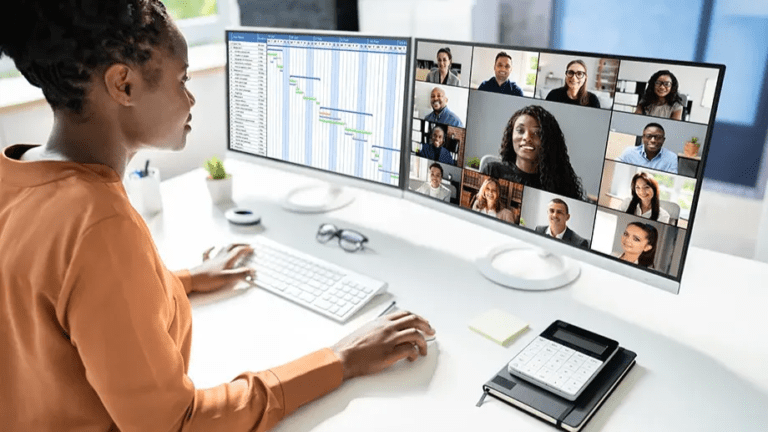
Remote Job Interview Tips: How to Get Hired Online
Remote Job Interview Tips: How to Get Hired Online
A practical guide to preparing for virtual interviews, answering remote-work questions confidently, proving that you can work independently, handling technical problems and protecting yourself from fake recruiters.
The most useful remote job interview tips are simple: research the company and role, test your camera, microphone, internet and interview software, prepare concise STAR examples, show how you communicate and manage work independently, choose a professional environment, ask thoughtful questions and follow up after the interview. In addition, verify the employer independently before sharing sensitive personal or financial information.
Part 1 — Prepare Before the Remote Job Interview
1. Research the Company Before You Join the Call
Strong interview preparation starts before the camera turns on. Review the employer's official website, products or services, the vacancy and the skills emphasized in the job description. Then identify three reasons your experience or abilities fit the role.
A strong remote interview is not about memorizing perfect answers. It is about understanding the employer's problem and proving that you can help solve it.

2. Study the Job Description Again
Look for repeated themes such as customer communication, independent work, deadlines, collaboration, specific software or problem-solving. Your interview examples should connect directly to these requirements.
3. Prepare Your 60-Second Introduction
“I have experience supporting customers and coordinating administrative tasks, where I developed strong written communication, organization and problem-solving skills. I am now focused on remote customer-support roles, and I have been strengthening my digital collaboration and CRM skills. This position interests me because it combines customer communication with the kind of independent, structured work I enjoy.”
4. Test Your Technology
Test the interview link or platform, microphone, camera, speakers and internet connection before the scheduled time. Charge your device and keep the charger nearby.
5. Prepare a Backup Plan
Technical failures happen. Keep the recruiter's contact details available, know whether you can switch to a phone call and have an alternative internet connection if practical.
6. Choose a Professional Interview Environment
Use a quiet, reasonably well-lit location with minimal distractions. You do not need an expensive home office. A clean, calm environment that allows the interviewer to hear and see you clearly is enough.

7. Position Your Camera Properly
Place the camera near eye level and frame yourself comfortably. Look toward the camera periodically when speaking, while still allowing yourself to look naturally at the interviewer on screen.
8. Dress for the Role
Choose clothing that matches the employer and position. Remote does not mean careless. When uncertain, aim for clean, professional and slightly more polished than everyday home clothing.
9. Keep Useful Notes Nearby
Keep your resume, job description, three key achievements and questions for the interviewer nearby. Use short prompts rather than a full script so your answers remain conversational.
10. Practice on Video
A mock video interview can help you notice speaking speed, distracting movements, weak answers and technical issues before the real interview.
11. Prepare STAR Stories
| STAR Element | What to Explain |
|---|---|
| Situation | What was happening? |
| Task | What responsibility or problem did you have? |
| Action | What did you personally do? |
| Result | What changed or what did you learn? |
12. Prepare Examples for Remote-Work Behaviors
Part 2 — Ace the Online Interview
13. Join Early—but Not Extremely Early
Be ready before the scheduled start. Joining a few minutes early gives you time to handle a last-minute technical issue without appearing rushed.
14. Start With Professional Energy
Greet the interviewer clearly, smile naturally and thank them for the opportunity. Speak at a comfortable pace and allow small pauses because online conversations can have slight delays.
15. Listen Before You Answer
Do not rush to fill silence. Let the interviewer finish, make sure you understand the question and then answer directly. If a question is unclear, asking for clarification is better than guessing.
16. Prepare for Common Remote Job Interview Questions
| Question | What the Employer May Be Evaluating |
|---|---|
| Why do you want to work remotely? | Motivation and realistic expectations |
| How do you stay productive without supervision? | Self-management |
| How do you communicate with distributed teammates? | Communication habits |
| How do you prioritize competing deadlines? | Organization and judgment |
| Tell me about a time you solved a problem independently. | Initiative and problem-solving |
| How do you handle distractions at home? | Work environment and boundaries |
| Which collaboration tools have you used? | Digital readiness and adaptability |

17. How to Answer “Why Do You Want to Work Remotely?”
“I value the focused work and clear communication that remote teams require. I am comfortable organizing my workload independently, and I like documenting progress so teammates know where work stands. I am interested in this role specifically because my customer-support skills align with the team's needs—not simply because the job is remote.”
18. How to Answer “How Do You Stay Productive?”
“I start by identifying deadlines and the highest-priority tasks. I keep a written task list, block focused time for work that requires concentration and communicate early when a dependency could affect a deadline. At the end of the day, I review unfinished items and plan the next day's priorities.”
19. How to Answer When You Have No Remote Experience
“I have not held a formal remote position yet, but my previous experience required many of the same behaviors: managing responsibilities independently, communicating clearly, meeting deadlines and solving routine problems. I have also practiced the digital tools relevant to this role and prepared a reliable home-work setup.”
20. Show Results, Not Just Personality
“I am hardworking” is difficult to evaluate. A short example showing what you did and what happened is more convincing. Use numbers when they are accurate and meaningful, but never invent metrics.
21. Demonstrate Remote Communication During the Interview
The interview itself is evidence. Clear answers, good listening, appropriate questions and professional follow-up demonstrate the communication skills remote employers need.
22. Do Not Read Answers From a Script
Notes can help, but reading full responses often sounds unnatural and can weaken connection. Use short bullet reminders and speak in your own words.
23. Handle Technical Problems Calmly
“It looks like my audio dropped for a moment. I apologize. Can you hear me clearly now? If the issue continues, I can switch to my backup connection or phone.”
24. Ask Strong Questions at the End
- What would success look like in the first 90 days?
- How does the team communicate when people are working asynchronously?
- How are priorities and deadlines normally managed?
- What are the biggest challenges someone in this role will need to solve?
- How is performance measured?
- What are the next steps in the hiring process?
25. Questions You Should Be Careful About Asking Too Early
Compensation, benefits and working conditions are legitimate topics. However, if your first questions communicate that you care only about working fewer hours or avoiding supervision, you may unintentionally undermine your candidacy. Ask balanced questions about the role, team, expectations and employment package.
26. Mini Case Study — Same Candidate, Better Evidence
A candidate initially answers every question with general claims such as “I am organized” and “I work well independently.” After practicing STAR examples, the candidate explains a specific situation where several customer requests arrived at once, how priorities were organized and how each customer received an update. The experience did not change; the evidence became clearer.
27. Incoming Link Opportunities
Because this is Remote Work Post #8, the strongest incoming-link opportunities are the earlier Remote Work posts #1–#7. The URLs below use the latest approved MoneyOnliners slugs, including the updated cornerstone slug remote-work-beginners-guide.
Part 3 — Follow Up, Stay Safe & Get Hired
28. Why Remote Job Interview Tips Matter
Remote Interviews Test More Than Your Answers
Remote job interview tips matter because an online interview can reveal how comfortably you communicate through digital tools.
In addition, remote job interview tips can help you remove preventable technical distractions before the conversation begins.
For example, testing your microphone beforehand prevents a simple audio problem from consuming valuable interview time.
More importantly, preparation gives you more attention to focus on the interviewer instead of your equipment.
Therefore, strong remote job interview tips combine career preparation with technical readiness.
Good Examples Make Skills Credible
Remote job interview tips matter because employers need evidence rather than unsupported claims.
Likewise, a STAR example can turn “I am organized” into a real demonstration of organization.
However, examples should remain truthful and relevant.
As a result, candidates should prepare stories from real jobs, school, volunteering or personal projects.
Furthermore, beginners can use transferable experiences even when they have never worked remotely.
Preparation Improves Communication
Remote job interview tips matter because online conversations can make interruptions and unclear answers more noticeable.
Similarly, concise answers can be easier for an interviewer to follow on video.
Above all, listening carefully helps prevent you from answering a question the interviewer did not ask.
For that reason, a short pause before answering can be useful.
Meanwhile, thoughtful questions can demonstrate genuine interest in the work.
Safety Is Part of Online Hiring
Remote job interview tips also matter because scammers can imitate recruiters and even conduct fake virtual interviews.
Consequently, candidates should verify unfamiliar employers and recruiters independently.
Legitimate hiring should not require you to pay money simply to receive a job.
Ultimately, getting hired online requires both strong interviewing and careful verification.
Finally, the best remote job interview tips help you present your real value professionally without exaggeration, panic or unnecessary risk.
29. Send a Professional Thank-You Message
“Thank you for speaking with me today about the Customer Support Specialist position. I enjoyed learning more about how the team handles customer communication across time zones. Our discussion reinforced my interest in the role, particularly because my experience resolving customer questions and organizing follow-up aligns with the team's priorities. Thank you again for your time and consideration.”
30. Record What You Learned
After the interview, write down the questions you were asked, where your answers were strong and where you struggled. This turns every interview into useful preparation for the next one.

31. Evaluate the Employer Too
An interview is a two-way process. Consider whether the role, manager, communication style, workload, compensation and remote-work expectations fit what you are looking for.
32. Verify the Recruiter Before Sharing Sensitive Information
Fake recruiters can use professional-looking invitations, company logos and even interviews. Check the sender's domain, search for the recruiter independently and verify the vacancy through an official company source when possible.
33. Know the Major Remote Interview Scam Red Flags
- An unexpected vague job message promises unusually high pay.
- The “recruiter” pressures you to provide bank or identity information before a genuine hiring process.
- You must pay for equipment, training or access before starting.
- You receive a check and are instructed to buy equipment or send part of the money elsewhere.
- You are asked to deposit your own money to unlock tasks or earnings.
- The recruiter cannot be verified through the employer's legitimate channels.
34. What to Do If You Suspect a Fake Interview
Stop before sending money or sensitive information. Contact the company using contact information you find independently—not the details supplied by the suspicious recruiter. Search the company and recruiter name with terms such as “scam” or “complaint.”
35. Use a 24-Hour Interview Preparation Plan
Research
Review company, role and requirements.
Examples
Prepare 5–7 STAR stories.
Technology
Test camera, audio and internet.
Environment
Prepare lighting and quiet space.
Questions
Prepare thoughtful questions.
Rest
Stop cramming and arrive prepared.
36. Remote Interview Day Checklist
37. Mini Case Study — Recovering From a Technical Problem
A candidate's internet connection fails during an interview. Instead of disappearing, the candidate immediately emails the recruiter, explains the problem briefly and offers to reconnect using a backup connection or phone. The interruption is inconvenient, but the response demonstrates calm communication and problem-solving—two qualities that matter in remote work.
38. Recommended External Resources
39. Frequently Asked Questions
How do I prepare for a remote job interview?
Research the employer and role, test your technology, prepare STAR examples, choose a quiet interview location, review common remote-work questions and prepare thoughtful questions for the interviewer.
What should I wear to an online interview?
Dress appropriately for the employer and role. A clean, professional appearance is generally safer than treating a virtual interview casually.
How early should I join a virtual interview?
Be completely ready beforehand and join a few minutes before the scheduled time unless the employer provides different instructions.
What if I have no previous remote-work experience?
Use examples demonstrating transferable remote behaviors such as independent work, communication, organization, digital tools and meeting deadlines.
What if my internet fails during the interview?
Communicate immediately and calmly. Use the recruiter's contact information and offer a practical backup such as reconnecting, switching connections or continuing by phone.
Can I use notes during a video interview?
Yes, short prompts can be useful. Avoid reading complete scripted answers because it can make the conversation unnatural.
What questions should I ask a remote employer?
Ask about success in the role, communication, performance measurement, team collaboration, onboarding, time-zone expectations and the next stage of hiring.
How can I tell whether a remote interview is fake?
Verify the recruiter and company independently. Be especially cautious about payment demands, fake equipment checks, requests for sensitive information unusually early or recruiters who cannot be confirmed through legitimate company channels.
Should I send a thank-you email?
A short professional thank-you message can reinforce your interest and remind the interviewer of a relevant strength or discussion point.
How do I improve after a rejected interview?
Review the questions, identify weak examples, improve your preparation and practice again. Rejection can provide useful information for strengthening your next interview.
40. Research Methodology
MoneyOnliners evaluates remote interview guidance using Employer Research → Role Alignment → Technical Readiness → Communication → Evidence of Skills → Remote-Work Behaviors → Interview Questions → Candidate Questions → Employer Verification → Follow-Up. Examples in this guide are educational scenarios and do not guarantee employment.
Final Thoughts
The strongest remote job interview tips are not tricks for manipulating an interviewer. They help you communicate your real abilities more clearly.
Research the employer. Understand the job. Prepare evidence. Test your technology. Listen carefully. Answer with real examples. Ask useful questions. Follow up professionally. At the same time, verify the hiring process before sharing sensitive information.
Research → Prepare → Test → Listen → Prove → Ask → Verify → Follow Up
Continue Your Remote Job Search
Build the skills employers want, find legitimate openings and prepare for your next interview.