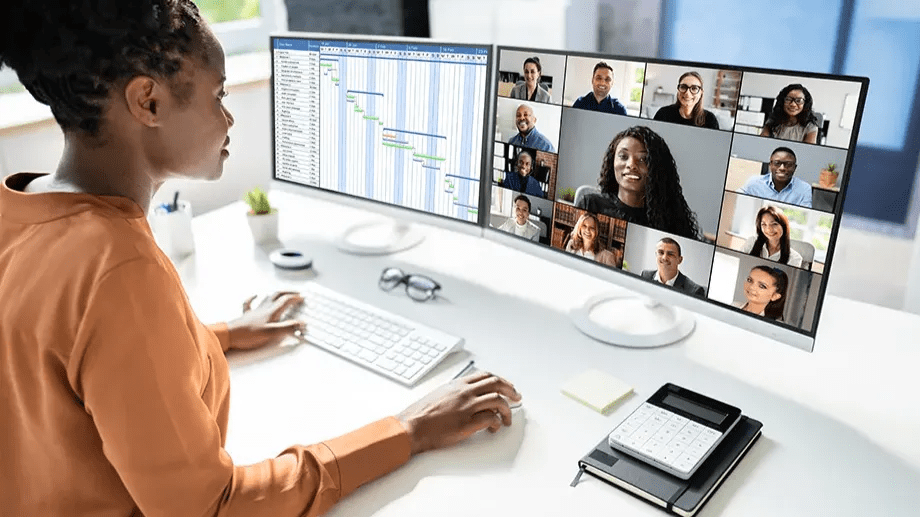
Best Skills for Remote Work: What Employers Actually Want
Best Skills for Remote Work: What Employers Actually Want
Learn which skills make remote employees valuable, how employers evaluate those skills, how to prove them on your resume and in interviews, and which capabilities can help you grow into stronger remote roles.
The best skills for remote work combine strong human skills with practical digital abilities. Employers commonly value written communication, self-management, collaboration, problem-solving, adaptability, digital literacy, organization, accountability and role-specific expertise. Increasingly, AI literacy and good judgment also matter—but employers still need people who can verify information, communicate clearly, make decisions and deliver reliable results.
Part 1 — What Remote Employers Actually Want
1. Employers Want More Than Technical Ability
A remote employee can be technically strong and still struggle if communication is unclear, deadlines are missed or teammates cannot tell what is happening. Because of that, remote work increases the importance of self-management, written communication and accountability when managers and coworkers are not physically nearby.
Remote employers do not only ask, “Can you do the task?” They also ask, “Can we trust you to do it clearly, reliably and with limited supervision?”

2. Skills Are Becoming More Important Than Titles Alone
Modern hiring increasingly emphasizes what candidates can actually do. Although job titles and degrees still matter in many professions, employers often use skills, outcomes and transferable experience to decide whether someone can contribute effectively.
3. Remote Skills Fall Into Three Groups
| Skill Group | Examples | Why Employers Care |
|---|---|---|
| Human skills | Communication, problem-solving, teamwork | Help teams coordinate and solve problems |
| Remote-work skills | Self-management, async communication, digital collaboration | Help employees function outside a shared office |
| Role-specific skills | CRM, coding, SEO, design, finance, sales | Produce the actual business output |
4. Written Communication Matters More Remotely
Remote teams often rely on email, chat, documents, tickets and project-management tools. Therefore, clear writing becomes especially important. For example, a short message with context, decision and next step can save more time than a long, confusing explanation.
“I have a problem with the client thing. Can we talk?”
Stronger Message“The client has not approved the final design, so tomorrow's launch may be delayed. I have sent a reminder and can proceed immediately once approval arrives. If we do not hear back by 3 p.m., should I move the launch to Friday?”
5. Remote Employers Look for Evidence, Not Buzzwords
Writing “excellent communicator” on a resume is weaker than showing how you used communication to achieve something. Instead, connect each important skill to a real task, decision or outcome whenever possible.

6. AI Skills Are Growing, but Judgment Still Matters
AI-related skills are becoming more important across many roles. However, strong remote workers do more than generate output. They also evaluate accuracy, protect confidential information, understand limitations and know when human judgment is required.
MoneyOnliners rule: Learn AI as a productivity tool, but do not let it replace fact-checking, client understanding, privacy safeguards or professional judgment.
7. What Employers Usually Do Not Mean by “Remote-Ready”
Part 2 — 15 Best Skills for Remote Work
1. Written Communication
Write messages that are clear, concise and complete. Because remote workers often communicate through email, chat, tickets and shared documents, writing quality directly affects speed and trust.
2. Verbal Communication
Remote teams still use video meetings, phone calls and presentations. As a result, strong speaking means explaining ideas clearly, listening well and adapting your message to the audience.
3. Self-Management
Remote workers need to prioritize tasks, maintain focus and meet deadlines without constant supervision. Therefore, self-management is one of the most practical remote-work skills to strengthen.
4. Time Management
Strong remote workers protect focused work, schedule meetings appropriately and avoid letting notifications control the entire day. In addition, they review priorities regularly so urgent messages do not replace important work.
5. Digital Collaboration
This includes using shared documents, project boards, cloud storage, video meetings and workplace chat effectively. However, the exact tools vary, so learning the workflow is more important than memorizing one brand.

6. Asynchronous Communication
Asynchronous work means communicating so others can understand and act without requiring everyone to be online at the same time. Therefore, include enough context, decisions, links and next steps in your message.
7. Problem-Solving
Employers value people who can investigate an issue, identify options and move work forward rather than waiting for instructions at every step. For that reason, practical problem-solving can make a remote worker more dependable.
8. Adaptability
Remote tools, processes and priorities change. Consequently, adaptability means learning new systems, responding constructively to feedback and adjusting without losing reliability.
9. Accountability
Accountability means owning commitments, communicating delays early and correcting mistakes rather than hiding them. In practice, this helps managers and teammates trust your work even when they cannot see you working.
10. Organization
Remote employees need organized files, clear task tracking and reliable documentation. After all, important information cannot depend on one person remembering where it is.
11. Digital Literacy
Remote workers should be comfortable learning common digital systems, browsers, file sharing, office tools, video conferencing and role-specific software. Moreover, they should be willing to adapt when an employer changes tools.
12. Cybersecurity Awareness
Basic security habits matter when employees access company systems from home. Therefore, strong passwords, multi-factor authentication, phishing awareness and safe handling of confidential information are essential.

13. AI Literacy and Judgment
AI literacy means knowing how to use AI tools productively while checking facts, protecting sensitive information and recognizing when automated output is unreliable or inappropriate. In other words, useful AI skills include judgment as well as prompting.
14. Cross-Functional Collaboration
Remote employees often work with people in different departments, time zones and specialties. As a result, the ability to coordinate clearly across those boundaries is increasingly valuable.
15. Role-Specific Expertise
Remote-work skills help you function effectively, but role-specific skills are what employers ultimately pay for. For example, these may include customer support systems, coding, finance, SEO, design, analytics, project management, sales and operations.
8. Best Skills by Remote Job Category
| Remote Job | Priority Skills |
|---|---|
| Customer support | Writing, empathy, problem-solving, CRM |
| Virtual assistant | Organization, communication, scheduling |
| Sales | Communication, persuasion, CRM, follow-up |
| Marketing | Writing, analytics, creativity, AI judgment |
| Software development | Coding, problem-solving, documentation, collaboration |
| Project management | Planning, communication, risk management, coordination |
| Data roles | Analysis, spreadsheets/SQL, communication, visualization |
9. Mini Case Study — Technical Skill Was Not Enough
A talented analyst repeatedly misses deadlines because project updates are unclear and questions arrive too late. After improving task planning and sending concise weekly progress notes, collaboration improves. The lesson is that strong technical work becomes more valuable when teammates can rely on the process around it.
10. Recommended External Resources
11. Incoming Link Opportunities
Because this is Remote Work Post #6, the strongest incoming-link opportunities are the earlier Remote Work posts #1–#5. The URLs below use the latest approved MoneyOnliners slugs, including the updated cornerstone slug remote-work-beginners-guide.
Part 3 — How to Prove, Improve & Use These Skills
12. Why the Best Skills for Remote Work Matter
Build Trust Without Being in the Same Room
The best skills for remote work matter because employers need confidence that work will continue even when no manager is physically nearby.
In addition, clear communication helps distributed teams understand progress without adding unnecessary meetings.
For example, a concise written update can make ownership, deadlines and blockers easy to understand.
More importantly, reliable follow-through reduces uncertainty for managers and coworkers.
Therefore, strong remote-work skills directly support trust.
Make Technical Skills More Valuable
Technical expertise becomes more useful when a remote worker can explain, organize and apply it effectively.
Likewise, problem-solving helps employees use their knowledge when priorities or conditions change.
However, technical ability without accountability can create operational risk.
As a result, employers often prefer people who combine hard skills with dependable working habits.
Furthermore, cross-functional communication can increase the impact of specialist knowledge.
Stay Competitive as Work Changes
The best skills for remote work also matter because tools and job requirements continue to evolve.
Similarly, AI is changing how many routine and professional tasks are performed.
Above all, adaptable workers can learn new tools without losing core judgment.
For that reason, communication, critical thinking and AI literacy can complement role-specific expertise.
Meanwhile, tool-agnostic learning reduces dependence on one platform or software brand.
Build Better Long-Term Career Options
Another advantage of the best skills for remote work is that many of them transfer between jobs and industries.
Nevertheless, transferable skills do not replace the occupational expertise required for a specific role.
In the same way, a strong communicator still needs the technical ability needed to produce real business results.
Ultimately, career growth comes from combining transferable strengths with increasingly valuable role-specific skills.
Finally, the best skills for remote work can help you become more employable, reliable and valuable over time.
13. Turn Skills Into Resume Evidence
| Skill | Weak Resume Claim | Stronger Evidence |
|---|---|---|
| Communication | Excellent communicator | Resolved customer questions through email and chat |
| Organization | Highly organized | Maintained project tracker and coordinated weekly deadlines |
| Problem-solving | Good problem solver | Identified recurring issue and documented a faster resolution process |
| Collaboration | Team player | Coordinated tasks across sales and operations teams |
14. Build a Proof Portfolio
Not every profession needs a traditional portfolio. Nevertheless, you can still create proof through project documents, dashboards, reports, writing samples, process maps, GitHub projects, presentation decks or case studies.

15. Practice Remote Interview Examples
“How do you manage priorities when working independently?”
Answer StructureExplain how you identify priorities, track tasks, communicate risks and review deadlines. Then give a real example where the system helped you deliver work successfully.
16. Use STAR Examples
Prepare stories using Situation → Task → Action → Result. Then, choose examples for communication, difficult customers, deadlines, teamwork, mistakes, learning and problem-solving.
17. Study Job Descriptions for Skill Patterns
Read 20–30 vacancies in your target role and record repeated skills. As a result, you can choose what to learn based on employer demand instead of guessing.
18. Build Skills in the Right Order
Foundation
Communication, organization, digital basics.
Role Skills
Learn the tools and knowledge required by your target job.
Proof
Create projects and measurable examples.
Apply
Target jobs that match your growing skills.
Feedback
Use interviews and work to identify gaps.
Advance
Build higher-value specialist skills.
19. 30-Day Remote Skills Plan
| Week | Focus |
|---|---|
| Week 1 | Choose a remote job category and study employer requirements |
| Week 2 | Improve communication, digital and organizational fundamentals |
| Week 3 | Build one role-specific skill and one proof project |
| Week 4 | Update resume, LinkedIn and interview examples |
20. Mini Case Study — From “Good With Computers” to Proof
A beginner writes “good with computers” on a resume but receives little interest. The candidate later identifies spreadsheet skills as important for operations roles, learns formulas and data cleaning, and creates a simple operations dashboard. The vague skill becomes specific evidence an employer can evaluate.
21. Frequently Asked Questions
Remote Work Skill Basics
What are the best skills for remote work?
Written communication, self-management, time management, collaboration, problem-solving, adaptability, accountability, organization, digital literacy, cybersecurity awareness, AI judgment and role-specific expertise are especially useful.
What skill do remote employers care about most?
There is no single universal skill, but communication and reliable self-management matter across many remote roles because distributed teams depend on clarity and trust.
Do I need technical skills for remote work?
You need enough digital literacy to perform the role, but the exact technical skills depend on the occupation.
Is communication more important in remote work?
It is often especially important because remote teams rely heavily on written messages, documents, tickets and virtual meetings.
AI, Proof and Career Growth
Do employers care about AI skills?
AI-related skills are growing in importance across many roles, but employers still need people who can evaluate quality, protect sensitive information and apply human judgment.
How do I prove remote-work skills without remote experience?
Use examples from previous jobs, school, volunteering or personal projects. Create sample work when useful, but label it honestly.
Should I list soft skills on my resume?
Yes, but support them with evidence. “Team player” is weaker than describing how you coordinated with others to complete work.
Which skills can help me earn more remotely?
Higher-value role-specific skills such as software development, cybersecurity, analytics, sales, project management, product, finance or specialized marketing can raise earning potential when combined with strong remote-work habits.
22. Research Methodology
MoneyOnliners evaluates remote-work skills using Employer Relevance → Transferability → Remote Compatibility → Ease of Demonstration → Business Value → Learning Curve → AI Resilience → Career Growth Potential. The goal is to identify skills that help people perform real remote work more effectively—not to promote buzzwords.
Final Thoughts
The best skills for remote work are not simply the newest software tools. Employers want people who can communicate clearly, manage themselves, solve problems, collaborate across distance and deliver reliable results.
First, build those foundations. Next, add the role-specific expertise that employers actually pay for. Finally, use projects, results and clear examples to prove the skills instead of relying on vague resume claims.
Learn → Practice → Prove → Communicate → Deliver → Improve → Grow
Your Next Step
Choose one remote role and study 20 real job descriptions. Identify the five skills that appear most often, then build your learning plan around them.