Media Jobs & Careers: 25 Career Paths in Digital Media, Publishing and Entertainment
Media Jobs & Careers: 25 Career Paths in Digital Media, Publishing and Entertainment
Media careers now extend far beyond newspapers, television studios and traditional publishing. Digital platforms, streaming, podcasts, social media, online publications and creator businesses have created many ways to turn writing, video, audio, design, marketing and communication skills into professional careers.
The media industry has changed dramatically. A person interested in media no longer has to choose only between working for a newspaper, television station or publishing house.
Today, media work can happen inside streaming companies, digital publications, brands, agencies, nonprofits, entertainment businesses, social platforms, podcast networks, sports organizations and independent creator businesses.
Moreover, many modern media careers combine traditional communication skills with digital abilities such as analytics, audience development, video editing, SEO, social media and content strategy.
Therefore, a strong media career begins with understanding what kind of value you can create: information, entertainment, storytelling, audience growth, production, design or commercial results.
Quick Answer
Media careers include journalism, editing, writing, content strategy, copywriting, social media management, community management, public relations, podcast production, audio engineering, video production, video editing, photography, graphic design, animation, broadcasting, production management, directing, audience development, SEO content, email publishing, digital advertising, talent management, publishing and creator management.
Some positions traditionally require degrees or specialized training. However, many digital media roles also place substantial value on portfolios, published work, practical experience and measurable results.
MoneyOnliners Media Career Formula:
COMMUNICATION SKILL + DIGITAL SKILL + PORTFOLIO + AUDIENCE UNDERSTANDING + EXPERIENCE = STRONGER MEDIA CAREER OPTIONS
25 Media Careers at a Glance
| # | Career | Main Skill | Strong Proof of Work |
|---|---|---|---|
| 1 | Journalist | Reporting | Published articles |
| 2 | Editor | Editing | Edited publications |
| 3 | Writer / Author | Writing | Writing portfolio |
| 4 | Copywriter | Persuasive writing | Marketing samples |
| 5 | Content Strategist | Content planning | Content strategy case studies |
| 6 | SEO Content Specialist | Search + content | Ranking/content portfolio |
| 7 | Social Media Manager | Social content | Account results |
| 8 | Community Manager | Audience engagement | Community projects |
| 9 | Public Relations Specialist | Communications | Campaigns and press materials |
| 10 | Email / Newsletter Editor | Publishing | Newsletter portfolio |
| 11 | Podcast Producer | Audio production | Published podcast episodes |
| 12 | Audio Engineer | Sound production | Audio projects |
| 13 | Video Producer | Video production | Production reel |
| 14 | Video Editor | Post-production | Editing reel |
| 15 | Camera Operator / Videographer | Cinematography | Showreel |
| 16 | Photographer | Photography | Photo portfolio |
| 17 | Graphic Designer | Visual design | Design portfolio |
| 18 | Animator / Motion Designer | Animation | Motion reel |
| 19 | Broadcast Presenter | Presentation | Demo reel |
| 20 | Producer / Director | Production leadership | Completed productions |
| 21 | Audience Development Manager | Growth | Audience metrics |
| 22 | Digital Advertising Specialist | Paid media | Campaign results |
| 23 | Publishing Professional | Publishing operations | Published projects |
| 24 | Talent / Creator Manager | Representation | Creator campaigns |
| 25 | Media Entrepreneur | Business building | Audience + revenue |
Table of Contents
1. How Media Careers Work 2. Writing & Publishing Careers 3. Digital Media Careers 4. Podcast & Audio Careers 5. Video & Production Careers 6. Photography, Design & Animation 7. Broadcasting & Entertainment 8. Media Growth & Commercial Careers 9. Media Entrepreneurship 10. Do You Need a Media Degree? 11. How to Start a Media Career 12. How to Build a Media Portfolio 13. Skills That Matter 14. Media Career Fit Map 15. AI and the Future of Media Work 16. Media Career Mistakes 17. Why Media Careers Matter 18. Frequently Asked QuestionsHow Media Careers Work Today
The word “media” now covers a broad collection of industries and business models.
Traditional publishing, radio and television still exist. However, they now operate alongside streaming, social platforms, podcasts, newsletters, online publications, digital advertising and independent creator businesses.
As a result, media professionals increasingly need combinations of skills rather than only one narrow capability.
Media Is About Creating and Distributing Attention
At its simplest, media connects information or entertainment with an audience.
A journalist may produce information. A video editor shapes storytelling. Meanwhile, an audience-development manager helps the work reach more people.
Commercial teams then help convert that audience into sustainable revenue through advertising, subscriptions, sponsorships, products or other models.
IDEA → CREATE → EDIT → PUBLISH → DISTRIBUTE → BUILD AUDIENCE → MONETIZE

Modern media combines creative production, technology, distribution and audience development.
Writing, Journalism and Publishing Careers
Journalist or Reporter
Best for: Curious people who enjoy research, interviewing and explaining events.
Journalists gather information, verify facts, interview sources and turn complex events into understandable stories.
Opportunities can exist across newspapers, websites, magazines, broadcasters, newsletters and specialist publications.
However, credibility is fundamental. Therefore, strong reporting involves more than writing quickly. It also requires verification, sourcing, fairness and editorial judgment.
Useful skills: Research, interviewing, writing, fact-checking and source development.
Editor
Best for: Detail-oriented people with strong language and judgment.
Editors help improve content before publication.
Depending on the organization, they may assign stories, revise structure, improve clarity, check facts, coordinate writers and maintain editorial standards.
Digital editors may also consider headlines, audience behavior, search visibility, multimedia and publication timing.
Consequently, editing increasingly involves both traditional editorial judgment and digital publishing skills.
Writer or Author
Best for: People who can communicate ideas clearly through long-form writing.
Writers can work across books, websites, publications, scripts, branded content, newsletters and other formats.
Some work as employees, while others operate independently or combine employment with freelance projects.
A strong portfolio is especially useful because employers and clients can directly evaluate the quality of your work.
Copywriter
Best for: Writers interested in marketing and persuasion.
Copywriters create text designed to encourage a commercial action.
Examples include advertisements, landing pages, product descriptions, emails, sales pages and campaign messages.
Unlike general editorial writing, copywriting often connects directly to measurable business outcomes such as clicks, leads or sales.
Publishing Professional
Best for: People interested in books, magazines and structured publishing systems.
Publishing involves much more than writing.
Roles can include acquisitions, editing, production, rights, marketing, publicity, sales and distribution.
Therefore, someone who enjoys books but does not want to become an author can still pursue numerous careers inside publishing.
Digital Media, Content and Social Careers
Content Strategist
Best for: People who enjoy connecting content with business and audience goals.
Content strategists decide what an organization should publish, who the content is for and how different pieces fit together.
The role may involve audience research, editorial planning, content audits, distribution and measurement.
Therefore, content strategy requires more than simply generating topic ideas.
SEO Content Specialist
Best for: Writers interested in search behavior and organic discovery.
SEO content specialists help organizations create information that can be discovered through search engines.
Their work can involve keyword research, search-intent analysis, content optimization, internal linking and performance monitoring.
However, SEO should support useful content rather than replace it.
Strong practitioners combine search knowledge with genuine editorial quality.
Social Media Manager
Best for: People who understand platforms, culture and audience behavior.
Social media managers plan and publish content across social platforms.
They may also respond to users, monitor trends, coordinate campaigns and analyze performance.
Because social platforms change frequently, adaptability is especially important.
A strong candidate should understand both creative content and measurable business objectives.
Community Manager
Best for: People who enjoy relationship building and audience engagement.
Community managers focus on relationships rather than simply publishing posts.
They may manage online groups, customer communities, membership spaces, forums or social conversations.
Furthermore, they often gather feedback that can help organizations better understand their audiences.
Public Relations Specialist
Best for: Strong communicators interested in reputation and media relations.
Public-relations professionals help organizations communicate with journalists, customers, communities and the broader public.
Tasks can include press releases, media outreach, statements, events, crisis communications and reputation management.
Digital platforms have expanded the role because information and public reactions can now spread extremely quickly.
Email and Newsletter Editor
Best for: Writers who enjoy direct audience communication.
Email newsletters have become important products for publishers, companies and independent creators.
An email editor may select stories, write subject lines, organize editions, analyze engagement and help develop the subscriber relationship.
Unlike social platforms, email can provide a direct channel between a publisher and an opted-in audience.
Podcast and Audio Careers
Podcast Producer
Best for: Organized storytellers who enjoy audio.
Podcast producers can help develop episode ideas, schedule guests, coordinate recording, manage workflows and oversee publication.
Some producers also edit audio, write scripts and support distribution.
Therefore, podcast production can combine creative, technical and organizational skills.
Audio Engineer or Sound Technician
Best for: Technically minded people interested in sound.
Audio professionals record, mix, process and manage sound for podcasts, television, film, music, live events and other productions.
Strong technical knowledge is important because poor sound quality can undermine even excellent visual or editorial content.
Practical experience with recording equipment and editing software can therefore be extremely valuable.
Video, Film and Production Careers

Video and streaming have expanded the range of production, editing and storytelling opportunities available in media.
Video Producer
Best for: People who can coordinate storytelling, budgets and production.
Video producers help turn an idea into a completed production.
Depending on the project, they may coordinate budgets, schedules, crews, locations, creative direction and delivery.
Production work therefore combines creativity with practical project management.
Video Editor
Best for: Detail-oriented visual storytellers.
Video editors assemble footage into a coherent final product.
Beyond cutting clips together, editing can involve pacing, sound, graphics, color, transitions and narrative structure.
Today, editors work across film, television, advertisements, YouTube, social media, corporate video and online education.
A strong editing reel is often one of the clearest forms of proof of work.
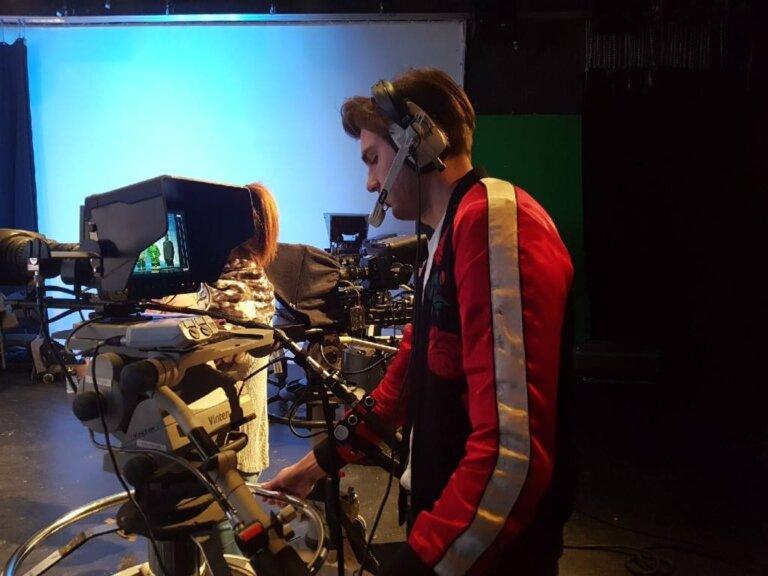
Camera Operator or Videographer
Best for: People who enjoy visual composition and technical production.
Camera professionals capture footage for films, events, documentaries, news, advertising and digital content.
Independent videographers may also serve businesses, creators, weddings, conferences and other clients.
Therefore, the same core skill can support both employment and freelance work.
Producer or Director
Best for: Experienced media professionals interested in creative leadership.
Producers and directors make major creative and business decisions about productions.
These roles generally require experience rather than functioning as immediate entry-level positions.
People may progress from editing, camera work, production assistance, writing, acting or related areas before taking on larger production responsibilities.
Photography, Design and Animation Careers
Photographer
Best for: Visual storytellers who enjoy capturing people, places and events.
Photographers can work in news, entertainment, fashion, sports, events, advertising and commercial media.
Some are employees, while many build freelance or independent businesses.
Because images can be evaluated directly, a strong portfolio is especially important.
Graphic Designer
Best for: Visually creative people who enjoy communicating through design.
Media companies need graphics for publications, social platforms, advertising, websites, videos and branding.
Graphic designers combine typography, imagery, color and layout to communicate ideas visually.
Digital skills have expanded opportunities into social graphics, web design, thumbnails and branded content.
Animator or Motion Graphics Designer
Best for: Designers interested in movement and visual storytelling.
Motion designers create animated graphics for advertisements, videos, television, social content, presentations and entertainment.
Meanwhile, animators may work across film, games, educational content and digital productions.
A professional reel can demonstrate both technical and creative ability.
Broadcasting and Presentation Careers
Broadcast Presenter, Host or Announcer
Best for: Confident communicators with strong preparation skills.
Presenters may host news, entertainment, sports, radio, podcasts, livestreams or online video.
Although personality matters, professional presentation also involves research, timing, interviewing and the ability to communicate clearly under pressure.
A demo reel can therefore provide important proof of ability.
Audience Growth and Commercial Media Careers
Audience Development Manager
Best for: People who enjoy analytics, distribution and growth.
Producing excellent media is not enough if nobody discovers it.
Audience-development professionals help publishers grow readership, viewers, listeners or subscribers.
Their work may involve search, social media, email, partnerships, analytics and platform distribution.
Consequently, this career sits between editorial work and growth marketing.
Digital Advertising Specialist
Best for: Analytical marketers interested in paid distribution.
Digital advertising specialists manage campaigns across search engines, social platforms, websites and other digital channels.
They may work on targeting, budgets, creative testing, conversion tracking and campaign optimization.
Because results can often be measured, employers may value candidates who can demonstrate performance rather than simply list platform familiarity.
Talent or Creator Manager
Best for: Relationship builders interested in the creator economy.
Creator managers help influencers, entertainers, athletes and digital creators handle commercial opportunities.
Their responsibilities may include sponsorship discussions, campaign coordination, scheduling, partnerships and business development.
However, strong management requires more than finding sponsorships. It also involves protecting relationships and understanding the creator's long-term goals.
Media Entrepreneurship
Media Entrepreneur or Independent Publisher
Best for: People who want to build their own media asset.
Instead of working exclusively for a media company, some professionals build their own publication, newsletter, podcast, YouTube channel, production company or creator business.
This path can offer greater control. However, it also shifts responsibility for audience growth and revenue onto the founder.
Therefore, media entrepreneurship requires both creative ability and business discipline.
USEFUL CONTENT → AUDIENCE → TRUST → DISTRIBUTION → MONETIZATION → REINVESTMENT
Do You Need a Media or Journalism Degree?
It depends on the career.
Traditional journalism, editing, public relations and management roles may commonly favor candidates with relevant university education. In contrast, many digital, creative and freelance roles can place greater emphasis on portfolios and experience.
Furthermore, technical roles may require education outside media altogether.
For example, a data specialist working for a media company might have studied computer science rather than journalism.
When Formal Education Helps
A degree can provide structured learning, internships, mentors and professional networks.
However, education should ideally be combined with actual work.
Do not graduate with only a qualification. Whenever possible, graduate with a qualification and a portfolio.
How to Start a Career in Media
Step 1: Choose Your Media Lane
Media is too broad to approach as one career.
Therefore, begin by deciding whether you are most interested in writing, video, audio, design, publishing, marketing, communication or business.
Step 2: Learn the Core Skill
Next, identify the professional skill behind the job title.
A video editor needs editing ability. A journalist needs reporting skills. Meanwhile, an audience-development professional needs distribution and analytics knowledge.
Step 3: Create Something Real
Media is one of the easiest industries in which to create independent proof of work.
For example, writers can publish articles. Editors can improve sample content. Podcasters can produce episodes, while designers can build visual projects.
Therefore, you do not always need to wait for employment before building experience.
Step 4: Build a Portfolio
Your portfolio should contain your strongest work rather than everything you have ever produced.
Moreover, provide enough context for employers or clients to understand what you actually contributed.
Step 5: Gain Real-World Experience
Internships, freelance projects, student media, nonprofit work and small businesses can all provide useful experience.
Although a famous employer can look impressive, a smaller organization may sometimes give you more responsibility and better portfolio material.
Step 6: Build Industry Relationships
Editors, producers, creators, marketers and other media professionals often move between companies and projects.
Therefore, professional relationships can become extremely valuable over time.
Step 7: Apply With Relevant Evidence
If a role asks for video experience, lead with video work.
Similarly, if the employer needs an audience-growth specialist, highlight measurable growth or campaign results rather than unrelated accomplishments.
CHOOSE → LEARN → CREATE → PUBLISH → BUILD PORTFOLIO → NETWORK → APPLY → IMPROVE
How to Build a Media Portfolio Without a Media Job
One of the strongest advantages of media careers is that many skills can be demonstrated independently.
| Career | Portfolio Project You Can Create |
|---|---|
| Journalist | Publish 5 well-researched articles |
| Editor | Create before-and-after editing examples |
| Copywriter | Build sample landing pages and email campaigns |
| SEO Specialist | Create a keyword-led content project |
| Social Media Manager | Build and document a small account |
| Podcast Producer | Produce a short podcast series |
| Video Editor | Create a 60–90 second editing reel |
| Photographer | Create a focused photo portfolio |
| Designer | Develop a brand or publication design project |
| Audience Development | Document growth of a newsletter, blog or channel |
12 Skills That Can Strengthen Media Careers
| Skill | Useful For |
|---|---|
| Writing | Journalism, editing, publishing, PR |
| Storytelling | Writing, video, podcasts, marketing |
| Editing | Publishing, video, audio |
| Interviewing | Journalism, podcasts, broadcasting |
| Research | Journalism, documentaries, content |
| Design | Publishing, advertising, social media |
| Video Production | Entertainment, social, advertising |
| Analytics | Audience development, marketing |
| SEO | Digital publishing and content |
| Project Management | Production and publishing |
| Communication | Nearly every media career |
| Business Literacy | Management and media entrepreneurship |
The MoneyOnliners Media Career Fit Map
| If You Enjoy... | Consider... |
|---|---|
| Writing and research | Journalism, editing, content, publishing |
| Persuasion | Copywriting, PR, advertising |
| Social interaction | Community management, PR, talent management |
| Video | Production, editing, videography, directing |
| Audio | Podcasting, audio engineering, broadcasting |
| Visual creativity | Photography, design, animation |
| Numbers and growth | Audience development, SEO, digital advertising |
| Leadership | Production, editing, publishing management |
| Entrepreneurship | Independent publishing or creator business |
How AI Is Changing Media Careers
Artificial intelligence is becoming part of media workflows. However, its impact will not be identical across every role.
Some repetitive writing, transcription, editing, research and production tasks can be accelerated with AI tools.
At the same time, media organizations still need judgment, verification, originality, direction, taste, relationships and accountability.
Do Not Compete With AI Only on Speed
If your only professional advantage is producing generic content quickly, automation may create substantial pressure.
Instead, build capabilities that are harder to reduce to one automated output.
- Original reporting
- First-hand interviews
- Creative direction
- Strategic judgment
- Specialist expertise
- Brand understanding
- Community relationships
- Verification and fact-checking
- Audience insight
- Business decision-making
Learn to use AI where it improves your workflow, but continue developing the judgment and expertise that make you responsible for the final result.
10 Media Career Mistakes to Avoid
1. Waiting for Permission to Create
You can often build media experience before an employer hires you.
2. Building No Portfolio
Creative and digital careers become harder to evaluate when you provide no examples.
3. Treating Social Followers as Your Only Qualification
Audience size can be useful. However, professional media work also requires reliability and skill.
4. Learning Tools Without Learning Communication
Software changes. Storytelling, judgment and communication remain valuable.
5. Ignoring Analytics
Media professionals increasingly need to understand how audiences respond to content.
6. Depending Entirely on One Platform
Platforms can change algorithms, rules and monetization systems.
7. Publishing Without Verification
Accuracy and credibility can take years to build and very little time to damage.
8. Refusing to Learn New Formats
A writer may benefit from learning newsletters, audio or video. Likewise, a video professional may benefit from understanding social distribution.
9. Confusing Visibility With Career Stability
A viral post does not automatically create stable professional income.
10. Ignoring the Business Side of Media
Media organizations ultimately need sustainable ways to finance production.
Understanding subscriptions, advertising, sponsorships and other revenue models can therefore strengthen your career perspective.
Why Media Careers Matter
Media Shapes How People Understand the World
1. Media careers matter because information influences public understanding, culture and decisions.
2. Journalists can help audiences understand events that would otherwise remain difficult to investigate independently.
3. Editors improve accuracy, clarity and structure before information reaches the public.
4. Writers and authors preserve ideas, stories and knowledge through written communication.
5. Therefore, media work can have influence far beyond the individual professional producing it.
Digital Media Has Expanded Career Paths
6. Digital publishing allows content to reach audiences without depending entirely on print distribution.
7. Social platforms have created professional demand for content and community management.
8. Podcasts have expanded opportunities for audio producers, hosts and editors.
9. Streaming and online video have increased the importance of production and editing skills.
10. Meanwhile, newsletters have created another direct publishing channel for organizations and independent creators.
Media Careers Combine Creativity With Technology
11. Modern media professionals increasingly need digital tools alongside traditional communication ability.
12. SEO can help publishers understand how audiences discover information.
13. Analytics can reveal which content attracts attention and encourages engagement.
14. Production software allows smaller teams to create professional-quality media more efficiently.
15. Therefore, people who combine creative ability with digital competence can expand their career options.
Strong Skills Can Transfer Across Media Formats
16. Storytelling can transfer from journalism to podcasting, video and marketing.
17. Editing skills can apply to websites, books, newsletters and branded content.
18. Audience-development skills can work across publishers, creators and entertainment brands.
19. As a result, media professionals do not necessarily have to remain in one format throughout their careers.
20. Ultimately, media careers matter because communication, storytelling, creativity and audience understanding remain valuable across many industries and business models.
Incoming Link Opportunities
Sports Finance
https://moneyonliners.com/sports-finance/
Sports Careers & Jobs
https://moneyonliners.com/sports-careers/
Creator Income Models
https://moneyonliners.com/creator-income/
Content Monetization
https://moneyonliners.com/content-monetization/
High-Priority Incoming Links
Social Media Income
https://moneyonliners.com/social-media-income/
Community Management
https://moneyonliners.com/community-management/
Personal Branding
https://moneyonliners.com/personal-branding/
Networking Opportunities
https://moneyonliners.com/networking-opportunities/
Topic Cluster Incoming Links
Athlete Earnings
https://moneyonliners.com/athlete-earnings/
Mentorship & Partnerships
https://moneyonliners.com/mentorship/
Continue Learning on MoneyOnliners
Jobs & Careers
https://moneyonliners.com/jobs/
Grow Your Income
https://moneyonliners.com/grow-your-income/
Digital Skills Academy
https://moneyonliners.com/digital-skills-academy/
Career Academy
https://moneyonliners.com/career-academy/
Learn Academy
https://moneyonliners.com/learn-academy/
Recommended External Resources
U.S. Bureau of Labor Statistics — Media and Communication Occupations
https://www.bls.gov/ooh/media-and-communication/
U.S. Bureau of Labor Statistics — Editors
https://www.bls.gov/ooh/media-and-communication/editors.htm
U.S. Bureau of Labor Statistics — Writers and Authors
https://www.bls.gov/ooh/media-and-communication/writers-and-authors.htm
U.S. Bureau of Labor Statistics — Public Relations Specialists
https://www.bls.gov/ooh/media-and-communication/public-relations-specialists.htm
U.S. Bureau of Labor Statistics — Producers and Directors
https://www.bls.gov/ooh/entertainment-and-sports/producers-and-directors.htm
Frequently Asked Questions
What are media careers?
Media careers are jobs involved in creating, editing, producing, distributing, promoting or monetizing information and entertainment.
Traditional examples include journalism, editing, television and publishing.
However, digital media has expanded the field significantly.
Today, media careers can also include social media, podcasts, SEO content, newsletters, video production, community management and audience development.
Therefore, the industry includes both creative and commercial roles.
What are the best digital media careers?
There is no single best career for everyone.
Writers may prefer journalism, editing or content strategy.
Meanwhile, visual creators may prefer video, photography or graphic design.
People interested in audience growth may find SEO, social media, advertising or audience development more suitable.
The strongest option is generally the career that matches both your abilities and real market demand.
Do you need a degree to work in media?
It depends on the occupation and employer.
Some established professions frequently expect university education.
However, digital and creative careers may place substantial weight on portfolios, experience and results.
Therefore, check the requirements of the specific jobs you want rather than assuming every media role has the same education standard.
How can I start a media career with no experience?
Start by choosing a skill you can demonstrate independently.
For example, writers can publish articles, while video editors can create sample edits.
Likewise, podcasters can produce a short series and designers can create portfolio projects.
Next, seek internships, freelance projects or entry-level work.
Over time, completed projects can create the experience needed for stronger opportunities.
Is digital media a good career?
Digital media can offer diverse career paths because organizations continue to communicate through websites, social platforms, video, audio and email.
However, the industry also changes quickly.
Therefore, professionals should expect to keep learning new tools and formats.
Transferable skills such as writing, storytelling, analysis and communication can provide useful long-term foundations.
Can media careers be remote?
Some can.
Writing, editing, design, social media, SEO and certain production tasks can often be performed remotely.
However, roles involving studios, live events, physical equipment or on-location production may require in-person work.
Therefore, remote-work opportunities vary considerably by specialization.
Can you freelance in media?
Yes.
Writing, editing, photography, video editing, design, podcast production and social media are examples of skills that can be offered independently.
However, freelancing also means finding clients, managing projects and handling business administration.
Therefore, technical skill alone may not be enough to build a reliable freelance career.
How is AI affecting media careers?
AI can accelerate several media tasks, including drafting, transcription, research support and production workflows.
However, professional media still requires human accountability.
Original reporting, strategic judgment, creative direction, relationships and verification remain important.
Therefore, media professionals should learn how to work effectively with AI while strengthening skills that extend beyond automated output.
Which media careers can lead to self-employment?
Many can.
Writers, photographers, videographers, designers, podcasters, editors and marketers can all potentially work independently.
In addition, creators can build their own newsletters, websites, channels or media companies.
However, self-employment also requires marketing, pricing, client management and financial discipline.
How do I choose between media careers?
Begin with the type of work you enjoy doing repeatedly.
Next, identify which skills employers or customers value in that area.
Then create a small portfolio project.
The experience of actually doing the work can reveal whether the career is a genuine fit.
Finally, compare demand, income potential, lifestyle and transferable skills before committing heavily to one path.
Research Methodology
MoneyOnliners grouped these 25 media careers according to the major functions required to create and operate modern media: reporting, writing, editing, digital publishing, audience engagement, audio, video, visual production, broadcasting, distribution and commercial growth.
Current occupational resources from the U.S. Bureau of Labor Statistics were reviewed for media and communication occupations, editors, writers, public-relations professionals, producers and directors.
However, this article does not treat U.S. salary figures as global expectations because media compensation varies substantially by country, employer, employment model and professional experience.
In addition, the article intentionally includes newer digital career paths that may not map neatly to one traditional occupational classification.
Therefore, the emphasis is on durable job functions, transferable skills, portfolio development and realistic career entry rather than promising a specific income level.
First-Hand Evidence Standard
MoneyOnliners does not claim first-hand professional experience in every media occupation covered in this guide.
Illustrative portfolio ideas are educational examples rather than guarantees that a specific project will secure employment.
Future interviews with working media professionals, original career surveys, hiring data, portfolio experiments or documented MoneyOnliners workflows should be clearly identified as first-hand evidence when genuinely available.
Limitations
Media job titles vary considerably between organizations.
For example, one company may call a position “content strategist,” while another company divides similar responsibilities between an editor, SEO specialist and audience-development manager.
Furthermore, education expectations and compensation can differ significantly across countries and employers.
Therefore, readers should always compare actual job descriptions before choosing education, training or career investments.
Conclusion: Build Media Skills That Produce Visible Work
Media careers have become far broader than traditional newspapers, radio and television.
Today, writers, editors, designers, producers, marketers, social-media professionals, podcasters and audience specialists can work across an increasingly diverse digital ecosystem.
However, simply wanting to work in media is not enough.
The strongest approach is to develop a specific skill, create work that demonstrates that skill and learn how your contribution helps an audience or organization.
For some people, that may mean reporting. For others, it may mean editing video, designing graphics, producing podcasts or growing audiences.
Moreover, many of these skills can transfer between employers, platforms and industries.
SKILL → CREATE → PORTFOLIO → EXPERIENCE → AUDIENCE UNDERSTANDING → NETWORK → CAREER GROWTH
Ultimately, a strong media career is not built only by consuming media. It is built by learning how to create, improve, distribute or monetize media in a way that produces genuine value.