25 Fun Ways to Teach Kids About Money, Saving and Spending
25 Fun Ways to Teach Kids About Money, Saving and Spending
Children can begin learning about money long before they need a credit card, paycheck or bank loan. Everyday activities such as grocery shopping, saving for a toy, earning money through age-appropriate tasks and choosing between two purchases can help make financial concepts real. These 25 activities turn money lessons into practical family experiences.
Some of the best ways to teach kids about money are hands-on and age appropriate. Let children use saving jars, set small savings goals, compare prices at the store, practice with pretend money, earn money through suitable tasks, make simple spending choices and watch savings grow. Parents can also explain everyday decisions out loud so children understand why families save, budget, wait before buying and choose one purchase over another.
Why Teaching Kids About Money Early Matters
Children begin observing financial behavior long before adults intentionally teach them about money.
They see parents shop, pay bills, use cards, compare prices and decide whether something is affordable.
Therefore, everyday family life already provides financial lessons.
The question is whether children understand what those choices mean.
Age-appropriate conversations can help connect actions with ideas such as earning, saving, spending, waiting and making choices.
The CFPB specifically encourages parents and educators to use age-appropriate activities that help children develop financial knowledge, skills and habits. :contentReference[oaicite:1]{index=1}
25 Fun Money Lessons for Kids at a Glance
| # | Activity | Main Money Skill |
|---|---|---|
| 1 | Create three money jars | Saving and spending |
| 2 | Set a savings goal | Goal setting |
| 3 | Use a savings progress chart | Tracking progress |
| 4 | Play shop at home | Buying and making change |
| 5 | Let kids compare grocery prices | Value comparison |
| 6 | Give a small shopping budget | Decision-making |
| 7 | Practice needs vs wants | Prioritization |
| 8 | Use pretend money | Counting |
| 9 | Let kids earn money through suitable tasks | Earning |
| 10 | Have a family money night | Communication |
| 11 | Read money-themed books | Financial concepts |
| 12 | Match part of their savings | Savings motivation |
| 13 | Visit a bank or credit union | Banking basics |
| 14 | Show how digital banking works | Modern money |
| 15 | Play a spending-and-saving game | Trade-offs |
| 16 | Let kids plan a low-cost family activity | Budgeting |
| 17 | Give choices within a fixed amount | Opportunity cost |
| 18 | Teach waiting before buying | Delayed gratification |
| 19 | Use birthdays to practice allocating money | Money allocation |
| 20 | Show how small spending adds up | Spending awareness |
| 21 | Practice giving | Generosity |
| 22 | Teach simple interest concepts | Savings growth |
| 23 | Let older kids help plan groceries | Budgeting |
| 24 | Talk through your own money decisions | Financial reasoning |
| 25 | Celebrate savings milestones | Positive reinforcement |
25 Fun Ways to Teach Kids About Money, Saving and Spending
Create Save, Spend and Give Jars
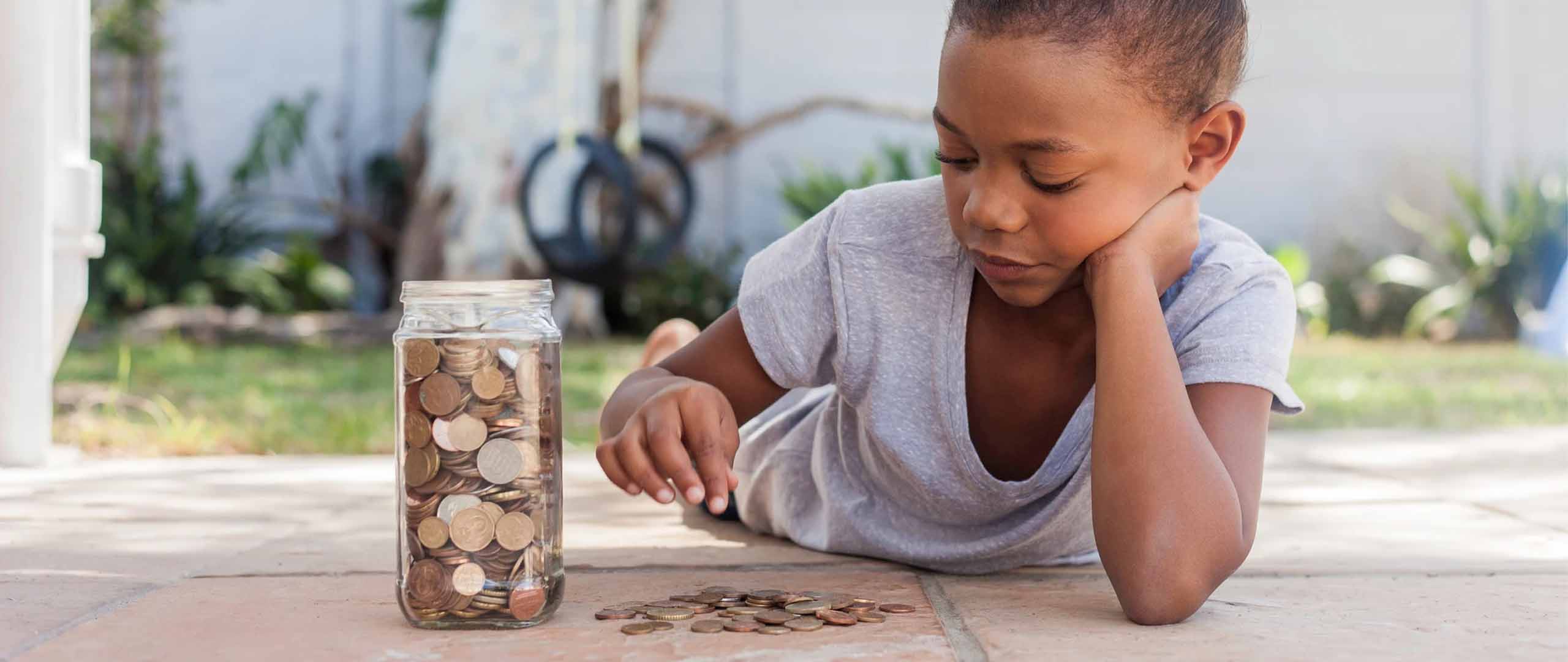
Three clear jars can make abstract money categories visible.
Label one jar Save, another Spend and another Give.
When a child receives money, help them decide how much should go into each jar.
The percentages do not need to be complicated.
Give the child $10 in play money and ask how they would divide it among saving, spending and giving. Then ask why they chose those amounts.
Help Them Choose a Savings Goal
Saving becomes easier to understand when the child knows what the money is for.
The goal might be a toy, book, game or special outing.
Write down the price and compare it with how much the child already has.
Then calculate how much more needs to be saved.
CFPB materials recommend using specific savings goals and breaking them into smaller steps. :contentReference[oaicite:2]{index=2}
Create a Savings Progress Chart
Children may find visual progress more motivating than simply hearing a balance.
Draw a thermometer, ladder or row of boxes.
Every time money is added, color in another section.
Put the target at the top so the child can see the distance between today's savings and the goal.

Set Up a Pretend Store at Home
Turn toys, fruit or household items into pretend shop products.
Add simple price tags.
Then let the child practice being both the customer and cashier.
This activity can teach counting, purchasing decisions and basic change.
Let Kids Compare Grocery Prices
Shopping can become a practical financial lesson.
Show two similar products with different prices.
Ask which costs less.
For older children, compare package sizes and unit prices where available.
Give the child two acceptable cereal options and ask which offers better value and why.
Give Them a Small Shopping Budget
A fixed amount forces real choices.
For example, give a child $5 or an age-appropriate amount for a snack or small treat.
If two desired items cost more than the budget, the child must decide which matters more.
That decision teaches a basic financial truth: money is limited.
Play Needs vs Wants
Write different items on cards.
Examples could include food, shoes, a game, water, a toy, housing and candy.
Ask the child to sort them into needs and wants.
Then discuss items that are not completely obvious.
For example, clothing is a need, but an expensive designer upgrade may be a want.

Practice With Pretend Money
Younger children can learn by handling physical representations of money.
Use play coins and notes to practice counting different amounts.
Later, create simple purchase exercises.
For example, ask which combination of coins could pay for a pretend $3 item.
Let Kids Earn Money Through Age-Appropriate Tasks
Children can learn that money often comes from work or value provided.
Depending on age and family approach, this might involve an allowance, additional household tasks, pet care or small supervised activities.
The FDIC highlights opportunities such as age-appropriate work and small entrepreneurial activities as ways to discuss earning, spending and saving. :contentReference[oaicite:3]{index=3}
Tasks should be safe, legal, age appropriate and supervised as necessary. Children should not be placed in risky work situations simply for the sake of a money lesson.
Have a Family Money Night
Make financial learning an occasional family activity rather than something discussed only when money is tight.
Choose a simple topic such as saving for a goal or planning a low-cost weekend.
Keep adult financial stress and private details out of the lesson.
The CFPB recommends family-oriented financial learning and everyday teachable moments. :contentReference[oaicite:4]{index=4}
Read Books That Include Money Decisions
Stories can make financial ideas easier to understand.
Look for age-appropriate books about saving, earning, sharing, waiting and making choices.
After reading, ask what the character could have done differently.
CFPB's Money as You Grow Bookshelf includes children's books and discussion guides built around financial concepts. :contentReference[oaicite:5]{index=5}
Offer a Small Savings Match
Parents can make saving more exciting by matching part of what a child saves.
For example, you might add 25 cents for every dollar the child puts toward a particular goal.
The CFPB specifically suggests savings matching as one way to reinforce saving habits. :contentReference[oaicite:6]{index=6}
Make the rules clear in advance so the child understands exactly how the match works.
Visit a Bank or Credit Union Together
A visit can make banking less abstract.
Explain that banks and credit unions provide places to hold money and offer financial services.
For an older child, discuss savings accounts and interest.
CFPB guidance suggests showing school-age children how savings accounts work and discussing why people use them. :contentReference[oaicite:7]{index=7}

Show How Digital Money Works
Children increasingly see adults tap cards or phones rather than hand over cash.
That can make spending appear almost invisible.
Explain that digital payments still reduce the amount available in an account.
For older children, show a safe example of how a bank balance changes after a purchase.
Do not share passwords, PINs, full account numbers or other sensitive financial credentials while teaching children.
Play a Saving and Spending Game
Games allow children to experience financial trade-offs without real financial consequences.
Create a simple game where the child earns pretend money, spends some and saves some.
Then introduce an unexpected event.
For example, a broken bicycle might cost five pretend dollars.
CFPB classroom activities use similar games to explore how spending choices affect saving and how emergency savings can help with unexpected costs. :contentReference[oaicite:8]{index=8}
Let Kids Plan a Low-Cost Family Activity
Give an older child a realistic budget for one family activity.
For example, ask them to plan an afternoon for $30.
They might compare admission prices, food costs and transportation.
This teaches budgeting while giving the child meaningful responsibility.
Give Two Choices Within One Budget
Opportunity cost becomes easier to understand through actual choices.
For example, a child with $10 might be able to buy one larger item or two smaller items.
Choosing one means giving up the other.
Ask which option provides more value to them.
Teach the Power of Waiting Before Buying
Waiting is an important money skill.
When a child wants something immediately, suggest adding it to a wish list.
Wait several days before deciding.
Sometimes the child will still want the item.
Other times, the excitement disappears.
Create a 7-day waiting rule for non-essential purchases above an age-appropriate amount.

Use Birthday Money to Practice Allocation
Birthday or holiday money creates a natural teaching opportunity.
Instead of telling the child exactly what to do, discuss options.
They might save part, spend part and give part.
Then let the child participate in the final decision at an age-appropriate level.
Show How Small Purchases Add Up
Children may understand a $2 purchase but not how repeated spending affects savings.
Use simple arithmetic.
A $2 snack bought five times costs $10.
If the child's savings goal costs $20, those purchases represent half the goal.
CFPB saving-and-spending activities specifically teach how small spending choices can affect the ability to save. :contentReference[oaicite:9]{index=9}
Let Children Practice Giving
Money can also be used to help others.
A child might choose to give part of their money to a cause, community activity or someone in need with appropriate parental guidance.
The lesson is not about requiring a particular percentage.
Instead, it shows that money decisions can reflect personal values.
Explain How Savings Can Grow
Older children can begin learning a simple version of interest.
Explain that some savings accounts may pay interest on money kept in the account.
Use very small examples rather than complicated formulas.
If a pretend bank adds $1 to every $100 saved during a particular example period, the child can see that saving may produce more than simply holding the original amount.
Let Older Kids Help Plan the Grocery Budget
Give an older child responsibility for planning one meal within a budget.
Ask them to list ingredients and estimate the cost.
Then compare estimated and actual prices in the store.
This combines budgeting, shopping and practical mathematics.
Think Out Loud About Everyday Money Decisions
Children often see what adults do without understanding why.
Explain simple decisions aloud.
For example: “These two products do the same job, so I'm checking which gives us better value.”
Or: “We're waiting until next month because this purchase isn't urgent.”
CFPB guidance for school-age children recommends thinking out loud so children can understand the reasoning behind everyday money decisions. :contentReference[oaicite:10]{index=10}
Celebrate Savings Milestones
Do not wait until the entire savings goal is complete.
Celebrate reaching 25%, 50% and 75% of the goal.
Recognition can be simple.
Update the chart, congratulate the child or let them choose a free family activity.
The objective is to reinforce the habit rather than reward saving with another expensive purchase.
Money Lessons by Age
| Age Range | Useful Concepts | Possible Activities |
|---|---|---|
| 3–5 | Money buys things, waiting, simple choices | Saving jar, pretend shop, needs vs wants |
| 6–9 | Saving goals, earning, prices, making choices | Shopping budget, savings chart, simple allowance |
| 10–12 | Budgeting, comparison shopping, digital money | Meal budget, price comparison, bank visit |
| 13–15 | Income, spending plans, banking, online spending | Personal budget, supervised account learning, savings goals |
| 16–18 | Work income, taxes basics, credit, long-term goals | Paycheck review, larger budget, banking practice |
Children develop at different rates. Adjust financial lessons to the child's maturity, understanding and individual needs rather than treating age ranges as rigid rules.
Real-Life Example: Saving for a Bicycle
Leo Wants a $60 Bicycle
Leo has $15 saved.
His parent helps him create a savings chart with a $60 target.
Leo earns small amounts from agreed age-appropriate extra tasks and saves part of birthday money.
Each time he adds $5, he colors another section of the chart.
Several weeks later, he reaches $45.
His parent offers a pre-agreed savings match for the final portion.
When Leo finally reaches the target, he understands that the bicycle represents several smaller decisions made over time.
Key lesson: A visible goal can make patience and repeated saving feel meaningful.
Case Study: The $10 Shopping Challenge
Maya Chooses Between Three Items
Maya is given a $10 budget during a supervised shopping trip.
She wants a $7 notebook, a $4 snack and a $6 craft item.
She quickly realizes she cannot purchase all three.
Her parent does not immediately tell her what to choose.
Instead, Maya compares which items she values most.
She selects the notebook and snack for $11, then realizes she is still over budget.
Eventually, she chooses the notebook and keeps the remaining $3.
Key lesson: A fixed budget teaches trade-offs more effectively than simply telling a child not to overspend.
Save vs Spend vs Give Example
| If a Child Receives | Save | Spend | Give |
|---|---|---|---|
| $10 | $4 | $5 | $1 |
| $20 | $8 | $10 | $2 |
| $50 | $20 | $25 | $5 |
These amounts are illustrations rather than recommended percentages. Families can choose a system that reflects their own values and the child's age.
Money Games Parents Can Create at Home
Price Guessing Game
Ask kids to estimate the price of everyday items before revealing the actual cost.
Needs vs Wants Race
Sort item cards into needs and wants as quickly as possible, then discuss disagreements.
Saving Challenge
Choose a small goal and track progress over several weeks.
Pretend Emergency Game
Give kids pretend money and introduce an unexpected expense after they have made spending decisions.
10 Mistakes to Avoid When Teaching Kids About Money
1. Making Every Money Conversation Negative
Children should not learn that money only means stress, arguments or fear.
2. Giving Too Much Financial Information Too Early
Keep explanations age appropriate and avoid burdening children with adult financial problems.
3. Teaching Only Saving
Children also need to learn how to spend thoughtfully and make choices.
4. Automatically Replacing Money They Spend
Natural consequences can teach that money used for one purchase is no longer available for another.
5. Turning Allowance Into a Complicated Contract
Keep the system simple enough for the child to understand.
6. Criticizing Every Spending Choice
Small mistakes can become useful learning experiences.
7. Ignoring Digital Spending
Children should understand that cards, apps and online purchases still use real money.
8. Comparing Siblings
Children may develop different money habits and learn at different speeds.
9. Using Shame
Correct the decision rather than labeling the child as irresponsible or bad with money.
10. Expecting One Lesson to Be Enough
Money skills develop through repeated experiences over time.
Kids Money Skills Checklist
- My child understands that money is limited.
- My child has practiced saving for a goal.
- We have discussed needs and wants.
- My child has made a spending choice within a limit.
- We have discussed earning money.
- My child understands that digital payments still use money.
- We have compared prices together.
- My child has seen how small purchases add up.
- We have discussed waiting before buying.
- My child knows that saving can provide more choices later.
- We keep financial discussions age appropriate.
- We avoid sharing sensitive banking credentials.
- We allow small mistakes to become learning opportunities.
- We revisit money lessons as the child gets older.
Continue Learning on MoneyOnliners
Recommended External Resources
Consumer Financial Protection Bureau — Money as You Grow
CFPB — School-Age Children and Saving
School-Age Children and Saving — CFPB
CFPB — Youth Financial Education
Youth Financial Education — CFPB
FDIC — Teaching Young People About Money
Teaching Young People About Money — FDIC
CFPB — Money as You Grow Bookshelf
Money as You Grow Bookshelf — CFPB
Currencies, banking systems, child-account rules and financial products vary by country. The basic lessons of earning, saving, spending, waiting and comparing choices can be adapted to local money and family circumstances.
Frequently Asked Questions
What age should I start teaching kids about money?
Money lessons can begin when a child is able to understand simple choices and waiting.
Young children can start with basic ideas such as saving coins in a jar and understanding that buying one thing can mean not buying another.
As they grow, lessons can expand into budgeting, banking and more complex financial decisions.
How do I teach a 5-year-old about money?
Keep lessons visual and simple.
Use coins, pretend shops, saving jars and needs-versus-wants activities.
Focus more on choices and waiting than on complicated mathematics.
How do I teach school-age children to save?
Help them choose something specific they want to save for.
Then break the target into smaller milestones.
A progress chart or clear savings jar can make progress visible.
Should kids receive an allowance?
Families approach allowances differently.
Some provide a regular allowance, while others connect some money to additional age-appropriate tasks.
Whatever approach you choose, explain the rules clearly and use the money as an opportunity to practice saving and spending.
Should children be paid for household chores?
There is no single right approach.
Some families expect basic chores as part of household responsibility while paying for extra tasks.
Others use an allowance system.
Choose a simple structure that supports the lessons you want to teach.
How much should children save?
There is no universal percentage.
The CFPB uses examples such as encouraging school-age children to save part of the money they receive, but families can choose an age-appropriate system that fits their own values. :contentReference[oaicite:11]{index=11}
Should kids have their own savings account?
A savings account can help older children understand banking and watch their balance grow.
Account eligibility and parental-control rules vary by bank and country.
Parents should review fees, access and account terms before opening one.
How can I teach kids the difference between needs and wants?
Use everyday examples.
Food may be a need, while a particular premium snack may be a want.
Clothing is necessary, while an expensive brand upgrade may be optional.
How do I teach children not to impulse buy?
Introduce a waiting period.
Add desired items to a list and revisit them later.
Over time, children can learn that wanting something immediately does not mean they must buy it immediately.
How can I teach kids about digital money?
Explain that card and app purchases still reduce available money.
Show safe examples of transactions and balances without exposing sensitive account information.
Are money games useful for children?
Yes. Games can provide practice with earning, saving, spending and unexpected expenses without risking real money.
The CFPB provides youth activities built around these kinds of financial choices. :contentReference[oaicite:12]{index=12}
How can grocery shopping teach kids about money?
Children can compare prices, find lower-cost options and help stay within a simple shopping budget.
Older children can also compare package size and unit pricing.
Should parents tell kids about family financial problems?
Money education should be age appropriate.
Children can learn that families have budgets and make choices without being burdened with adult financial stress or private financial problems.
How can teenagers learn about money?
Teenagers can practice creating budgets, comparing bank accounts, managing earnings and planning savings goals.
They can also learn basic concepts involving paychecks, taxes, credit and online financial safety.
What is the most important money lesson for children?
One of the most useful lessons is that money involves choices.
Saving one dollar means that dollar is available later.
Spending it means choosing something today instead.
Understanding that trade-off supports many other financial skills.
Research Methodology
This MoneyOnliners guide was developed using youth-financial-education guidance and activities from the Consumer Financial Protection Bureau and Federal Deposit Insurance Corporation.
The CFPB emphasizes age-appropriate teaching, practical activities and building financial knowledge, skills and habits over time.
Its Money as You Grow materials include saving goals, conversations, books and activities for children of different ages. :contentReference[oaicite:13]{index=13}
FDIC guidance similarly encourages adults to use everyday experiences such as work, bills and purchases to discuss earning, saving and spending with young people. :contentReference[oaicite:14]{index=14}
The fictional children, dollar amounts and activities in this article are educational illustrations. Parents and caregivers should adapt each activity to the child's age, maturity, abilities and local circumstances.
Final Thoughts: Make Money Lessons Part of Everyday Life
Teaching children about money does not require turning the kitchen table into a finance classroom.
Some of the most useful lessons already happen during normal family life.
Let Children Make Small Choices
Give them opportunities to choose between two purchases.
Let them save toward something they want.
Allow them to experience what happens when money is spent and is no longer available.
Make Progress Visible
Savings jars, charts and milestones can turn an abstract balance into something a child understands.
Likewise, games can help children explore financial choices without real financial consequences.
Talk About the Reason Behind Your Decisions
Children see parents make money decisions every day.
Explain why you compare prices, delay purchases or save for future expenses.
Most importantly, keep the conversation appropriate for the child's age.
Ultimately, one of the best ways to teach kids about money is to give them repeated, safe opportunities to practice earning, saving, spending, waiting and choosing.
Those small experiences can gradually build money habits that become more useful as financial decisions grow larger later in life.