Get Paid to Donate Stool: Legit Programs, Pay & Requirements
Get Paid to Donate Stool: Legit Programs, Pay & Requirements
Learn how compensated stool donation and microbiome research really work, why donor screening is strict, which programs need verification, and how to calculate whether this unusual side hustle is actually worth your time.
Yes, some legitimate stool-donor programs, microbiome studies and clinical research projects may compensate carefully screened participants. However, qualifying can be difficult, compensation varies widely, and many opportunities mentioned in older side-hustle articles are historical, study-specific or no longer clearly open to the public. This guide treats current recruitment, medical screening, privacy, compensation and net value separately so you can evaluate each opportunity realistically.
Part 1 — How Paid Stool Donation Really Works
Important: This article is educational and does not provide medical advice. Never change medication, diet or medical treatment to qualify for a donor program. Follow only the instructions of the legitimate medical or research institution running the program.
1. Can You Really Get Paid to Donate Stool?
Yes. Some authorized research programs, microbiome studies and donor systems compensate qualified participants for time, inconvenience, study participation or accepted donations. However, this is not a simple walk-in side hustle. A legitimate program may require extensive medical history review, blood testing, stool testing, infectious-disease screening, behavioral-risk assessment and ongoing monitoring.
“Get paid to donate stool” can mean per-sample compensation, paid research visits, study stipends or travel reimbursement—not one standardized job.
2. What Is Stool Donation?
Stool donation involves providing fecal samples to an authorized medical, research or microbiome program. Samples may support microbiome research, clinical research, development of donor-derived products or other approved scientific purposes.

3. Why Do Researchers Need Donated Stool?
Researchers study the gut microbiome to understand microbial diversity, digestive health, infectious disease, diet, medication effects and other biological relationships. The value comes from carefully collected, well-documented samples—not simply from stool as a commodity.
A university study comparing gut microbiomes may recruit healthy participants to provide health information, biological samples and follow-up data. Compensation may cover participation in the research protocol rather than the stool alone.
4. Stool Donation vs Microbiome Research vs FMT
| Term | What It Means |
|---|---|
| Stool donation | Providing a fecal sample under an authorized protocol |
| Microbiome research | Studying microorganisms and biological characteristics of the sample |
| FMT | Use of donor-derived fecal microbiota for transplantation in a medical context |
5. FMT Regulation Is More Nuanced Than “FDA-Approved”
In the United States, FDA's November 2022 guidance describes limited circumstances in which the agency intends to exercise enforcement discretion concerning IND requirements for FMT used to treat Clostridioides difficile infection that has not responded to standard therapies. Importantly, that policy does not apply to FMT obtained from a stool bank.
Medical accuracy: FMT should not be presented as a general approved treatment for every gastrointestinal condition. Regulatory requirements depend on how fecal microbiota products are produced, studied and used.
6. Why Programs Compensate Donors
Participation can involve questionnaires, interviews, medical examinations, laboratory testing, travel, repeated visits, dietary or lifestyle reporting, sample collection and continued monitoring. Therefore, compensation may recognize time, inconvenience and compliance with the study or donor protocol.
7. How Much Can You Get Paid to Donate Stool?
There is no universal pay rate. Compensation can depend on the institution, study, location, sample acceptance, donor status and current recruitment needs.
OpenBiome has published historical documentation describing compensation for processed donations. Those figures are useful for understanding past donor models, but they should not automatically be presented as a current public offer.
8. Why Big Monthly Income Claims Need Care
A claim such as “earn $1,500 per month” is incomplete unless it explains whether the program is currently recruiting, how many accepted donations are required, whether every sample is compensated, how many applicants qualify and what travel or time costs are involved.
9. Not Every Sample May Be Accepted
Historical stool-bank documentation shows that samples can fail processing requirements for quality or protocol reasons. Therefore, providing a sample does not necessarily guarantee compensation unless the program explicitly says it pays for every submitted visit or sample.
A hypothetical program pays $50 per accepted sample. You submit 12 samples, but 9 qualify. Gross compensation would be $450—not $600.
10. Calculate Your Real Earnings
Gross Compensation − Direct Participation Costs = Net Compensation
Net Compensation ÷ Total Time = Approximate Effective Hourly Value

11. Why Screening Is So Strict
Fecal microbiota products can transmit pathogenic organisms if screening and processing are inadequate. FDA has issued safety alerts concerning serious adverse events linked to transmission risks, which is why responsible programs use formal donor screening and testing.
12. How Hard Is It to Qualify?
OpenBiome has reported that fewer than 3% of prospective candidates qualified under one of its highly selective donor-screening systems. That figure should not be generalized to every study, but it shows that some stool-donor programs are extremely selective.
100 Interested Applicants
Some applicants fail basic eligibility, others do not pass medical-history screening, laboratory testing may exclude more candidates, and some people live too far from the collection site. High compensation does not automatically mean high accessibility.
13. What Happens During Screening?
Initial Application
Age, location, availability and general health.
Medical Questionnaire
Health history, medication, travel and risk factors.
Clinical Evaluation
Program-specific medical or research assessment.
Laboratory Testing
Blood and stool testing under the protocol.
Final Qualification
Only eligible candidates become active donors.
Ongoing Monitoring
Repeat questionnaires or testing may be required.

14. Common Screening Areas
| Screening Area | What May Be Reviewed |
|---|---|
| General health | Overall medical history |
| GI health | Digestive conditions and symptoms |
| Medication | Current and recent medications |
| Antibiotics | Recent exposure may matter |
| Travel | Recent destinations and exposure risks |
| Infectious disease | Potential exposure or history |
| Bowel habits | Frequency and consistency |
| Location | Ability to reach the collection site |
15. Do Not Change Your Health to Qualify
Never stop prescribed medication, hide symptoms, conceal antibiotic use or alter your medical history to qualify. If a program has dietary or lifestyle requirements, follow only the official instructions from that legitimate program or an appropriate healthcare professional.
16. How Often Might Donors Participate?
Donation frequency depends entirely on the program. A study might need one sample, several scheduled samples or repeated participation. A frequent donor program can have a much more demanding schedule.
17. Can You Donate From Home?
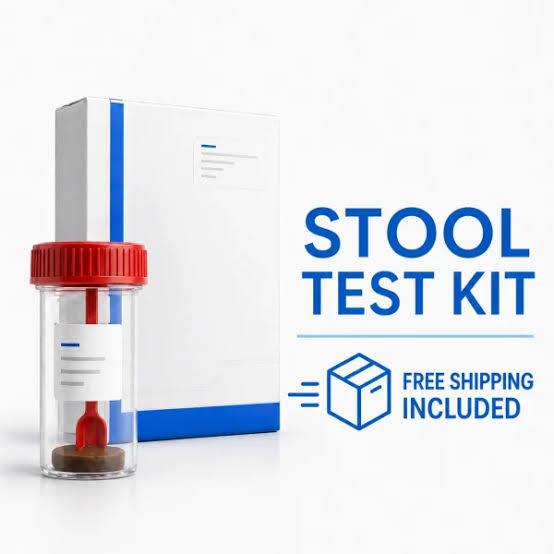
Some research studies may provide an approved home-collection kit, while other programs require on-site collection. Never independently collect or ship biological material without the institution's official protocol.

18. Location Changes the Real Value
A program may look attractive until you account for travel. A $50 accepted-donation payment can be very different economically if one donor travels 10 minutes and another travels 75 minutes each way.
19. Privacy and Consent Matter
Applications can involve sensitive medical, lifestyle and biological information. Before enrolling, understand what data is collected, who can access it, how samples may be used and what happens if you withdraw.

20. Is This a Good Side Hustle?
| Method | Easy to Start? | Location Restricted? | Medical Screening? | Scalability |
|---|---|---|---|---|
| Stool donation | Low | Often | Yes | Low |
| Paid surveys | High | Sometimes | No | Low |
| Selling unused items | High | Somewhat | No | Medium |
| Freelancing | Medium | Usually low | No | High |
| Remote work | Medium | Sometimes | No | High |
Part 2 — Legitimate Programs & Research Opportunities
This section corrects the common mistake of treating every name in an old list as a current paid public donor program.
21. Original Nine-Program List — Corrected Status
| Program | MoneyOnliners Classification | Compensation Status |
|---|---|---|
| OpenBiome | ⚠ Established stool-bank organization | Historical pay documented; current public offer needs verification |
| Broad Institute | ⚠ Research institution | Study-specific compensation may exist |
| Finch Therapeutics | ✕ Not a current donor side hustle | Do not use old pay figures |
| Seres / VOWST ecosystem | ⚠ Donor-derived manufacturing documented | Current public recruitment/pay unconfirmed |
| UCLA | ⚠ Study-specific research | Verify individual studies |
| Mayo Clinic | ⚠ Clinical/research institution | Standing paid donor program unconfirmed |
| BiomeBank | ✓ Current donor program infrastructure | Verify current compensation directly |
| Taymount Clinic | ⚠ Needs current verification | Do not quote old pay rate |
| Clinical Microbiomics | ⚠ Needs current verification | Do not quote old pay rate |
22. OpenBiome
OpenBiome remains an authoritative stool-banking and microbiome organization. Its published materials provide extensive information about donor screening, stool banking and historical compensation models. However, historical compensation should not be treated as a guaranteed current public offer.

23. Broad Institute
The Broad Institute conducts major microbiome research and has collaborated with OpenBiome in creating microbiome resources. However, that does not establish a standing public donor program paying a fixed amount per stool sample. Readers should look for current study-specific recruitment through official sources.
24. Finch Therapeutics
Do not present Finch as a current stool-donation side hustle. Finch discontinued its Phase 3 CP101 program in 2023 and changed its corporate focus. Historical donor activity does not equal current public recruitment.
Why Old Lists Mislead
Michael finds several old articles repeating that Finch pays per sample. The information originated when CP101 was still active. The program later changed. Repetition across old blogs does not make an opportunity current.
25. Seres / VOWST Ecosystem
Donor-derived microbiota manufacturing has used qualified donors and extensive pathogen screening. However, public donor recruitment and current compensation cannot be assumed from the existence of the product itself.
26. UCLA
UCLA conducts gastrointestinal and microbiome research, but opportunities should be treated as study-specific. A university may compensate participants for an entire research protocol rather than purchasing stool at a fixed rate.
27. Mayo Clinic
Mayo Clinic is a major medical and research institution. However, its clinical credibility does not by itself prove a currently open public stool-donor program paying a fixed rate per sample.
28. BiomeBank — Australia
Strongest current donor-program candidate from the original list: BiomeBank currently maintains identifiable stool-donor screening infrastructure in Australia. Current compensation should still be verified directly before relying on any pay amount.
29. Taymount Clinic
Older articles describe Taymount as a paid donor opportunity, but the current public compensation claim needs direct verification before publication.
30. Clinical Microbiomics
The organization operates in the microbiome research ecosystem, but a general public paid donor opportunity and the old quoted per-sample pay rate should not be presented as current without official confirmation.
31. Where to Look for Better Current Opportunities
Dedicated Stool Banks
Look for current donor screening infrastructure.
University Studies
Search current microbiome research recruitment.
Clinical Trials
Check official research registries and hospital portals.
Therapeutic Programs
Some donor systems are private and may not recruit publicly.

32. Better Search Terms for “Donate Stool Near Me”
- healthy stool donor research [city]
- paid microbiome research [city]
- healthy volunteer stool study [city]
- stool donor program [city]
- FMT research volunteers [city]
- gut microbiome paid research [university]
33. Paid Per Sample vs Paid Research Participation
| Structure | Example |
|---|---|
| Per accepted sample | $X for each qualifying sample |
| Per visit | Compensation for a research appointment that includes sample collection |
| Study stipend | Compensation for completing the full protocol |
| Travel reimbursement | Repayment of approved transport or parking costs |
| Completion bonus | Additional payment after all follow-ups |
34. Net Compensation Matters More Than Headline Pay
The “Higher-Paying” Program
Program A pays $75 per visit but is far away. Program B pays $50 but is nearby. After transport and parking, the net difference may be tiny. Compare net compensation, not the headline amount.
35. Ask Whether Screening Is Paid
Some studies compensate screening visits and some do not. Before participating, check whether application time, laboratory visits, travel and unsuccessful screening are compensated.
36. Sample Acceptance Also Changes Income
Do not calculate projected monthly income using scheduled visits alone if the program only pays for accepted or processed samples.
37. Medical Screening Is Not an Obstacle to Beat
Never conceal health conditions, antibiotic use, medication, travel, symptoms or exposure risks. Screening protects patients, participants and research integrity.
38. Scam Warning
- Huge guaranteed monthly pay
- No health screening
- No identifiable institution
- No consent process
- Registration or crypto fee
- Unknown biological sample destination
- No privacy notice
- Pressure to ship immediately
39. Stool Donation vs Other Paid Research
If stool donation is unavailable, official universities and medical centers may recruit participants for nutrition, sleep, exercise, psychology, healthy-volunteer or other clinical research studies. Compensation, risks and procedures vary.
40. Part 2 Opportunity Scorecard
| Opportunity | Institution Legitimacy | Current Donor Evidence | Current Pay Evidence |
|---|---|---|---|
| OpenBiome | Strong | Medium | Low/current public offer unconfirmed |
| Broad Institute | Strong | Research-specific | Study-specific |
| Finch | Strong company history | Low/current donor side hustle | None |
| Seres/VOWST | Strong | Donor system documented | Current public pay unconfirmed |
| UCLA | Strong | Study-specific | Study-specific |
| Mayo Clinic | Strong | Unclear public program | Unclear |
| BiomeBank | Strong | Strong | Verify directly |
| Taymount | Needs current verification | Unclear | Unclear |
| Clinical Microbiomics | Strong scientific context | Unclear public program | Unclear |
Part 3 — Qualification, Safety, Real Earnings & Is It Worth It?
41. Why Getting Paid to Donate Stool Matters
An Unusual but Legitimate Income Opportunity
Getting paid to donate stool is unusual, but legitimate microbiome research and donor programs can compensate carefully screened participants for their time and participation.
In addition, these opportunities show that some side hustles exist inside scientific and medical research rather than traditional gig-work platforms.
However, compensation does not mean an opportunity is easy to access. Screening requirements can be demanding.
For example, some highly selective donor programs have historically accepted only a small percentage of applicants.
Therefore, eligibility matters just as much as the advertised compensation when evaluating a program.
Understand the Real Economics
A high per-sample payment can look attractive at first. Yet travel, screening time and rejected samples can reduce the real value.
Likewise, payment structures differ. One program may pay per accepted donation, while another compensates participants for study visits or completion of a research protocol.
As a result, calculate net compensation instead of relying only on the headline payment.
Furthermore, donation frequency can vary significantly between programs, which directly affects possible monthly earnings.
Ultimately, location and total time commitment determine whether getting paid to donate stool is financially worthwhile for you.
Health, Privacy and Safety
Donor screening is essential because it helps protect research participants, patients and scientific integrity.
Similarly, biological samples can carry infectious risks when screening and processing are inadequate.
Applicants may also need to provide sensitive information about their health, medication, travel and lifestyle.
For that reason, check the privacy policy, informed-consent process and institutional oversight before participating.
Above all, never hide symptoms, medication use or other medical information simply to qualify for compensation.
Keep a Long-Term Financial Perspective
For qualified participants, stool donation may provide useful supplemental income.
Nevertheless, it has limited scalability compared with freelancing, remote work, digital skills or building a business.
If you are rejected, consider another legitimate side hustle rather than trying to bypass a program's eligibility rules.
More importantly, no side hustle is worth compromising your health or ignoring professional medical guidance.
Finally, treat getting paid to donate stool as one possible extra-income opportunity within a broader plan to earn more, protect your money and build a stronger financial future.
42. What Happens If You Pass the Initial Application?
Passing the first questionnaire does not make you an approved donor. Instead, the program may continue with a detailed health review, clinical assessment and laboratory testing. Final qualification and ongoing monitoring may follow.
43. Never Try to Beat Screening
If the program asks about recent antibiotics and you used them, answer truthfully even if you fear disqualification. Never alter or hide medical information for compensation.
44. Temporary vs Long-Term Ineligibility
Some exclusions may be temporary. Others may make someone unsuitable for a particular study. Therefore, follow the program's official guidance about whether and when reapplication is appropriate.
45. What If a Sample Is Rejected?
Ask whether payment is based on a visit, submitted sample or accepted sample. The distinction changes projected earnings dramatically.
46. Calculate Real Monthly Compensation
Eight accepted hypothetical donations at $50 each = $400 gross. Subtract $64 transport, $24 parking and $12 other direct costs = $300 net. If total participation time is 18 hours, approximate effective value is $16.67/hour.

47. Screening Time Has Value Too
An application, phone screening, clinical visit, travel and lab work can add up to hours before approval. Moreover, if screening is unpaid and you do not qualify, compensation may be zero.
48. Ask These Compensation Questions
49. “Donate Stool Near Me” — Better Search Workflow
Use professional search terms first. Then, verify each result through the official university, hospital, clinical-trial registry or company domain. A side-hustle blog can provide a lead, but it should not be your application portal.

50. Privacy Is Part of the Cost
Applications may involve sensitive health, medication, travel, lifestyle and biological information. Read the consent and privacy documents carefully before participating.
51. Informed Consent Matters
Legitimate research participation should explain the purpose, procedures, possible risks, privacy rules, compensation, voluntary participation and withdrawal rights.

52. Never Pay to Become a Stool Donor
Be cautious about unexplained registration fees, crypto payments, “donor certification” charges, gift-card payments, wire transfers or mandatory products from unknown sellers.
53. Stool Donation Scam Warning
An ad promises “$4,000 monthly, no tests, apply in two minutes.” Before sharing medical or banking information, independently verify the institution, official study purpose, screening, compensation and privacy process.
54. Tax and Expense Considerations
Tax treatment depends on country, compensation structure and individual circumstances. Keep payment and reimbursement records and use applicable tax-authority guidance or qualified tax advice when needed.
55. Is Stool Donation Worth It?
| More Attractive When | Less Attractive When |
|---|---|
| Program is nearby | Long travel is required |
| Compensation is clear | Payment rules are vague |
| Schedule fits your routine | Frequent visits disrupt work |
| Screening is transparent | Privacy terms are unclear |
| Net hourly value is reasonable | Costs consume most compensation |
56. Stool Donation vs Paid Surveys
| Factor | Stool Donation | Paid Surveys |
|---|---|---|
| Entry difficulty | High | Low |
| Medical screening | Significant | No |
| Location restrictions | Often | Less often |
| Compensation per activity | Potentially higher | Usually lower |
| Career skill building | Low | Low |
57. Stool Donation vs Freelancing
| Factor | Stool Donation | Freelancing |
|---|---|---|
| Medical eligibility | Required | No |
| Location dependence | Often | Often low |
| Skill requirement | Low professionally | Yes |
| Rate growth | Limited | Can increase |
| Portfolio value | No | Yes |
| Scalability | Low | Medium/High |
58. What If You Are Rejected?
Rejected but Redirected
Sarah does not qualify for a donor program. Instead of hiding information on another application, she spends time learning basic Canva design and later completes hypothetical paid projects. One side hustle not working does not mean you are out of options.
59. Build a Better Side-Hustle Progression
Unusual Side Hustle → Small Earnings → Learn What Your Time Is Worth → Build Skills → Earn More → Build Systems
60. 30-Day Stool Donation Application Roadmap
Week 1 — Research
Verify programs, recruitment, location and compensation.
Week 2 — Screening
Complete legitimate official forms accurately.
Week 3 — Evaluate
Track time, appointments, costs and requirements.
Week 4 — Decide
Calculate net value if accepted; move on if rejected.

61. MoneyOnliners Final Opportunity Scorecard
| Factor | 0 | 1 | 2 |
|---|---|---|---|
| Institution legitimacy | Unknown | Some evidence | Strong |
| Current recruitment | Unknown | Limited | Confirmed |
| Compensation | Unverified | Partial | Clear |
| Screening | None | Limited | Formal |
| Consent | Missing | Basic | Detailed |
| Privacy | Missing | Basic | Clear |
| Location | Impractical | Manageable | Convenient |
| Travel costs | High | Moderate | Low |
| Donation schedule | Unclear | Difficult | Manageable |
| Payment conditions | Hidden | Partial | Clear |
17–20: Strong candidate for further investigation. 12–16: Research carefully. 7–11: Too many unanswered questions. 0–6: Do not proceed without substantially more verification.
62. Continue Learning
63. Frequently Asked Questions
Eligibility and Compensation
Can you really get paid to donate stool?
Yes. Some legitimate stool-donor programs and microbiome research studies compensate qualified participants. Opportunities are limited and screening can be strict.
How much can you get paid?
There is no universal rate. Compensation may be per accepted sample, study visit, completed protocol or another arrangement.
Can I make $1,500 per month?
Older articles have used that figure, but it should not be treated as guaranteed or broadly available current income. Verify the specific program, current pay, donation frequency and sample-acceptance rules.
Do I get paid if I fail screening?
It depends on the study. Some may compensate screening visits; others may not.
Do all submitted samples get paid?
Not necessarily. Some programs may pay only for accepted or processed samples.
Safety and Medical Questions
Why is screening so strict?
Programs need to reduce infectious and other biological risks and maintain research quality.
Can I change my diet to qualify?
Do not make medical or dietary changes solely to qualify unless instructed by the legitimate program or an appropriate healthcare professional.
Should I stop antibiotics or medication to qualify?
No. Never change prescribed medical treatment for compensation.
Can I donate from home?
Some research studies may provide approved home-collection kits. Others require on-site collection. Follow only the program's official instructions.
Opportunity and Strategy
Do I need to live nearby?
Often, yes—especially for frequent donor programs. Study-specific home collection may differ.
Is stool donation a good side hustle?
It can provide supplemental income for qualified people living near an appropriate program, but it has low scalability and strict eligibility.
Are stool donation programs scams?
Legitimate programs exist, but fake offers can imitate them. Verify every opportunity through an official institution.
Is it better than freelancing?
Stool donation can be simpler from a professional-skills perspective, but freelancing has much stronger long-term earning and skill-development potential.
64. Recommended External Resources
65. Research Methodology
MoneyOnliners evaluated this topic using: Program Legitimacy → Current Recruitment → Medical Screening → Compensation → Location → Net Value → Safety.
The article does not assume an organization is currently recruiting simply because it operated a donor program historically. Likewise, historical compensation is not presented as a current public offer without verification.
Educational examples are hypothetical and do not claim that specific individuals earned the amounts shown. This article is informational and does not provide medical advice.
Final Thoughts
Yes, it is possible to get paid to donate stool, but this is not an easy side hustle where anyone can sign up, provide a sample and collect hundreds of dollars.
Legitimate donor and microbiome research programs may require detailed screening, laboratory testing, repeated appointments, strict eligibility, controlled sample collection and ongoing monitoring. Moreover, many opportunities mentioned in older articles are historical or no longer clearly open to paid public donors.
Verify → Screen → Understand → Calculate → Participate Safely
Your Next Step
Investigate unusual opportunities carefully, but keep building toward stronger, more scalable income skills.