
From Freelancer to Digital Asset Builder (2026 Guide) How to Turn Skills Into Long-Term Online Income
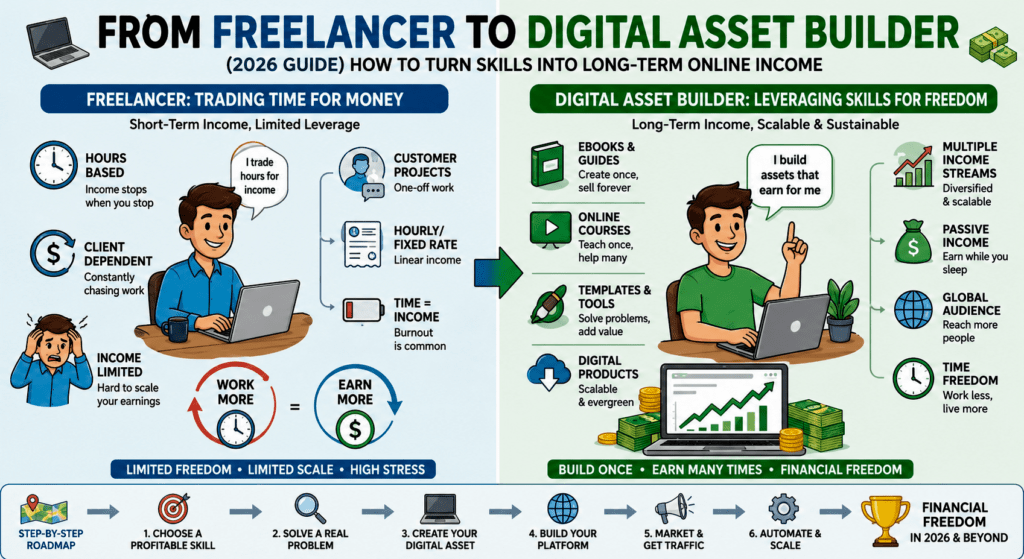
From Freelancer to Digital Assets in 2026
Many people begin freelancing to earn income online, but long-term success often comes from learning how to transition from freelancer to digital assets. Freelancing helps beginners build:
- experience,
- confidence,
- client communication skills,
- and valuable digital expertise.
However, many freelancers eventually realize that client-based income can become difficult to scale because earnings are usually connected directly to time and active work. This means taking breaks, losing clients, or reducing workload can immediately affect income stability. This is one reason more freelancers are now focusing on building digital assets such as:
- blogs,
- SEO websites,
- affiliate content,
- online courses,
- email lists,
- and digital products.
Unlike one-time freelance projects, digital assets continue generating value over time through:
- search traffic,
- audience growth,
- internal linking,
- and long-term SEO authority.
The transition from freelancer to digital assets helps freelancers gradually move away from unstable income cycles and toward scalable online business systems that can continue growing for years.
In 2026, search engines increasingly reward websites that demonstrate:
- expertise,
- educational value,
- trustworthiness,
- topical depth,
- and strong user experience.
This creates major opportunities for freelancers willing to:
- learn SEO,
- build authority,
- publish useful content,
- and create digital assets around their skills.
Whether you are:
- a writer,
- designer,
- SEO specialist,
- developer,
- marketer,
- or content creator,
learning how to move from freelancer to digital assets can help you build: - stronger online authority,
- scalable traffic,
- recurring income,
- and long-term online business growth.
If you are still learning how online income systems work, read our:
https://moneyonliners.com/how-online-income-works/

Why Moving From Freelancer to Digital Assets Matters
Freelancing can create fast online income opportunities, but digital assets create scalability.
Most freelancers eventually reach a limit because:
- there are only so many client hours available,
- income depends on active work,
- and long-term growth becomes difficult without systems.
The transition from freelancer to digital assets allows freelancers to create:
- recurring traffic,
- passive income opportunities,
- stronger authority,
- and scalable online growth.
Many freelancers start by using the same skills they already provide to clients. For example:
- writers can create blogs,
- designers can sell templates,
- SEO specialists can publish tutorials,
- and developers can build educational websites.
Instead of relying only on active client work, freelancers begin creating online assets that continue attracting visitors through:
- Google search,
- SEO rankings,
- email marketing,
- and content authority.
Over time, these digital assets may generate:
- affiliate commissions,
- sponsorships,
- advertising revenue,
- product sales,
- and long-term traffic.
This creates far more flexibility compared to depending entirely on client projects and deadlines.
Another major advantage of moving from freelancer to digital assets is ownership.
Unlike freelance projects that end after delivery, digital assets continue growing through:
- SEO optimization,
- internal linking,
- backlinks,
- and audience trust.
This compounding effect is one reason many successful online entrepreneurs originally started as freelancers before building scalable digital businesses.
Common Digital Assets Freelancers Can Build
Many freelancers already possess valuable skills that can become scalable digital assets over time.
Examples include:
- writing,
- graphic design,
- SEO,
- web development,
- video editing,
- marketing,
- and content creation.
Instead of only selling services, freelancers can build systems around these skills.
Blogging Websites
Blogging remains one of the strongest digital assets because articles can continue attracting search traffic for years.
A freelancer may create tutorials about:
- SEO,
- blogging,
- online business,
- freelancing,
- or productivity.
Over time, those tutorials may rank in Google and generate:
- traffic,
- affiliate income,
- sponsorship opportunities,
- and email subscribers.
One of the biggest advantages of blogging is long-term compounding growth.
Unlike social media posts that disappear quickly from visibility, blog posts can continue generating:
- traffic,
- authority,
- affiliate clicks,
- and monetization opportunities
for months or even years.
For example:
A beginner may publish a tutorial about:
- SEO basics,
- affiliate marketing,
- or freelancing strategies.
Initially, the article may receive little traffic. However, after:
- SEO optimization,
- keyword improvements,
- internal linking,
- and backlinks,
the same article may begin ranking for dozens of related search terms.
Over time, older articles continue attracting visitors while newer content expands the website’s authority further.
This is one reason blogging remains one of the strongest long-term online business models in 2026.
Another important advantage of blogging is ownership. Unlike social media platforms that can change algorithms anytime, a website gives freelancers more control over:
- branding,
- SEO,
- content,
- monetization,
- and audience relationships.
This makes blogging especially valuable for building long-term digital assets.
You can also explore:
https://moneyonliners.com/passive-income-blogging/
Affiliate Websites
Affiliate marketing allows freelancers to monetize educational content naturally.
For example:
A freelancer teaching SEO may recommend:
- SEO tools,
- hosting providers,
- email marketing platforms,
- and keyword research software.
When readers purchase through affiliate links, commissions are earned.
Affiliate marketing works best when:
- trust comes before monetization,
- content provides genuine value,
- and recommendations feel natural.
Many beginners make the mistake of aggressively placing affiliate links without helping readers properly. However, successful affiliate websites usually focus on:
- education,
- tutorials,
- comparisons,
- problem-solving,
- and honest recommendations.
Search engines increasingly reward affiliate websites that include:
- educational depth,
- trustworthy experiences,
- original insights,
- and strong user engagement.
Thin affiliate pages with little value often struggle to rank long term.
This is why combining:
- affiliate marketing,
- blogging,
- SEO,
- and educational content
creates much stronger long-term results.
Popular affiliate platforms include:
You can also read:
https://moneyonliners.com/affiliate-marketing-business/
Digital Products
Freelancers can also create:
- ebooks,
- templates,
- premium guides,
- online courses,
- checklists,
- and downloadable resources.
Digital products are powerful because they:
- scale easily,
- require no inventory,
- and generate recurring income opportunities.
For example:
A freelance designer may sell:
- logo templates,
- Canva kits,
- branding resources,
- and social media packs.
A freelance writer may create:
- blogging courses,
- SEO writing guides,
- or content templates.
These products transform freelance expertise into scalable digital assets.

How SEO Helps Freelancers Build Digital Assets
SEO is one of the most important systems behind long-term digital asset growth. Many freelancers initially focus only on:
- client projects,
- freelance marketplaces,
- referrals,
- and short-term income opportunities.
However, SEO allows freelancers to build online systems that continue attracting:
- traffic,
- authority,
- leads,
- and monetization opportunities
long after the original content is published.
This is one of the biggest reasons why the transition from freelancer to digital assets has become increasingly popular in 2026.
Unlike paid advertising, SEO can continue generating organic traffic without requiring constant advertising budgets. A well-optimized article may continue ranking in Google and attracting targeted visitors for:
- months,
- years,
- or even longer.
This creates powerful long-term growth opportunities for freelancers willing to invest in:
- content creation,
- keyword research,
- internal linking,
- and topical authority.
SEO Creates Long-Term Organic Traffic
One of the strongest advantages of SEO is long-term organic visibility.
Search engines process billions of searches daily from users looking for:
- tutorials,
- solutions,
- services,
- reviews,
- and educational content.
Freelancers who publish SEO-optimized content can position themselves directly in front of these users.
For example:
A freelance writer may publish articles targeting:
- SEO writing tips,
- blogging strategies,
- content marketing,
- or freelance productivity.
A freelance designer may target:
- branding tutorials,
- Canva design tips,
- UI design resources,
- or logo creation guides.
As these articles begin ranking, they continue attracting targeted traffic consistently.
This creates opportunities for:
- affiliate income,
- email subscribers,
- client inquiries,
- digital product sales,
- and authority building.
The transition from freelancer to digital assets becomes much more powerful when SEO traffic starts compounding over time.
SEO Helps Freelancers Build Authority
Search engines increasingly reward websites that demonstrate:
- expertise,
- educational value,
- topical authority,
- and trustworthiness.
This creates major opportunities for freelancers to position themselves as experts within their industries.
For example:
A freelancer consistently publishing tutorials about:
- SEO,
- freelancing,
- blogging,
- affiliate marketing,
- or design
gradually builds stronger topical authority.
As authority increases:
- rankings improve,
- traffic grows,
- backlinks become easier to earn,
- and audience trust strengthens.
Many users naturally associate strong Google rankings with:
- credibility,
- expertise,
- and professionalism.
This means SEO does not only generate traffic — it also strengthens:
- branding,
- trust,
- and long-term business authority.
Over time, freelancers who consistently publish educational content often become recognized as industry experts.
SEO Helps Freelancers Build Passive Traffic Systems
One of the biggest differences between freelancing and digital assets is scalability.
Freelancing often requires:
- active work,
- client management,
- and continuous time investment.
SEO-driven digital assets help freelancers build systems that continue working even while:
- sleeping,
- traveling,
- or focusing on other projects.
For example:
A freelancer may spend several days creating:
- a detailed tutorial,
- an affiliate guide,
- or a beginner SEO article.
Initially, traffic may remain low.
However, after:
- optimization,
- keyword improvements,
- internal linking,
- and backlink growth,
the same article may continue attracting visitors for years.
This creates passive traffic systems that help freelancers reduce dependence on constant client work.
The more SEO-focused content freelancers publish, the stronger these systems become over time.
SEO and Keyword Research Work Together
Keyword research is one of the foundations of SEO growth.
Instead of guessing topics randomly, freelancers can identify exactly what users are already searching online.
For example:
A freelancer targeting:
- “freelancer to digital assets”
may also rank for related searches such as: - freelancer passive income,
- blogging for freelancers,
- SEO for freelancers,
- build digital assets online,
- and scalable online business systems.
Long-tail keywords are especially valuable because they often:
- have lower competition,
- target specific search intent,
- and attract highly relevant visitors.
New websites usually perform better targeting:
- beginner-focused searches,
- informational queries,
- and educational keywords
before competing for highly competitive broad terms.
This helps freelancers build:
- topical authority,
- early traffic,
- and stronger search visibility gradually.
Internal Linking Strengthens SEO Growth
Internal linking is another major part of SEO growth.
Strong SEO websites connect related content naturally.
For example:
An article about:
- freelancing
may internally link to: - SEO tutorials,
- blogging guides,
- affiliate marketing strategies,
- and digital product resources.
This improves:
- crawlability,
- user engagement,
- topical authority,
- and keyword relevance.
Internal linking also helps users continue exploring related content instead of leaving the website quickly.
For example:
A visitor reading about:
- SEO for freelancers
may continue reading: - affiliate marketing guides,
- blogging tutorials,
- and online business strategies.
This improves:
- session duration,
- page views,
- and engagement signals.
Search engines interpret these behaviors as indicators of useful and relevant content.
SEO Compounds Over Time
One of the most powerful aspects of SEO is compounding growth.
Every:
- article,
- keyword ranking,
- internal link,
- backlink,
- and content update
helps strengthen the website further.
For example:
A freelancer may publish:
- 10 articles,
- then 30 articles,
- then 100 articles
over time.
As content expands:
- topical authority increases,
- keyword visibility grows,
- and newer content often ranks faster.
Older articles also continue attracting traffic while newer articles expand reach further.
This creates a compounding SEO effect where:
- traffic grows,
- authority strengthens,
- and monetization opportunities expand simultaneously.
This is one reason many successful digital asset websites continue growing for years after they are launched.
Search Console Helps Freelancers Improve SEO
Google Search Console becomes increasingly valuable as websites mature.
Initially, freelancers may see:
- low impressions,
- unstable rankings,
- and limited keyword visibility.
However, as content expands and SEO improves, Search Console begins showing:
- keyword growth,
- click-through opportunities,
- indexing improvements,
- and hidden ranking opportunities.
For example:
An article targeting:
- “freelancer to digital assets”
may later begin ranking for: - dozens,
- hundreds,
- or even thousands
of related keyword variations.
Search Console helps freelancers identify:
- which keywords generate impressions,
- which pages need optimization,
- where CTR can improve,
- and which content performs best.
Experienced SEO-focused freelancers continuously use this data to:
- improve titles,
- strengthen content,
- expand tutorials,
- and improve rankings further.
SEO Creates Long-Term Digital Business Growth
The transition from freelancer to digital assets becomes much more powerful when SEO is combined with:
- blogging,
- affiliate marketing,
- educational content,
- email marketing,
- and digital products.
SEO creates:
- visibility,
- authority,
- audience growth,
- and recurring traffic.
This traffic can later support:
- affiliate commissions,
- sponsorships,
- digital product sales,
- online courses,
- and long-term business expansion.
Unlike temporary freelance projects, SEO-driven digital assets continue building value over time.
Every:
- SEO improvement,
- article update,
- internal link,
- and backlink
helps strengthen the business further.
This is why many successful freelancers eventually focus heavily on SEO as one of the core foundations behind scalable online business growth.
You can also explore:
https://moneyonliners.com/technical-seo/
Topical Authority and Content Clusters
Topical authority continues becoming one of the strongest SEO concepts in modern search optimization.
Search engines increasingly prefer websites that demonstrate deep expertise within connected subject areas.
For example:
A freelancer-focused website may naturally cover:
- blogging,
- SEO,
- affiliate marketing,
- online income,
- freelancing,
- digital products,
- and website monetization.
When these topics connect together through:
- internal linking,
- educational depth,
- structured content,
- and SEO optimization,
search engines better understand the website expertise.
This improves:
- rankings,
- crawlability,
- keyword relevance,
- and user engagement.
Topical authority also improves user experience because readers can continue exploring connected topics naturally instead of leaving the website quickly.
This is one reason strong SEO websites build content clusters around connected subjects.
Strong Backlinks and Authority Building
Backlinks remain important because they help search engines evaluate how trustworthy and useful a website appears compared to competitors.
However, modern SEO focuses much more on:
- quality,
- relevance,
- and authority
instead of simply accumulating large numbers of backlinks.
For example:
A backlink from a trusted SEO website may provide far more value than dozens of unrelated spam links.
The strongest backlinks are usually earned naturally through:
- useful tutorials,
- original research,
- free resources,
- case studies,
- and educational content.
Another effective strategy is publishing “reference-worthy” content.
Examples include:
- complete beginner guides,
- SEO checklists,
- industry statistics,
- and in-depth tutorials.
This type of content increases the likelihood of:
- being shared,
- referenced,
- and linked to naturally.
Helpful SEO resources include:
EEAT Signals and Trust Building
Google increasingly evaluates websites using EEAT principles:
- Experience
- Expertise
- Authoritativeness
- Trustworthiness
Strong EEAT signals help improve trust for both users and search engines.
Important trust-building elements include:
- About pages,
- author profiles,
- affiliate disclosures,
- contact pages,
- privacy policies,
- and transparent branding.
Search engines increasingly prioritize websites that appear:
- reliable,
- educational,
- trustworthy,
- and genuinely helpful.
This is especially important for:
- online business,
- freelancing,
- SEO,
- and monetization-related content.
Helpful educational content usually performs much better long term than exaggerated “guru-style” marketing.
Important trust pages include:
https://moneyonliners.com/about/
https://moneyonliners.com/contact/
https://moneyonliners.com/privacy-policy/
https://moneyonliners.com/affiliate-disclosure/
SEO Trust and Authority

Search Console Maturity and Long-Term SEO Growth
One of the most interesting parts of SEO growth is how Search Console data expands over time.
New websites may initially rank for only a few keywords. However, as topical authority improves, websites often begin appearing for:
- hundreds,
- thousands,
- or even tens of thousands
of keyword variations.
This creates a compounding SEO effect.
For example:
One article optimized around:
- “freelancer to digital assets”
may later rank for related searches such as: - freelancer passive income,
- build digital assets online,
- SEO for freelancers,
- freelancing to passive income,
- and long-term online business growth.
This broader keyword visibility often becomes one of the biggest traffic drivers for mature websites.
Search Console also helps website owners discover:
- hidden keyword opportunities,
- indexing issues,
- low CTR pages,
- and content gaps.
Experienced SEO-focused businesses continuously use this data to improve rankings further.
Real Examples and Case Studies
Case Study 1 — Freelance Writer Builds SEO Blog
A freelance writer originally depended entirely on client work.
Income fluctuated constantly because projects changed monthly.
The freelancer later started publishing:
- SEO tutorials,
- blogging guides,
- and affiliate marketing content.
Initially, traffic remained extremely low.
However, after:
- keyword optimization,
- internal linking,
- content updates,
- and consistent publishing,
the website gradually began ranking for long-tail keywords.
After approximately one year:
- organic traffic increased significantly,
- affiliate income grew,
- and the freelancer relied less on client work.
This demonstrates how digital assets create scalability over time.
Case Study 2 — Freelancer Creates Digital Products
Another freelancer specialized in graphic design.
Instead of only selling services, the designer created:
- templates,
- downloadable resources,
- and educational tutorials.
SEO traffic helped attract targeted visitors searching for:
- branding resources,
- design templates,
- and beginner design education.
Over time:
- product sales increased,
- email subscribers grew,
- and recurring income became more stable.
This shows how freelancers can transform existing skills into scalable digital products.
Beginner Testimonies
“Client Work Was Becoming Exhausting”
“Freelancing helped me start earning online, but I realized I was constantly trading time for money. Building SEO content and affiliate articles helped me slowly transition into creating digital assets that continue generating traffic even when I’m not working constantly.”
“Blogging Changed My Online Business”
“I originally started as a freelance writer. Later I created a blog focused on SEO and blogging tutorials. Over time, old articles continued attracting search traffic and affiliate commissions. That changed how I think about online income completely.”
“SEO Helped Me Build Long-Term Growth”
“At first, I underestimated SEO. Once I learned keyword research and internal linking, my website started growing much faster. Search Console data helped me understand which topics users actually wanted.”
Recommended Beginner Guides
https://moneyonliners.com/how-online-income-works/
https://moneyonliners.com/passive-income-blogging/
https://moneyonliners.com/affiliate-marketing-business/
https://moneyonliners.com/technical-seo/
https://moneyonliners.com/your-first-500-online/
Final Thoughts on Freelancer to Digital Assets
Learning how to move from freelancer to digital assets in 2026 can help create:
- scalable income,
- long-term SEO traffic,
- stronger authority,
- and greater financial flexibility.
Freelancing is often the beginning.
Digital assets create long-term leverage.
Many successful online entrepreneurs originally started with:
- simple freelance services,
- little traffic,
- and limited SEO knowledge.
Over time, they gradually transitioned from freelancer to digital assets by building:
- blogs,
- affiliate websites,
- educational platforms,
- email lists,
- digital products,
- and SEO-focused online businesses.
One of the biggest advantages of moving from freelancer to digital assets is compounding growth.
Every:
- article,
- internal link,
- keyword ranking,
- backlink,
- and SEO optimization
helps strengthen the online business further.
Search engines increasingly reward websites that demonstrate:
- expertise,
- trustworthiness,
- topical authority,
- educational value,
- and strong user engagement.
This creates major long-term opportunities for freelancers willing to:
- publish consistently,
- improve SEO,
- help users genuinely,
- and think long term.
The journey from freelancer to digital assets does not happen overnight.
It grows gradually through:
- patience,
- consistency,
- learning,
- and continuous improvement.
However, over time, these efforts can create:
- scalable online income,
- recurring traffic,
- stronger authority,
- and long-term business freedom.
The earlier freelancers begin building digital assets around their skills, the more time their websites and online businesses have to:
- rank,
- grow,
- attract backlinks,
- build trust,
- and generate long-term online income opportunities.
Freelancing may be where the journey begins.
But moving from freelancer to digital assets is often what creates long-term online freedom and sustainable digital business growt






One Comment