Start with our step-by-step online income roadmap. Join Now →

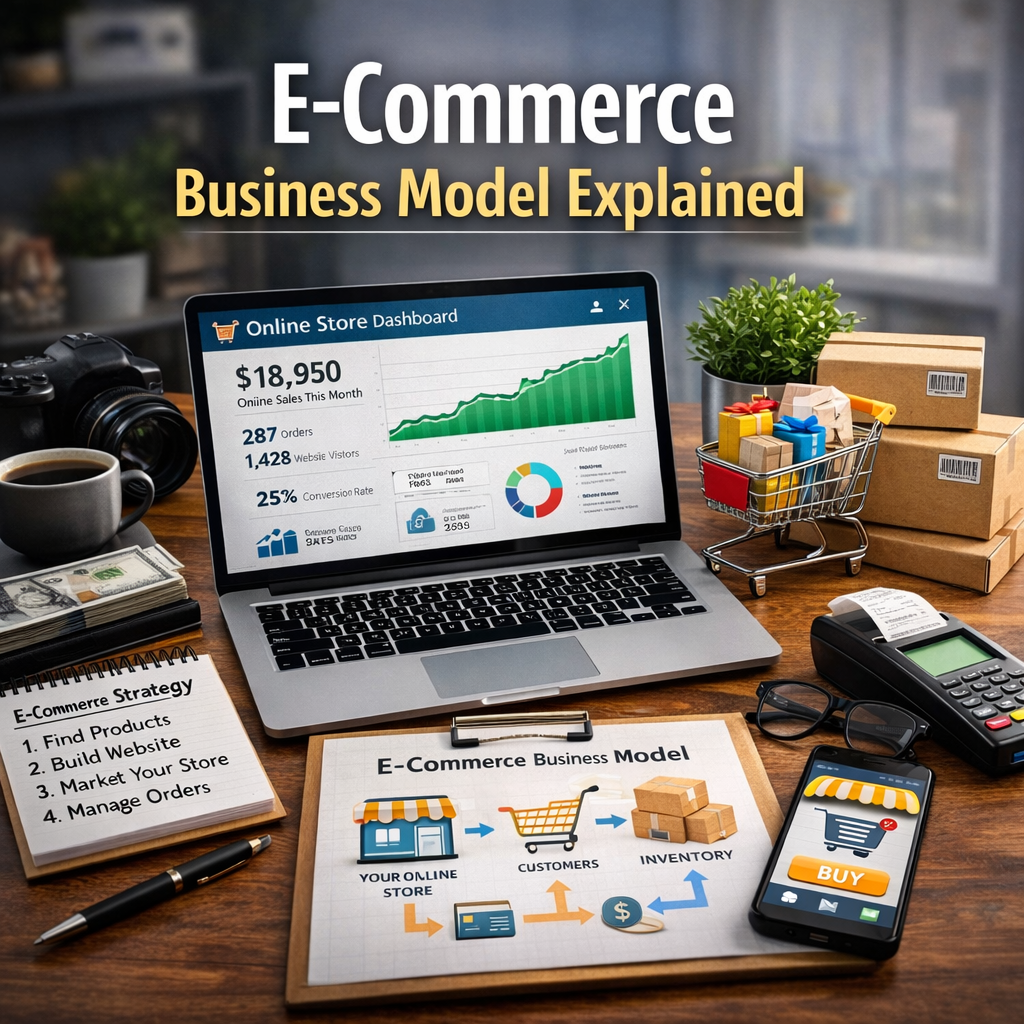

What Is E-Commerce?
E-commerce means selling products online instead of in a physical store.
You can build your store using platforms like:
- Shopify
- WooCommerce
Main E-Commerce Models
1. Dropshipping
You don’t hold inventory.
When a customer orders → supplier ships directly.
Low startup cost.
Lower control over quality.
2. Print-on-Demand
Sell custom t-shirts, mugs, hoodies.
Supplier prints and ships after purchase.
Creative-focused business.
3. Private Label
You manufacture your own branded products.
Higher investment.
Higher profit margins.
4. Digital Products
Sell ebooks, templates, or software.
No shipping.
Highest profit margins.
Skills Required for E-Commerce
- Product research
- Paid advertising
- Conversion optimization
- Customer service
- Branding
Risk Level
Compared to freelancing:
- Higher financial risk
- Requires marketing budget
- Slower profitability if ads fail
But scalability is higher.
E-Commerce Business Model Explained



4
E-commerce (electronic commerce) is the process of buying and selling products or services online. Instead of operating a physical store, businesses use websites, online marketplaces, or mobile apps to sell products to customers around the world.
The e-commerce model has grown rapidly over the past decade as more consumers prefer the convenience of shopping online. With internet access, digital payment systems, and global shipping networks, entrepreneurs can build successful online stores and reach customers from almost anywhere.
For beginners interested in starting an online business, e-commerce provides an attractive opportunity because it allows people to sell products without needing a traditional retail location.
How the E-Commerce Business Model Works


4
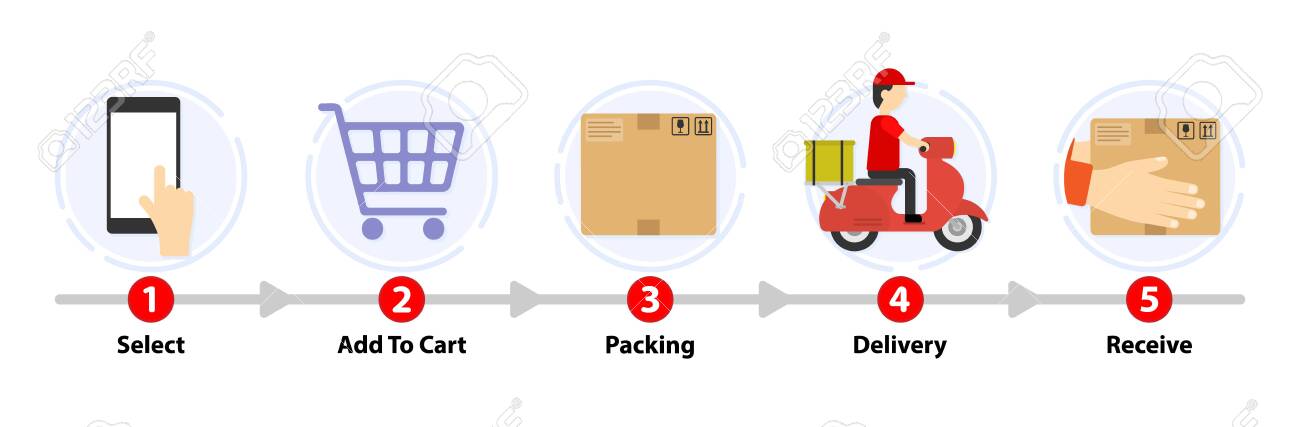
The e-commerce business model follows a simple process that connects businesses and customers online.
1. Online Store Creation
The business sets up a digital storefront using a website or online marketplace.
2. Product Listing
Products are displayed online with descriptions, prices, and images.
3. Customer Purchase
Customers browse products and place orders through secure online payment systems.
4. Order Fulfillment
The business ships the product to the customer or arranges delivery through logistics services.
5. Customer Support
Businesses handle returns, feedback, and customer service.
This process allows businesses to operate without the costs of physical retail stores.
Types of E-Commerce Business Models
1. Business-to-Consumer (B2C)

4
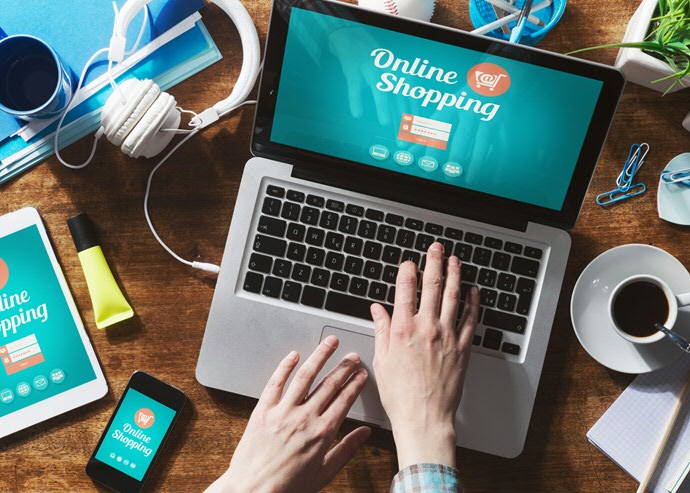
The B2C model is the most common type of e-commerce.
In this model, businesses sell products directly to individual consumers.
Examples include online clothing stores, electronics retailers, and beauty product brands.
Customers visit the website, browse products, make a purchase, and receive delivery.
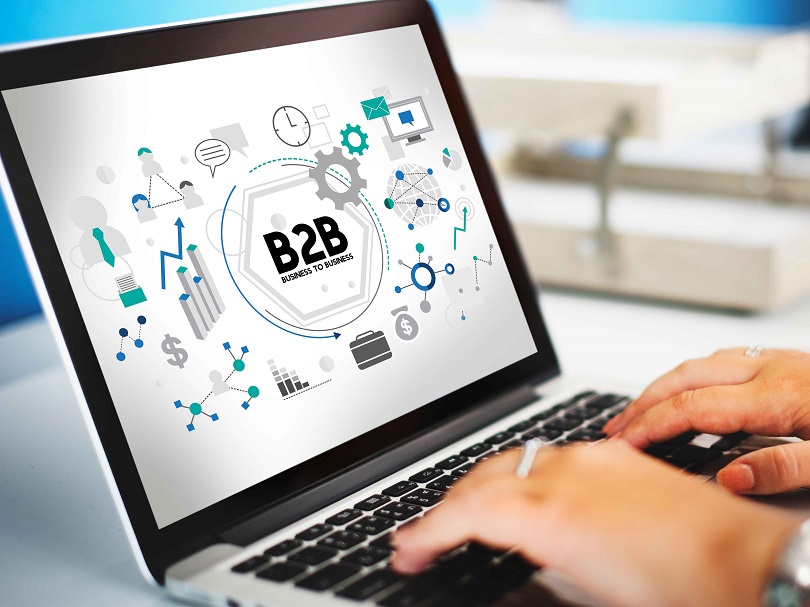
2. Business-to-Business (B2B)

4
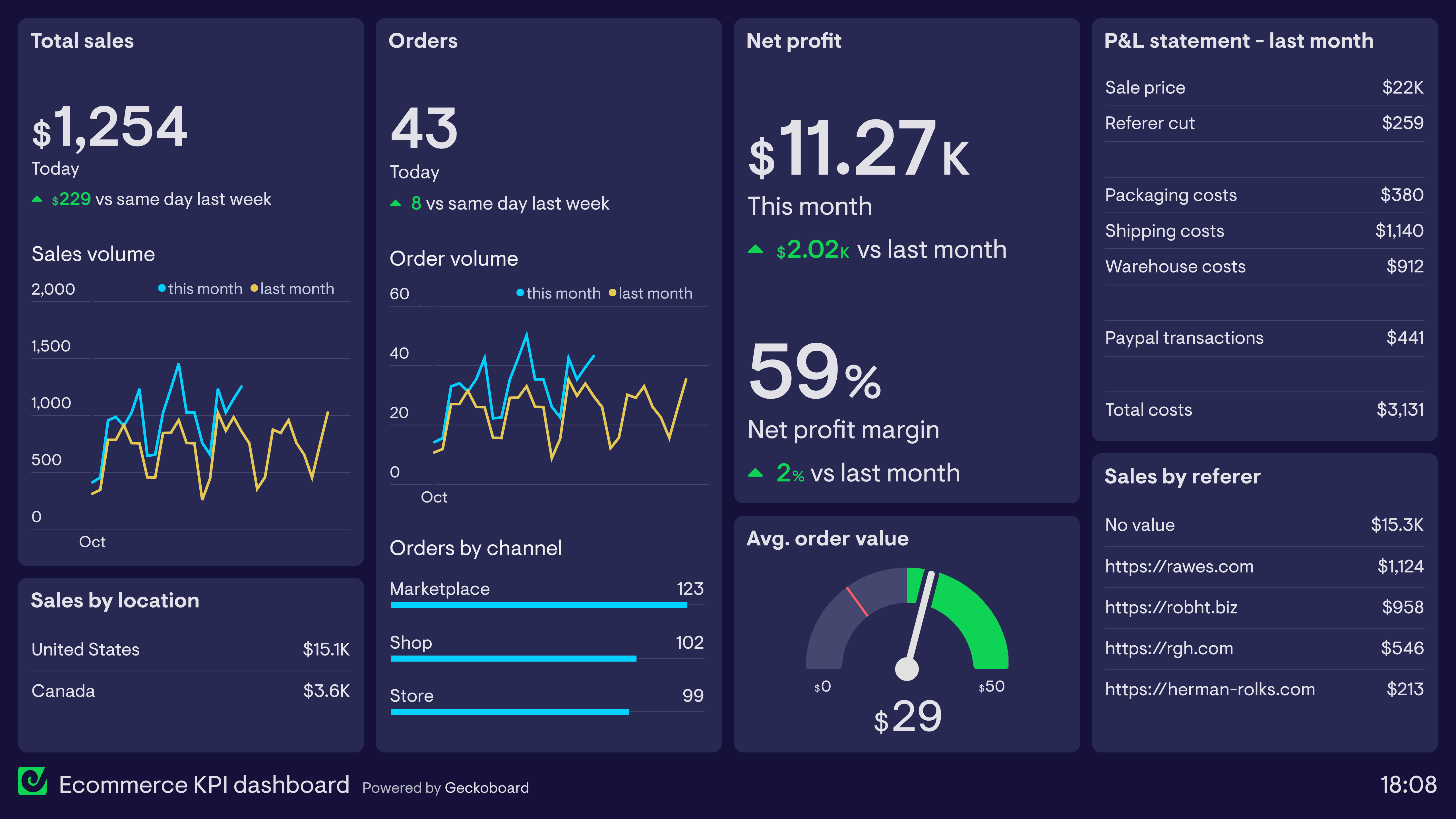
In B2B e-commerce, companies sell products or services to other businesses rather than individual consumers.
Examples include:
-
Wholesale product suppliers
-
Manufacturing equipment suppliers
-
Software platforms for businesses
These transactions often involve larger order volumes and long-term business relationships.
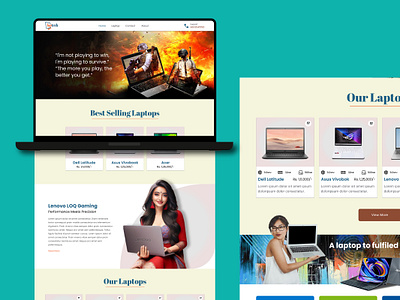
3. Consumer-to-Consumer (C2C)


4
C2C platforms allow individuals to sell products to other individuals.
Examples include online marketplaces where people sell:
-
Used products
-
Handmade items
-
Collectibles
These platforms connect buyers and sellers directly through digital marketplaces.
Popular E-Commerce Business Strategies
Dropshipping


4
Dropshipping is a popular e-commerce model for beginners.
In dropshipping:
-
The seller lists products on their website.
-
Customers place orders through the website.
-
The supplier ships the product directly to the customer.
This model eliminates the need for inventory storage.
Private Label Products


4
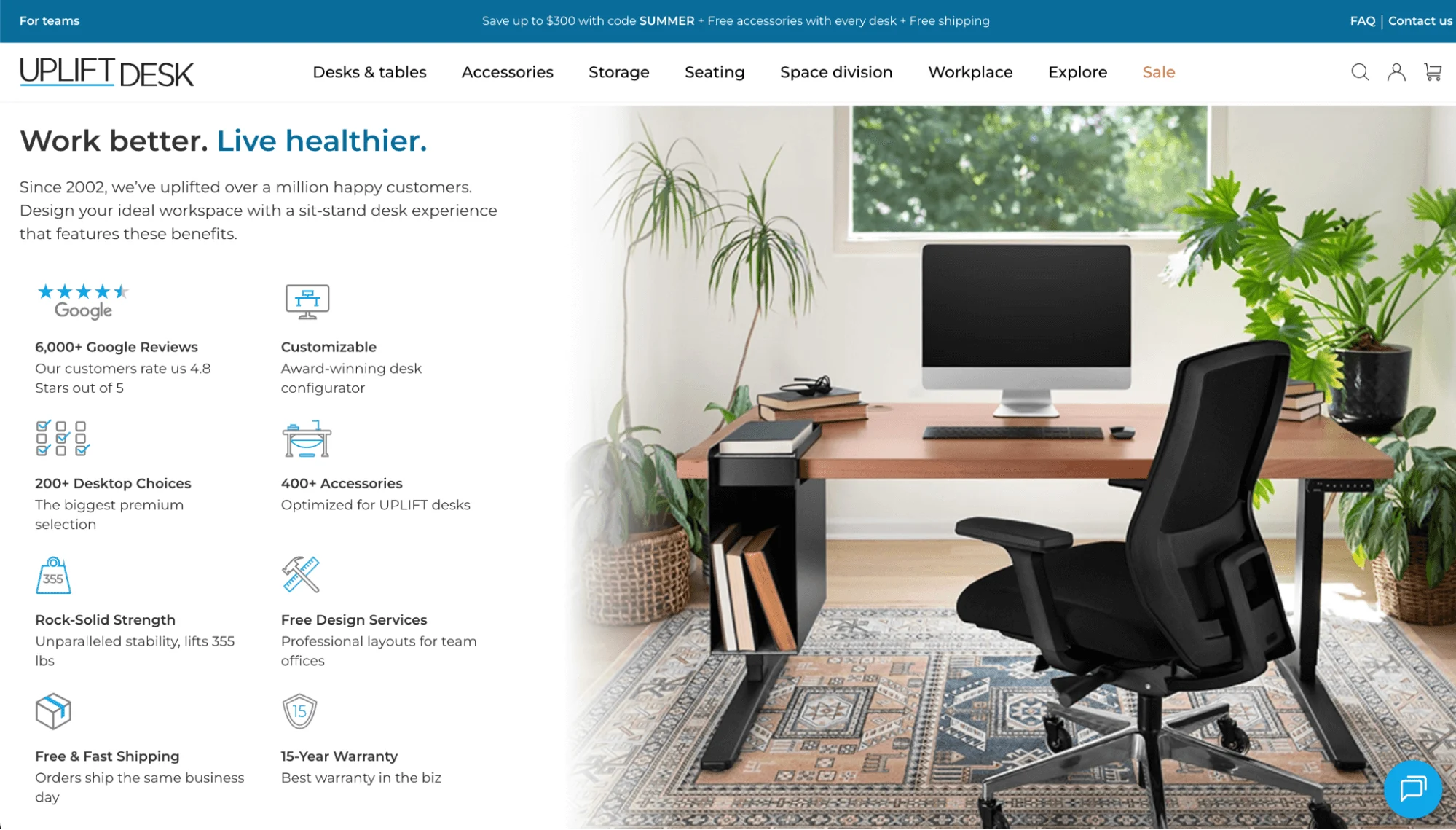
Private labeling involves creating your own brand and selling products manufactured by another company.
For example, a business might:
-
Source products from manufacturers
-
Add custom branding
-
Sell products under their own brand name
This model allows entrepreneurs to build unique brands.
Case Studies: Successful E-Commerce Businesses
Case Study 1: Small Online Store Growth

4
Background
A beginner entrepreneur launched an online store selling niche lifestyle products.
Strategy
The store focused on:
-
Identifying a specific target audience
-
Creating attractive product pages
-
Using social media marketing to attract customers
Results
As traffic increased, the store began generating consistent sales.
Lesson
Niche targeting and strong branding can help small e-commerce stores grow quickly.
Case Study 2: Dropshipping Store Success


4
Background
An entrepreneur started a dropshipping business selling trending products.
Strategy
The entrepreneur used:
-
Online advertising
-
Social media marketing
-
influencer collaborations
Results
Several products became popular, generating high sales volumes.
Lesson
Effective marketing and product research are key factors in dropshipping success.
Advantages of the E-Commerce Business Model
E-commerce offers several advantages compared with traditional retail.
Lower startup costs
Businesses can operate without renting physical stores.
Global market access
Online stores can sell products worldwide.
Automation and scalability
Digital systems help automate orders, payments, and marketing.
Flexible operations
Entrepreneurs can manage online stores from almost anywhere.
Challenges of E-Commerce
Despite its advantages, e-commerce also has challenges.
Common challenges include:
-
High competition in popular markets
-
Managing shipping and logistics
-
Customer service and returns
-
Marketing and traffic generation
Successful entrepreneurs overcome these challenges through strong branding, marketing strategies, and excellent customer experiences.
Final Thoughts
The e-commerce business model has transformed the way businesses sell products and reach customers. With the right strategy, entrepreneurs can build profitable online stores that serve customers around the world.
Whether through dropshipping, private label products, or online marketplaces, e-commerce offers significant opportunities for individuals who want to start and grow digital businesses.
For websites like MoneyOnliners.com, understanding the e-commerce model is an important step toward exploring different online income opportunities.