AI for Research, Data Analysis and Problem Solving
Learn how to use AI to support research, organize evidence, inspect data, generate hypotheses, compare explanations and solve problems without confusing plausible output with verified conclusions.
AI can support research and analysis, but it should never replace evidence, calculation checks or human judgment
Research and analysis involve more than collecting information. You need to define a clear question, identify trustworthy evidence, compare sources, inspect data quality, test assumptions and explain what the evidence actually supports.
AI can help with many parts of this process. It can summarize documents, organize themes, compare arguments, suggest formulas, inspect patterns, generate alternative explanations and help structure problem-solving steps. But it can also invent citations, misread data, make arithmetic mistakes or turn weak evidence into confident conclusions.
This lesson will teach you how to use AI as a research and analysis assistant while keeping evidence, verification and human interpretation at the center of the workflow.
Effective AI for research and analysis means defining a clear question, working from reliable sources or data, using AI to organize and explore information, checking calculations and citations independently, considering alternative explanations and making sure the final conclusion does not go beyond what the evidence supports.
1. Understand the Role of AI in Research and Analysis
AI is most useful when it helps you work with evidence that you can inspect. It is less reliable when asked to produce unsupported factual answers from memory.
| Research stage | AI can help with | Human responsibility |
|---|---|---|
| Question | Refine wording and subquestions | Define the real objective |
| Sources | Summarize and categorize material | Choose trustworthy evidence |
| Analysis | Suggest patterns and calculations | Validate methods and numbers |
| Interpretation | Generate possible explanations | Decide what evidence supports |
| Communication | Organize findings | Present uncertainty honestly |
Use AI to accelerate understanding
Large documents or datasets can be easier to explore when AI helps summarize structure or identify recurring themes.
Keep evidence separate from inference
Research becomes unreliable when AI-generated interpretation is presented as if it came directly from a source.
Match the workflow to risk
A low-stakes exploratory question needs less review than a public policy report, financial decision or health recommendation.
Separate exploration from publication
During exploration, it is acceptable to consider many tentative ideas. Before publication, those ideas need to be narrowed to claims that can be supported and explained.
Use reproducibility as a quality test
Another person should be able to follow your sources, calculations and reasoning well enough to understand how you reached the result.
Keep a distinction between facts and recommendations
A recommendation may be reasonable, but it should be clearly presented as a judgment based on evidence rather than as a fact contained in the source.
Use research logs to preserve context
AI-assisted research can become difficult to audit when questions, sources and conclusions are spread across many conversations. Keep a simple research log that records the question, source, date, key finding and verification status so the evidence trail stays clear.
Separate exploratory prompts from final reporting prompts
Exploration can be broad and speculative. Final reporting should be narrower, source-grounded and written only after the important evidence has been checked.
2. Frame the Research Question Before Using AI
A poorly defined question produces scattered research and weak analysis.
Move from broad to specific
“How is our business doing?” is broad. “Which product category had the largest revenue decline this quarter, and what factors may explain it?” is more analyzable.
Define the decision
Explain what the research will support: a purchase, policy recommendation, content decision, budget allocation or learning goal.
Identify measurable terms
Words such as success, growth, engagement or quality should be defined so the analysis can use consistent criteria.
Separate descriptive and causal questions
“What changed?” is easier to answer than “What caused the change?” Causal claims require stronger evidence.
Ask AI to generate subquestions
AI can help break a broad problem into smaller research questions, but you should choose which ones are relevant.
Define the time period
Many research questions change depending on whether you are examining one week, one quarter, one year or a long historical period.
Define the population
State who or what the question is about. Results from one customer group or country may not generalize to another.
Identify constraints before analysis
Budget, data access, deadlines and tool availability can determine which research methods are realistic.
Define what would count as a useful answer
Before researching, write the minimum evidence needed to answer the question. This prevents endless collection of material that does not change the decision.
Identify variables that may be confused with each other
If traffic, revenue and conversions all changed at the same time, make sure the research distinguishes them instead of treating them as one phenomenon.

3. Ground AI Research in Trustworthy Sources
Source grounding means giving the AI reliable documents, datasets or links and asking it to work from those materials.
Prefer primary sources for important claims
Official documents, original research, regulator guidance and first-party product documentation are often stronger starting points than summaries.
Use secondary sources for context
High-quality analysis can help explain primary evidence, compare viewpoints and provide historical background.
Tell the AI what sources are allowed
For controlled research, ask it to use only the provided documents and flag information that is missing.
Keep source metadata
Record titles, dates, authors or organizations and URLs so evidence can be traced later.
Do not trust generated citations automatically
Open every important citation yourself and confirm it supports the exact claim.
Use current sources for current questions
News, software, prices, laws and public roles can change quickly, so live information may be necessary.
Use a source hierarchy
Rank sources by directness and authority. Original datasets, official documentation and primary studies usually deserve more weight for factual claims than summaries or opinion posts.
Capture exact evidence
Save the page, table, paragraph or dataset field that supports a key claim so the reviewer does not need to rediscover it later.
Watch for outdated secondary summaries
A reputable article may still describe an older version of a law, software feature or market condition. Freshness matters independently of reputation.
Use citation-first note taking
When saving a useful fact, save its source at the same time. Reconstructing citations later is slower and increases the risk of attaching the wrong source to a claim.
Review source incentives
A vendor, advocacy group, government body and academic researcher may all provide useful information but may have different incentives and perspectives. Consider that context during interpretation.
4. Use AI to Compare Evidence Without Forcing Agreement
Research often includes sources that disagree or emphasize different facts.
Build comparison tables
AI can summarize what each source claims, what evidence it uses and where conclusions differ.
Separate agreement from disagreement
Do not ask AI to merge conflicting positions into one artificial consensus.
Identify missing evidence
Ask what would need to be known before one explanation could be preferred over another.
Check source quality, not just quantity
Five weak sources do not necessarily outweigh one strong primary source.
Preserve uncertainty
If the evidence is mixed, the final report should say that rather than pretending the question is settled.
| Comparison field | Why it matters |
|---|---|
| Claim | Shows what the source is asserting |
| Evidence | Shows what supports the claim |
| Date | Helps assess freshness |
| Method | Shows how the result was produced |
| Limitations | Shows where caution is needed |
Compare methods, not only conclusions
Two studies may reach different results because they used different samples, definitions or time periods. Understanding method differences can explain disagreement.
Ask whether sources are independent
Several articles may all repeat the same original claim. Counting them as separate evidence can create a false impression of broad support.
Use weighted confidence
You do not need to assign a precise score, but you should recognize that some findings deserve more confidence than others based on source quality and consistency.
Look for shared underlying data
Different articles may appear independent but rely on the same original dataset or press release. Trace claims back to their origin when possible so you do not overcount repeated evidence.
Distinguish methodological disagreement from factual disagreement
Sources may use the same facts but interpret them differently because they apply different assumptions or methods. Labeling the type of disagreement makes the analysis clearer.
5. Use AI to Support Data Analysis
AI can help explain data structures, suggest formulas, identify patterns and translate analytical results into plain language.
Describe the dataset clearly
Explain what each column means, units, date range, missing-value rules and what one row represents.
Use AI to suggest analysis approaches
Ask which summaries, charts or comparisons might answer the research question.
Use AI to explain formulas
If you are using spreadsheets, AI can explain functions and help troubleshoot formulas.
Check every important calculation
Use a spreadsheet, calculator or code to verify totals, percentages and statistical results.
Ask for alternative interpretations
A visible pattern may have several explanations. AI can help generate hypotheses that you then test against the data.
Do not let AI invent missing data
If values are absent, decide how to handle them explicitly rather than allowing the model to fill them with assumptions.
Use small test cases
Before applying an AI-suggested formula to thousands of rows, test it on a few records where you already know the correct answer.
Separate descriptive from predictive analysis
Summarizing what happened is usually more reliable than forecasting what will happen. Predictive tasks require additional assumptions and validation.
Check units before comparison
AI can miss that one column is in percentages while another uses decimals, or that currencies differ. Unit errors can invalidate otherwise correct calculations.
Use AI to document formulas in plain language
For complex spreadsheet work, ask AI to explain what each formula is intended to do. Then compare the explanation with the actual formula to catch mismatches.
Check denominator choices
Percentages can change dramatically depending on the denominator. Make sure the model and the analyst are using the same definition for rates such as conversion, churn or growth.
6. Check Data Quality Before Trusting AI-Assisted Analysis
Poor-quality data produces poor conclusions regardless of how sophisticated the AI appears.
Check completeness
Are important records or fields missing?
Check consistency
Are categories, units and date formats standardized?
Check duplicates
Repeated records can inflate totals and distort averages.
Check outliers
Extreme values may be real or may be data-entry errors. Investigate before removing them.
Check sampling
A clean dataset may still be unrepresentative if important groups are missing.
Check freshness
Old data may no longer support a current decision.
| Quality issue | Possible effect |
|---|---|
| Missing values | Incomplete totals or biased averages |
| Duplicates | Inflated counts |
| Wrong units | Invalid comparisons |
| Old records | Outdated conclusions |
| Selection bias | Unrepresentative findings |
Document missing-value rules
A blank can mean unknown, not applicable or zero. Write the rule explicitly before analysis so the model does not infer the wrong meaning.
Check data collection bias
If only certain users responded to a survey or only successful cases were recorded, the dataset may systematically exclude important information.
Keep raw data unchanged
Work from a copy when cleaning or transforming data so the original source remains available for audit and recovery.
Check for survivorship bias
If the dataset contains only successful projects, active customers or published studies, conclusions may ignore failed or missing cases. Ask which observations never entered the dataset.
Check category drift over time
Definitions can change. A status or product category used this year may not mean exactly the same thing as it did two years ago.
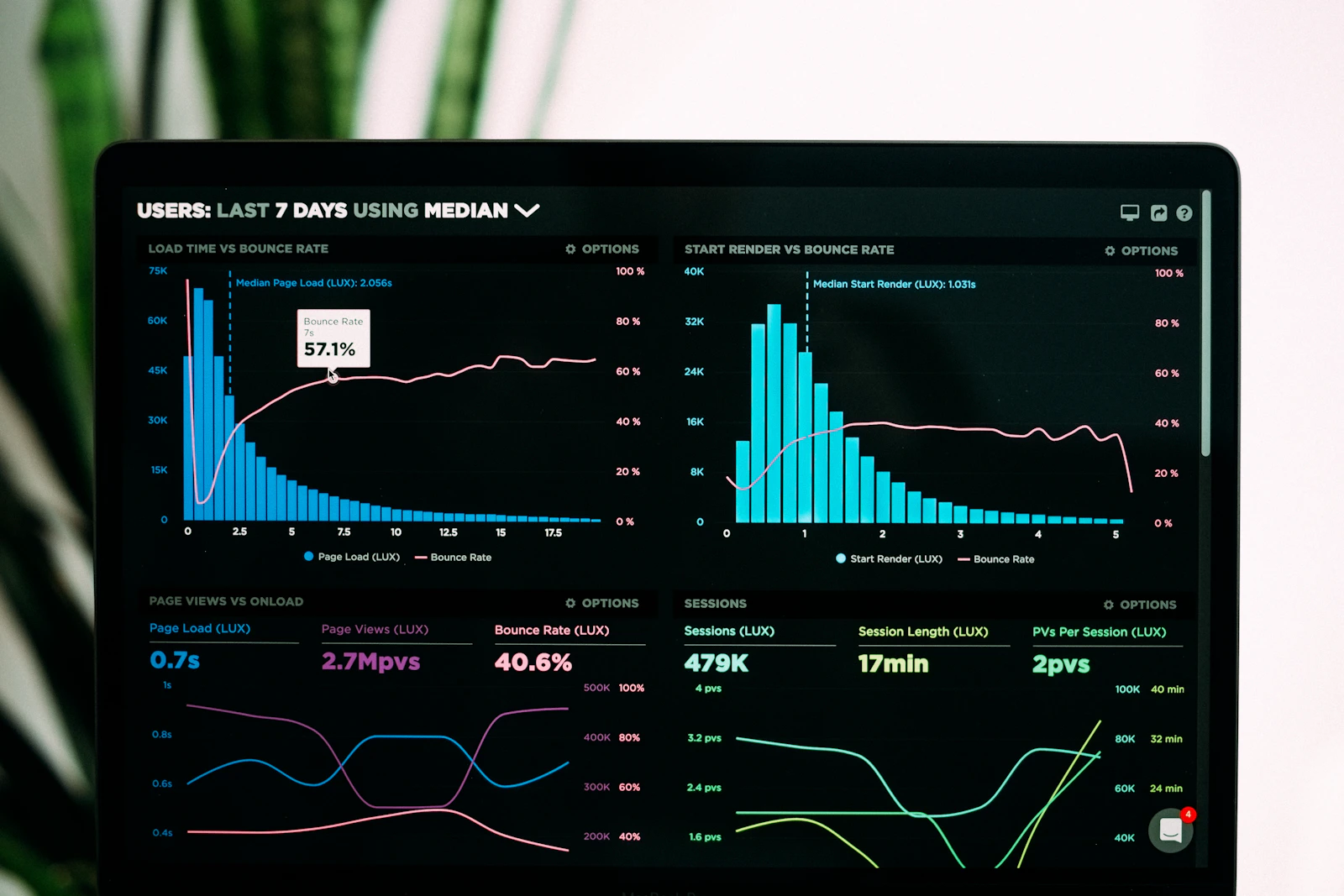
7. Use AI to Generate Hypotheses and Alternative Explanations
One useful role for AI is generating possible explanations that you can test.
Distinguish hypotheses from conclusions
A hypothesis is a possible explanation, not a proven answer.
Ask for competing explanations
If sales dropped, possibilities may include seasonality, price changes, inventory issues, traffic decline or measurement error.
Look for disconfirming evidence
Ask what evidence would make the hypothesis less likely. This reduces confirmation bias.
Rank hypotheses by testability
Start with explanations that can be checked using available evidence.
Use domain knowledge
AI may generate plausible but irrelevant explanations. Subject expertise helps identify which hypotheses deserve attention.
Use evidence thresholds
Decide what evidence would make you increase or decrease confidence in each hypothesis. This prevents explanations from surviving simply because they sound plausible.
Ask for mechanisms
A useful hypothesis should explain how one factor could produce the observed result, not merely note that the two occurred together.
Retire weak hypotheses
If repeated checks fail to support an explanation, remove it from the active list instead of continuing to defend it.
Use prediction as a test
A stronger hypothesis should imply something you could observe if it were true. Write that expected observation before checking the data so the test is less subjective.
Consider interaction effects
Sometimes several factors combine to produce a result. AI can suggest interactions, but these possibilities still need evidence rather than narrative confidence.
8. Use AI for Structured Problem Solving
Problem solving improves when a difficult issue is broken into smaller components.
Define the problem precisely
State what is happening, what should be happening and what constraints exist.
Separate symptoms from causes
A slow website is a symptom. Possible causes include large images, server delay, scripts or caching problems.
Generate solution options
Ask for several approaches with benefits, risks and prerequisites.
Test assumptions
Identify which proposed solution depends on facts that have not been verified.
Use staged troubleshooting
Start with low-risk checks before making expensive or irreversible changes.
Document what has already been tried
This prevents the AI from repeatedly suggesting actions that failed earlier.
Use root-cause techniques
Methods such as the Five Whys can help move from a visible symptom toward underlying process problems. AI can facilitate the questions, but humans must verify each answer.
Separate reversible and irreversible actions
Test low-risk changes first when possible. A reversible experiment provides information without committing to an expensive or permanent solution.
Define success metrics
Before implementing a solution, decide how you will know whether it worked. Without a metric, teams can mistake activity for improvement.
Use constraints to eliminate impossible solutions
Budget, policy, staffing and technical limits should be included before solution generation. Otherwise AI may recommend options that cannot realistically be implemented.
Use post-solution monitoring
A problem-solving workflow is not finished when a change is made. Define what metrics will be monitored afterward to confirm whether the solution worked.
9. Use AI to Support Decisions Without Delegating Responsibility
AI can organize options and evidence, but human decision-makers should remain accountable.
Create decision criteria
Define cost, benefit, risk, urgency, feasibility or other relevant factors before comparing options.
Ask for tradeoffs
Every option has limitations. Good decision support makes them visible.
Use weighted scoring carefully
If some criteria matter more, document why they receive more weight.
Keep qualitative factors visible
Not every important consideration can be reduced to a number.
Use sensitivity analysis
Check whether the decision changes when key assumptions change.
Use scenario analysis
Compare how options perform under optimistic, expected and pessimistic assumptions. This reveals decisions that depend heavily on one uncertain forecast.
Document value judgments
Weights and criteria often reflect organizational priorities. Make those priorities explicit rather than presenting the final score as purely objective.
Keep a human override
Decision-makers should be able to reject an AI-assisted recommendation when contextual factors or new evidence justify a different choice.
Use pre-mortem analysis
Ask how each option could fail and what warning signs would appear first. This can reveal risks that a simple ranking table misses.
Document non-quantifiable considerations
Trust, staff morale, reputation and strategic fit may matter even when they are difficult to score precisely. Keep them visible rather than forcing false numerical precision.
10. Verify AI-Assisted Research and Analysis
Verification is the step that separates useful assistance from unreliable automation.
Verify source existence
Confirm that every important source is real and accessible.
Verify source relevance
A real source may not support the exact claim.
Verify calculations independently
Use spreadsheets, calculators or code.
Verify quotations and dates
Exact details require direct checking.
Check negative claims carefully
Statements such as “no evidence exists” are difficult to prove and require broad searching.
Use expert review for specialist topics
Some conclusions require qualified expertise even when the data is correct.
Use independent replication
For important calculations, reproduce the result with a second method or reviewer. Independent replication catches mistakes that repeated use of the same method may miss.
Verify data provenance
Know where the dataset came from, who collected it, when it was collected and what transformations occurred before you received it.
Check assumptions explicitly
List assumptions such as inflation rate, conversion window or excluded categories and test whether the conclusion changes when they change.
Use spot checks on large analyses
For large datasets, manually verify a sample of records, formulas and outputs. Spot checks can reveal systematic errors that are difficult to notice from aggregate results alone.
Ask what would change the conclusion
A robust analysis should identify which assumptions or new evidence could materially alter the result. This helps decision-makers understand the true level of confidence.
11. Understand the Limits of AI-Assisted Research
AI can fail in ways that are difficult to notice because the output may remain fluent and confident.
Hallucinated sources
The model may invent papers, links or quotations.
Weak causal reasoning
AI may treat correlation as causation or overlook confounding factors.
Data interpretation errors
It can misread column meanings, units or missing values.
Outdated knowledge
Without live access, the model may rely on old information.
Overconfidence
The wording may sound more certain than the evidence justifies.
Automation bias
Humans may trust a machine-generated answer too easily simply because it looks systematic.
Beware of persuasive coherence
AI can connect weak clues into a story that feels complete. A coherent story is not evidence that the explanation is true.
Beware of hidden missing data
If an important variable was never measured, neither the model nor the analyst can recover it from the dataset without additional evidence.
Beware of benchmark leakage
When evaluating AI systems themselves, ensure the test data and scoring method genuinely measure the capability you care about rather than rewarding familiarity with the benchmark.
Beware of confirmation through repetition
If AI repeats the same answer several times, that does not create new evidence. Repeated generation from the same underlying knowledge is not independent confirmation.
Beware of opaque transformations
When data passes through several automated steps, keep track of what changed at each stage. Hidden transformations can create errors that are difficult to trace later.
12. Build a Repeatable AI Research and Analysis Workflow
A documented workflow makes research easier to audit and improve.
| Stage | Action |
|---|---|
| Define | Write the question and decision |
| Collect | Gather trustworthy sources or data |
| Prepare | Clean data and organize sources |
| Explore | Use AI to summarize, compare or suggest patterns |
| Validate | Check sources, methods and calculations |
| Interpret | Explain what the evidence supports |
| Communicate | Present findings, uncertainty and next actions |
Keep an evidence log
Record which source supports each important claim.
Keep a calculation log
Document formulas or methods for important numeric results.
Use approval checkpoints
High-impact reports should receive human or specialist review before action.
Archive the final source pack
Keep the evidence used for the report so future updates are easier.
Add a source-review checkpoint
Before analysis, confirm that the source pack is relevant, sufficiently current and appropriate for the question.
Add a method-review checkpoint
Before presenting results, confirm that formulas, statistical methods and comparisons are suitable for the data.
Archive assumptions with the result
A conclusion without its assumptions can be misunderstood later. Keep both together.
Use named versions for major analyses
When assumptions, data or methods change, save a new version instead of overwriting the old one. This makes comparisons and audits much easier.
Include a final uncertainty statement
Every important report should state what remains uncertain and what additional evidence would improve confidence.
13. Practice AI Research and Analysis With Real Projects
A good portfolio project should show the evidence, analysis process and human validation.
- Compare three official reports on one topic.
- Analyze a small public dataset.
- Investigate a website traffic decline.
- Build a vendor-comparison decision matrix.
- Fact-check an AI-generated research answer.
- Create a source-grounded briefing note.
Show your research question
Make the objective clear before presenting the analysis.
Show the source pack
List the evidence used and why it was chosen.
Show calculations
Include formulas, summaries or checks where relevant.
Show alternative explanations
Demonstrate that you considered more than one interpretation.
Show limitations
Explain what the evidence cannot establish.
Show uncertainty visually
Where appropriate, include ranges, confidence notes or scenario bands instead of presenting one precise number as certain.
Show rejected explanations
Document one hypothesis that initially looked plausible but was not supported after checking the evidence.
Include a reproducibility note
Explain which files, formulas or sources another person would need to reproduce the analysis.
Include a decision memo
After the analysis, write a one-page decision memo summarizing the question, strongest evidence, main uncertainty and recommended next step. This demonstrates communication skill as well as technical analysis.
Show validation artifacts
Include screenshots, formulas, checklists or source tables that demonstrate how you verified the AI-assisted work.
14. Lesson 29 Practical Exercise: Complete One AI-Assisted Analysis
Define the question
Write one clear research or analysis question.
Gather evidence
Collect trustworthy sources or a clean dataset.
Use AI to explore
Generate summaries, patterns or hypotheses.
Verify and conclude
Check everything important and write a cautious conclusion.
Seven-day practice routine
Day 1: define the question. Day 2: collect sources. Day 3: organize evidence. Day 4: use AI to compare findings. Day 5: verify calculations or claims. Day 6: test alternative explanations. Day 7: write the final summary with limitations.
Create a research scorecard
Score source quality, data quality, calculation reliability, alternative explanations, uncertainty and final usefulness.
Run one falsification check
Ask what evidence would contradict your preferred explanation, then search for that evidence.
Run one alternative-method check
Answer one part of the analysis using a second method and compare the result. Differences can reveal hidden assumptions or implementation errors.
Write a limitation paragraph
Describe at least three factors that reduce confidence in the result. This builds the habit of communicating uncertainty instead of hiding it.
Write the decision implication separately
First state what the evidence shows, then state what action you recommend. Keeping these separate makes judgment more transparent.
Perform one manual calculation
Choose an important result and reproduce it without AI. The manual check helps confirm that the automated analysis is using the intended logic.
Write one competing conclusion
Ask whether the same evidence could support a different reasonable interpretation, then explain why your final conclusion is stronger or why uncertainty remains.
15. Common Mistakes When Using AI for Research and Analysis
| Mistake | Why it is risky | Better habit |
|---|---|---|
| Trusting generated citations | Sources may be invented | Open and verify them |
| Using weak data | Produces weak conclusions | Check data quality first |
| Skipping calculation checks | Allows numeric errors | Verify independently |
| Forcing one explanation | Creates confirmation bias | Generate alternatives |
| Ignoring uncertainty | Overstates findings | State limitations clearly |
| Confusing correlation with causation | Creates false causal claims | Use stronger evidence |
| Using stale information | Weakens current decisions | Use recent sources |
| Delegating final judgment | Removes accountability | Keep human approval |
Do not let AI fill missing evidence silently
If the evidence is incomplete, identify the gap instead of asking the model to invent a complete story.
Avoid conclusion-first research
Starting with the answer you want and searching only for support increases bias.
Do not hide contradictory evidence
A strong report explains meaningful disagreement instead of removing it.
Avoid fake precision
A number with two decimal places can still be based on weak assumptions. Precision is not the same as accuracy.
Do not confuse a summary with analysis
Summarizing what sources say is useful, but analysis requires comparison, interpretation, evidence assessment or calculation.
Do not use AI to manufacture consensus
If experts or datasets disagree, preserve the disagreement and explain why rather than forcing one synthesized answer.
Avoid overfitting explanations to one event
A story that perfectly explains one case may fail elsewhere. Look for patterns across multiple observations where possible.
Do not treat a confidence score as objective truth
AI-generated confidence language or scores may not be calibrated to real-world accuracy. Treat them as signals, not proof.
Avoid mixing exploratory and confirmed findings
Label speculative patterns, tested findings and verified facts differently so readers can see the strength of each statement.
16. AI for Research and Analysis: 15 Questions and Answers
1. What is AI-assisted research?
It is the use of AI to help organize, summarize, compare and explore evidence while humans remain responsible for source quality and conclusions.
2. Can AI replace a researcher?
No. AI can assist with parts of research, but source selection, verification and interpretation still require human judgment.
3. Can AI analyze spreadsheets?
Yes, it can help explain data and suggest methods, but important calculations should be verified independently.
4. What is source grounding?
Source grounding means asking AI to work from specific trusted documents, data or retrieved evidence.
5. Can AI invent sources?
Yes. Generated citations, links and quotations must be checked.
6. How can AI help compare evidence?
It can organize claims, methods, dates, agreements and disagreements across sources.
7. What is a hypothesis?
A hypothesis is a possible explanation that still needs to be tested.
8. Why should I consider alternative explanations?
They reduce confirmation bias and help prevent premature conclusions.
9. Can AI prove causation?
Not by itself. Causal conclusions require appropriate evidence and methods.
10. Why does data quality matter?
Missing, duplicated, inconsistent or biased data can produce misleading results.
11. What should I verify in analysis?
Sources, formulas, calculations, dates, quotations, assumptions and high-impact conclusions.
12. Can AI help solve business problems?
Yes. It can help break problems down, generate options and compare tradeoffs, but decisions remain human responsibilities.
13. What should an AI research portfolio show?
The question, evidence, AI-assisted steps, calculations, alternative explanations, verification and limitations.
14. How do I communicate uncertainty?
State what the evidence supports, what remains unknown and what additional information would improve confidence.
15. What comes after AI research and analysis?
Lesson 30 focuses on no-code and automation skills for beginners.
17. Learning Resources for AI Research and Analysis
Use current official guidance and strong research practices when applying AI to evidence, data and decision-making.
MoneyOnliners Learning Path
Digital Skills AcademyView the complete 40-lesson curriculum.https://moneyonliners.com/digital-skills-academy/ Lesson 28: AI-Assisted Writing and Content Creation SkillsReview AI-assisted content research, drafting and fact-checking.https://moneyonliners.com/ai-content-creation-skills/ Lesson 30: No-Code and Automation Skills for BeginnersContinue into no-code automation and connected workflows.https://moneyonliners.com/no-code-automation/ Data Analysis and Spreadsheet SkillsStrengthen the underlying data skills needed to evaluate AI analysis.https://moneyonliners.com/data-analysis-skills-for-beginners/Authoritative Research and AI Resources
NIST AI Risk Management FrameworkFramework for evaluating AI-related risks and reliability.https://www.nist.gov/itl/ai-risk-management-framework OECD Artificial IntelligencePolicy, governance and responsible AI resources.https://www.oecd.org/en/topics/artificial-intelligence.html Data.govPublic datasets that can be used for structured analysis practice.https://www.data.gov/ Microsoft Excel Help & LearningOfficial spreadsheet guidance for validating data analysis workflows.https://support.microsoft.com/excelCreate your own evidence log
For every important research project, record the claim, source, date, method, verification status and any limitation that affects interpretation.
Create a calculation audit trail
Keep formulas, code or spreadsheet references for important numeric results so another person can reproduce them.
Lesson 29 Summary
AI can make research and analysis faster by helping organize sources, compare evidence, explore data, generate hypotheses and structure problem-solving steps.
The quality of the final result still depends on the quality of the evidence, the correctness of calculations and the discipline of human verification.
Digital Skills Academy Lesson 29 Workbook
Use this workbook to frame a research question, compare sources, inspect data quality, generate hypotheses, verify calculations and document a complete AI-assisted analysis.
Lesson 29 Completion Check
- I can frame a clear research or analysis question before using AI.
- I can ground AI research in reliable sources and preserve evidence boundaries.
- I can use AI to explore data while checking calculations and data quality independently.
- I can generate alternative hypotheses without treating them as proven conclusions.
- I can communicate uncertainty, limitations and decision tradeoffs clearly.
- I am ready to continue to Lesson 30 and learn no-code and automation skills for beginners.